


A peek into the future
The shortlist for the 2027 Truck Innovation Award read like a catalogue of trucking’s future. BYD’s Flash Charging and Blade Battery 2.0 made the final cut, alongside cellcentric’s BZA375 fuel cell, the Iveco-PlusAI Level 4 autonomous driving programme and Scania ProDriver, which uses technology to improve driver performance. Yet the International Truck of the Year jury – which picks the winner – gave the award to something less radical: a hybrid transmission.
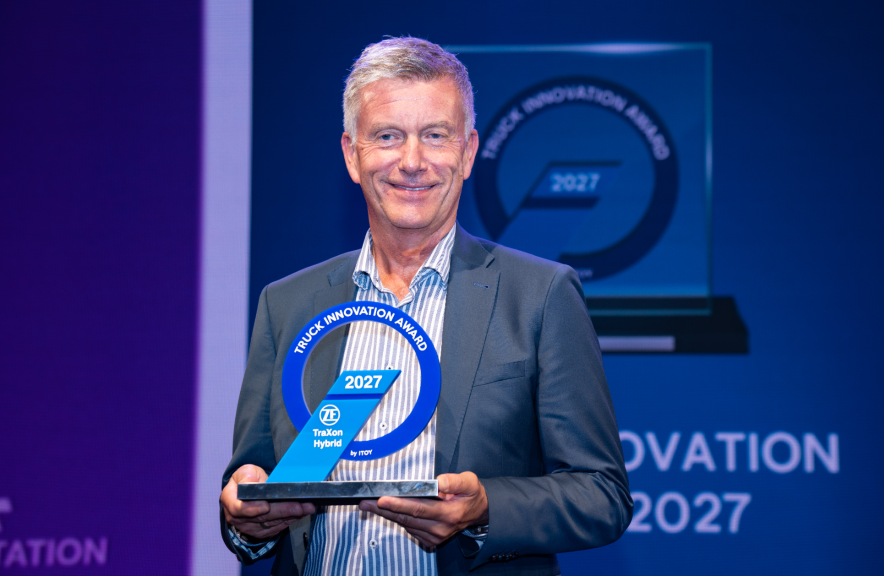
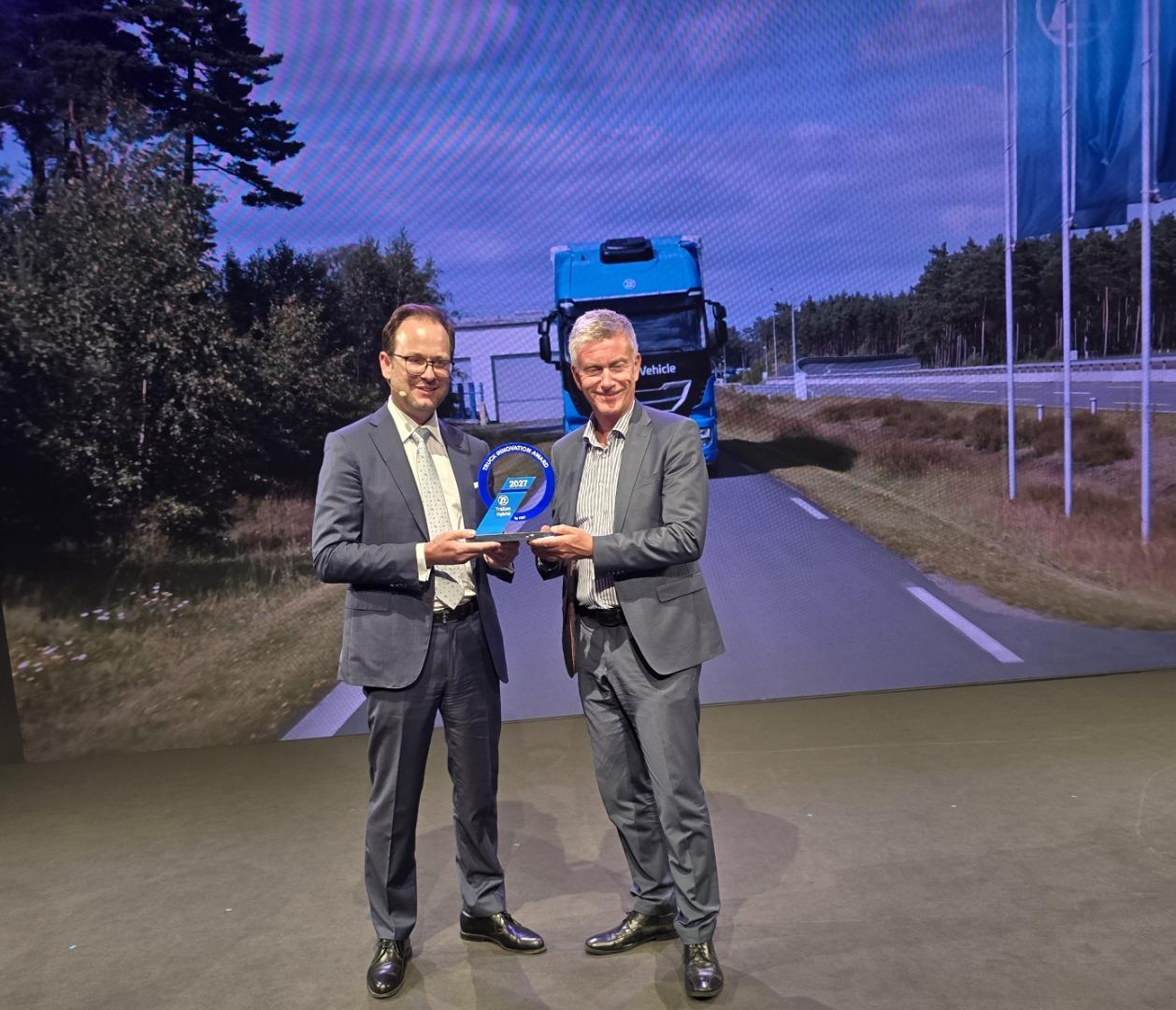
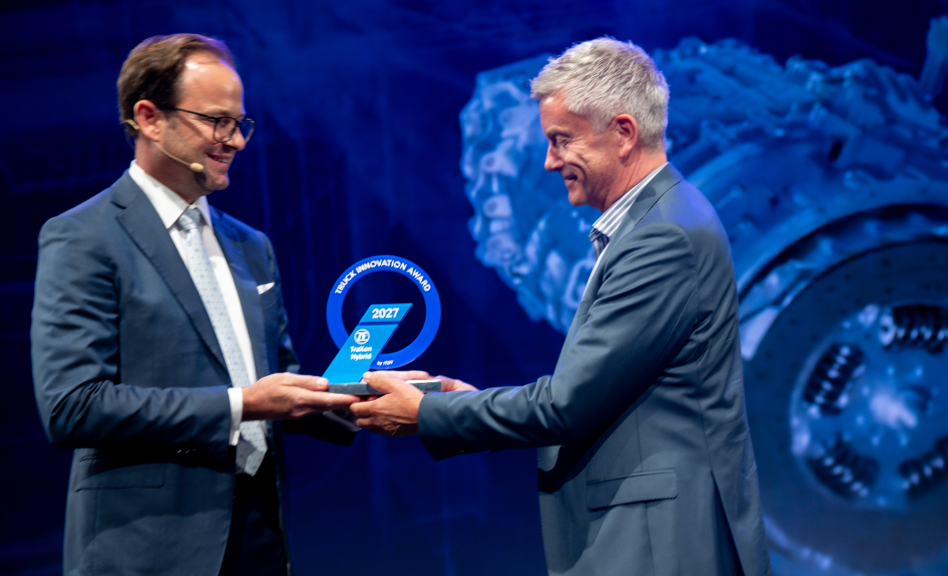
ZF’s TraXon Hybrid scored 77 points and was crowned the winner of the 2027 Truck Innovation Award during the IAA Transportation exhibition in Hanover. What makes the victory significant is the thinking behind the technology: rather than replacing the conventional heavy-duty driveline with an entirely new architecture, ZF has electrified its proven TraXon transmission by integrating hybrid capability into a system truck makers and operators already know.
Hybridisation inside the transmission
At the heart of the concept is ZF’s established TraXon heavy-duty transmission architecture. An electric motor is integrated into the driveline, allowing the truck to combine combustion and electric power. The system can recuperate energy during braking instead of allowing all that energy to disappear as heat. That recovered energy can later support propulsion. The electric motor can assist the combustion engine when additional power is useful and, in suitable configurations, the truck can travel using electric power alone.

The result is not a battery-electric truck with a small combustion engine attached as insurance. Nor is it simply a conventional diesel with an electrical accessory. The transmission itself becomes the point at which the two propulsion sources are brought together. That packaging is a large part of the appeal. Truck manufacturers can introduce hybrid functionality while retaining a heavy-duty transmission platform developed for demanding commercial applications.
How big could the saving be?
ZF says VECTO simulations indicate CO₂ reductions of up to 47% in long-haul transport under the defined test conditions, provided the plug-in hybrid is recharged consistently.
The qualification is important. It is a simulation result, not a promise that every operator will cut fuel consumption or emissions by 47%. Real-world performance will depend on route, payload, vehicle configuration, driving pattern, charging frequency and the amount of work that can be shifted from the combustion engine to the electrical system.

But it demonstrates why hybridisation is attracting attention in heavy trucks. Energy normally lost during deceleration can be recovered, while electrical assistance can reduce how hard the engine must work during parts of the duty cycle.
Why hybrid now?
The truck industry knows where regulations are heading, but the journey is proving challenging. Battery-electric long-haul trucks are becoming capable. At the same time, infrastructure readiness varies dramatically between markets and even between routes within the same country. Grid connections, charging speeds, depot access, payload sensitivity and daily utilisation can determine whether a zero-emission truck fits an operation.
ZF’s approach acknowledges that transition period rather than pretending it does not exist. The company’s wider driveline strategy spans hybrid and fully electric technologies. At IAA Transportation it described decarbonisation as a process involving multiple pathways, shaped by application, region and charging readiness.
For South Africa, that conversation is particularly relevant. Long routes, high utilisation and limited heavy-vehicle charging infrastructure create a different operating environment from dense European freight corridors.
Maturity counted
The jury also highlighted practical applicability and technological maturity. ZF says more than 1.5 million TraXon automated manual transmissions have been produced since 2014. Building hybrid capability around an established platform offers a different proposition from technologies requiring an entirely new vehicle architecture or supporting ecosystem.
International Truck of the Year jury chairman Florian Engel summed up the thinking when he said more sustainable freight transport would be defined by a broad portfolio of technologies. The award therefore says as much about the state of the transition as it does about ZF.
Flash charging, hydrogen, autonomous trucks and smarter drivers all remain part of the innovation race. TraXon Hybrid did not win because the jury decided hybrids are the final answer. It won because, in a transport industry that still has to move freight every day while preparing for a lower-emission future, a technology capable of bridging those two realities can be highly innovative in its own right.