Why VR could make a difference
At the time of writing this article, there were close on 180 000 confirmed cases of COVID-19 worldwide – and counting … The disease is spread via human contact. As the World Health Organization notes: “The disease can spread from person to person through small droplets from the nose or mouth which are spread when a person with COVID-19 coughs or exhales. These droplets land on objects and surfaces around the person. Other people then catch COVID-19 by touching these objects or surfaces, then touching their eyes, nose or mouth. People can also catch COVID-19 if they breathe in droplets from a person with COVID-19 who coughs out or exhales droplets. This is why it is important to stay more than 1 metre away from a person who is sick,” it advises.
So, keeping one’s distance is a good thing. Completely avoiding human contact would, of course, be even better.
But that’s somewhat impractical. We don’t live in silos. But there is one technology that certainly could help with this – and it’s VR.
VR is, after all, an artificial environment that is created with software. Originally viewed as a gimmick for hardcore gamers, it’s not a real place containing real people – although it does feel like one. Instead, the software works with the use of two of the five senses – namely sight and sound – and “fools” you into thinking and feeling as though you’re there. And the good news is that the transport industry is already employing this technology …
VR for truck and van technicians
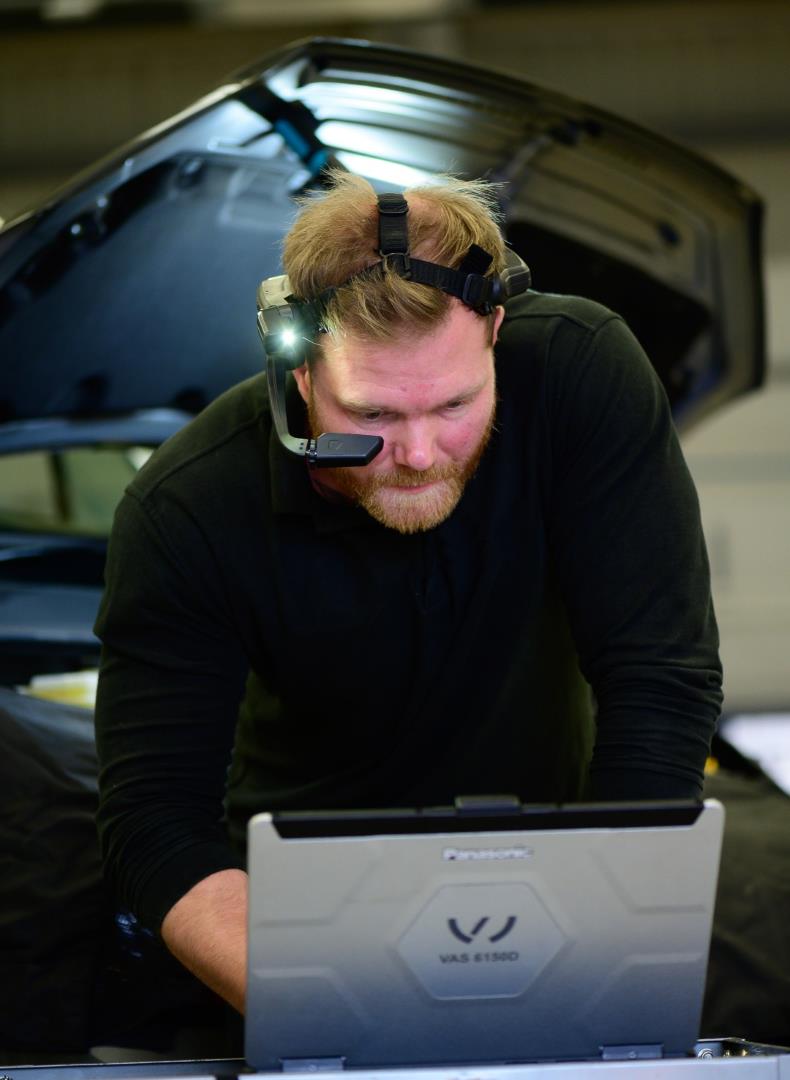
Volkswagen Commercial Vehicles, for instance, is currently rolling out augmented reality headsets for technicians across its Van Centre network in the United Kingdom (UK). The innovative system allows experts based at the Technical Support Centre to send precise visual instructions remotely to technicians at Van Centres and Mobile Service Clinics to ensure any maintenance issues can be fixed as quickly and efficiently as possible. These headsets have the potential to save customers five years of downtime – equal to £1 million (about R20.3 million). CO2 emissions are also saved because a human being doesn’t have to physically get into his car or van and travel to a Van Centre or Mobile Service Clinic.
Each of the 67 Van Centres and 30 Authorised Repairers across the UK will have access to a pair of the RealWear glasses, which feature a microphone, head camera, display screen and voice activation. As an aside, RealWear glasses have also been used in the treatment of coronavirus victims at the Huaqiao Hospital, 50 km west of Shanghai (where VR is used for communication among doctors, thereby minimising exposure to the virus).
According to Kate Thompson, head of press and public relations at the company, the headsets could also minimise human contact in the UK, which is important with the coronavirus. “That was never the intended purpose! However, we are already exploring how we could utilise them further – say, for group or 121 training and ‘meetings’ between suppliers. I suspect that anything that can also overcome difficulties associated with personal contact will be an advantage,” she points out.
Also in the UK, MAN Truck and Bus is piloting the use of VR glasses to facilitate communication between technicians at its dealerships and technical experts.
Volvo Group Trucks Central Europe is also providing RealWear glasses to some of its maintenance and repair technicians. They’re using VR to chat to product quality engineers. “The RealWear HMT-1 with Librestream Onsight Connect has the potential to provide better assistance to our technicians and increase our productivity. This solution can help us improve our quality of service and customer satisfaction,” notes Markus Weckesser, director service market at Volvo Group Trucks Central Europe. The glasses also mean that the technicians and engineers don’t need to be in the same room at the same time – minimising the risk of COVID-19 transmission.
VR for driver training
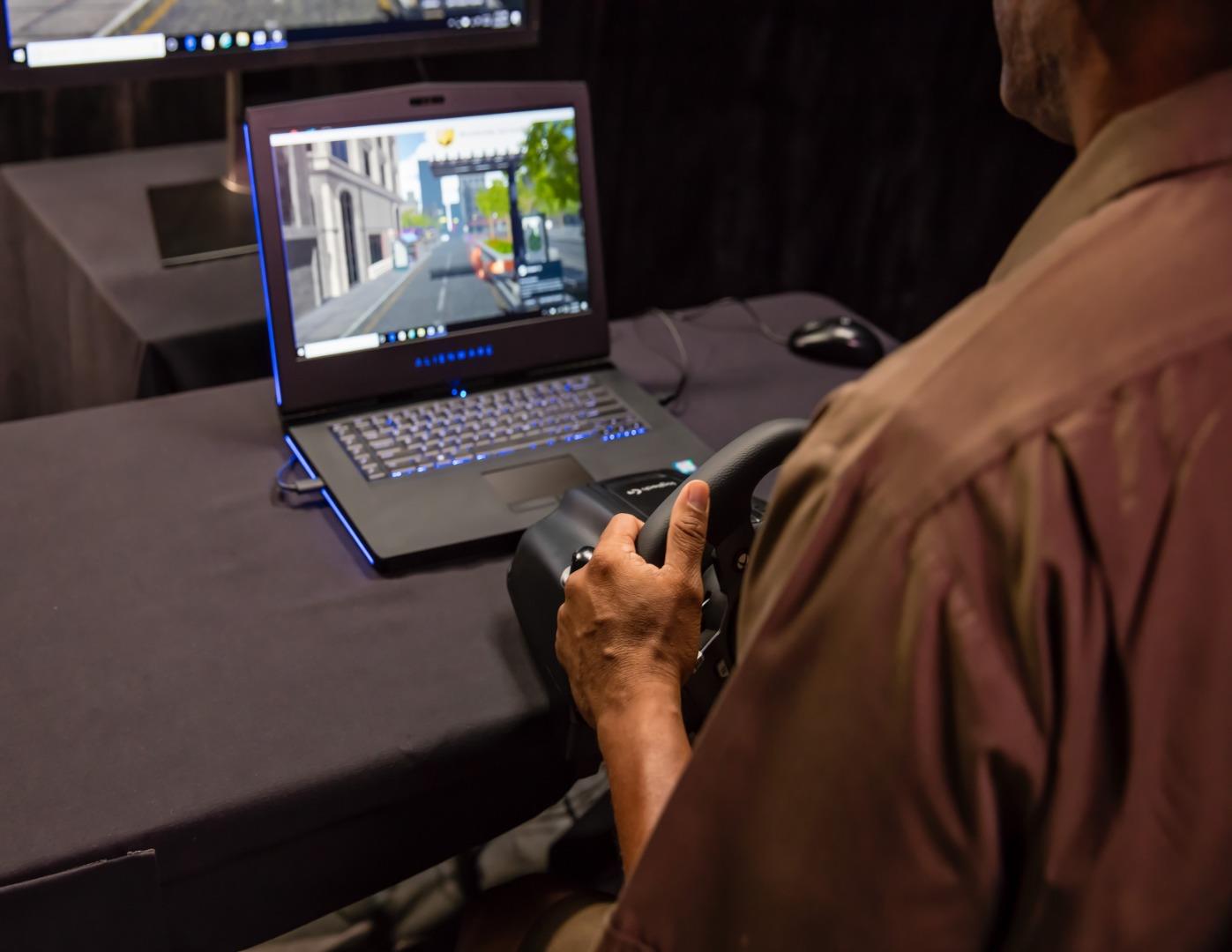
Another company – namely UPS – is also employing VR technology in the UK (and in Germany too). It is using this technology for driver training. So, instead of a driver going out onto a street in the company of a human driver trainer, he pops on a VR headset and heads out into virtual German and UK city streets.
There are safety benefits to the concept too, as Juan Perez, UPS chief information and engineering officer, explains: “VR offers a technological leap in the realm of driver safety training. It creates a realistic streetscape that will impress even the youngest of our drivers, whose previous exposure to the technology may have been through video games.” Human interaction and therefore virus transmission is minimised. Also, UPS isn’t incurring costs related to insurance, fuel, maintenance, or repairs. There are emission benefits too …
VR for test drives
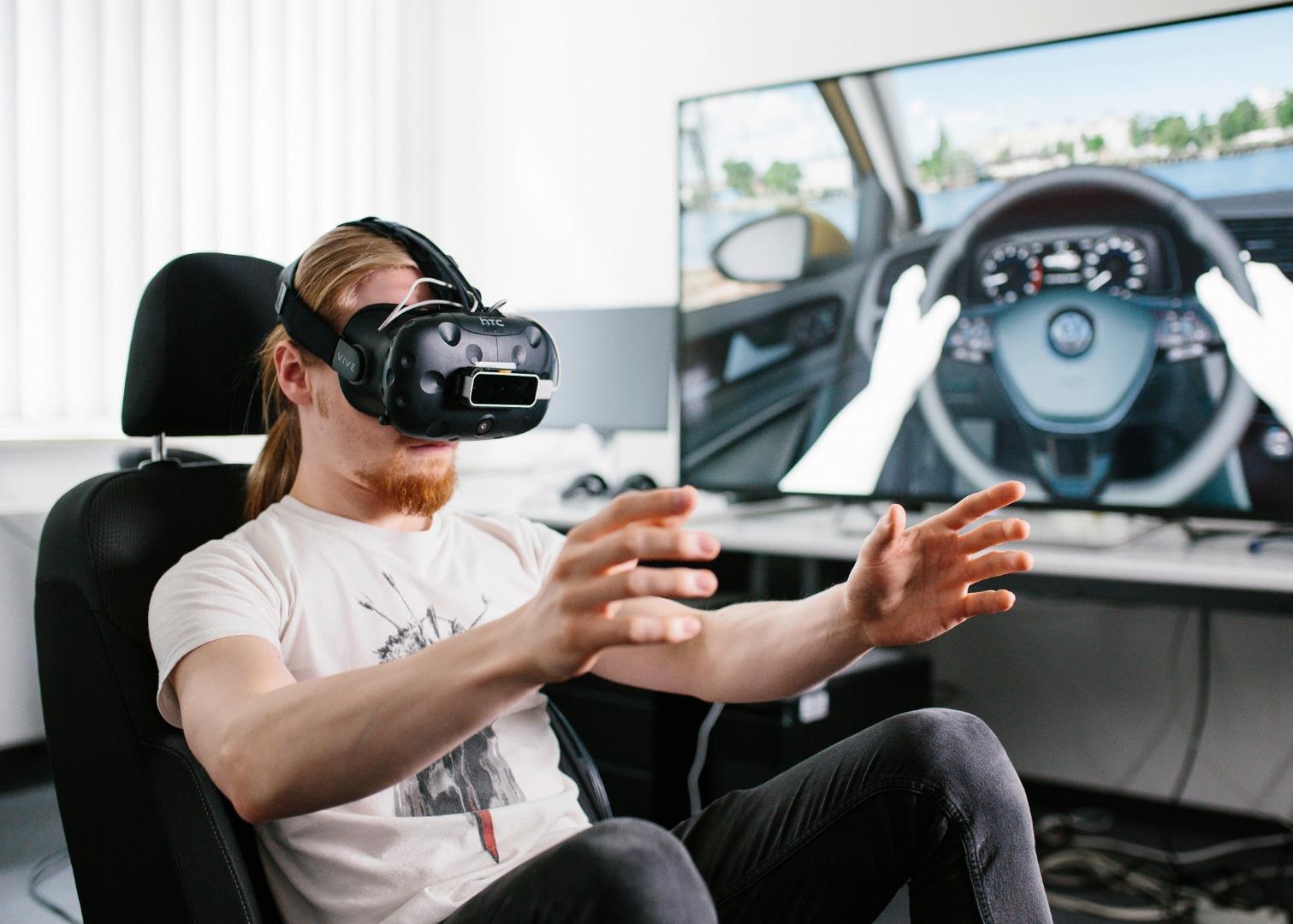
Over in the USA, Mack Trucks has been using VR to demonstrate what it’s like to go for a drive in a Mack truck (the company was the first Class 8 OEM to offer such a VR test drive of a commercial vehicle to a wide audience). A test drive would normally involve a customer and a staff member from the company – who would accompany the customer on the drive. Not with VR. “Through VR, customers and the general public now have the opportunity to truly understand what it’s like to be in the cab of a Mack truck as it gets the job done,” says John Walsh, Mack vice president of global brand and marketing. Like UPS, Mack is reducing human interaction as well as cutting costs related to insurance, fuel, maintenance, or repairs – and saving emissions too.
Looking ahead
Going forward, we will see two things happen in the world of VR: it will grow in use and it will also become more affordable. Right now, it offers a real solution to the widespread travel bans imposed in all countries, for instance. Going forward, it could replace those expensive travels – as people working for trucking companies (and other firms too) hold virtual meetings with their colleagues. We’re betting on the fact that more and more applications for VR will be found too.
And, as it becomes more popular and more and more suppliers enter the fray, the glasses will also become more affordable. According to CNBC, Microsoft, Amazon, Google, Snap, Facebook, Apple and Magic Leap and others are all working on some form of smart glasses or headset that will change how we view the world around us. Will we still see our colleagues, suppliers, truck drivers, technicians or whoever? Undoubtedly. But they won’t necessarily be in the same room as us – which can only be good news in the war against COVID-19.