
Local is lekker: Federal-Mogul expands their manufacturing capacity
Local is lekker: Federal-Mogul expands their manufacturing capacity




By Colin Windell
Vehicle downtime and replacement part- and maintenance costs are the bane of any fleet manager’s life – but both need to handled with the minimum of fuss and maximized cost- and operational efficiency.
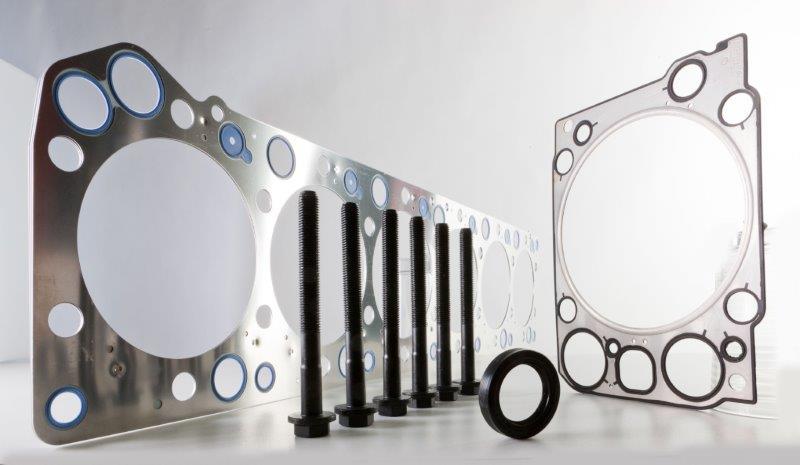
For example, when users fit gaskets onto their vehicles’ engines, they do not expect them to fail prematurely. This means that each gasket must be of superior quality, as these are not service-type components expected to be replaced regularly. Buying low-priced (which often also means low-quality) parts for such applications will result in a short-term saving, but with long-term cost implications for the customer.
Antony Funston, plant manager at Federal-Mogul’s Port Elizabeth gasket facility, says: “While aftermarket growth is through new product introductions, and being first-to-market with Federal-Mogul Motorparts’ high quality Payen brand, this can never be to the detriment of quality. Our original equipment (OE) business growth on our thermal shielding products is focused on ensuring that our customers receive quality products at a target price. Diversification in this area is important, so our customers receive a full range of products to meet their needs. Understanding our unique competitive space has yielded significant business wins, and continues to drive our strategic growth.”
Established in 1954, the Port Elizabeth gasket plant has 247 employees, working two- or three shifts for five days per week. The plant is supplemented by bearing and valve production in Federal-Mogul’s Pinetown plant, and friction products at their plant in Prospecton.
“By producing a more complete range of products out of South Africa for South African customers, and also exporting to global markets, we maintain our offering of a range of excellent high-quality brands for our customers,” Funston says.
The Port Elizabeth gasket facility has seen significant expansion over the years, not only in its infrastructure and equipment, but also to the entire product range. This has evolved from its early days as a cork gasket manufacturing company to its current broad range of modern gasket technology and heat shielding products.
A variety of both mechanical and hydraulic presses are used in the manufacturing process. Robotics are utilised where possible to improve productivity, and ensure continued competitiveness. Other key equipment includes sonic knife cutters, auto kitting lines, and a two-axis laser cutter.
The facility complies with AITF16949 quality standards, which involved transitioning from the previous TS16949 standards.
“This ensures we implement the most recent quality standards demanded by our OE customers. We apply the same standards to the aftermarket products we manufacture, as all our products are made in the same facility to the same quality standards and principles,” Funston states. “Our customer base is diverse, with customers based globally, including African markets for our aftermarket business. These are all supplied through our distribution centre (DC) in Johannesburg.”
For the aftermarket, the facility produces Payen gaskets and seals, while for OE and Tier 1 customers it produces heatshields, brackets, catalytic cones, exhaust flanges, muffler blanks, and gaskets.
Commenting on the importance of localised manufacture and sourcing of raw materials, Funston explains that South Africa is a key entry point into the African market. “Our local manufacturing supports our DC in supplying product to the aftermarket. In terms of our OE business, our South African footprint allows us to supply the local market competitively from within South Africa. This entails significant benefits for our customers regarding the Automotive Production and Development Programme (APDP) benefits offered by the government. South Africa is still a competitive manufacturing country if you know where your capabilities lie, and what your competitive advantage is,” he asserts.
In terms of the latest developments at the Port Elizabeth gasket facility, Funston highlights any expansion of existing manufacturing capability depends on product-range growth. “Understanding our unique competitive space, and capitalising on this, remains our strategic objective, and we have seen great benefits in this process. The expansion of our heat-shielding capabilities into different products has been very successful, and we are experiencing significant growth in this area,” he says.