

Isuzu/UD bombshell!
The trucking world has been rocked by the news that Isuzu has acquired UD. Is this a case of a trucking company acquiring a competitor in order to shut it down?

Introducing Isuzu
Let’s kick off the debate by introducing Isuzu. One of the oldest companies in the Japanese automotive industry, the roots of Isuzu can be traced back to 1916 – when Tokyo Ishikawajima Shipbuilding and Engineering Co and Tokyo Gas and Electric Industrial Co got together and decided that they would build automobiles. Fast forward to 1934, and the company made its first vehicle called an Isuzu (it was named after the Isuzu River). After being known by various names, the company was finally named Isuzu Motors Limited in 1949. In 1971, General Motors (GM) bought 34% of Isuzu, increasing its stake in the company to 49% by 1998. By 2006, GM had sold all its Isuzu shares. Toyota also had a small (5.89%) stake in Isuzu, which it sold two years ago.
In the fiscal year 2019, Isuzu sold 647 716 vehicles and it produced 846 829 engines worldwide – meaning it’s no small fry. Despite this, some naysayers have questioned its ability to survive while flying solo in what’s essentially a highly competitive market fraught with change.

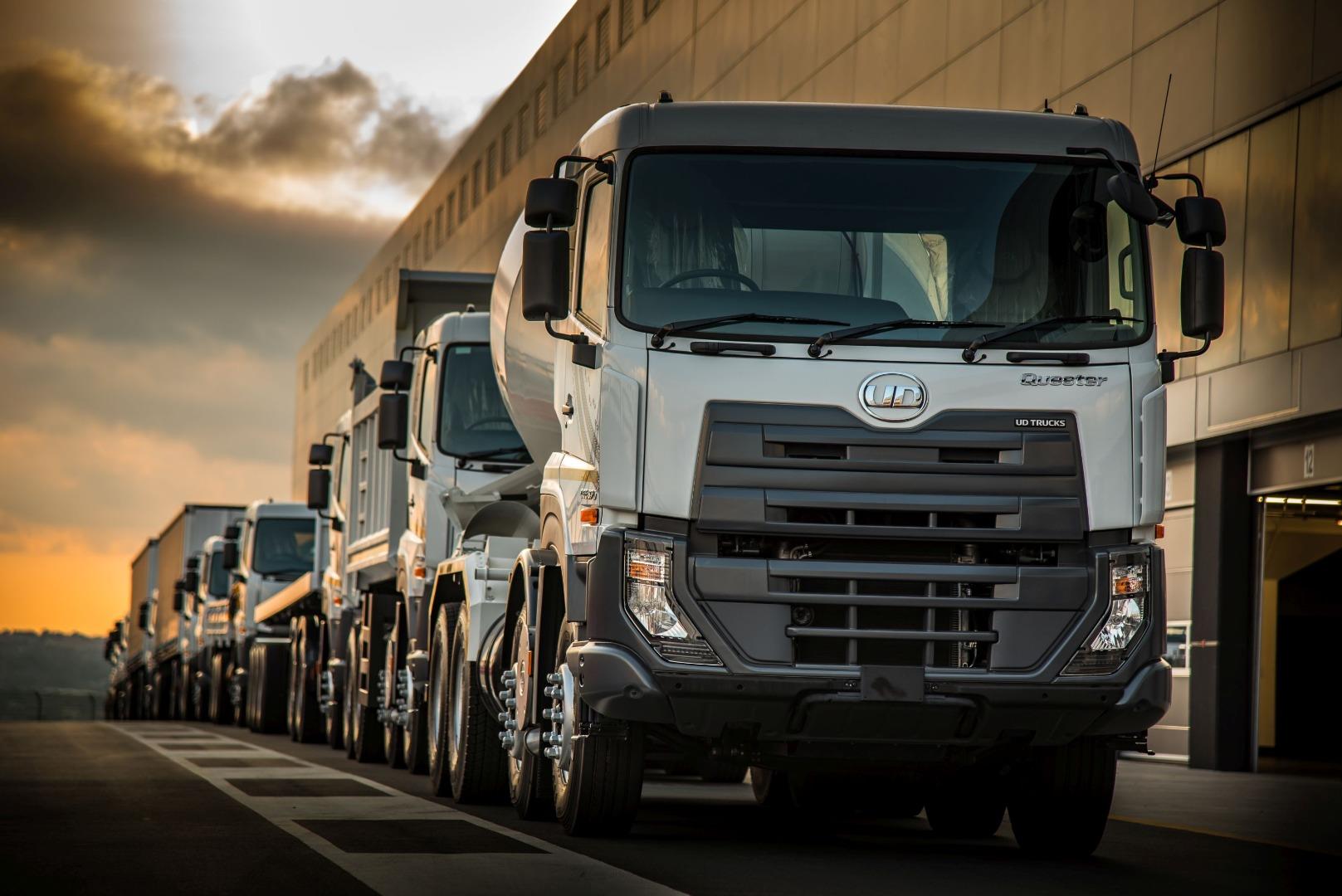
Introducing UD
Nihon Diesel Industries, which became Nissan Diesel and then UD Trucks, was established back in 1935 (it was the brainchild of a chap called Kenzo Adachi, who had seen diesel engines in use in Europe). Incidentally “UD” stands for Ultimate Dependability today (in times gone by, it was a reference to the company’s uniflow diesel engine). And “Ultimate Dependability” is what Adachi wanted to prove of his first diesel truck – the LD1 – which was built in 1939. So, he took it on a 3 000 km journey, which spanned 13 days. The LD1 passed this test with flying colours (absolutely nothing broke).
Fast forward to 2007, and the company was purchased by the Volvo Group. UD sells about 20 000 to 21 000 trucks a year, meaning it probably cannot survive as a standalone brand. It’s been described as Volvo’s “long-time problem child” – because it hasn’t been as profitable as the Swedes had hoped. Martin Lundstedt, president and CEO of the Volvo Group, has been at pains to dispel these rumours. “Our UD Trucks colleagues have done a great job to improve performance in recent years,” he stressed last month. There have been no such allegations levelled at UD Trucks Southern Africa, which has met with more than just a modicum of success.
Exactly what’s happened thus far
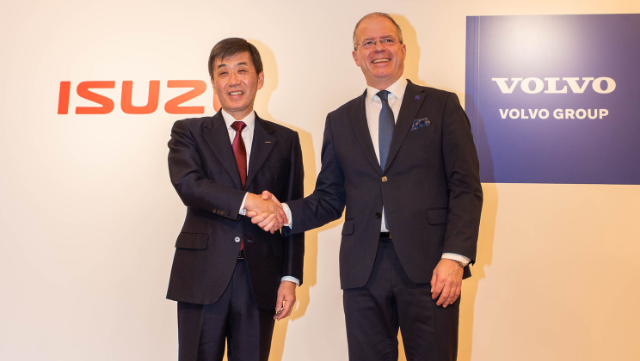
Last month, the Volvo Group and Isuzu Motors signed a non-binding Memorandum of Understanding with the intent to form a strategic alliance within commercial vehicles “in order to capture the opportunities in the ongoing transformation of the industry”.
Isuzu will buy UD Trucks for JPY 250 billion (about R32.89 billion). Some say this price is quite high. “The offer of 250 billion yen sounds very big,” Tatsuo Yoshida, a Tokyo-based automotive analyst at Bloomberg Intelligence, was quoted as saying. “No businessman is a fool, and Isuzu found them valuable. I’m wondering how Isuzu sees potential in the business.”
Investors appeared to share these sentiments: after the announcement, Isuzu shares fell 5.1% while Volvo shares gained 3.6%.
Future implications
There are two separate processes at play here, with separate (albeit linked) implications. Let’s first tackle the strategic alliance. Given the pace of change in the world of trucking, these agreements are becoming more commonplace. It’s costly to go it alone when it comes to the development of electric and autonomous trucks, for instance. Isuzu, an acknowledged expert in diesel engines, can benefit from access to Volvo’s electric truck technology (Volvo has already travelled a long way down the electric road; it announced the start of sales of its Volvo FL and Volvo FE electric trucks in selected markets within Europe in November last year). The company has also done an impressive job when it comes to autonomous driving – with its spectacular Vera leading the way.

Now onto the second issue at play: Isuzu’s acquisition of UD. Because it’s early days, no one knows exactly what will happen. Maybe Isuzu will focus more on light to medium-duty trucks – because that’s where its expertise lies – while UD focuses more on medium to heavy-duty (because that’s where it’s stronger). A certain amount of product rationalisation would certainly make sense; it would seem silly for Isuzu and UD to produce vehicles that are direct competitors.
What about South Africa?
This is, of course, pure conjecture – because no one really knows exactly what will transpire (except, maybe, the powers that be at Isuzu). For now, nothing will really change, as Claes Eliasson, senior vice president of media relations, group communication at AB Volvo, explains: “The parties (Volvo and Isuzu) aim to sign a binding agreement during 2020 and close the transaction by the end of 2020. Until then it is business as usual in all parts of the organisation. After a changed ownership it is ultimately up to Isuzu to decide how the operation will proceed.”
Denise van Huyssteen, corporate affairs, business strategy and legal executive at Isuzu Motors South Africa, has declined to give further input. “It would be premature at this stage to speculate on the impact of this development on our South African operations,” she points out.
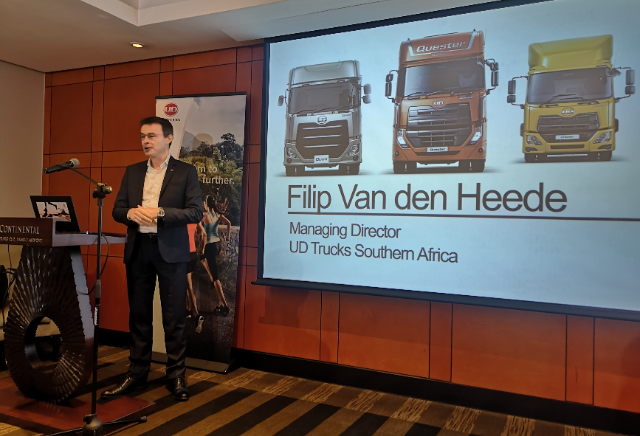
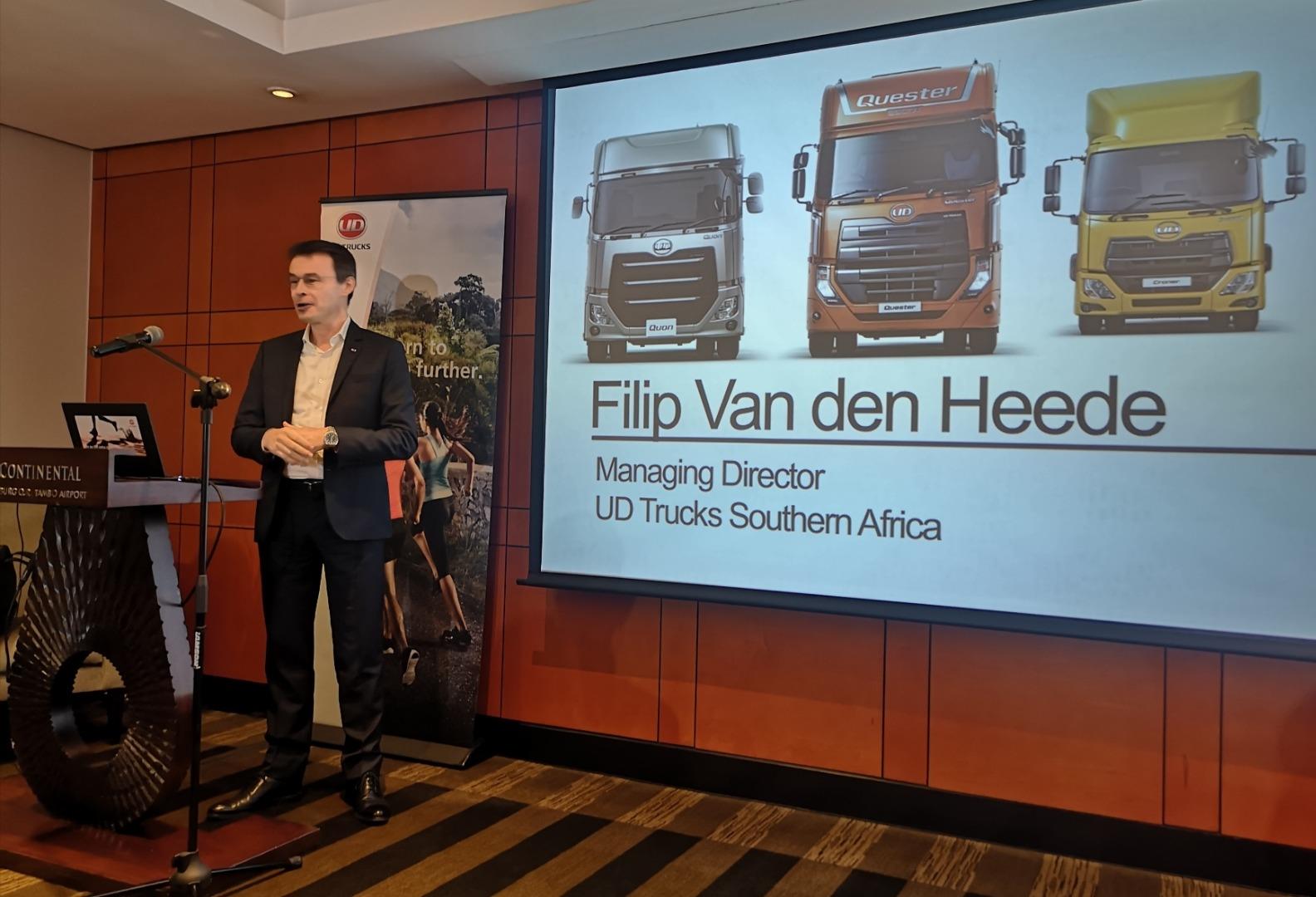
But the newly appointed managing director of UD Trucks Southern Africa, Filip Van den Heede (he joined the company on 1 January 2020), believes that the acquisition of UD by Isuzu will result in a win-win scenario. “Yes, we’re in a year of transition but we are assured that the two brands will continue to exist and that they will continue to operate as separate entities. All our plans that we have – be they for South Africa or globally – will continue to go ahead. We are not in a wait and see mode. For us it’s a case of business as usual. Waiting is not an option; we won’t waste this year,” he stresses.
Van den Heede won’t comment on product rationalization. “It is too early to say,” he explains. But he will comment on the impact on customers. “There is no risk for the customer. Remember, when you buy a business, you want to have the best outcome,” he pointed out.
Hopefully, in this case, that means the best outcome for Isuzu, UD, its dealers and its customers alike.