Opportunities in South Africa
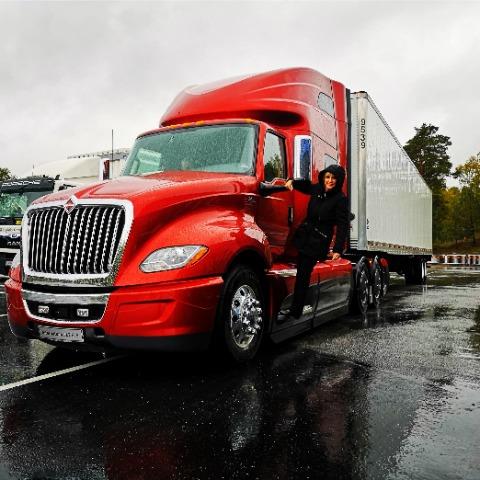
There is no precise timeline for their launch in South Africa, but Craig Knight, CEO of Hyzon Motors (pictured below), says the company is actively looking at all opportunities to bring its technology into new markets worldwide.
“South Africa’s vast trucking and transport networks present many opportunities for Hyzon to implement its zero-carbon hydrogen fuel cell technology and we’d like to explore these pathways further as part of our global growth strategy. We’ve had conversations with some fleet operators of both trucks and buses and South Africa, and we look forward to continuing to pursue these opportunities,” he reveals.

Unpacking Hyzon
The Hyzon name isn’t particularly well known in South Africa – but it’s part of a substantial global company. Hyzon is owned by Horizon Fuel Cell, which set up shop in Singapore in 2003. Horizon Fuel Cell was founded by George Gu and Taras Wankewycz – and their mission was to build the world's first profitable fuel cell company. They’ve done a pretty good job; the company claims that it is now the world's largest volume producer of fuel cells regardless of size or power level, serving customers in over 65 countries with the widest selection of commercial products in the fuel cell industry.

Along the way, Horizon Fuel Cell has started a number of application focused companies, including Horizon Educational (the world's leading clean energy and hydrogen science education company), HES Energy Systems (a global leader in hydrogen-electric aerial mobility solutions) and, more recently (in 2020, to be precise), Hyzon Motors. Hyzon’s global headquarters and engineering centre is located at the former General Motors fuel cell facility in Rochester, New York. The company reports that this facility is destined to become the benchmark in high power fuel cell production in the USA. Last year, the company also opened Hyzon Motors Europe, its European headquarters and manufacturing centre, in Groningen, the Netherlands.
Vehicle range

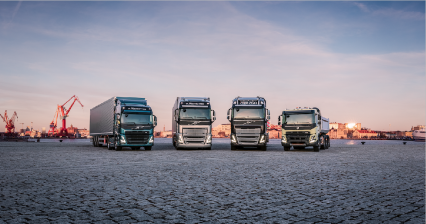
Hyzon manufactures medium and heavy-duty trucks, as well as city buses and coaches. It also supplies more tailored vehicles such as refuse and concrete trucks. All its vehicles are powered by hydrogen fuel cells.
Its 12 to 24t medium-duty trucks – ideal for applications such as general logistic operations, lighter-load refuse truck applications, refrigerated box-truck food logistics and flat-bed trucking – have a driving range of 400 to 600km per fill.
The company’s heavy-duty trucks – rated up to 55t combined vehicle mass (CVM) – also have a range of 400 to 600km. Maximum power delivered via the electric motors is up to 500kW. Hyzon plans to launch road-trains for specialised markets, with up to 140t CVM.
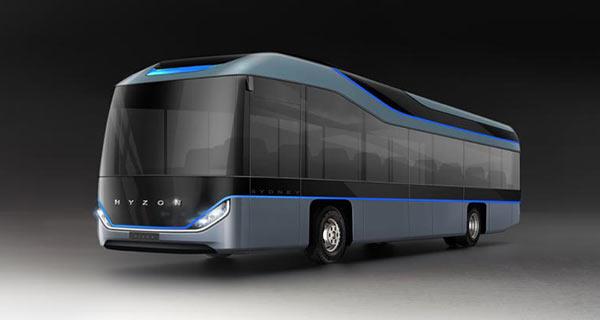
Hyzon’s 12m and 18m low-floor city buses and regional coaches have a capacity of up to 80 people and a range of up to 500km.
Deliveries this year
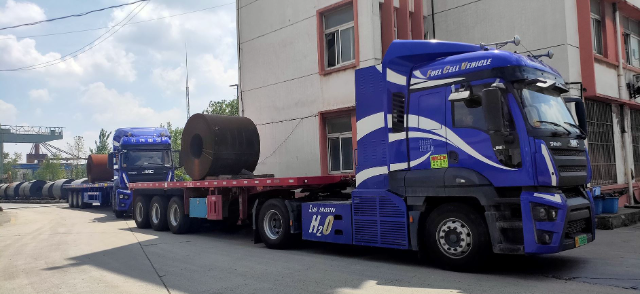
Hyzon assembles fuel cell trucks in both the USA and the Netherlands, serving global markets, and Knight says the company is ahead of the game when it comes to hydrogen propulsion. “Deliveries of Hyzon fuel cell-powered heavy trucks to customers in Europe and North America will occur this year, well ahead of our competitors, and our committed sales pipeline is proof that the world is truly recognizing the need to develop innovative solutions to mitigate climate change and accelerate efforts to move the world economy down the path to net-zero emissions,” he notes.
While its trucks will be new to most operators, its technology isn’t. According to Bloomberg, Hyzon’s technology is in more than 400 commercial vehicles on the road, and it projects that it will deliver about 5 000 fuel cell trucks and buses by 2023.
Trucks being snapped up

While the Hyzon name is still relatively new to truckers, its products are being snapped up. Over in New Zealand, for instance, Hiringa Energy announced that it would acquire 1 500 hydrogen fuel-cell powered, zero-emission heavy trucks from Hyzon by 2026.
The vehicle supply agreement sets Hyzon and Hiringa on an ambitious path towards decarbonizing the New Zealand heavy transport sector through cooperation on hydrogen infrastructure and heavy-duty fuel cell electric vehicle (FCEV) deployment.
Hyzon’s FCEVs will be powered by green hydrogen supplied through Hiringa’s nationwide refuelling infrastructure. The trucks will be built in a 6x4 configuration, will include a sleeper cab option, they will have a GCM of 58 metric tonnes and a range of 680km. In addition to the enormous clean energy output benefits, one of the key highlights of Hyzon’s hydrogen fuel cell-powered trucks are their comparable-to-diesel refuelling times, providing a “drop-in” solution for freight operators to replace their diesel fleets.
Hyzon reckons that – with cost-effective hydrogen – cost parity with a diesel-powered truck can be achieved. So, we have right-hand drive trucks that are 6x4s… and they’re “green” and cost-effective too. This combination should hold considerable appeal to South African transport operators.