Hyperloop: taking trucks off our highways?
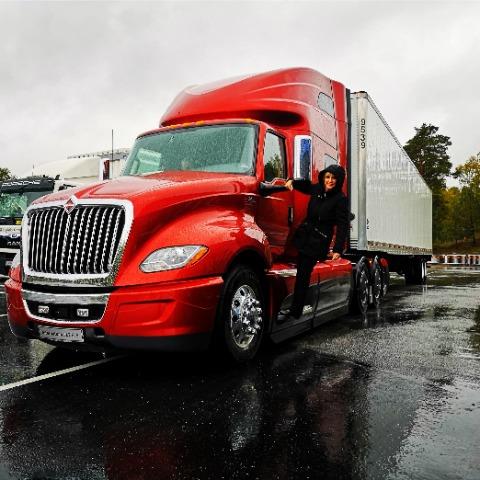
We’ve all seen them: the endless procession of trucks on the N3 highway between Johannesburg and Durban and also on the N1 between Cape Town and Johannesburg. Some road users even curse those trucking cavalcades, little realising that – sans trucks – they would not be able to buy bread (or much else for that matter). But could you imagine a highway that’s virtually free of trucks? Thanks to the Hyperloop, this is not a pipe (no pun intended) dream!


All thanks to Elon Musk
It’s hard not to wax lyrical about the Hyperloop. Because, after all, it’s a Seriously Big Thing! The first new mode of mass transportation in over 100 years, it’s a bit like a scene from Blade Runner 2049 … because it really does seem years ahead of its time. Just picture this: passengers or cargo are loaded into the Hyperloop vehicle and accelerate gradually via electric propulsion through a low-pressure tube. According to Virgin Hyperloop One, the vehicle floats above the track using magnetic levitation and glides at airline speeds for long distances due to ultra-low aerodynamic drag. Sounds pretty innovative huh?
But actually, the concept isn’t really that new. Back in 1909, Robert Goddard – an American engineer credited with creating and building the world's first liquid-fuelled rocket – came up with a vacuum train not entirely dissimilar to the Hyperloop. Fast forward to August 2013 and Elon Musk proposed the modern-day Hyperloop in a 58-page white paper. He called it the fifth mode of transport (after planes, trains, cars and boats) and said it could travel at 760 miles an hour (1223 km/h).
Some people laughed. Some people called him nuts. Now that the Hyperloop is becoming a reality, those sceptics are looking somewhat silly.
Numerous players
Today, there are numerous companies working within the Hyperloop arena. One of the most interesting is the aforementioned Virgin Hyperloop One, which was founded in June 2014. Elon Musk is neither an investor nor associated with the company, but he had a massive influence on its journey. “We started with his basic designs and, after considering how we could provide value to the world as a whole, added a focus on moving freight in addition to passengers,” the company’s website explains.
Virgin Hyperloop One has joined forces with DP World to create DP World Cargospeed, which will focus on transporting freight via the Hyperloop “at the speed of flight and closer to the cost of trucking”.
Massive benefits
Speed is only one of the benefits of the Hyperloop – although it’s a big one. As a society, we want everything right now. That includes freight. But trucks aren’t exactly speed freaks, right? The Hyperloop is – it can transport goods (and people for that matter) at speeds of 1000 km plus.
Another advantage relates to the environment. Love them or hate them, the trucks on our roads (virtually all with internal combustion engines) do still spew out emissions – albeit much less than in years gone by. In contrast, Virgin Hyperloop One describes its Hyperloop as “energy-agnostic”. Its system can draw power from whichever energy sources are available along the route. If that means solar and wind, then the entire system is 100% carbon-free.
Safety is yet another major benefit. Road accidents are a major cause of deaths all over the world and, here in South Africa, we lead the pack. South Africa has one of the most appalling road safety records in the world. Road accidents are said to cost the economy R164-billion a year and our December death toll exceeds that of the annual death toll of many countries. The Hyperloop, on the other hand, promises to offer extremely safe, accident-free transportation. It’s fully autonomous and enclosed, eliminating driver error and problems associated with weather hazards.
Some disadvantages too
Of course, there are pros and cons to many things – and the same applies to the Hyperloop. So, what are its disadvantages?
One would need to be employment – or rather, a lack thereof for truck drivers specifically. There are already thousands of unemployed truck drivers in this country. This lit the xenophobic flame recently; local drivers (already battling to find work) aren’t too chuffed about foreign drivers working within South Africa.
Another would be a reduced demand for trucks. Of course, the Hyperloop would operate on a hub-to-hub basis. Trucks would still be required at the start and end of the freight’s journey. But we’re not talking 6x4 truck tractors. Medium and heavy commercial vehicles could do the job just fine. This would pain the majority of truck manufacturers; long-haul trucks are their bread and butter.
When will we get it?
Right now, there are no concrete plans to launch the Hyperloop in South Africa in the immediate future. Instead, Virgin Hyperloop One – which aims to be operational by the mid 2020s – is focusing on the Middle East and the United States. Recently, it signed an agreement with the Ministry of Transport in the Kingdom of Saudi Arabia to conduct a pre-feasibility study on the use of Hyperloop technology for the transport of passengers and cargo. The study – the first at a national level to be carried out anywhere in the world – will examine viable routes, expected demand, anticipated costs and explore the socio-economic benefits of creating jobs and develop high-tech skills.
But it seems perfectly reasonable to assume that the Hyperloop will arrive in sunny South Africa one day. When that happens … rather magically … lots of trucks could vanish from our highways in a puff of smoke.