



Both have merit
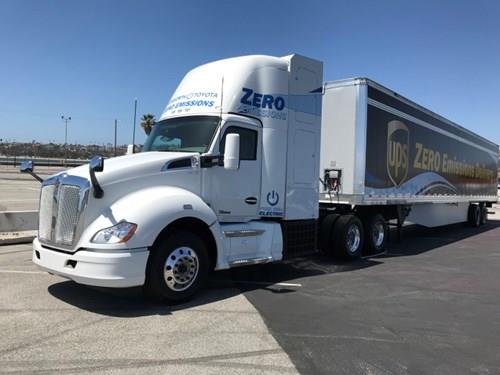
Whenever we go to a commercial vehicle show, electricity and hydrogen propulsion have been the talk of the town. It’s impossible to find a show that doesn’t feature one or both technologies. The recent North American Commercial Vehicle Show was a case in point. Some people – Tesla’s Elon Musk, for instance – are ardent fans of electric propulsion. Others – Nikola’s Trevor Milton and the powers that be at Hyundai, for instance – reckon that hydrogen is the way to go.

Both technologies have their advantages and disadvantages. Which one is better? That was the question that we put to David Cebon, Professor of Mechanical Engineering in the Cambridge University Engineering Department and one of the world’s leading experts when it comes to sustainable road freight. The answer, he says, isn’t quite as simple as you may think …
Introducing the main players
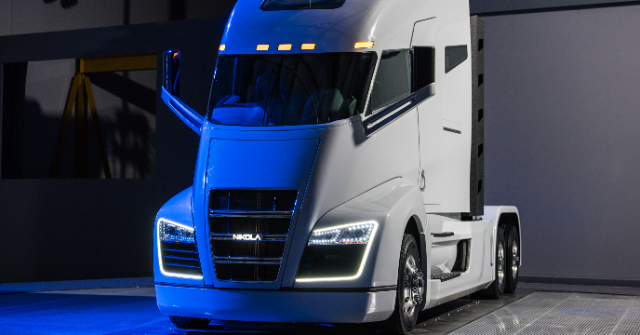
According to Cebon, most hydrogen-powered vehicles use fuel cells to convert hydrogen and oxygen into electricity and water. “The electricity drives electric motors, which propel the vehicle. This is the case with the Nikola fuel cell truck,” he explains.
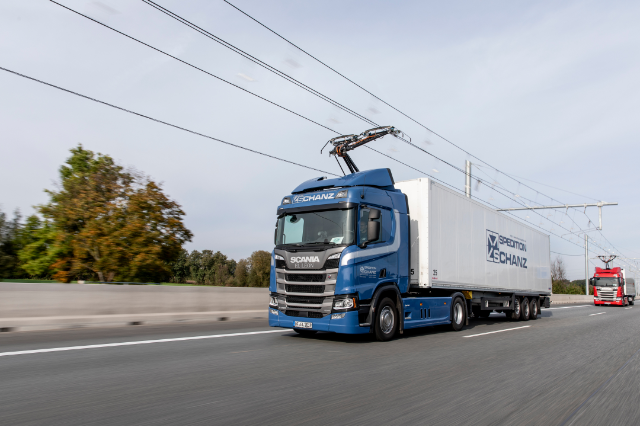
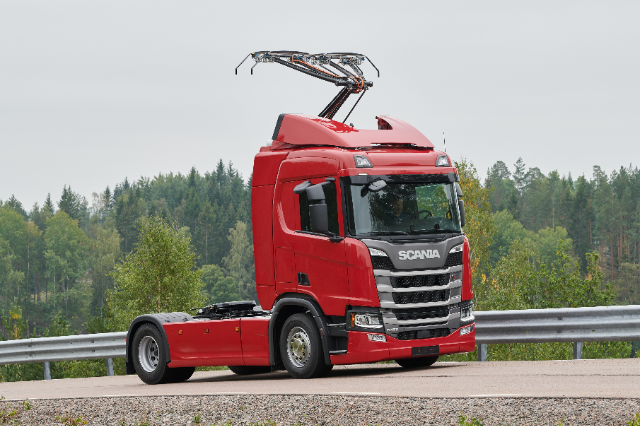
There are two different options when it comes to electric propulsion. “Direct electrification involves either carrying the electricity in large batteries (this is the solution proposed by Tesla) or an ‘Electric Road System’ (ERS), which transmits electricity to the vehicle while it is in motion (an example is the eHighway by Siemens),” says Cebon. An ERS is a road containing an infrastructure that supplies electricity to the vehicles travelling on it. You have power lines above the road, for instance. The overhead cables are contacted by pantographs carried on the vehicles. Very simply, the system looks a bit like the electric trams that you typically see in European cities (but, instead of trams you have trucks) and the trucks are capable of running at highway speeds.
Hydrogen in the spotlight
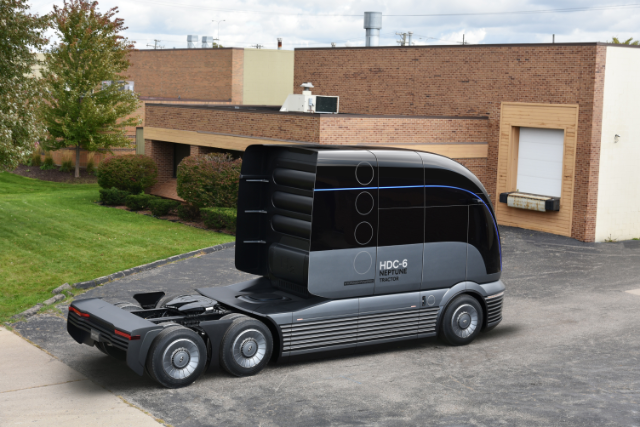
So, let’s consider the first option: fuel cell trucks. According to Cebon, the major benefit of hydrogen over electrification is its flexibility. “A hydrogen truck can be refuelled in approximately the same time as a diesel truck and the operating range and operating patterns are similar. So, hydrogen-powered trucks could fit into the existing logistics system without too much change,” he notes.
But, of course, those trucks need hydrogen to run. Where would it come from? According to Cebon, there are two main ways that hydrogen can be manufactured in order to power long-haul trucks. “There is so-called ‘green hydrogen’, which is manufactured by electrolysis – using electricity to split water into hydrogen and oxygen. Then there is so-called ‘blue hydrogen’, which is manufactured by Steam Methane Reforming (SMR) – using high temperature steam to convert methane into hydrogen and then storing the resulting carbon dioxide in underground reservoirs,” he explains.
The challenge with green hydrogen, according to Cebon, is that each step in the process introduces energy losses and the overall energy performance is the product of the individual efficiencies. “The ‘round-trip’ process of using renewable electricity to make hydrogen by electrolysis, storing and transporting it on a vehicle, then converting it back to electricity in a fuel-cell and powering the electric motors is only about 23% efficient overall. That is, for every 100 kWh of ‘renewable electricity’ purchased from the grid, only 23 kWh will reach the road wheels of the truck,” he explains.
Practically, this means that one hell of a lot of renewable electricity is required to produce green hydrogen. “The green hydrogen route would require approximately 3.3 times more power (from whatever renewable source), 3.3 times more land area for renewable electricity generation and 3.3 times more money to power the same vehicles as an ERS solution,” Cebon reveals.
Blue hydrogen doesn’t exactly offer a tantalising alternative – because you also have energy losses along the way. “Assuming one creates blue hydrogen from 100 kWh of methane by SMR; you compress and transport it in a truck, and convert it to electricity to propel the vehicle. Accounting for all the energy losses in the process chain, 29kWh would be available at the wheels of the vehicle,” he reports. So, marginally more impressive than green hydrogen – but really not that efficient compared to other “green” ways to use methane.
What about electricity?
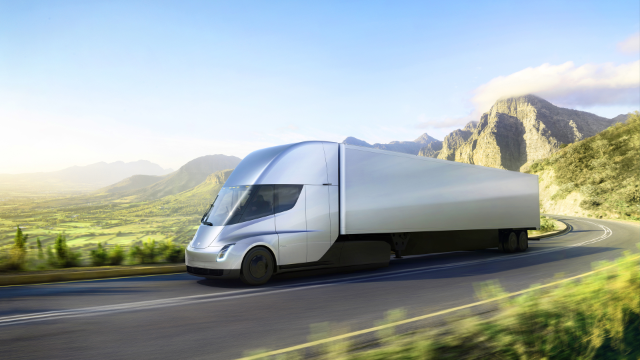
So, how does electric propulsion compare? What are the comparative figures? “Take the same 100 kWh of ‘renewable electricity’, and 69kWh will reach the wheels of a battery electric vehicle while 77 kWh reaches the wheels of a truck travelling on an ERS,” Cebon reveals. He explains that the ERS is the more efficient pathway because the motors are powered directly from the electricity supply (via an inverter), avoiding energy loss through charging and discharging a battery.
He believes that ERS is also a better option for other reasons. “Direct electrification of long-haul trucks using large batteries and fast chargers requires the vehicles to carry batteries with capacities of 300 to 600 kWh (or more). Typical power consumption levels for articulated heavy goods vehicles are 2 to 3 kWh/km, so these battery sizes correspond to ranges of 100 to 300km. Such batteries are expensive, heavy and contain large amounts of scarce cobalt. For example, the stated capabilities of the Tesla Semi would require batteries of mass at least 7 t (with a corresponding reduction in payload) and would cost $100 000 to $200 000 (about R1 799 760 to R3 599 520).
“Charging the batteries quickly would require high local electric power capacity at depots. For example, the Tesla Semi would need a 2 MW charger to meet the stated 30-minute fast charge. This implies very large and expensive substations at depots, distribution centres and motorway services,” he explains.
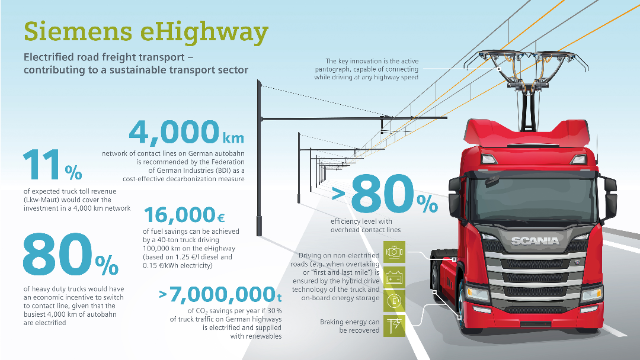
ERS technology, on the other hand, could be deployed quickly and cost-effectively. “ERS technology would provide deep decarbonisation (approximately 90% from 2016 levels by 2040). Also, this system would distribute charging electricity requirements around the country, with consistent power requirements through the day, instead of major electricity hot-spots in depots at night,” he notes. The cost for installing the eHighway infrastructure in the United Kingdom, for instance, would be similar to the government’s planned expenditure on roads for 2020-2025.
The verdict
According to Cebon, ERS wins this shootout. “Hydrogen by electrolysis or by SMR are poor choices to power heavy goods vehicles. A better solution is direct electrification, particularly using an ERS which offers much lower energy and carbon in the shorter term. The jury is out at the moment. But with the climate change imperative becoming much more urgent, I know which one I would choose…”