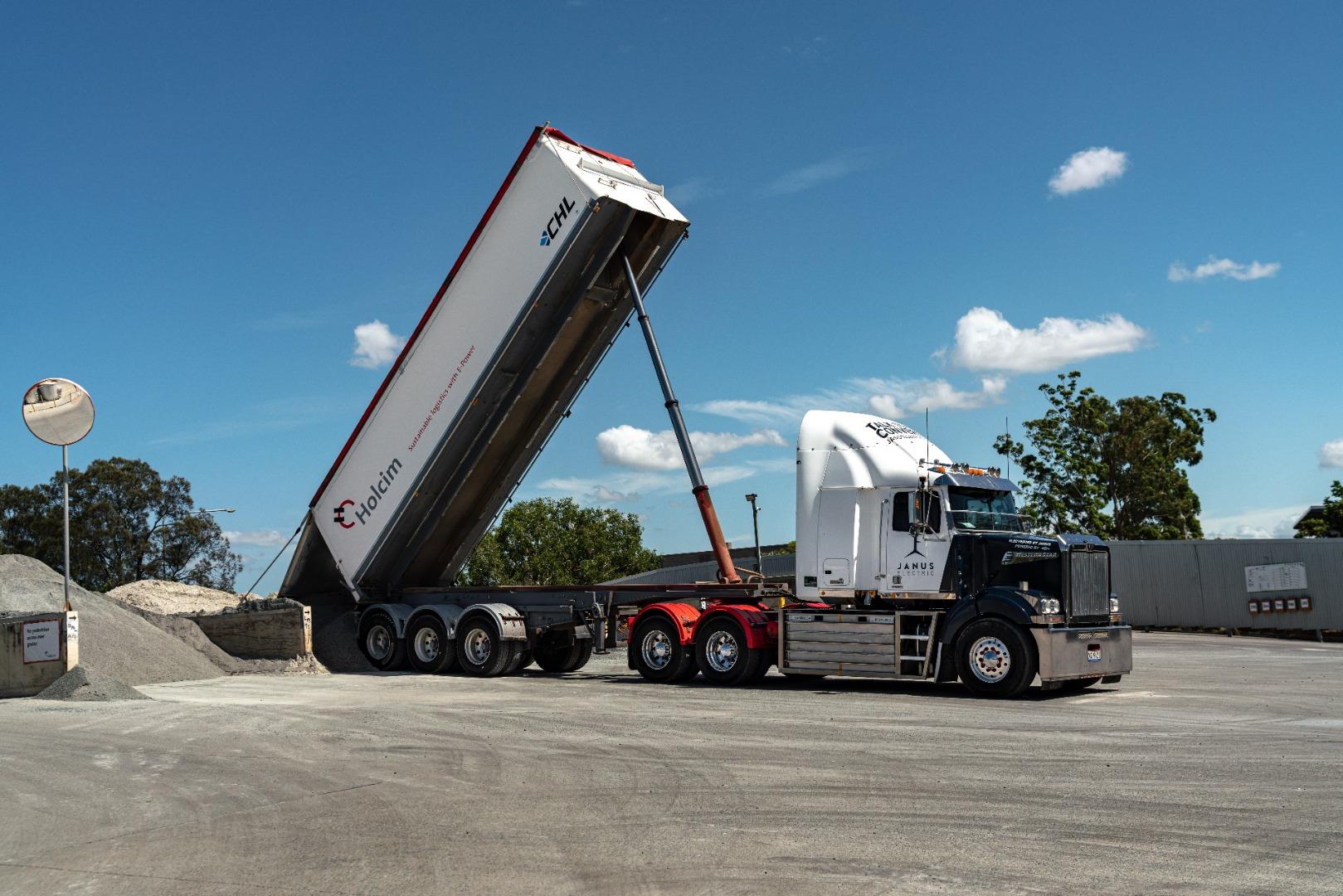

Australian company Janus Electric began operating in 2022, with a vision to offer an innovative zero-emission solution for the road transport industry. By converting diesel engine trucks into electric vehicles that can switch batteries in the blink of an eye, Janus simplifies electric operations and significantly reduces fleet costs.
Stopping environmental damage was key

Janus was formed in 2019 by Bevan Dooley and Lex Forsyth, after Forsyth’s daughter spoke to him about the environmental damage caused by diesel vehicles. It now fits new electric motors to diesel engine trucks requiring a rebuild or replacement.

“All prime movers require a rebuild at approximately one million kilometres,” says Forsyth. “The cost of replacing a diesel engine is $AU70,000 to $AU100,000 (R861,000 to R1.23 million) and overhead costs remain the same. While the cost to convert a diesel vehicle to electric is around $AU175,000 (R2.15 million), the overhead maintenance costs are significantly reduced,” he continues.
Anything under 10 years old works
The company can convert any vehicle make or model under 10 years old. “We have already converted Kenworths, Macks, Volvos, Freightliners, and Western Stars,” notes Forsyth. “The process takes up to eight weeks, depending on the vehicle, including whether it requires repairs or additions. All trucks have different personalities and quirks… we work with these to convert them into vehicles that perform better than diesels.”

Janus estimates that, by converting existing diesel-powered trucks with its technology, fleet operators can reduce capital costs by up to 70%. In a market as cost sensitive as South Africa, local transport operators would welcome such a significant saving.
But how does Janus calculate such a high cost reduction? “By converting, you immediately reduce the maintenance costs of regular services, including oil. Renewable energy costs are also less than when using diesel and AdBlue, while regenerative braking extends the life of tyres and brake pads, reducing the need for replacements. Additionally, we offer a cost per kilometre of AU$0.33 (about R4.00) compared to AU$0.96 (about R11.95) for a diesel” Forsyth explains.
As simple as changing braai bottles
Janus offers a unique solution, with exchangeable batteries that Forsyth compares to swapping the bottle on a gas braai. “The batteries are slowly charged, taking up to four hours for a full charge. When a truck’s battery is low, the driver simply visits a Janus Charge & Change Station (JCCS) and swaps it over. This takes just four minutes using a forklift, and soon we will be implementing a robotic JCCS,” he says. Every JCCS uses a renewable energy grid to provide a balanced three-way charging system – from grid to battery, battery to battery and battery to grid – that minimises surges and outages.

Forsyth says that fixed batteries raise a multitude of issues. “Fleets can’t always meet their duty cycles, because trucks need downtime to charge the battery, which usually takes between one and two hours. If there is an issue with the battery, the whole asset is off the road, whereas with a Janus exchangeable solution, the battery is simply swapped over,” he emphasises. “As battery technology develops, we are also able to offer our clients the latest technology, allowing them to travel further for longer.”
Massive potential for growth
To date, Janus Electric has converted nine trucks, and the company believes there is huge potential for future growth. “At the end of the day, it is up to the fleet owner and their specific duty cycle, but we strongly encourage converting as opposed to purchasing. It means you can reuse your asset – the truck. Not only is this a great cost saving, but it also reduces emissions,” says Forsyth.

If you’re wondering when you’ll get the chance to pursue one of these incredible conversions in South Africa, Forsyth cautions that Janus is initially concentrating on the Australian market, but is quick to elaborate: “We will be looking at expanding within the next 12 to 18 months, while we opened our US office this year and have confirmed orders which will be in the market by the beginning of 2024.”
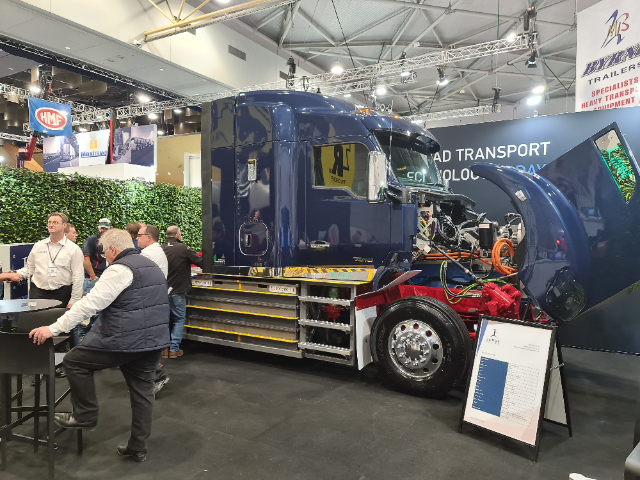
In an increasingly competitive and costly industry, this revolutionary technology could be a game changer for many operators. We hope to see it on our shores sooner rather than later.