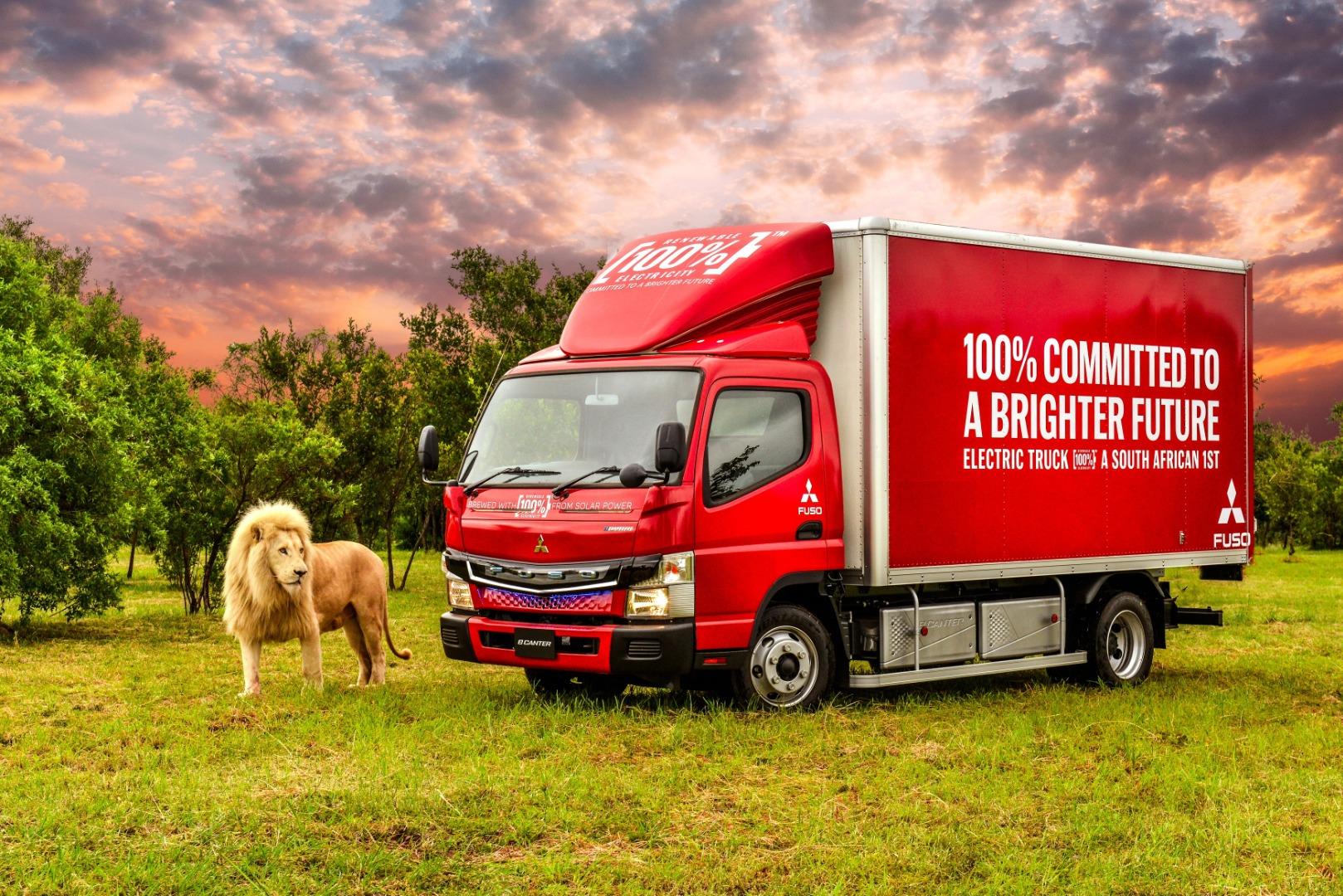


Fuso celebrated the global launch of the Fuso eCanter in September 2017 and has since delivered the vehicle to numerous customers around the globe.
In an exclusive interview, Michael Dietz, CEO of Daimler Trucks and Buses Southern Africa, has revealed that two trucks will be brought into the country. “We want to gain experience together with the customers,” he reveals. “We are bringing in the first two units and we will start testing in the field of distribution.”
Load shedding a problem?
One of the key challenges with e-vehicles is load shedding. Well, that’s what some operators say. Dietz isn’t overly concerned. “Yes, there have been questions asked about load shedding; we don’t think that this will be a problem.”
As is always the case when introducing new technology, there will be some potential worries. “There are some concerns amongst customers when it comes to electromobility, how the batteries work, what the range is, how reliable the truck is. But this is all about getting started and giving the customers their own experiences. Maybe we will find out that there are some hurdles or roadblocks but, if we never get started, we will never find out. And, to be honest, load shedding is not one of the potential hurdles. Two to four hours of load shedding is not a reason to stop e-mobility. We’re also not talking about 100% electric fleets so diesel variants will always be available,” he points out.
Global footprint

This is not the eCanter’s first foray into the South African marketplace. In January this year, AB InBev experienced the truck in this country. This was part of a global “tour” for the e-truck, which also visited Taipei (Taiwan, China), Jakarta (Indonesia) and Chennai (India) on the Asian continent and then Sydney (Australia) and Auckland (New Zealand).
During its world tour, the Fuso eCanter received overwhelmingly positive feedback from local Fuso distributors, customers, media and the public. Drivers particularly appreciated the instantaneous torque and the lack of engine noise, as they experienced less fatigue while operating the truck. Logistics companies recognised the Fuso eCanter for providing a potential answer to their need for sustainable, ecological mobility solutions for their fleets.
Eerie to drive

South African journalist Gavin Myers, who now works as assistant editor of New Zealand Trucking, drove the eCanter during its time in Auckland, and he concurs with the drivers’ opinions. “Sure, it’s a little eerie at first, driving a truck with the only noise being from the wind rushing past the windscreen and the vibration from uneven road surfaces. In fact, wind noise is only noticeable at highway speeds. Driving around town, the eCanter is serene. There’s no doubt spending every day in this cab would be far more relaxing for driver and crew than an equivalent oil-burning unit,” he reports.
Myers found the truck easy to live with in other ways too. “Managing speed, for instance, is easy. Lift off the throttle and the eCanter begins to slow down against its electric motor. If more retardation is needed, flicking the left-hand steering column stalk selects the first and second stage of the regenerative braking. The amount of retardation is more than sufficient for a vehicle in this weight class (7500kg GVM), easily bringing the eCanter to all but a final stop without use of the foundation brakes. All the while, it’s putting a little bit of energy back into the batteries,” he notes.
Not surprisingly, Hartmut Schick, President and CEO Mitsubishi Fuso Truck and Bus Corporation (MFTBC), is also a fan of the electric truck. “The Fuso eCanter is our answer to the public’s need for a zero-emission, very quiet truck for inner-city distribution. It helps to solve the increasing noise and pollution problems in urban environments across the globe. With ample range and payload, it easily meets the inner-city short-range distribution requirements of our customers," he says.
“We have to get started with e-mobility”

Dietz is keen to see how it will fit the bill here in sunny South Africa. “We will put bodies on the trucks, hand them to customers and then share experiences. We have to get started with e-mobility and so we will run these pilot programmes. The infrastructure here is comparable to Europe and America. We do have a hot summer season though and we need to address the issue of driver skills and training. However, I think it is important to give it a try and then, once we have some experience, we can make a final decision. But, right now, it is important to get started. Maybe, when the customers are happy with the eCanter, we can transfer some of the knowledge and enthusiasm into eActros sales,” he enthuses.
First the eCanter and then the eActros. Our roads are set to become super silent!