Exploring the Dakar
But first, let’s shed some light on the Dakar. It was actually conceived back in 1977, when a chap by the name of Thierry Sabine got lost on his motorbike in the Libyan desert while participating in the Abidjan-Nice Rally. He was overwhelmed by the incredibly scenery and he decided to arrange a race that would start in Europe, continuing to Algiers and crossing Agadez before eventually finishing at Dakar. The first-ever Dakar started on 26 December 1978. “It will be a challenge for those who go. A dream for those who stay behind," he famously said. Indeed, it has been; this race has brought even the most tenacious of sportsmen and women to their knees (sadly, some competitors have even lost their lives). In fact, the world-famous rally is so difficult that it is said that “all drivers who complete the race are winners” …
Over the years, the Dakar has taken place in 29 countries and on many continents. This year, for the very first time, it moved to Saudi Arabia. The drivers and crews had to complete a total of 7 500 km, including 5 000 km of special stages (five of them longer than 450 km). Three quarters of the arduous route was over sand.
Trucking at the Dakar
While the cars and bikes tend to hog the limelight, trucks also participate in the Dakar each year. In fact, trucks have their own overall category, along with four other classes – motorcycles, cars, quads and, more recently, the ‘‘Side by Side” (SxS) category. This year, a total of 46 trucks participated in the event, and they’re divided into three classes: T4.1, T4.2 and T4.3.
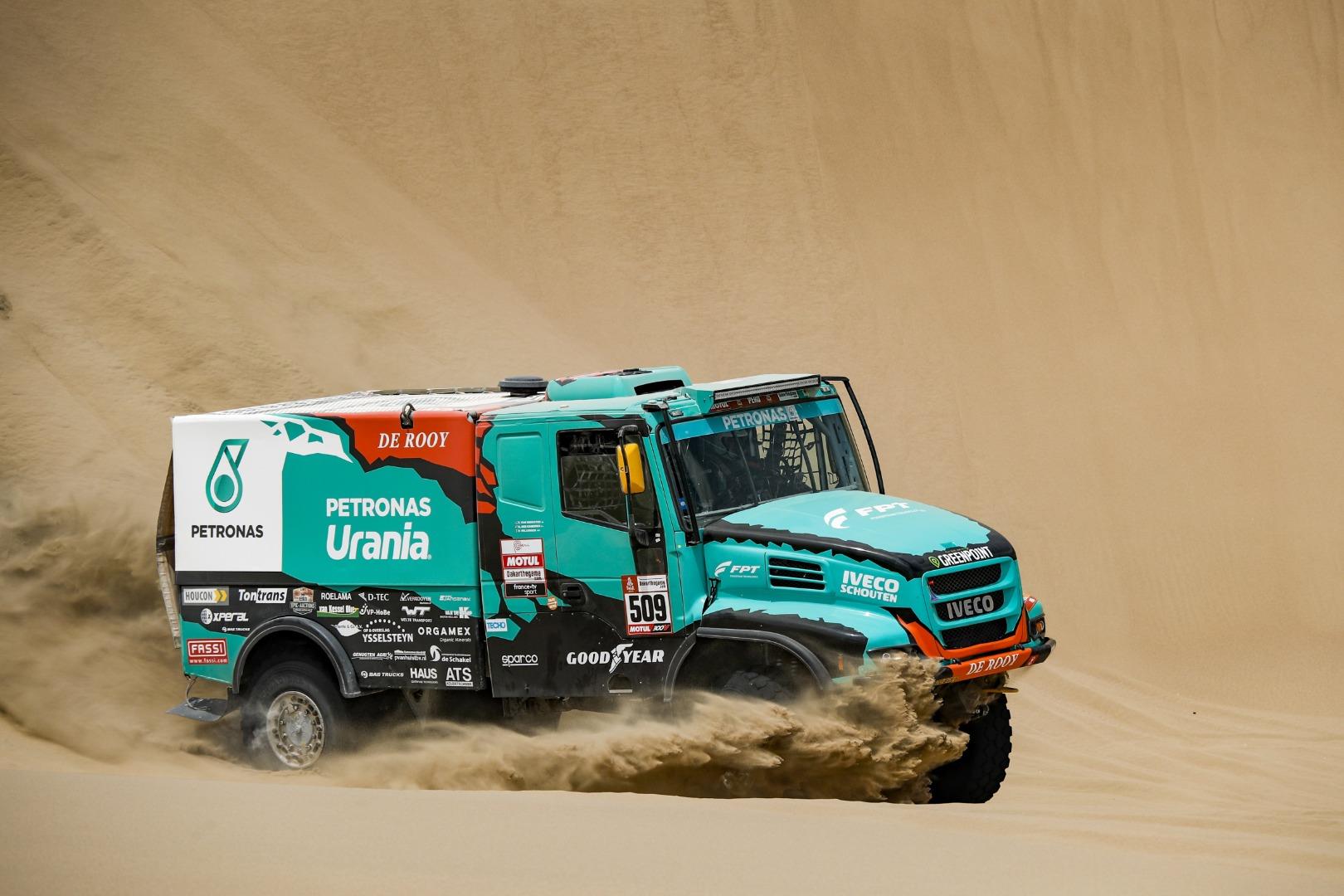
T4.1 vehicles are production-based trucks that meet FIA regulations and they’re as rare as hen’s teeth because they’re not great at tackling dunes (a most helpful attribute if you’re planning to compete in the Dakar). T4.2 trucks are the most common. They’re extremely expensive prototypes (so forget about ordering one) which have to adhere to very strict regulations put in place by the organiser of the Dakar, Amaury Sport Organisation (ASO), which, incidentally, also organises the Tour de France. The cab and certain components of the T4.2 trucks have to be standard (so, unlike many of the cars, it’s easy to identify the brand). They don’t carry any cargo and their top speed is limited to 140 km/h for safety reasons. Finally, there are T4.3 trucks, which have often previously served as T4.1 or T4.2 trucks. These vehicles carry spare parts and serve as rolling workshops.
Just to make things even more complicated, there are various rankings in the race – of which overall is obviously the most significant. This year, there were five additional rankings: T4.2, T4.3, six-wheel drive, less than 10-litre engine size and a newcomer ranking.
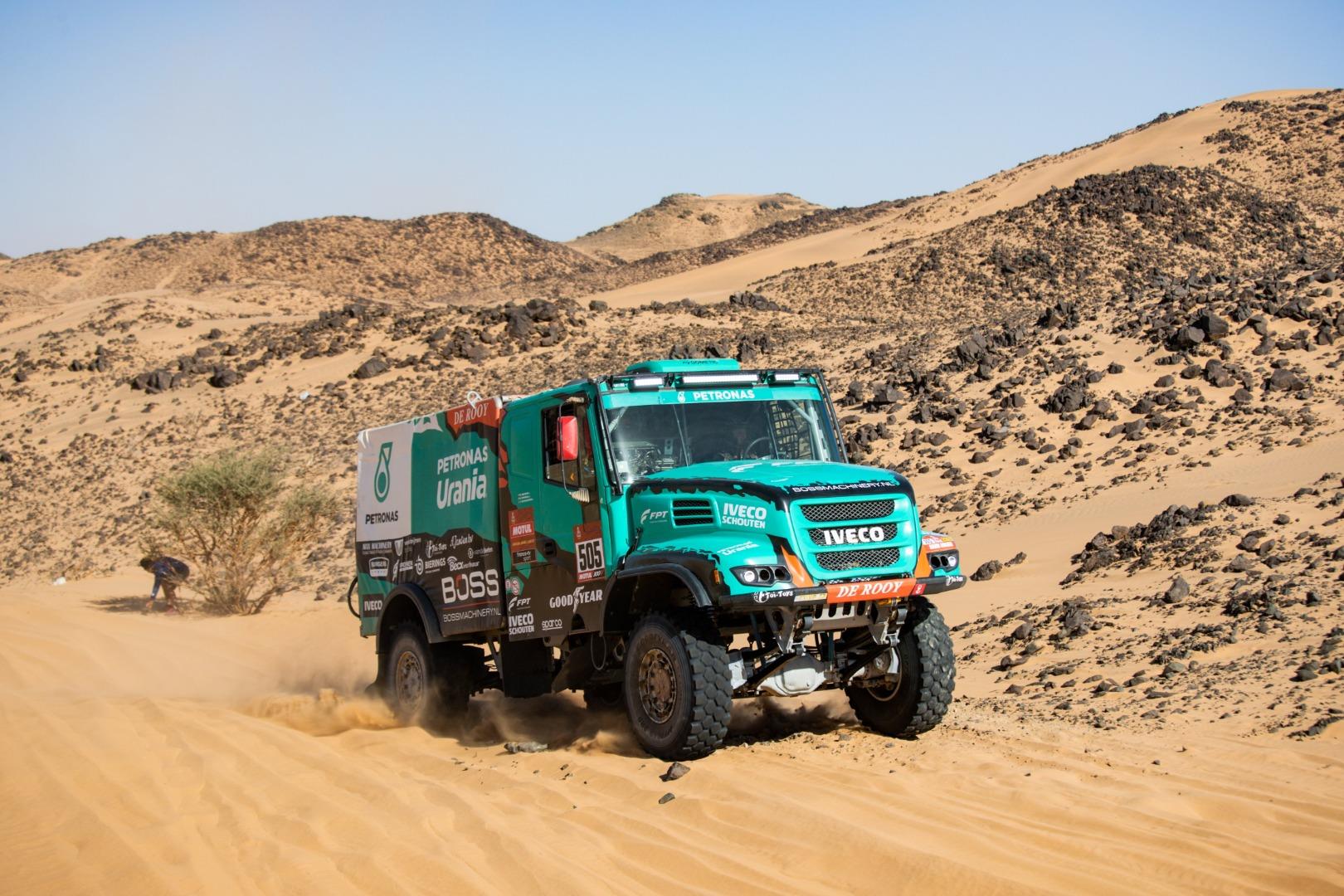
A total of 10 different truck manufacturers were present at the 2020 Dakar. It is important to bear in mind, however, that many of the trucks are not officially endorsed by the truck manufacturers (they have been entered by privateers, who have raised one hell of a lot of money in order to compete). Trucks from eight different countries participated in this year’s event, namely MAN and Mercedes-Benz from Germany, Iveco (Italy), DAF (the Netherlands), Kamaz and Maz from Russia, Japan’s Hino, and Praga and Tatra from the Czech Republic.
Who did what?
Okay, now with all that background in place, how did the various teams fare? Here are the results, as well as some commentary:
OVERALL RANKINGS AND T4.2
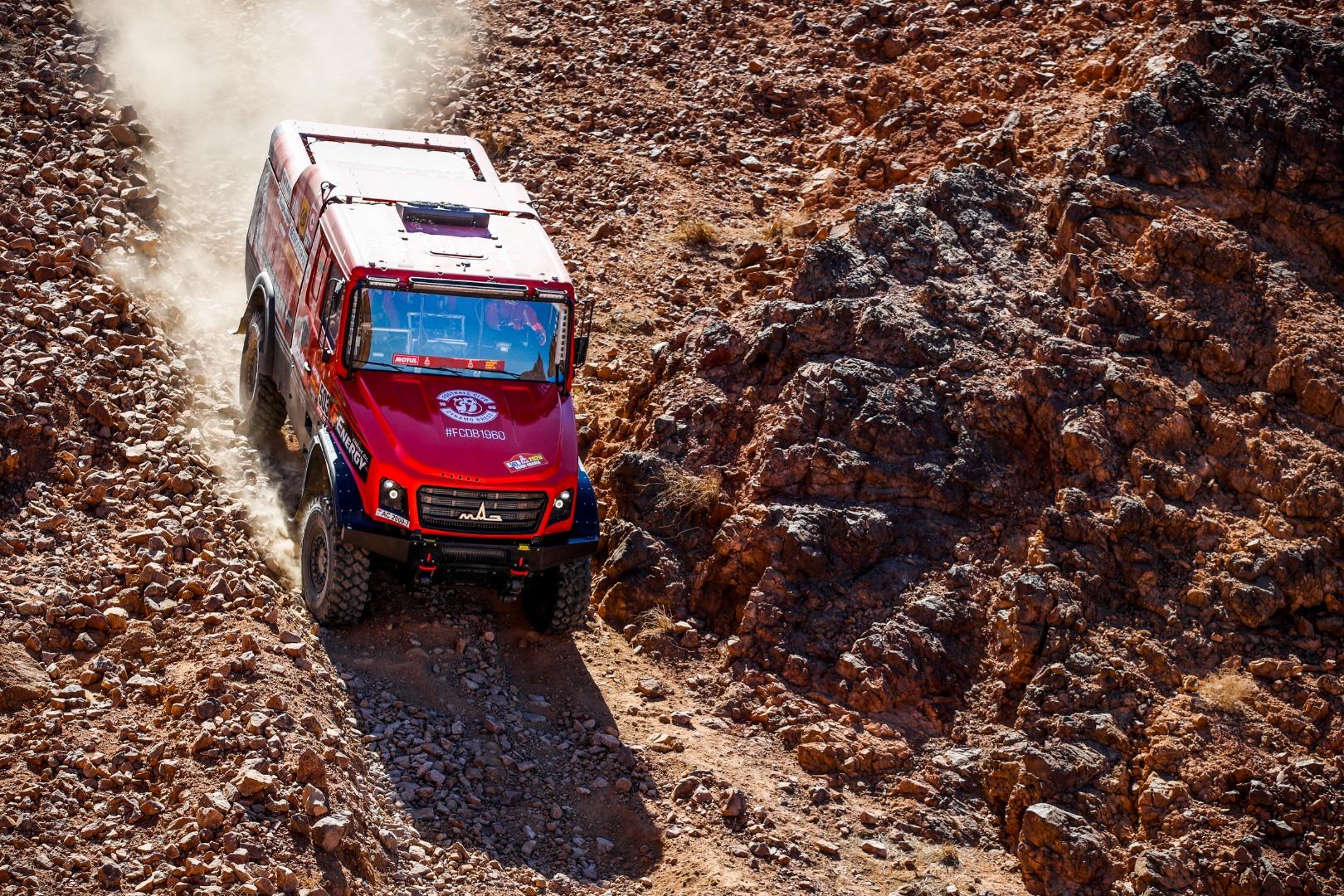
As was expected (they have won the Dakar a whopping 17 times), the mighty Kamaz-master team dominated both the overall rankings and the T4.2 truck rankings. Incredibly, when one looks at the top five finishers, a whopping three are Kamaz trucks. As mentioned, this should not come as a massive surprise; this big-budget Russian team has dominated Dakar in recent years. Maz and Iveco also got a showing in the top five.
The win must have been especially significant for Karginov. The Russian won the truck class in 2014 but was excluded from the 2019 race after hitting a spectator. “I am happy that we managed to win. In two weeks, we covered thousands of kilometres with the toughest off-road routes. It was important for us to confirm the first position of Kamaz-master in the truck category of the Dakar and show advantage of the Russian vehicles in the new region for the rally-marathon. I am glad that our team became first again and delighted fans in Russia and around the world," he said after his race victory.
- Andrey Karginov (Kamaz)
- Anton Shibalov (Kamaz)
- Siarhei Viazovich (Maz)
- Dmitry Sotnikov (Kamaz)
- Martin Macik (Iveco)
T4.3
This was won by Frenchman Sylvain Besnard in a MAN. It was the 14th time that he had competed in the Dakar.
SIX-WHEEL DRIVE
Spanish driver Jordi Juvanteny took top honours in a MAN. It was his 28th Dakar.
LESS THAN 10-LITRE ENGINE SIZE
Japan’s Teruhito Sugawara won the under 10-litre engine capacity class this year in a Hino. It was the 11th successive year that Hino has won this class.
NEWCOMER RANKING
The rookie win went, rather aptly, to a driver from Saudi Arabia. Almuhna Ibrahm drove a Mercedes-Benz Unimog. It took him 115 hours to complete the race, versus the winner’s 46 hours. So, it was quite some undertaking! We wonder if he will be back in 2021?