


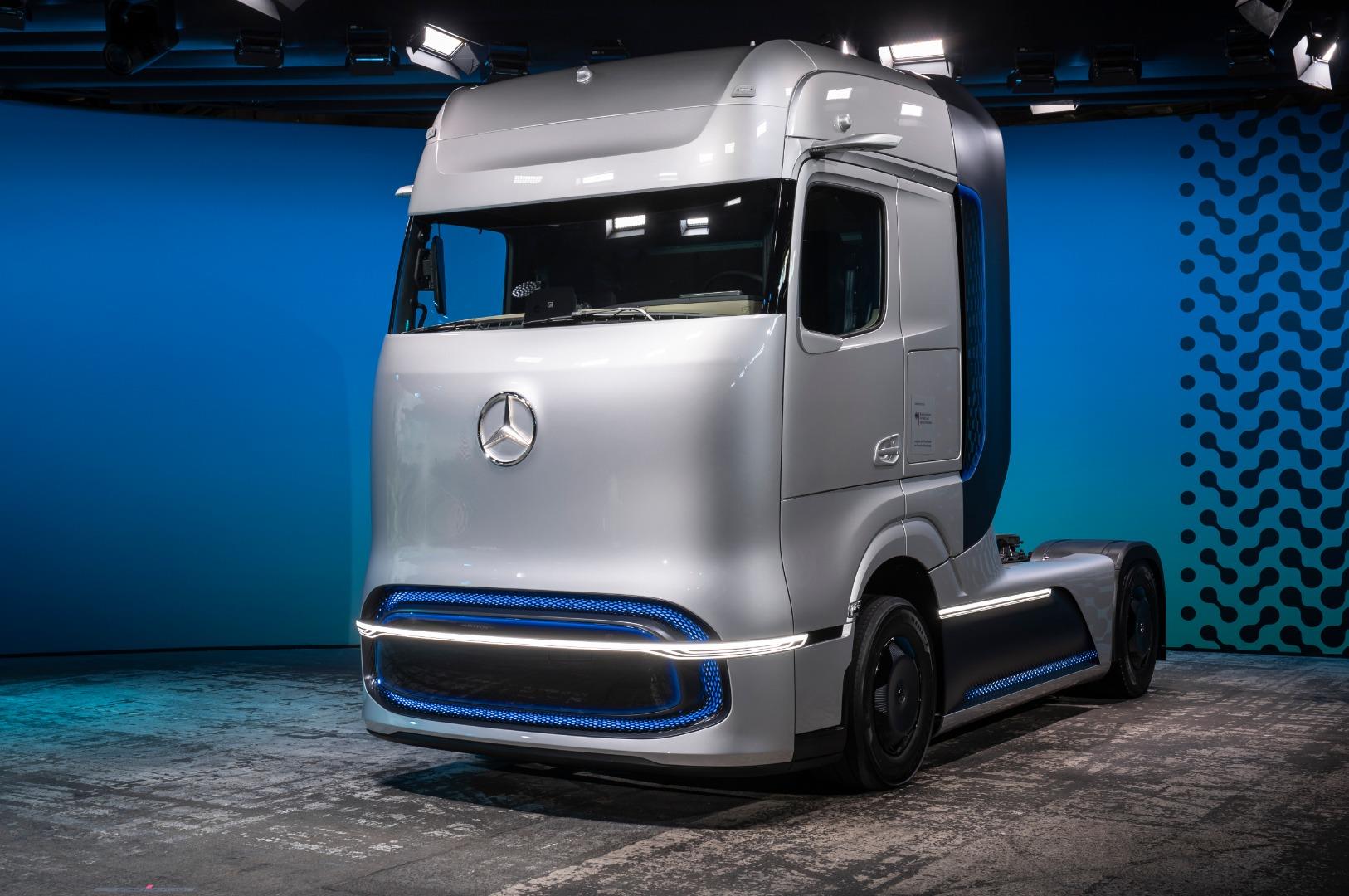
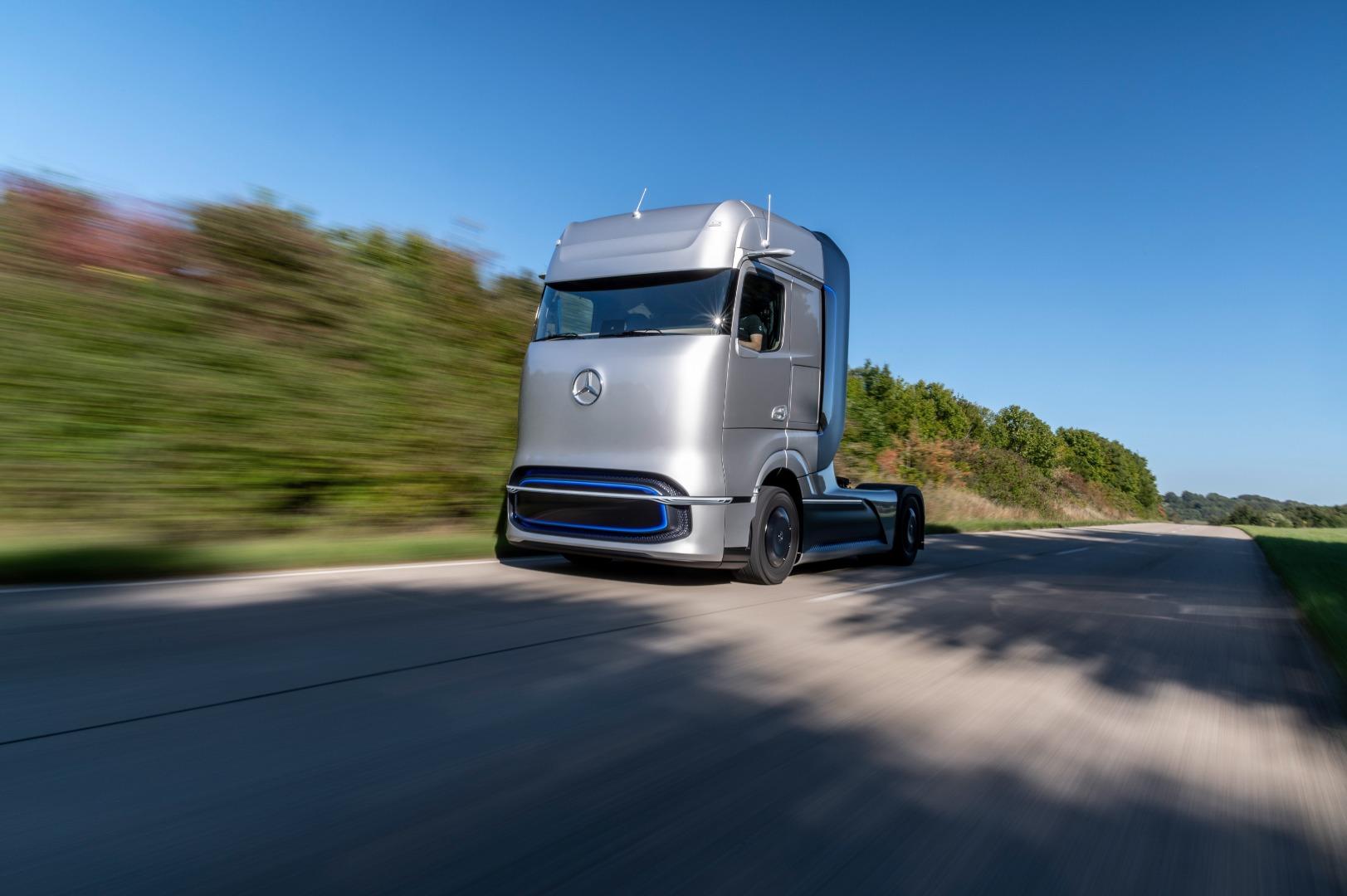
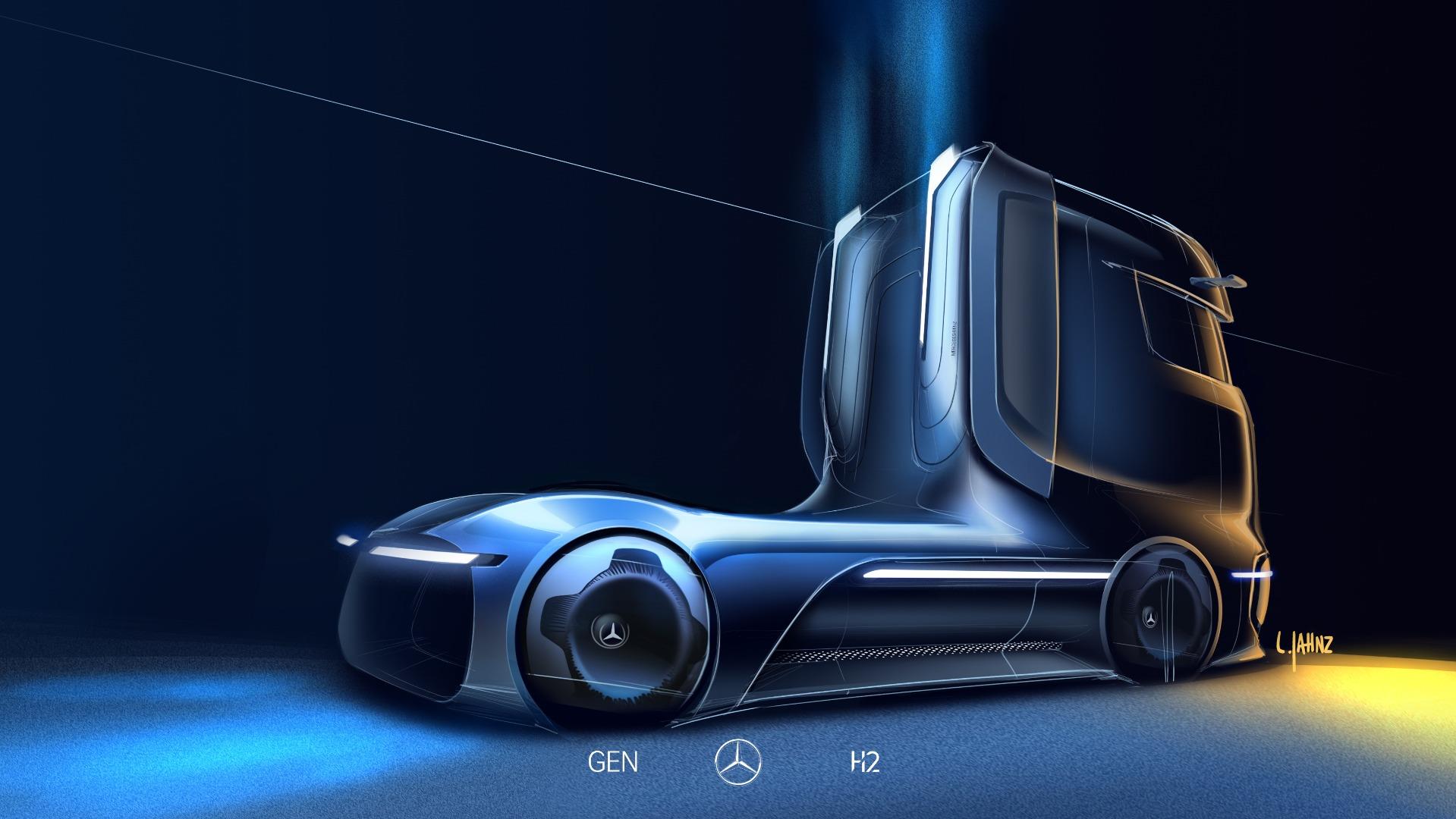
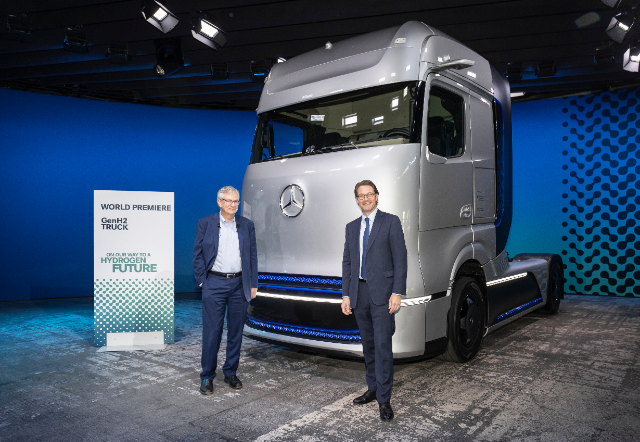
Berlin was chosen as the launch venue because it is, of course, the capital of Germany. This means that it’s also where the federal government is located. And, as Martin Daum, Chairman of the Board of Management of Daimler Truck AG and member of the Board of Management of Daimler AG, stressed, the widespread implementation of fuel cell trucks will only be possible with government support.
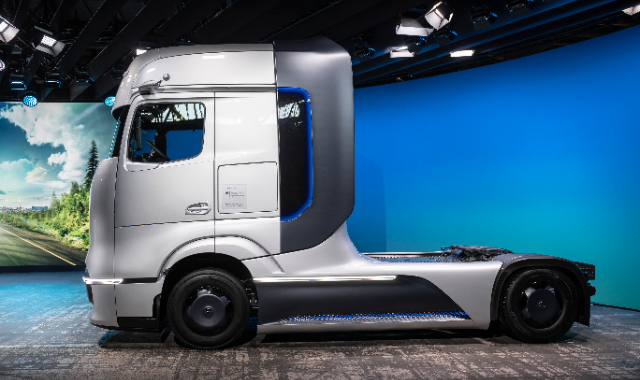
“Today we are very consciously here in Berlin, the political centre of our country. Because today we want to talk about the road to the CO2-neutral transport of the future. We will make good progress down this road, especially when government and business work closely together,” he noted.
One million kilometres of testing planned
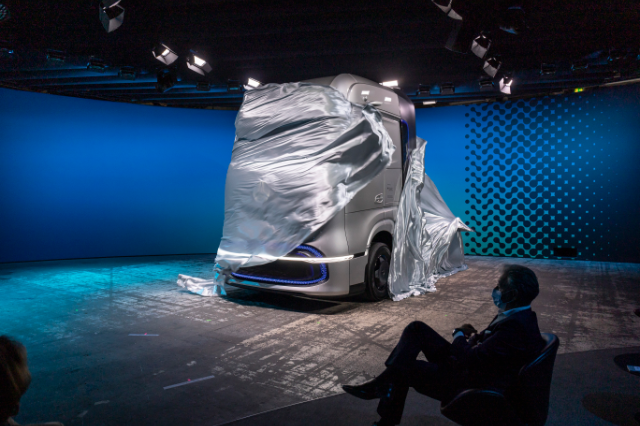
While the cooperation between industry and government is ongoing, so too is development of the new truck. The GenH2 is a work in progress, as Daum pointed out. “This is a concept study that confirms that it’s possible. We will modify the truck along the way. We plan one million kilometres of truck testing – and the trucks must be driven during this period. We also need to go through two winters, to see what will break and what will need to be fixed,” he pointed out.
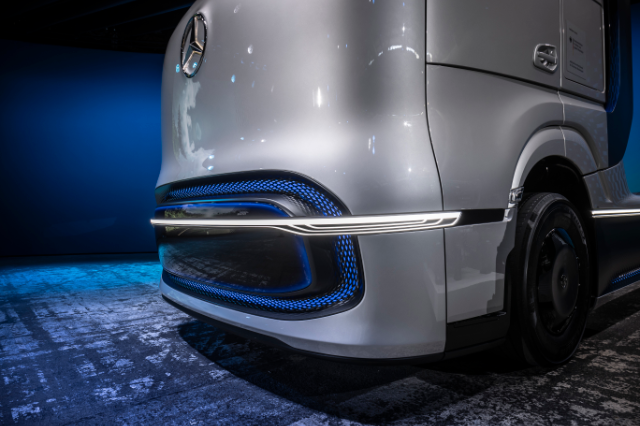
Michael Dietz, CEO of Daimler Trucks & Buses Southern Africa, is very upbeat about prospects for both the truck and the technology. “Hydrogen is the future solution to achieve CO2-neutral transport in the heavy-duty long-haul segment. Significantly, we can have a systematic transition from diesel to hydrogen propulsion systems without restrictions in operation (in terms of uptime, mileage, payload and trailer concepts),” he points out.
Dietz believes that fully CO₂-neutral transport can be accomplished through electric drivetrains with energy coming either from batteries or by converting hydrogen into electricity onboard. “With these two technologies, we can cover all major applications of our truck customers: from predictable routes for urban distribution to difficult-to-plan, multi-day transport of containers, bulk goods and the like. Therefore, battery-electric and hydrogen-drive technologies complement each other perfectly. Which technology best meets the needs of customers depends on the specific application,” he maintains.
Range of up to 1000 km
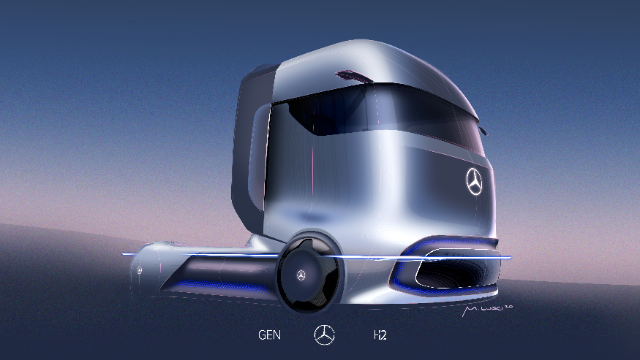
For now, development and testing of the new hydrogen truck are ongoing. However, there are some facts pertaining to the GenH2 that we can reveal now. We already know, for instance, that the truck will have a range of up to 1000 km – meaning it can be used for long-haul applications. We can reveal that the fuel-cell system will supply 2 x150 kilowatts to the GenH2, while a battery will provide an additional 400 kW.
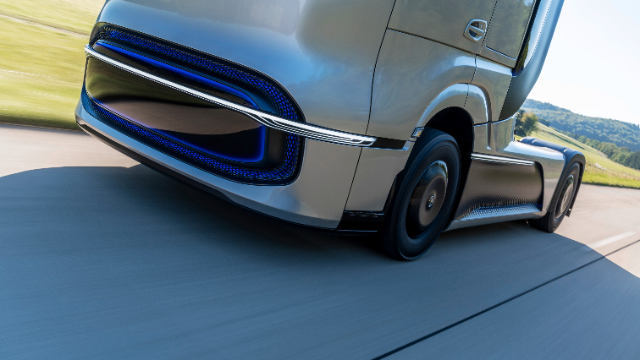
We can also confirm that customer trials will start in 2023, with series production starting in the second half of this decade. Dietz says the truck could come to South Africa around the same time. “This can happen if all other necessary preconditions (H2 production, infrastructure, fuel-pricing etc) are resolved. There are already a number of projects pertaining to the production of H2 in South Africa,” he points out.
The wait for the GenH2 is no big deal. As Daum noted: “If the vehicle was available today, we would not be able to sell one – because there is no infrastructure.”
As good as diesel
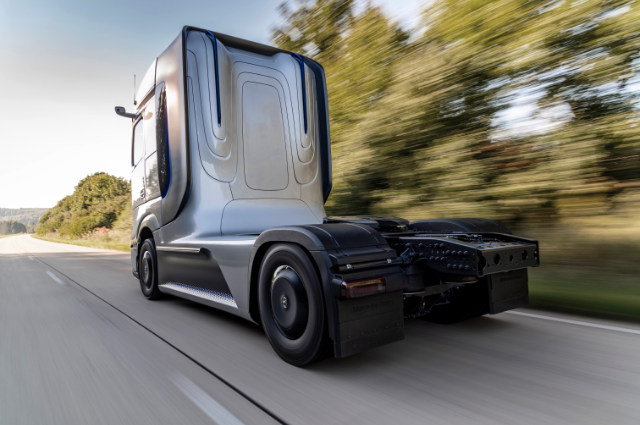
When it does eventually come to market, the GenH2 will be on par with diesel trucks when it comes to a number of aspects. The development engineers’ goal was to create a truck that would have the capabilities of the diesel-powered Mercedes-Benz Actros when it comes to tractive power, range, and performance. They seem to have achieved this. For example, the series-production version of the GenH2 Truck will have a GVM of 40 tons and a payload of 25 tons. Two special liquid-hydrogen tanks – each with a 40 kg capacity – and a particularly powerful fuel-cell system will make this high payload and long range possible. The hydrogen truck will also take the same time to “refuel” as a diesel truck.
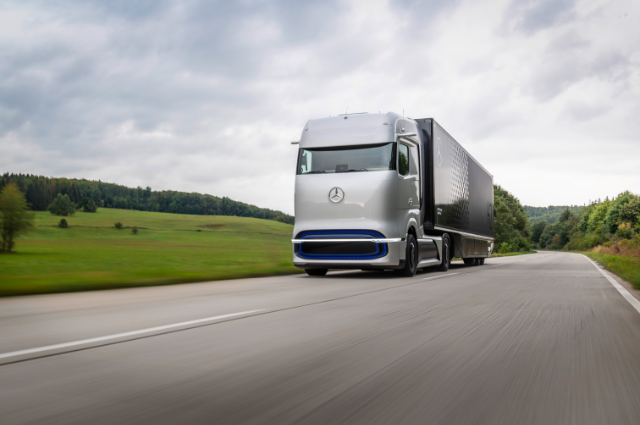
The engineers decided to use liquid hydrogen instead of gaseous hydrogen because the former offers a far higher energy density in relation to volume. The tanks of a fuel-cell truck using liquid hydrogen are much smaller and, due to the lower pressure, significantly lighter than those using gaseous hydrogen. This has very significant practical benefits: trucks such as the GenH2 have a larger cargo space and payload. Also, more hydrogen can be carried, which significantly increases the range of the vehicle.
So, the GenH2 offers a lot. What’s the catch? Right now, the price would be prohibitive and – as Daum pointed out – this is a problem. “If a CO2 efficient vehicle is more expensive, they won’t be able to survive. Customers may be willing to change a few of their vehicles, but not their entire fleet. Even if I work on the most optimistic hypothesis, hydrogen and battery electric vehicles are still more expensive to operate than diesel vehicles. That is why we need to find a way to create benefits for operating green vehicles. Customers must be able to earn money with CO2-neutral vehicles and, of course, be able to charge them and use them in everyday transport without complications,” he stressed.
Volvo partnership fruitful
Daimler is tackling the issue of price in various ways. “Fuel cell production is very capital intensive and so you need high batch numbers in order to reduce the cost. Accordingly, our discussions with Volvo have proved fruitful. We have agreed to form a joint venture with the Volvo Group in order to work together to make the fuel cell ready for series production and to take advantage of economies of scale and cost. They were also aware of the need for large batch numbers. Hence, it was a logical step to work together,” he pointed out, while stressing that the two companies would indeed remain competitors.
Government assistance needed
Daum believes that governments must also come to the party when it comes to costs. “The development of a hydrogen infrastructure should be publicly funded. We also need a CO2-based toll as well as a predictable increase in CO2 taxes on diesel fuel in order to offset the significant cost disadvantage of fuel cells and hydrogen compared to conventional trucks,” he maintained.
Dietz concurs. “Despite all efforts on the part of manufacturers, the acquisition and operating costs of all-electric trucks and buses will be higher than conventional vehicles. It is therefore important that we work together with government and relevant regulatory bodies to find an integrated solution to make CO2-neutral all-electric trucks and buses competitive. Furthermore, it is now up to policymakers, other players and society as a whole to provide the right framework conditions, especially the necessary infrastructure for charging with green electricity and for production, storage and distribution of green liquid-H2,” he points out.
Having said this, he does predict a hydrogen-filled future for South Africa. “From a logistics perspective, South Africa is highly developed and advanced, with the economy relying heavily on truck transport – especially in the heavy-duty long-haul segment. Secondly, it looks ideal to implement green electric power and liquid-H2 production due to ideal climate conditions. Therefore, South Africa has a big potential to take a leading role in CO2-neutral transport,” he concludes.