
Cummins and Komatsu to enhance standard technical education platform
Cummins and Komatsu to enhance standard technical education platform


By Colin Windell
Targeting the technical skills gap that exists in South Africa through vocational education programmes is the driving force behind a joint initiative by engine, filtration and genset manufacturer, Cummins Africa Middle East and earthmoving, construction and utility equipment supplier, Komatsu Africa Holdings.
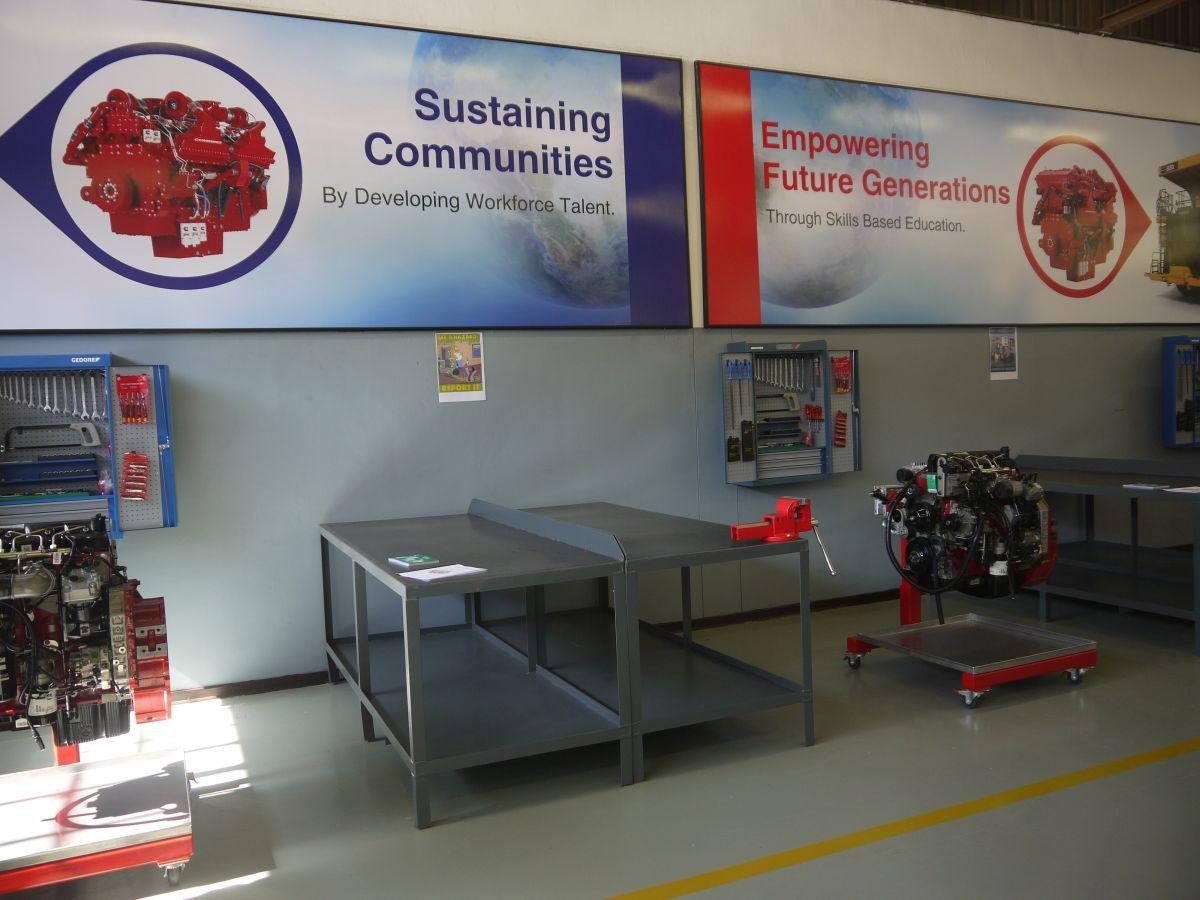
The joint effort is in the form of a new Technical Education for Communities (TEC) programme at the Sedibeng TVET College, Sebokeng Campus in Southern Gauteng.
Through the partnership, Cummins and Komatsu will enhance the standard education platform to help develop a market-relevant curriculum, teacher training and career guidance, and also provide much-needed practical experience for students.
It is the realisation of an agreement signed by Gino Butera, Vice President and Managing Director, Cummins Africa Middle East, and Mike Blom, Managing Director, Komatsu Africa Holdings in October 2017.
The latest TEC programme was launched recently during a ceremony hosted at the Sedibeng TVET College, during which Higher Education and Training Minister Naledi Pandor delivered the keynote address.
“This initiative falls exactly within the government’s domain of focusing on uplifting the youth through training. It is therefore a very important initiative, and both Cummins and Komatsu are to be commended. We as South Africa need many more such initiatives to give young people access to training so that they can become employable, and thereby play a meaningful role in both their communities and the future of the country,” she says.
“Together we will provide comprehensive tools to improve job skills. We are proud to bring this global programme to South Africa for the first time, and welcome the first group of learners. We look forward to the results, and trust that the leaners will maximise the opportunities made available to them,” added Butera.
He pointed out that, globally, employers are experiencing critical shortages of skilled technical workers, with around 10-million manufacturing jobs worldwide unfilled owing to a shortage in technical capabilities and soft skills. The TEC programme seeks to plug this gap by providing schools in South Africa with the necessary tools to equip learners with market-relevant skills that prepare them for the world of work throughout the course of the Fourth Industrial Revolution, or Industry 4.0.
“While our industry is dependent on technology and innovation, everything begins with people, which means that human resource development is critical. I am absolutely convinced that, with the support of all stakeholders, we will succeed in this initiative,” says Blom.
Since the global launch of the TEC initiative in 2012, 19 schools in 11 countries, two of which are in Morocco and Nigeria, have been established, with the Sedibeng TVET College becoming the twentieth school to fall under the auspices of the programme.