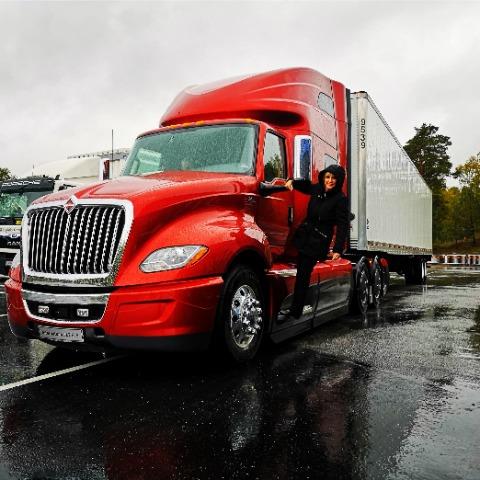
Autonomous trucks: coming to South Africa?
Daimler Trucks has partnered with Waymo to develop autonomous trucks. Could we see these self-driving trucks in South Africa one day? And what about job losses? These were two of the questions that we put to Michael Dietz, CEO of Daimler Trucks & Buses Southern Africa.



The Daimler Waymo deal

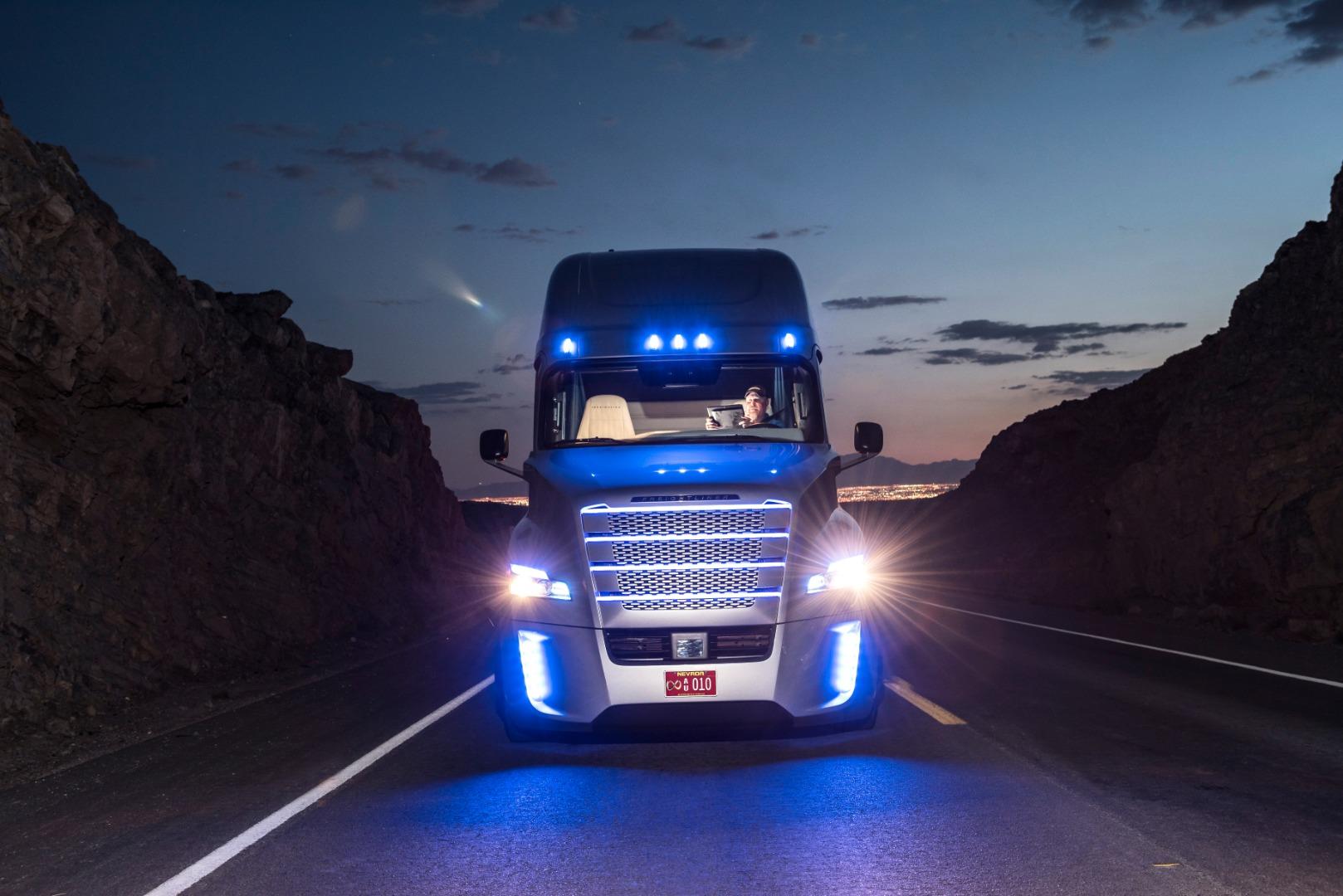
But first, a brief overview of the Daimler and Waymo partnership – and why it’s so significant. We hardly need to introduce Daimler; it’s one of the world’s largest commercial vehicle manufacturers, with about 100 000 employees and extremely well-known brands including Mercedes-Benz, Setra, Freightliner, Western Star, Thomas Built Buses, BharatBenz and Fuso.

The Waymo name, on the other hand, isn’t perhaps quite as well known. However, its very first project – the Google Self-Driving Car back in 2009 – certainly is. Like Google, it is owned by Alphabet, a tech giant with a market cap of nearly $1 trillion (about R15.32 trillion). Waymo is to self-driving cars what Google is to internet searches. Specifically, Waymo has developed an artificial intelligence (AI) driving system called the Waymo Driver, which powers Waymo One, the world's first fully driverless ride-hailing service, as well as Waymo Via, the company’s trucking and local delivery service. To date, Waymo has driven over 20 million miles (over 32 million kilometres) autonomously on public roads across 25 cities in the United States and driven over 15 billion miles (24 billion kilometres) in simulations.
Not their first autonomous rodeo
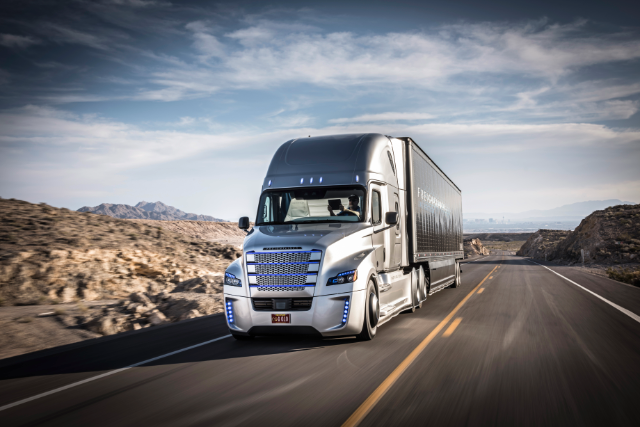
This is not the first autonomous truck rodeo for Daimler or Waymo. Back in 2014, Daimler Trucks provided the world's first demonstration of an autonomous truck in action when the Mercedes-Benz Future Truck 2025 drove along a cordoned-off section of the A14 autobahn near Magdeburg. Then, in 2015, its Freightliner Inspiration Truck became the first licensed autonomous driving truck in the US.

Waymo, meanwhile, launched a pilot in Atlanta in 2018 whereby its self-driving Peterbilt trucks carried freight bound for Google’s data centres. The trucks were retrofitted with sensors and software. Those Peterbilts are still being tested in Arizona, New Mexico and Texas.
Now Daimler and Waymo are working together to develop SAE Level 4 trucks. “SAE” stands for the Society of Automotive Engineers, and the levels – which rank from zero to five – determine the intelligence level and automation capabilities of vehicles. With Level 4, the trucks can intervene if things go wrong or there is a system failure. But these vehicles do still have a driver, who can override the truck’s decisions. The driver is only eliminated in Level 5 (typical controls – such as steering wheel, fuel and brake pedals – are also ditched). An excellent example of this technology is the Scania AXL, which we saw in action and wrote about last year.

Rollout of SAE Level 4 truck
Daimler and Waymo aim to develop an autonomous Freightliner Cascadia truck, equipped with the Waymo Driver, which will be available to customers in the US in the future. What about South Africa? Dietz says it’s too soon to say – but he stresses that autonomous trucks could play an important role in our country, especially given the fact that road safety is a massive challenge. “Given that most accidents are caused by human error, the reduction in human intervention when operating an autonomous L4 truck will significantly minimize the risk of accidents on our roads,” he points out.
While this logic is clear, there are those who don’t support autonomous trucks, saying that they will lead to job losses (because drivers, for instance, can no longer be required). Dietz states that, contrary to the argument that “autonomous trucks will reduce jobs” the opposite will hold true. “The journey of innovation will, in fact, result in job creation as companies test and evolve the business scenarios, including the need for technicians, drivers, dispatcher and the additional safety driver role,” he maintains.
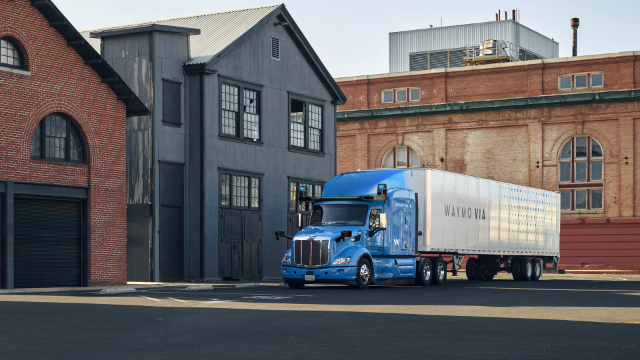
With Daimler and Waymo’s truck, there will still be a driver in the cab in any event and, going forward, drivers will remain important. “Our goal is to make roads safer and help trucking companies boost productivity. We think automated trucks will improve drivers’ jobs, by making them safer. The work they do will be different and may involve less driving and more planning/logistics,” Dietz believes.
“We believe that the role of drivers is essential to meeting the ever-growing demand for freight movement. With the forecasts for even greater increases in freight and home deliveries over the next several decades, automation will serve as a complementary technology to meet critical economic needs. We will work with all stakeholders to provide a rock-solid, mutually agreeable framework for bringing this technology on the road to the benefits of drivers, society and the overall economy,” he stresses.
Autonomous trucks should be more fuel-efficient (because driver error is minimised), as Dietz points out: “This will occur thanks to optimum gear shifting, acceleration and braking. As it currently stands partially automated driving trucks (Level 2) consume less diesel, therefore reducing CO2 emissions. But autonomous trucks will never eliminate the need for qualified and skilled drivers. Driver training will remain essential for maximised truck usage and safety,” he stresses.

So, drivers will be with us for some time and autonomous trucks will offer many advantages. When will we see them in South Africa? “Daimler Trucks together with Waymo will investigate expansion to other markets and brands in the near future. Necessary legislation is key for the effective deployment and operation of autonomous vehicles in South Africa and, in general, safety and reliability remain an absolute priority. Honestly, there are still too many variables to give a confirmation or specific timeline, however, it can be assumed that with the necessary legislation in place around the time the vehicles are ready, there might be an opportunity for South Africa. So, stay tuned!” Dietz concludes.
We can’t wait.