Hey good looking
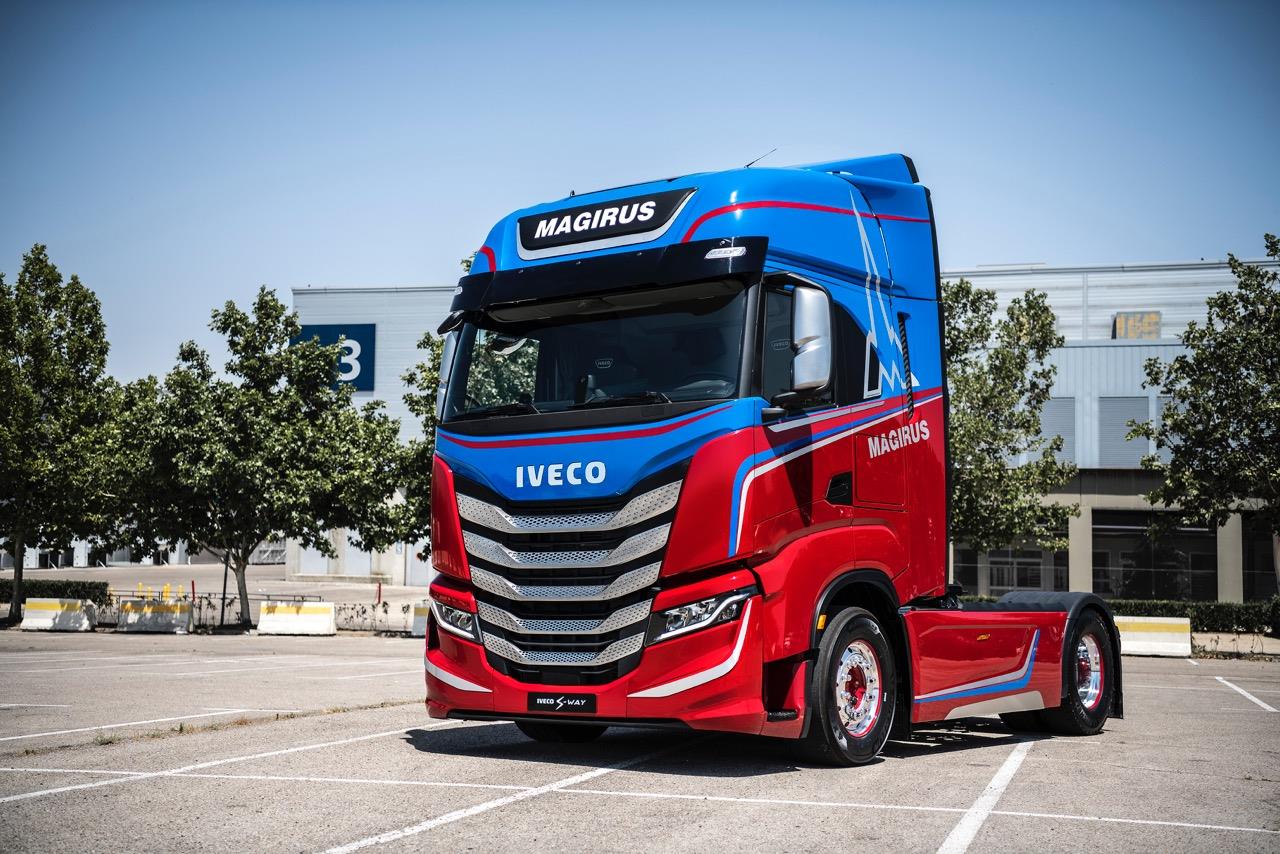
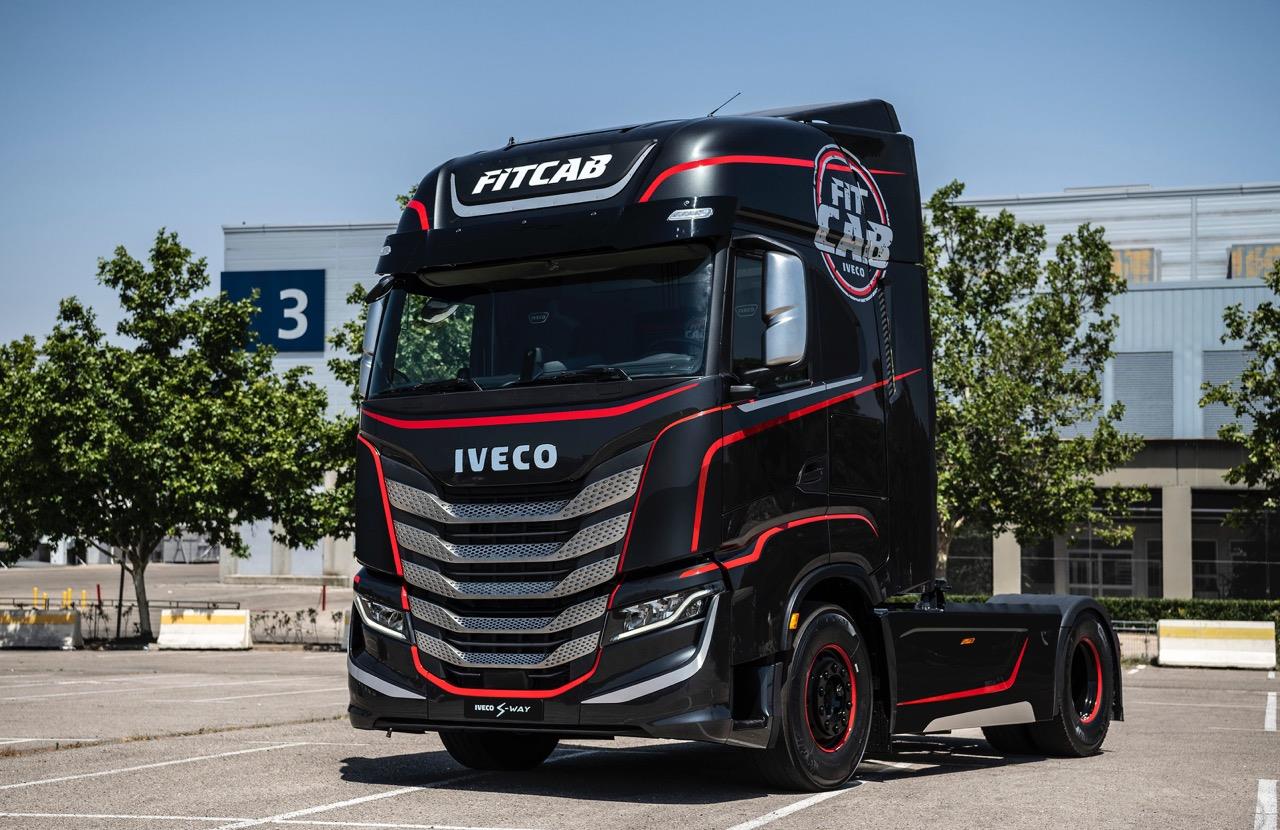
If we only consider the exterior (and completely disregard everything else), the answer would have to be yes. It’s an undeniably good-looking vehicle; its appearance is quite similar to its Scania rival (which isn’t a bad thing; the Scania’s styling is terrific).
Oliver Willms, who represents Germany on the International Truck of the Year jury, says that the exterior deserves a thumbs-up. “I really like the strong, dynamically shaped radiator grille, together with the new slightly slanted headlights with LED daytime running lights. It’s a stylish, sharp-looking truck,” he says.
The Austrian representative on the International Truck of the Year jury, Florian Engel, says that he really likes the fully integrated parking air-conditioner. “It means no more rooftop mushroom for that. Plus, I like the exterior in general. The lights are modern and the lines are beautiful,” he adds.
Will Shiers, the English judge on the International Truck of the Year jury, concurs. “It’s one of the best-looking trucks on the road. With the S-Way, Iveco has an exterior of which they can be very proud,” he says.
But the S-Way is more than just a pretty face. Visibility is much better (which is great for safety) while the S-Way is considerably more aerodynamic than the Stralis too, and Iveco says that this will result in fuel savings of 4%. On this subject, the S-Way doesn’t come with mirror cams (aka the latest Actros). Should this feature follow in the future (we think it should), this will only serve to further lower fuel consumption.
And what about the interior?
While the exterior has attracted widespread praise, the jury is out when it comes to the interior. It is a massive improvement on the Stralis – that’s for sure. As International Truck of the Year Chairman Gianenrico Griffini notes: “The interiors are rational, ergonomic and spacious, and there is a lot more storage space too.”
“The S-Way seems much more refined, with better quality and a much better designed cabin,” agrees Martin Schatzmann, who represents Switzerland on the jury.
Ergonomics within the cab are improved too, and it boasts a comfortable standing height (2.15 metres in the centre). The designers at Iveco paid a lot of attention to the seats and steering wheel. The former was lowered in order to increase cushion thickness, while the latter has a flat base, which is great for more rotund drivers. Also, the driver hardly ever needs to move his (or her) hands from the steering wheel – because it’s equipped with 22 switches, placing most functions at the driver’s fingertips.
The new S-Way also boasts a seven-inch touchscreen, which provides access to the infotainment system (which incorporates Apple Car Play), Bluetooth, voice recognition and a navigation system. We also like the feature-rich central stack – it is home to a handy shelf with bottle and cup holders, USB and 12V sockets, and a new drawer where drivers can store documents up to the size of an A4 folder – all lit with a console background light for night-time use. Also, thumbs up to the folding table on the dashboard in front of the passenger seat, which can be used while eating, working or chilling (watching movies, for instance).
But, while it’s practical and mostly does the job, some say that the interior isn’t quite good enough. “The driver’s seat still cannot be moved to the back. For big drivers, it is quite tight,” Engel points out.
Shiers agrees that the interior could have been better. “This is a great truck that is let down by the interior. Yes, inside it’s better than the Stralis, but they haven’t raised the bar. It is underwhelming and it lacks a wow factor,” he maintains.
As Shiers points out, when any truck manufacturer is developing a new truck, there is a bit of a ding-dong battle between the exterior and interior designers and the finance department. “Now, I suspect that, with the S-Way, the right people won the battle when it came to the exterior, but the wrong people won the battle when it came to the interior,” he notes.
Willms concurs. “I cannot understand why the instrument panel is virtually unchanged (over the Stralis). It’s still made up of colourful lights and analog instruments – instead of a digital display. Then there is the classic parking lever brake (an electrically operated brake is typical with almost all competitors). It almost seems as if the designers ran out of air or maybe money.”
We hope that the interior will receive some attention in the not-too-distant future. In fact, a little birdie has told us that an interior update is coming in about 2021. We also hear that Iveco will introduce electric steering then, which could mean that more driving aids like lane-keeping assist are on their way …
Driveline unchanged
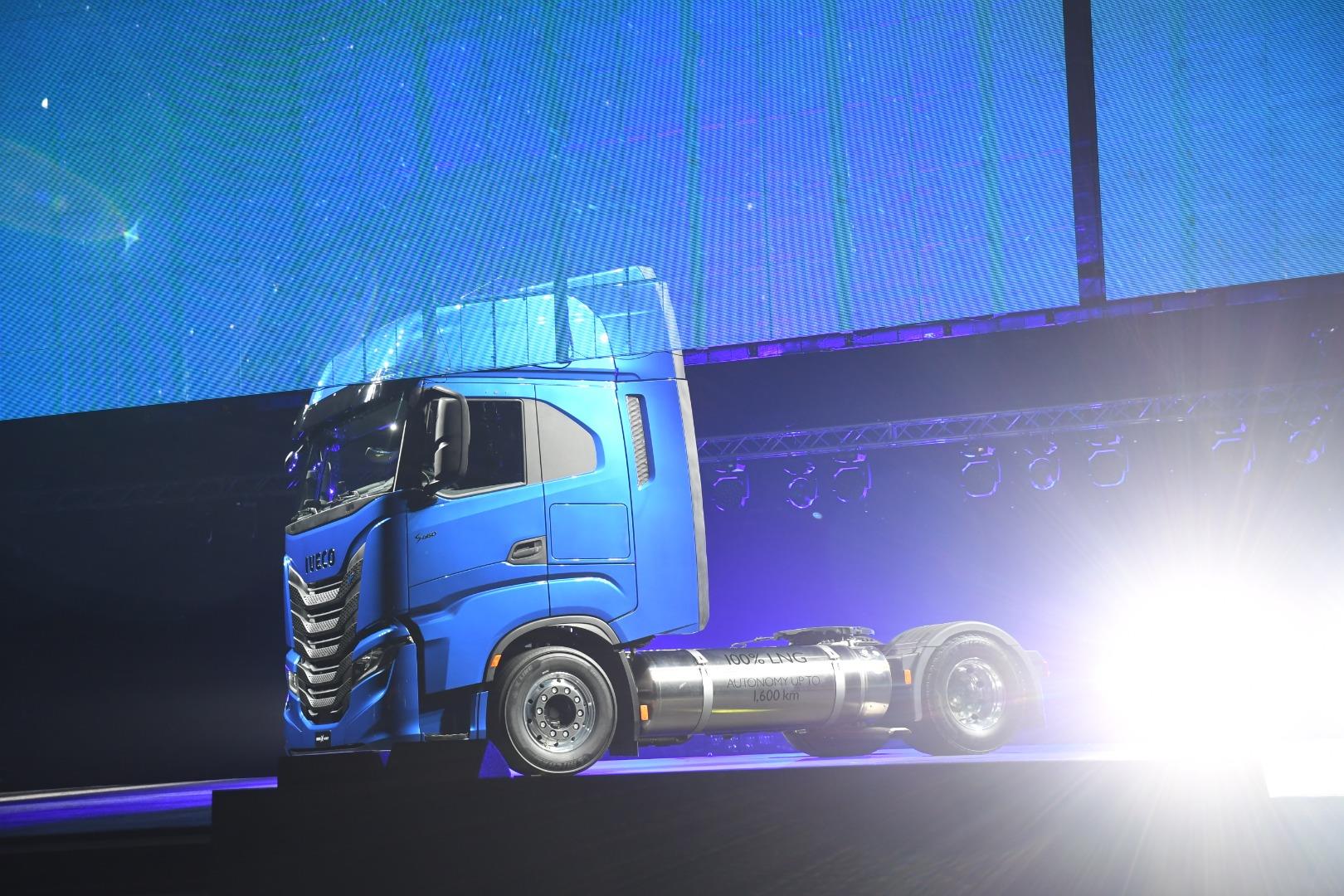
Iveco has opted not to change the driveline, which is great: the Cursor 13 engines, mated to the ZF TraXon gearbox, do a terrific job. As was the case with the Stralis, the S-Way can be powered by diesel or natural gas.
Big news on connectivity front
What has, however, changed is the connectivity. The S-Way comes with a connectivity box, which collects, processes and exchanges data in real time. Working off a service platform developed in partnership with Microsoft and via the MyIVECO portal and app, it allows truck operators and drivers to be constantly connected with the vehicle via their mobile device or PC. Operators benefit thanks to things like predictive maintenance/service planning and ongoing analysis of the driver’s performance. Drivers, on the other hand, will like the fact that they can control all the cabin and vehicle management functionalities on their mobile devices. They can also use the app to request assistance (in the unlikely event that the truck breaks down).
The S-Way will probably arrive in South Africa in 2021; we hope to be able to drive and report on it well before then. Watch this space!