
The importance of effective irrigation in South Africa
Agriculture is one of the most important sectors for food supply within our country, and ensuring that farmers are able to give their crops water when needed is also of vital importance. With South African being an arid country, rainfall is low and most large scale farmers use irrigation systems to provide water to their crops. But what are the different types of irrigation systems, and which is best to use for your crops?


The importance of effective irrigation in South Africa
The most common form of irrigation is natural rainfall. This is what a large majority of farmers in South Africa rely on, especially those in rural areas without access to irrigation infrastructure. Rain-fed farming is the natural application of rain water to the crops. Relying on rainfall is less likely to result in contamination of food products, but is also open to water shortages as a result of unpredictable weather patterns. Water shortages are becoming a common issue due to rapid climate change, with droughts affecting our country ever more frequently. On the other hand, artificial applications of water increase the risk of contamination.
Irrigation is also known to mean the artificial application of water to the soil, through various systems of pumps, tubes, and sprayers. One will normally use irrigation in areas where rainfall is irregular, or during dry times such as during a drought. Irrigation systems allow for an even supply of water to the crops, which can be closely monitored and regulated. There are various sources from which to acquire the irrigation water, such as from groundwater, through springs or wells, surface water, through rivers, dams, reservoirs, or other sources such as treated wastewater or desalinated water.
Types of irrigation systems
There are many different types of irrigation systems, which allow for various dispensing methods of throughout the field. Some of the most common types of irrigation systems include:
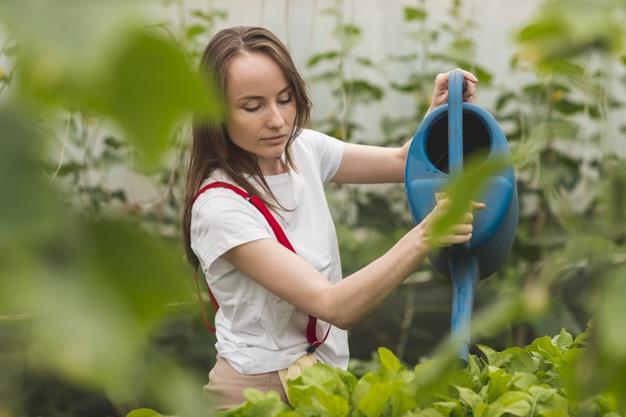
- Manual irrigation: Water is distributed across land through manual labour and watering cans. This system is very labour intensive, and is used by many (mainly subsistence) farmers in rural areas.
- Centre pivot irrigation: Water is distributed by a system of sprinklers that move on wheeled towers in a circular pattern. This system is most common in level areas of our country.
- Localized irrigation: Water is distributed under low pressure, through a piped network and applied to each plant.
- Drip irrigation: A type of localized irrigation in which drops of water are delivered at or near the root of plants. In this type of irrigation, evaporation and runoff are minimized.
- Surface irrigation: Water is distributed over and across land by gravity, with no mechanical pump involved.
- Sprinkler irrigation: Water is distributed by overhead high-pressure sprinklers or “guns” from a central location in the field, or from sprinklers on moving platforms.
- Sub-irrigation: Water is distributed across land by raising the water table, through a system of pumping stations, canals, gates, and ditches. This type of irrigation is most effective in areas with high water tables.
- Lateral move irrigation: Water is distributed through a series of pipes, each with a wheel and a set of sprinklers, which are rotated either by hand or with a purpose-built mechanism. The sprinklers move a certain distance across the field and then need to have the water hose reconnected for the next distance. This approach tends to be less expensive than automated systems, but requires more labour than others.
Issues affecting irrigation in South Africa
One might think that a lack of rainfall would be the main cause of failing irrigation, but it is in fact load-shedding. Over 25% of our country’s food is produced by irrigation-dependent and energy-intensive industries. Load-shedding has a negative impact on these industries, as well as on dairy, poultry, grains, and the agro-processing industry. Irrigation, irrigation scheduling, the application of fertilizer, processing and shipment are all negatively affected by the unplanned load-shedding disruptions.
Irrigation is of vital importance to our country’s food security and measures need to be taken to protect it. It is also important for farmers to make use of the best available irrigation options, to better serve their crops while minimising their effect on the environment.