
Is this little diesel the most economical small car it claims to be?
Auto Trader reviews the Volkswagen Polo 1.2TDI BlueMotion


Fuel consumption – important on some cars, but less so on others. It is common knowledge that car manufacturers over-promise and under-deliver with its unachievable fuel consumption claims. So is this Polo honest in its claimed fuel achievements?
Volkswagen makes a very big claim – the company puts in writing that the Polo 1.2TDI BlueMotion sips an unbelievable 3.4 (three point four) litres, in the combined cycle, over 100km driven. Is this possible? Well, when looking at the engine, it has to be the major contributing factor – a 1.2-litre 3-cylinder diesel… that’s 3 ways of reducing fuel consumed: a small capacity, fewer cylinders, and efficient-burning diesel fuel. This is not a concept or some fantasy prototype car – it is a Polo you can purchase today off your VW dealership.
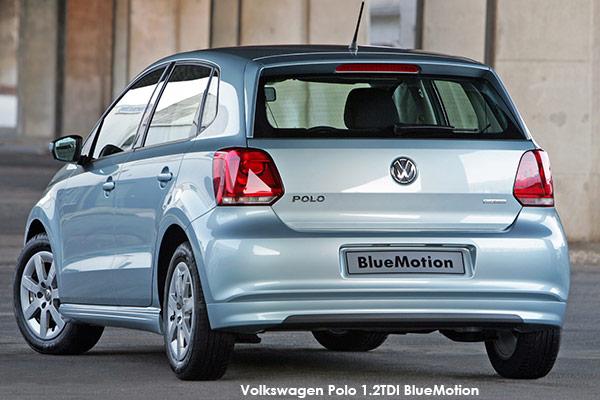
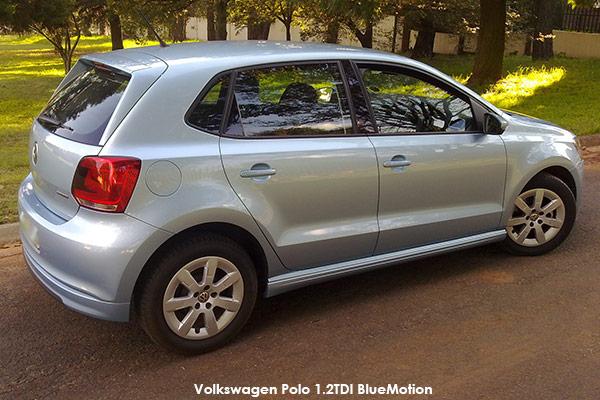
Aerodynamics also make a big difference to a car’s fuel consumption, but rather than odd-looking tapered rears (like some of the hybrid cars) or trick aerofoils, the Polo BlueMotion takes the airflow challenges into a sporting direction, by adding what looks like a kit of sports bumpers, sill and spoiler, a mostly blanked-off grille and smaller mirrors, though these physical changes are in fact mainly to enhance airflow. The BlueMotion badges on the grille and tailgate call out this special selection of measures taken by VW to optimise fuel efficiency.
Fuel gauge activity in this lean machine is restricted to the slowest movement ever seen in a car. The fuel measurement is a digital vertical segmented bar, and, as usual, the test car was delivered with a full tank of fuel. About 110 kms of suburban driving saw no change in the digital segments – so it is economical around town, for sure. But when it was decided to drive Polo BlueMotion on a long-distance road trip to test the fuel consumption, it was worrying… at the 100 km mark, the gauge still indicated a full tank, and at 200 km on the trip meter, it was getting disconcerting that the digital meter didn’t move even one segment. Then, arriving at our destination at just over 300 km… still no change. The owner’s manual was whipped out – what is the fuel tank capacity? 45 litres. Claimed extra-urban fuel consumption is 3.0 (yes, three!) litres per 100km. Unheard of! OK, so 300 km at 3 litres for every 100 calculates to 9 litres – just 9 litres used! But still, the gauge was showing full, which meant either a. the gauge is showing only the reserve in the tank was used, so is still full, or b. the gauge is faulty. There was a serious consideration to call the fleet manager who delivered the car, or technical assistance at VW to advise on this unusual phenomenon. Trying the old-school stick into the tank would be unthinkable in such an advanced car, so it was decided that we’d fill up to full tank (just in case the gauge was digitally stuck) at the 1st filling station. Then, just after leaving our destination, the top-most segment on the fuel gauge dropped a single segment, indicating a tank (still) 7-eighths full. Usually the worry is seeing a gauge drop too quickly… in Polo BlueMotion it was a relief to finally see it dropping.
Out on the open road, and now out of the “is the tank really still full?” syndrome, it was time to keep an occasional eye on the on-board computer readout – when driving at a steady highway speed on a level road, there were moments where current consumption showed 2.9 l/100km. The 1.2 TDI 3-cylinder is not lazy, so overtaking is quick enough, and uphills are not a struggle. This little engine is a little gem – the 3-cylinder sounds good, and even characterful combined with the slight diesel sound, and a good sweet spot in the mid rev range. Despite all the eco-max engineering, this car has a 5-speed where a 6-speed would surely be the expected number. Gear spacing is wide, and the 5th gear tall, relaxing the engine to do 2300 r/min at 120 km/h.
Some winding rural roads with foot-flat overtaking and a mix of highway cruising, thanks to the standard-fit cruise control, still saw amazing fuel economy: after a near-700 km round trip, the tank was still half!
Back in the driveway… take-off on an incline, such as at a steep driveway, unfortunately sees the little diesel pull flat – it seems to lack enough low-down torque, or is smothered by the turbo at low revs. A proper dose of revs is needed to pull this Polo up. On occasion it was stalled at a red traffic light on an uphill, so apply enough revs before setting off.
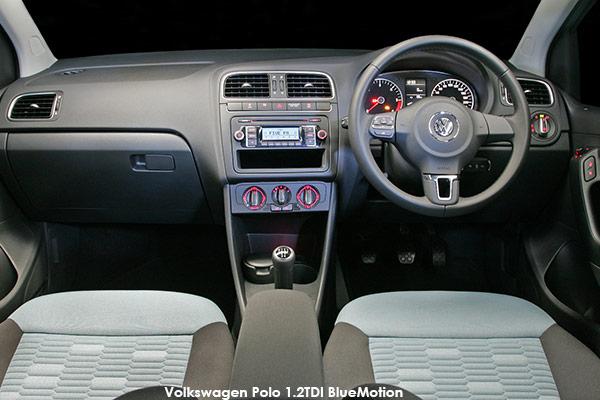
What is pleasant about the Polo BlueMotion interior is that it is typically German minimalist and functional – no need to add any of the think-green gimmicks you’d find in most hybrids, like a green-coloured eco button, silly diagrams or graphs showing driving history, or little icons showing trees and leaves and flowers which grow or wilt away depending on driving style – all of the above actually detracting from driving focus. None of these tricks, as the Polo’s fuel gauge does all the talking… and it is certainly not talkative.
Compared to other Polo models, where does the BlueMotion slot into? To be clear, the Polo BlueMotion is the full-on BlueMotion which is a stand-alone model receiving all the unique body, trim and fuel-saving engineering, whereas other VWs also carrying a BlueMotion badge on the back has only some of the economy-enhancing features. The Polo hatch was recently facelifted, replacing the 1.4 and 1.6 engines with an advanced 1.2TSI engine, and dropping the 1.6TDI as the other diesel option, leaving 1.2TDI BlueMotion as the single remaining diesel Polo hatch. When the pre-facelift Polo hatch 1.6TDI Comfortline went off the market in May 2014, it was priced at R 246 000, compared to 1.2TDI BlueMotion (which hasn’t received the facelift of the SA-built Polo hatch) selling at R 226 400 in September 2014. Polo hatch ranges from R 191 600 for the 66kW 1.2TSI Trendline via R 251 900 for a 81kW 1.2TSI Highline with 7-speed DSG to R 302 000 for a hot GTI.
If you believe in German and VW and super-low economy, the Polo BlueMotion is the only choice you have – if you are willing to go Japanese and hybrid, Honda and Toyota offer theirs. Honda has 3 to choose from: Jazz hybrid at R 282 600, or the Prius-look Honda Insight at R 298 100, or CR-Z (sporty-looking coupé-like hatch) at R 358 400 for the manual or R 373 000 for the CVT auto. Toyota just gave its Yaris a moustache facelift, and has a hybrid at R 276 300, or the Auris HSD for R 353 000. Unfortunately, real-world consumption of any of the tested hybrids falls far short of its eco claims. Also, these hybrids will be wheezing uphill, dropping its speedometer readouts, battling to overtake… whereas this or any small diesel will gladly pull you through, and achieve much lower consumption and emissions.
Polo BlueMotion is the only 3-cylinder diesel on the market, and the lowest claimed fuel consumption in its segment (excluding the plug-in e-hybrids some upmarket manufacturers build). There are a few other small diesels under/around R250k, such as Ford Fiesta 1.6TDCi, the twins Citroën C3 and DS3 with e-HDi 90 engines, Hyundai i20 1.4CRDi (you shouldn’t consider this if you’re looking at any of these European offerings) and Peugeot 208 1.6HDi.
Is the Polo BlueMotion the economy champion? Yes, on fuel economy it beats any small hybrid or other small diesel.