Positioned as a compact, purist, body-on-frame 4x4 SUV, the new Cruiser FJ aims to bridge the gap between everyday city usability and genuine trail capability. Available in two trim levels—the base GX and the range-topping VX—it aims to offer bulletproof Toyota reliability in a rugged, adventure-ready 5-door package. I recently spent a few days with the VX model to see what it is like to live with.
Pros
Excellent ground clearance & off-road angles
Old school off-road appeal
Durable mechanics, strong brand heritage
- Unique offering in the market
Cons
High fuel consumption
Underwhelming engine performance on the road
63-litre fuel tank limits range
Underpinnings
Unlike its larger siblings (the Land Cruiser 300 and 250 Prado), which sit on Toyota’s premium TNGA-F architecture, the Land Cruiser FJ is built on a heavily refined version of Toyota’s IMV body-on-frame platform—the same ladder-frame backbone underpinning South Africa’s beloved Hilux and Fortuner.
Toyota shortened the wheelbase to 2 580 mm (270 mm shorter than the Prado 250), yielding an 11.0-metre turning circle that shines in both tight city manoeuvring and technical off-road trails. Heavy-duty structural cross-bracing, extensive use of high-tensile steel, and underfloor reinforcement dramatically boost torsional rigidity over standard commercial applications.
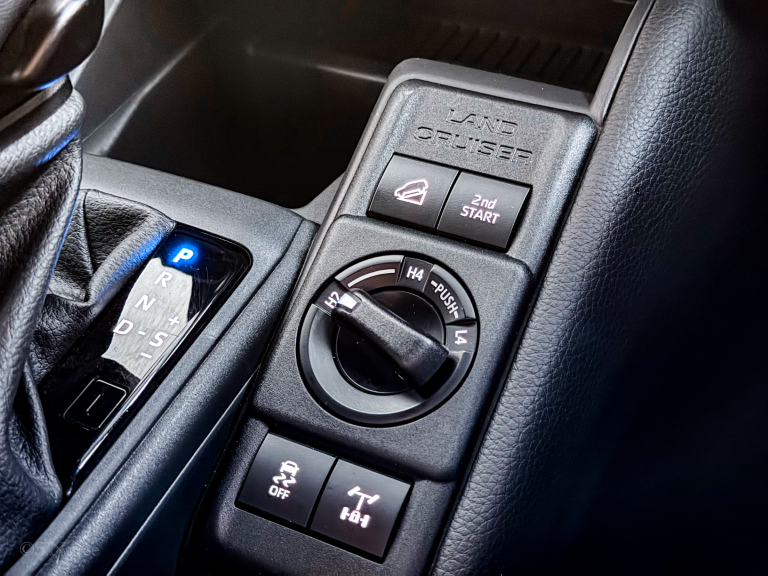
Suspension is engineered specifically for abuse, featuring independent double-wishbones up front and a rigid rear-axle setup, delivering impressive wheel articulation that Toyota claims matches that of the legendary 70 Series workhorse. Coupled with a mechanical part-time 4WD system, selectable low-range transfer case, and standard rear differential lock, the FJ delivers uncompromising hardware built for true off-grid exploration.
Styling
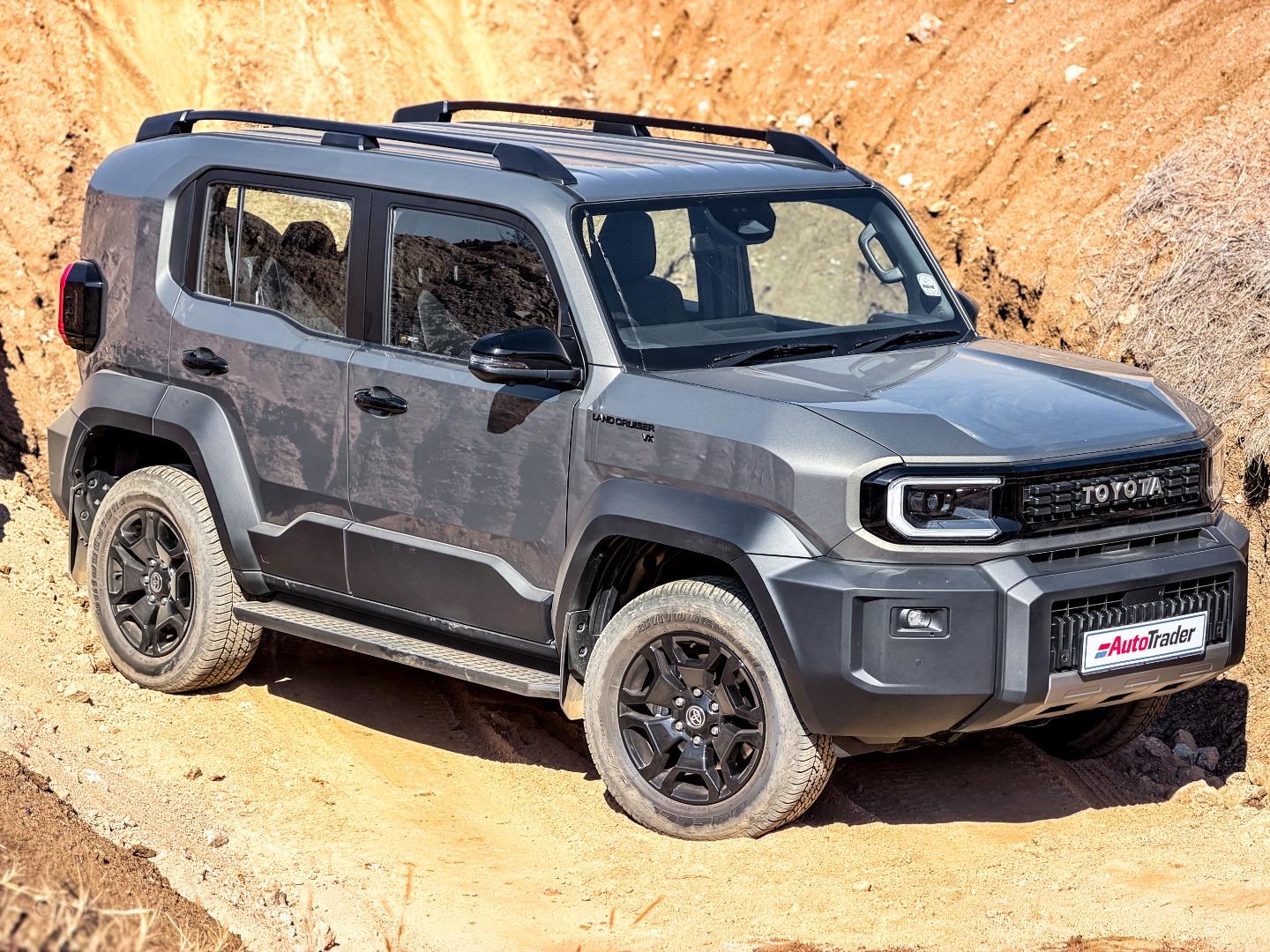
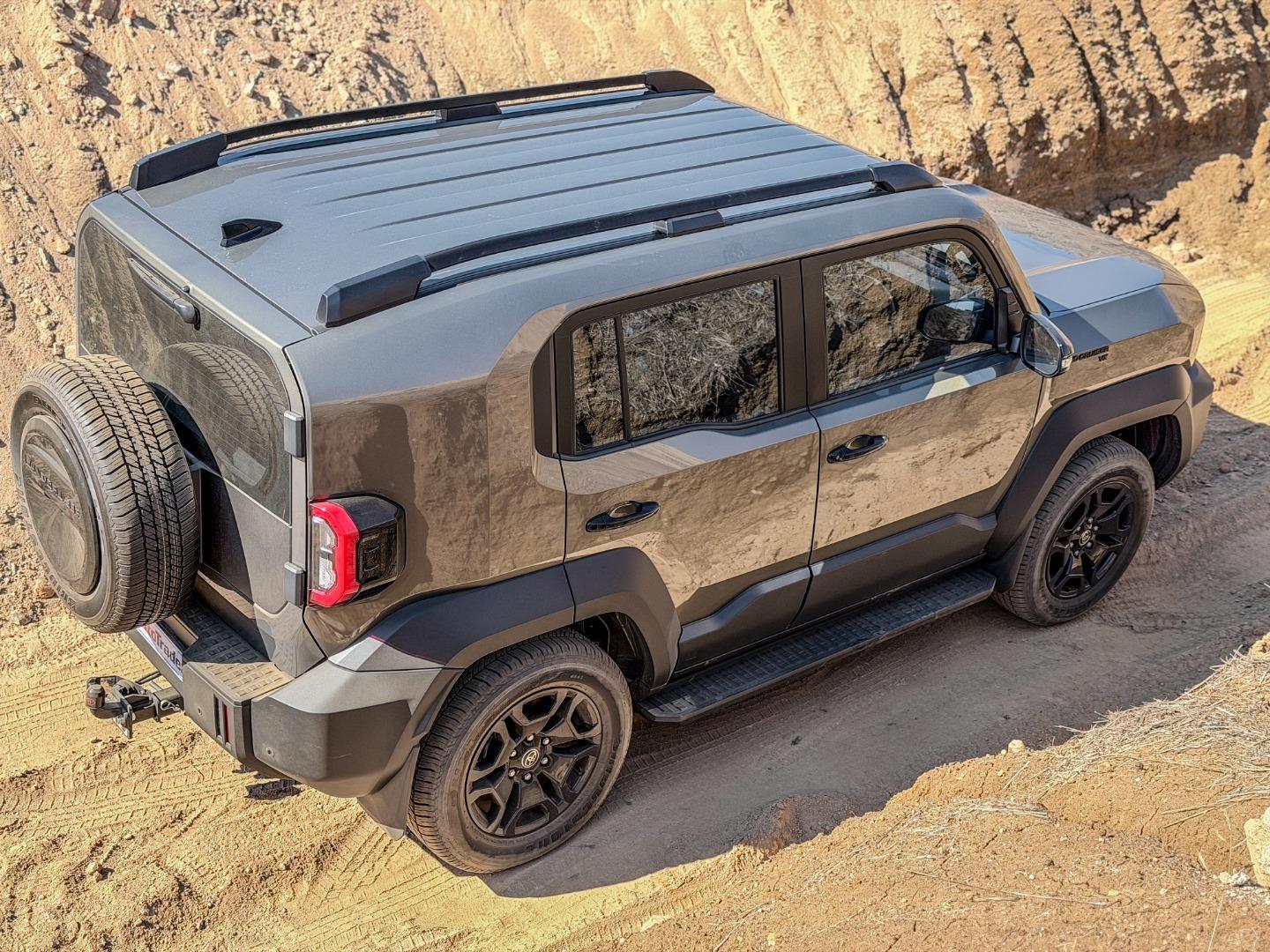
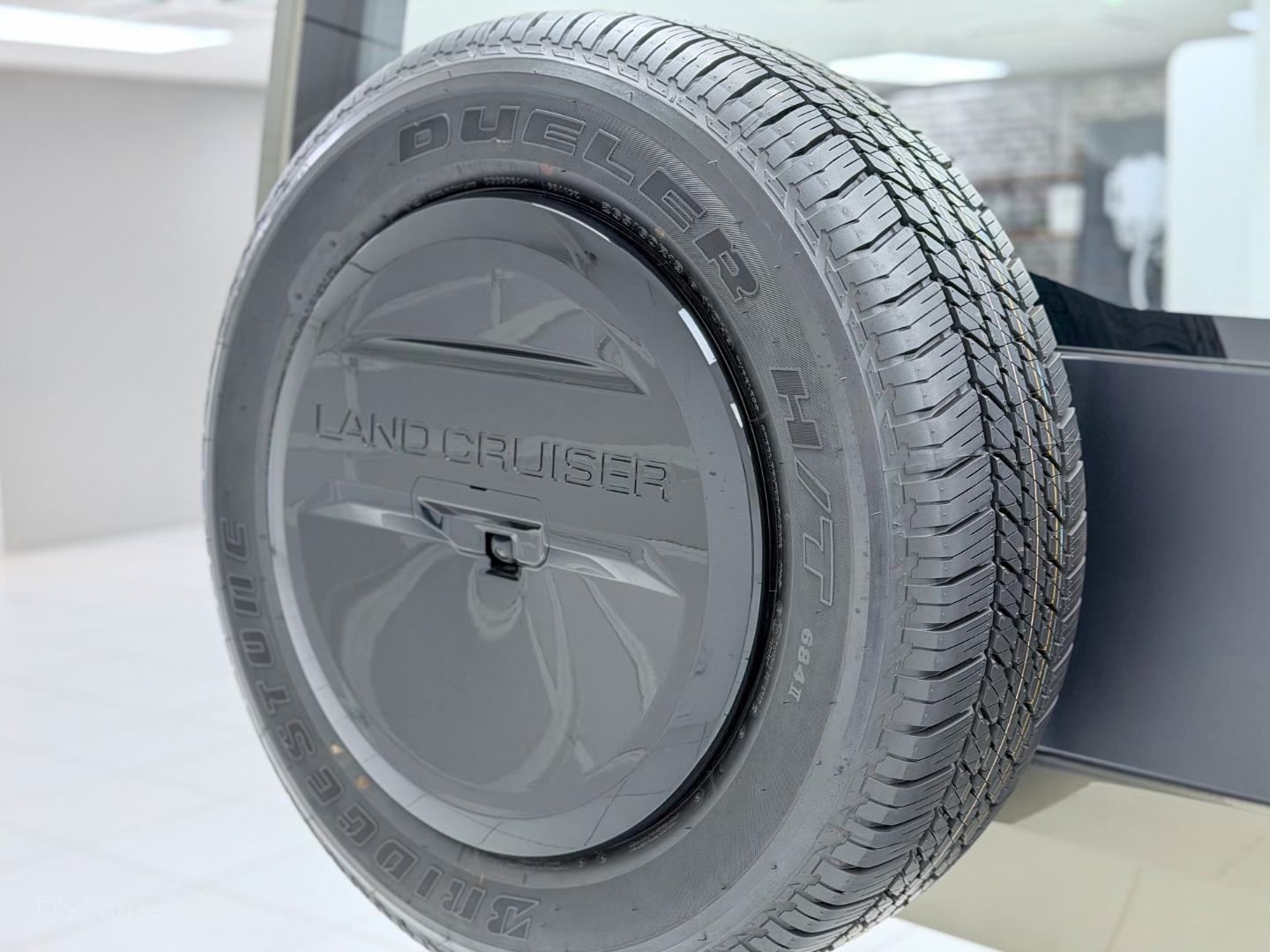
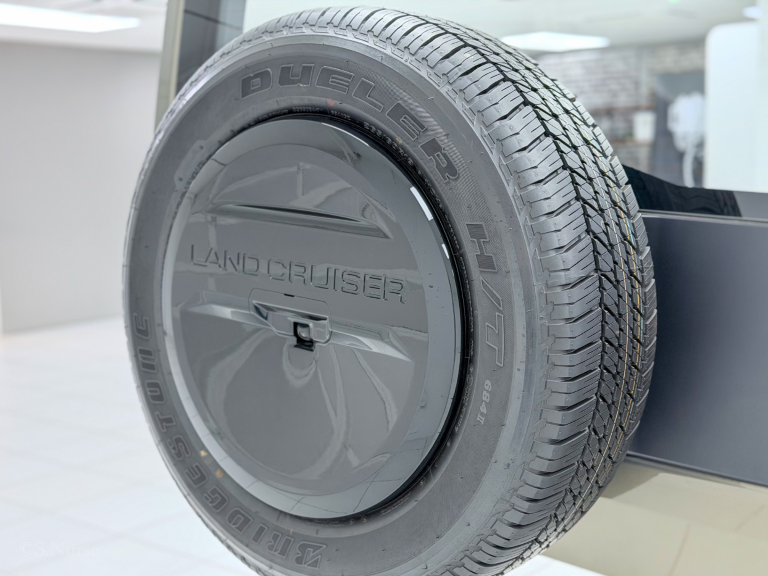
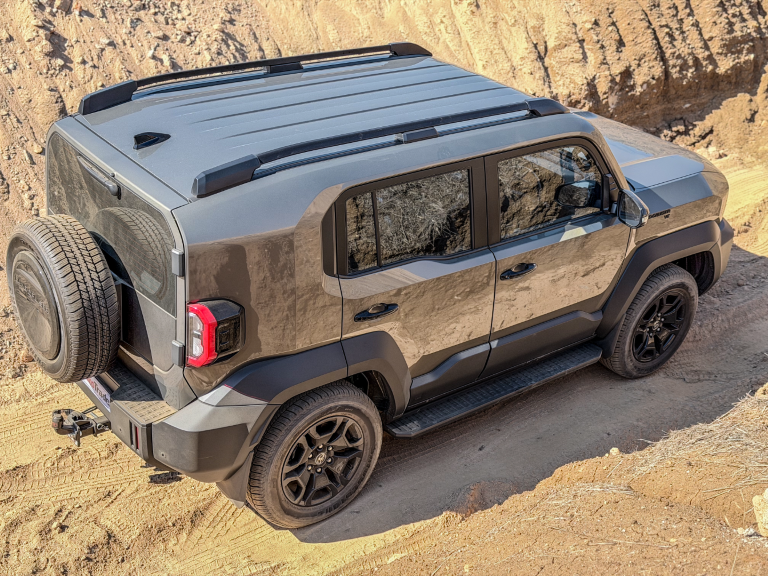
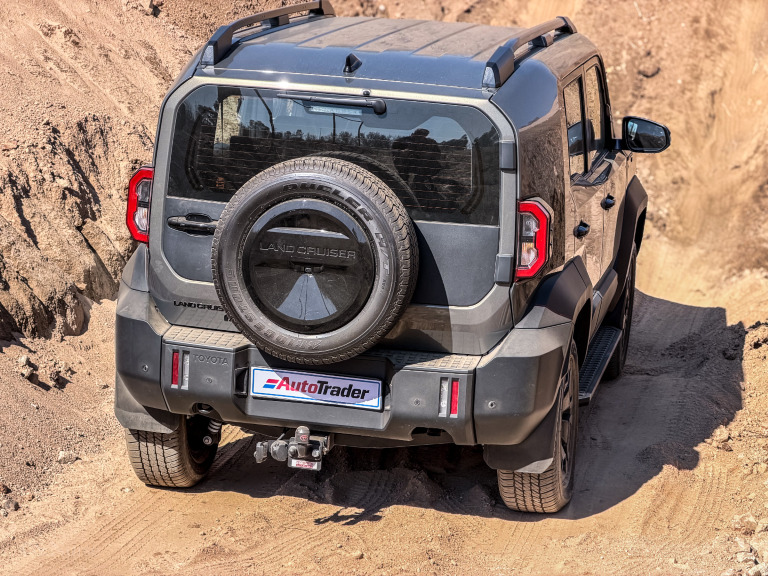
Visually, the Land Cruiser FJ adopts a boxy, functional stance that nods to classic Land Cruisers while still looking modern. The VX model tested features black roof rails, side steps, a full-size alloy spare wheel mounted on the tailgate, and 265/60 R18 tyres. At 4 610 mm long, 1 855 mm wide, and 1 890 mm tall, with a compact 2 580 mm wheelbase, it is easy to manoeuvre around town, but also surprisingly big when viewed in the metal. I personally find it quite ungainly from certain angles, but it has grown on me the more I look at it. I am certain that more off-road-ready tyres and some off-road accoutrements will transform it, as we have seen with its 70 Series sibling.
Interior, comfort & technology
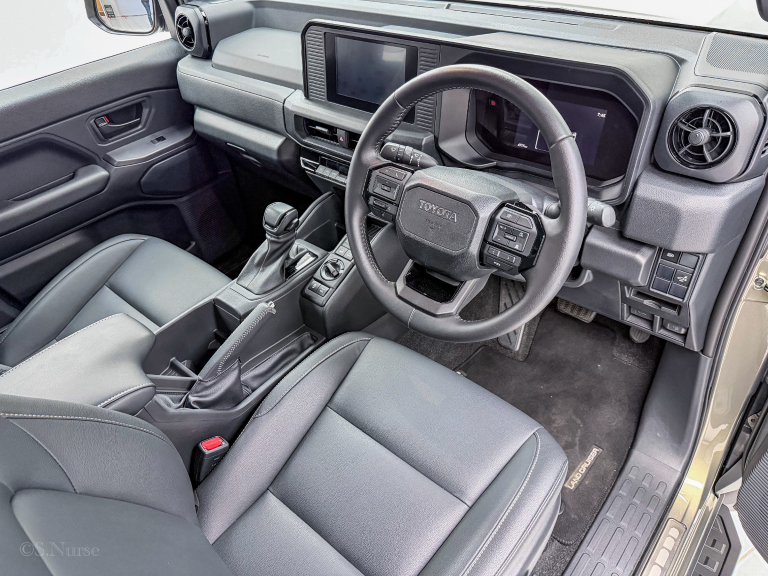
All models come with keyless entry and start, automatic air conditioning, auto wipers, an auto-dimming interior mirror, a touchscreen infotainment system with Bluetooth and voice control, 7 airbags, standard ISOFIX child-seat anchors, LED headlights, fog lights, and daytime running lights. Our VX trim press unit upgrades to artificial leather upholstery, electric driver seat adjustment, surround-view cameras (360-degree), and active driver assists. The interior will be familiar to those who have seen the latest Prado and new Hilux; however, the FJ simplifies all functionality. The infotainment system is underwhelming, but entirely functional, as is the digital cluster. The rest of the interior relies on simple buttons and switches to control key functions. It is easy to operate and refreshingly old school in an era of massive screens and digitisation.
Powertrain & performance
| Spec | Toyota Land Cruiser FJ |
| Engine | 2.7-litre 4-cylinder petrol |
| Power | 122 kW @ 5 200 r/min |
| Torque | 245 Nm @ 4 000 r/min |
| Drivetrain | 4WD with low range |
| Top speed | 165 km/h |
| Claimed fuel economy | 10.7 L/100 km |
| Fuel tank capacity | 63 Litres |
| Estimated range | ~589 km |
Under the bonnet, Toyota has chosen the tried-and-tested 2TR-FE powertrain. The 2TR-FE is a 2.7 L (2 693 cc) version of Toyota's long-running TR engine series. The version in the FJ has niceties such as Dual VVT-i (Variable Valve Timing with intelligence) and a higher compression ratio of 10.2:1 than pre-2015 variants of the engine.
While the engine is known for bulletproof long-term durability, its 122 kW and 245 Nm figures at sea level appear insufficient in a car with the aerodynamic properties of a brick and a kerb weight of 2.0 tons. Now factor in the 17% altitude-associated power loss we experience here in Gauteng, and you have a vehicle that feels underpowered and strained in most driving scenarios. Once up to speed, the car is surprisingly refined and comfortable, but introduce any overtaking scenario or incline, and you're met with a drone as the engine and gearbox do their best to maintain the requested speed. The engine sticks out like the proverbial sore thumb in an otherwise tantalising off-road package.
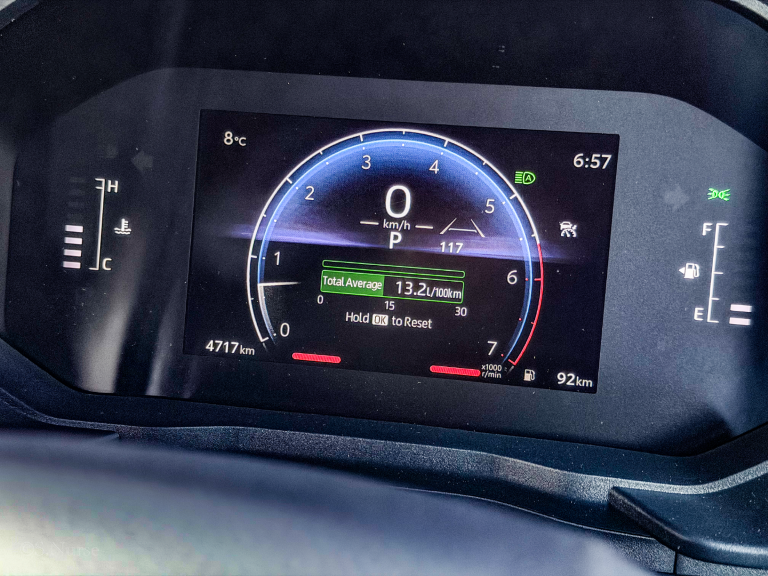
The engine leads to potentially the FJ's biggest pain point: its real-world fuel economy. My week with the vehicle resulted in a figure of over 13.0 L/100km, which included a variety of driving conditions from the daily commute to an off-road trail and some weekend family activities, which is representative of an average LC FJ owner's usage case.
Off-road ability & towing
Where the Land Cruiser FJ shines is when the pavement ends. Equipped with standard low-range, a rear differential lock, hill-start assist, hill-descent control, and 245 mm of ground clearance, it will comfortably tackle trail obstacles that stop most soft-roader crossover SUVs in their tracks. Its approach and breakover angles are 29 degrees, while its departure angle of 38 degrees means that some of the more difficult obstacles at Syringa Park can be negotiated with ease. I was truly stunned at how the FJ becomes an entirely different vehicle when shown a set of 4x4 obstacles. Suddenly, the asthmatic engine becomes an asset, with instant throttle response and enough torque to make crawling over obstacles easy. I still believe that a turbodiesel would offer the sort of versatility many are looking for, but during the off-road route, I didn't find too much to complain about with the petrol motor.
Having driven the car for a week, I can say with absolute confidence that this is a poor choice for anyone looking to tow. There isn't enough torque to make the prospect of towing anything other than painful. I shudder to think what its fuel economy would be like when towing.
Braked towing capacity: 2 500 kg
Unbraked towing capacity: 750 kg
Payload: 530 kg
How does it compare to key rivals?
The FJ enters a hot market populated by fresh, feature-packed competitors like the GWM Tank 300 and Jetour T2.
| Feature | Toyota Land Cruiser FJ 2.7 VX | GWM Tank 300 2.4T Ultra Luxury | Jetour T2 2.0T Odyssey Dark Knight |
| Price | R761 400 | R739 900 | R704 900 |
| Engine | 2.7L petrol (122kW / 245Nm) | 2.4L turbodiesel (135 kW /480Nm) | 2.0L turbo petrol (180kW / 375Nm) |
| Claimed fuel consumption | 10.7 L/100 km | 7.7 L/100 km | 9.3 L/100 km |
| Braked towing | 2 500 kg | 3 000 kg | 1 600 kg |
| Low range/diff lock | Std (Rear Lock) | Std (Front + Rear Lock) | XWD / Lock Modes |
| Service/maintenance | 9 Services / 90 000 km | 7 Years / 75 000 km | 7 Years / 75 000 km |
| Warranty | 3 Years / 100 000 km | 7 Years / 200 000 km | 7 Years / 200 000 km |
The takeaway:
The GWM Tank 300 2.4T offers substantially more torque (480 Nm), diesel fuel efficiency, and a higher towing capacity for less money.
The Jetour T2 delivers significantly more power (180 kW) and tech features at a lower price point, though it lacks a traditional mechanical low-range transfer case.
The Land Cruiser FJ counters with a solid service plan, Toyota’s extensive dealer network, and proven resale value retention in South Africa.
Pricing, warranty & service plan
Toyota Land Cruiser FJ 2.7 4x4 VX: R761 400
Prices include CO2 emissions tax and VAT.
Warranty: 3-year / 100 000 km
Service Plan: Standard 9-service / 90 000 km (10 000 km service intervals)

Verdict
The Land Cruiser FJ 2.7 4x4 is a nostalgic, honest, and rugged 4x4 that stays true to Toyota’s core values of mechanical simplicity and off-road capability. Its naturally aspirated petrol engine is its biggest Achilles' heel and may be a dealbreaker for many. These compromises must be taken into consideration when looking to purchase one. If you're after a more modern driving experience and still want a Toyota in the garage, the new RAV4 is a better bet for similar money.
Don't be surprised if a diesel version of the new FJ appears at some point, such is the demand from enthusiasts. Still, for those after a simple, old-school off-roader with a promise of high resale value and dependability, it is a compelling choice for bush enthusiasts and overlanders.