
Fresh-faced Fortuner a force to be reckoned with
We review the Toyota Fortuner 2.8 GD-6 4x4 AT



Fresh-faced Fortuner a Force to be Reckoned With
As much of an institution as Biltong, Koeksisters and Melktert, South Africa’s favourite large SUV recently had a complete makeover. But if Toyota sold thousands and thousands of Fortuners (the exact figure is 8385 units in 2015 alone) why go through all that trouble in recreating the Golden Goose? South African buyers are a finicky lot, and for the Fortuner to compete with the likes of the refined Ford Everest and Chevrolet Trailblazer, some automotive rabbits were destined to be pulled from hats.
The new Fortuner is indeed very dapper-looking, and may I say, a little more appealing to the people who probably spend most of their time in the driver’s seat. And who are these people we speak of? The busy moms, of course. There is not a single school parking lot without Fortuners to be found anywhere in Suburbia. However, the ‘Tuner’s new look has caused it to both gain and lose fans. After posting various photos on Twitter (@AutoTraderSA), there were quite a few followers with their own ideas about the Fortuner’s styling. The comments were mostly positive, but also included one or two opinions like “It looks like an enlarged hearse”.
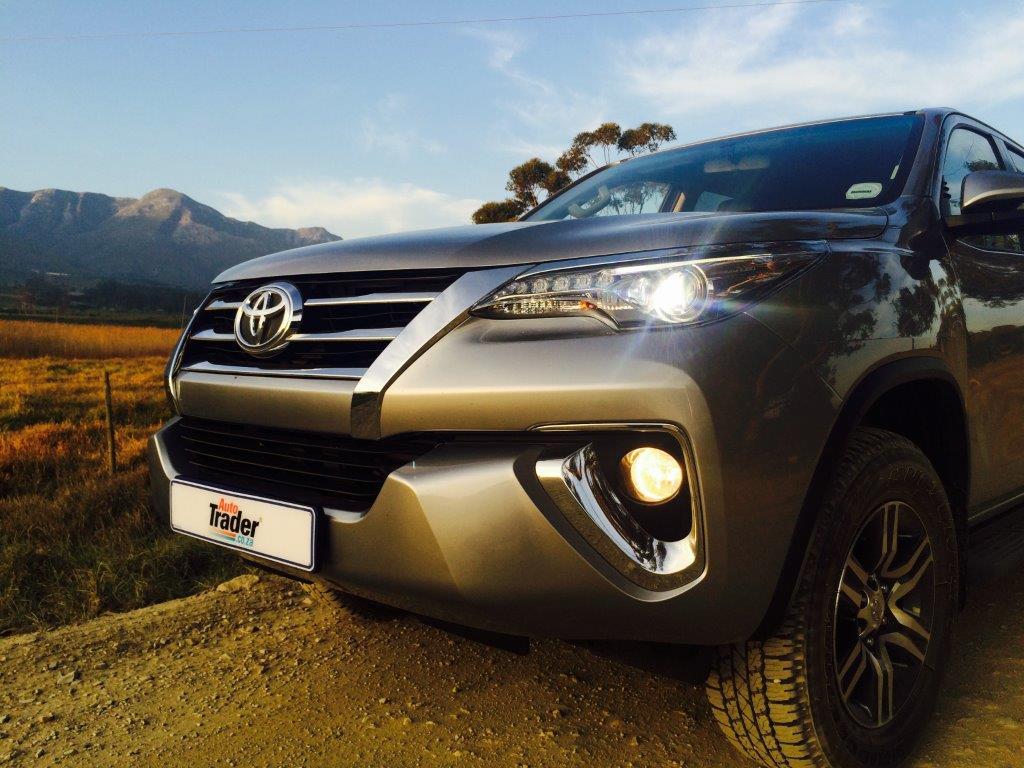
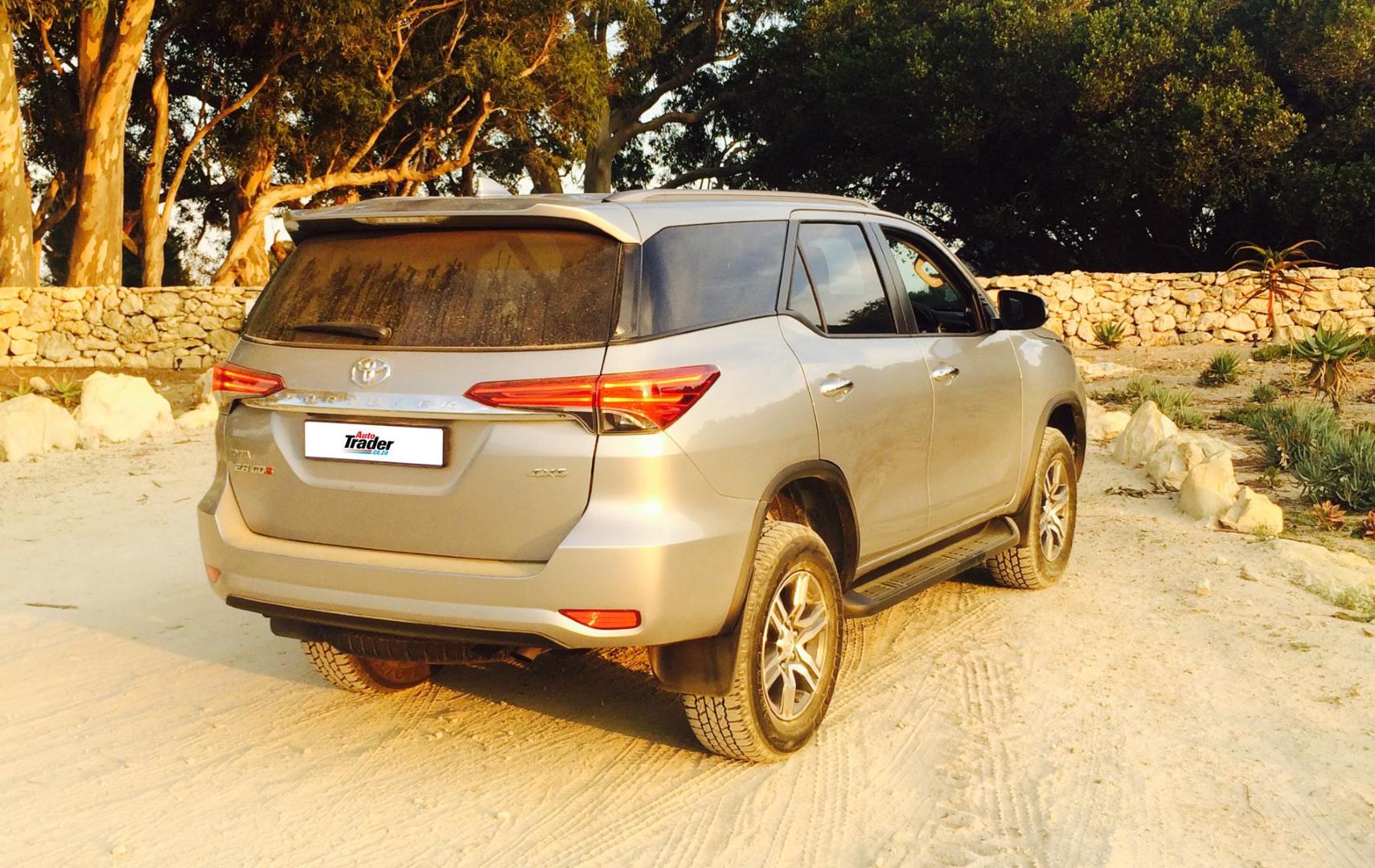
Personally, I think the new chrome-embellished face with its swept-back Xenon headlamps and daytime driving lights is quite fashionably futuristic. The elongated tail-lamps are a definite step up, and the blacked-out B and C-pillars help create a look that is much more on-trend than before. The new Fortuner’s ultramodern styling may not be to everyone’s preference, but boring it most certainly is not.
Here at AutoTrader, we received the 2.8 GD-6 4x4 auto variant (R589 400), which slots in directly below the range-topping Fortuner 4.0 V6 4x4 auto, priced at R633 400.
Luxuriously livable
The new interior is quite a different story, compared to the outgoing model. The newly designed cabin is all soft touch surfaces and leather, albeit not the real thing all the way through. Faux wood grain inserts and aluminium-look plastics add further to the cushy and modern ambience. The ultra-reflective, high definition infotainment system’s touchscreen looks upmarket enough to belong in a Lexus. The lid of the coolable (and lockable) leatherette-covered cubby hole springs open when you press the silver ‘Fortuner’ button. It is a cosseting, comfy interior, and the wood/leather steering wheel and beautiful chocolate brown leather seats with white topstitching contribute to that contemporary yet classic effect. It’s very far removed from the pragmatic interior of the outgoing model.
Space for days
The second row offers good legroom, and to my delight I discovered that the backrests can recline. The third row is a little short on leg space. If you absolutely must put the carpoolers in there, the second row can slide forward a little. The other niggle of the rear-most seats is that they don’t fold flat when not in use. They fold to an upright position on each side, and are then secured with straps to hooks, which isn’t done as quickly as you’d imagine. In the Chevrolet Trailblazer, those seats fold completely flat, almost creating a surface area large and flat enough for a double mattress. Furthermore, when folded and secured, these third row seats in the Fortuner make irritating squeaky noises as the leather rubs against the sides of the car when you drive. If that sort of thing drives you nuts, you’ll be on anti-anxiety meds sooner than you know. Those seats also obstruct rear visibility - thank goodness the rear-view camera is standard. On the upside: if the rearmost seats are in use, there’s still quite a bit of luggage space left.
The Fortuner on tar and dirt
The new diesel engine is not remarkably quiet, but it’s less gruff than the previous. Toyota have addressed noise, vibration and harshness issues, and the cabin is markedly quieter for all their trouble. The 2.8-litre turbodiesel engine is perfectly matched to a car this size, offering a good balance of fuel economy and grunt. Speaking of fuel usage and power, there are Eco Mode and Power Mode buttons situated below the gear lever. In town Eco Mode was our default setting, averaging 9-10 litres per 100 km. On a longer drive to neighbouring Stanford I saw the average drop to 8.5 litres / 100 km which is also a big improvement over the old engine.
When I needed to overtake someone, I pressed the PWR Mode button and I’d get a subtle boost in the Fortuner’s buxom buttocks. It doesn’t really give you more power, but it does sharpen the throttle response, so it feels like you do. It will then also stay in a specific gear for longer. The automatic gearbox is a little lethargic, but can be driven in manual mode if you think you can do better. For the mum about town, it shouldn’t be much of a worry. I should also mention that the new Fortuner’s automatic transmission is a six-speed, while the old auto box only went up to fourth.
My route through the countryside comprised some corrugated gravel roads as well. If you want to go deeper into the bundu, you can now switch from 2H to 4H whilst on the go, by means of a rotary dial. To switch to 4L (low range), stop the car, and turn the dial to 4L. On dirt 4H is preferable - with the dial locked in 2H the Fortuner’s tail feels a bit loose, which is a little disconcerting. It also feels more settled when there is weight inside, i.e. people and their camping gear. Soft suspension makes the inside of the Fortuner a good place to be when the terrain gets tricky. Toyota did not skimp on safety spec, knowing full well that the Fortuner will mostly be carrying priceless cargo. Standard electronic safety features across the entire range include Vehicle Stability Control (to keep that long tail in line), Active Traction Control (ATC), Trailer Sway Control (TSC) and Hill-start Assist Control (HAC). Downhill Assist Control (DAC) is available on the 4x4 models.
Are we completely convinced?
The rotary dial for high and low range settings makes going off-road more accessible for slightly more novice 4 x 4 enthusiasts. Not that the low range gear lever was complicated, but it all seems a little less daunting without it.
Admittedly, the new touch screen infotainment system is not without its twinges, but you’ll get used to it real quick. I would have liked a volume dial somewhere instead of using the touchscreen only to adjust it. And then there’s the silly third row seat configuration. However, the Fortuner is priced right - the more budget models offer more than enough convenience features and are just as safe as the top-end variants. The new Fortuner is sleeker-looking, more comfortable, more economical and capable as ever. And at the rate that new Fortuners are appearing in school parking lots, I’d say South African moms agree.
Facts and Figures:
| Price | : R 589 400 |
| Engine | : 2.8-litre turbodiesel |
| Power | : 130 kW |
| Torque | : 450 Nm |
| 0-100 km/h | : 10.8 seconds |
| Transmission | : 6-speed automatic |
| Ground Clearance | : 279 mm |
| Luggage Volume | : 492 / 1292 litres |
| Realistic Fuel Consumption | : 8.5 - 10 litres per 100 km |
| Fuel tank size | : 80 litres |
| Warranty and Roadside Assistance | : 3 years / 100 000 km |
| Service Plan | : 5 years / 90 000 km |