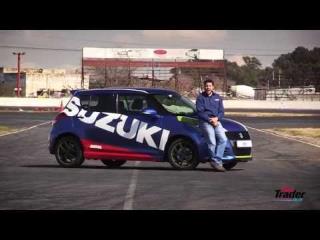
Suzuki Swift 1.2 GLX (2021) Review – A Solid All-rounder
The Suzuki Swift first appeared in South Africa more than a decade ago, and has since won countless followers for the brand. It has always been a complete package that punched above its weight, and the third-generation’s latest update shows no sign of disrupting this tradition. Safer and prettier, it’s now even better value for money.


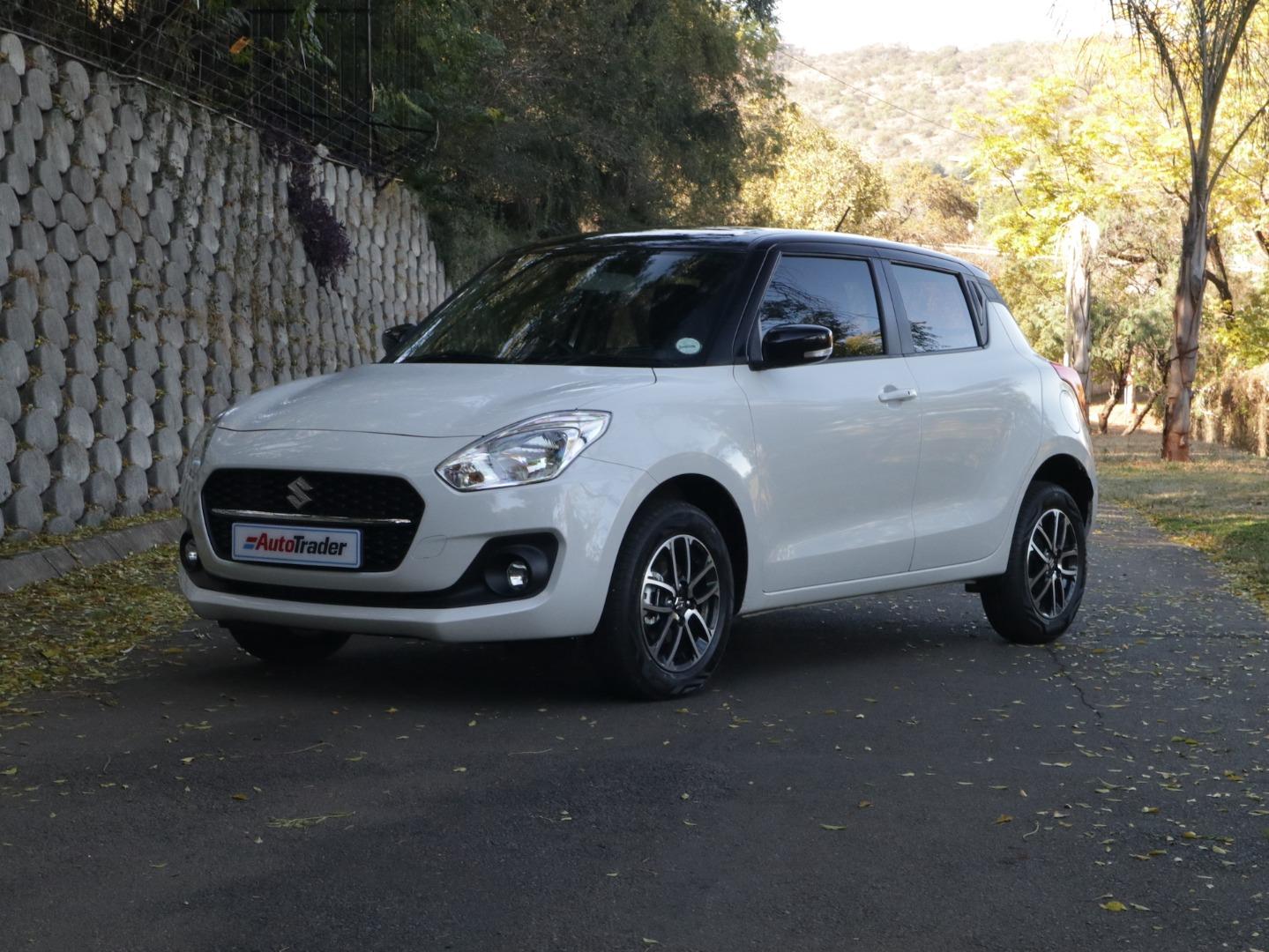
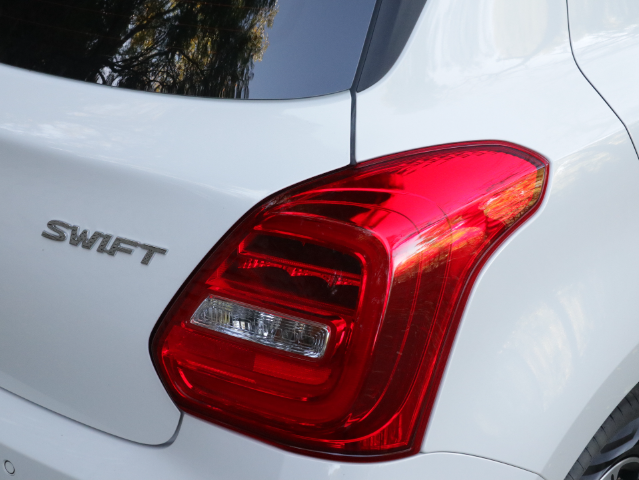
The new Swift’s revisions are so minor that even Suzuki themselves call it a “minor change”, and some casual observers may even miss the details completely. But that would be doing the latest Swift a disservice, because it features some real-world enhancements that significantly add to this model’s appeal.
Related: Shop for new and used Suzuki Swift cars for sale here.

Styling
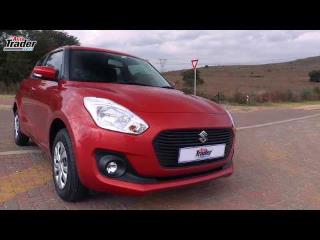
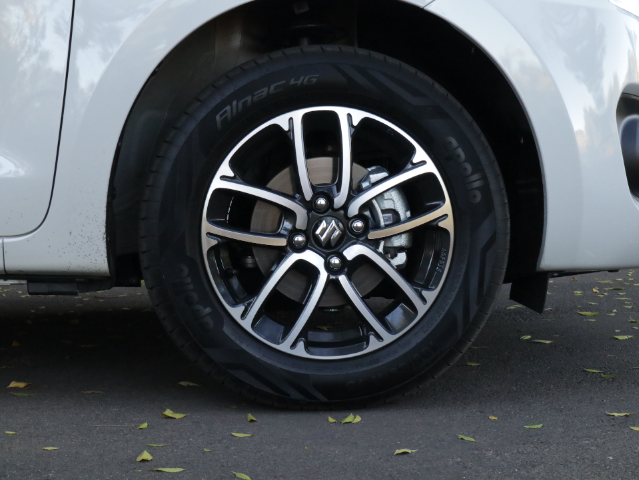
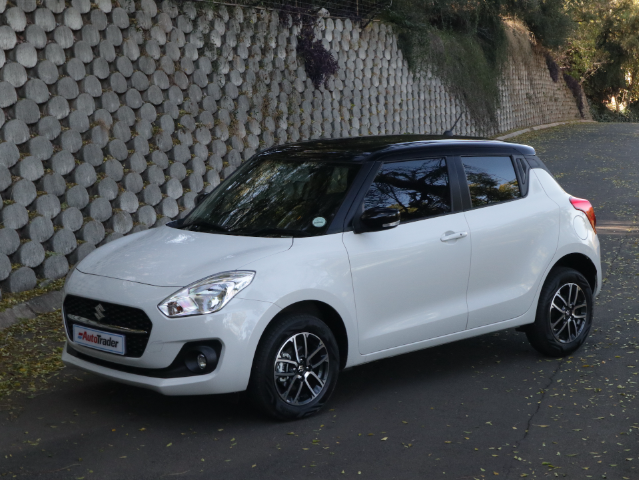
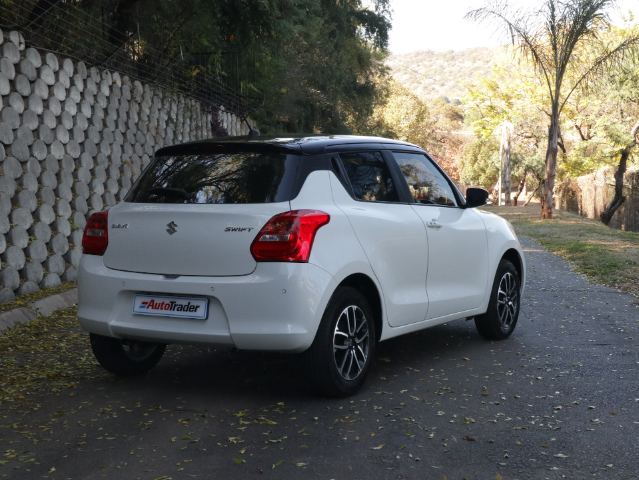
Cosmetically, the differences amount to a new grille, a new alloy wheel design (standard on the GLX trim), and jazzed-up paintwork. Most notable is the arrival of three dual-tone colour schemes, of which our test car features the pearl white lower body/black roof option. (The other available combinations are red/black and blue/white).
The black roof certainly suited our test Swift’s styling very well, and complimented the new wheels to give a visually lower, sportier stance. It’s an optical illusion, mind you, as there are no mechanical changes, but the overall effect is pleasing to the eye and lifts the Swift’s image a bit more upmarket.

Performance
The drivetrain also remains unchanged, and features Suzuki’s proven K12M engine on all Swifts bar the hot-shot Sport. In the case of our test car, the 5-speed manual gearbox was specified, but an automated manual gearbox (AMT) is available as an option. We’d recommend staying with the manual, unless you really hate changing your own gears.
There’s only 61 kW and 112 Nm under the bonnet, courtesy of a non-turbo 1.2-litre, 4-cylinder engine, but these modest outputs are offset by the Swift’s extremely low kerb weight. With only 875 kg to move around, that 61 kW isn’t over-burdened on the road, while well-chosen gear ratios help to make the most of the little bit of power on offer. Suzuki claims a 0 – 100 km/h sprint in 12.0 seconds, and that’s perfectly adequate for a car of this type.
Freeway driving takes some forward planning and pre-emptive gear changing if you’re in a hurry or want to overtake. But, even with the rather leisurely progress on offer, the power is enough to cruise at the national speed limit, provided you’re willing to spur the little non-turbo 1.2-litre, 4-cylinder engine to action by rowing some ratios.
The Drive
It's not as though operating the manual gearbox is in any way a chore, anyway: The gear shifts are slick and the gear lever has a direct feel, and the clutch is light in action and smooth in engagement. As a result, it’s no hardship to chase high revs in search of acceleration – in fact, it’s a rather charming throwback to a simpler, non-boosted era.
As for the driving experience itself, it’s all rather uneventful, really. This isn’t a car meant to set your pulse racing, and easy and safe operation takes priority over driver engagement and sporty handling. With that said, the Swift feels agile in most conditions, and has mostly decent straight-line stability.

There is one peculiarity that rears its head at cruising speeds, however, and it relates to the steering system. With the steering wheel in the straight-ahead position, there’s a disconcerting vagueness to the steering feel, and a sensation much like a delayed reaction to slight steering inputs.
This might be due to a wheel alignment anomaly resulting from the Indian-built Swift’s raised suspension, as the same symptom has been noted in other 1.2-litre Swifts as well – but not in the previous-generation 1.4-litre or any Sport variants. Either way, this is the only real point that justifies criticism in the Swift’s dynamic envelope, and it handles really well once the steering angle increases.

Space and Comfort
Front-seat occupants will find no cause for complaint, thanks to large door apertures and plenty of leg- and head room in front. Shoulder room isn’t massive, however, but that’s understandable, given the Swift’s compact dimensions. And, provided the front seats house average-sized people, those in rear seat won’t complain too loudly, either.
The luggage compartment is class-competitive, but not overtly generous at 268 litres. Split-folding rear seatbacks add practicality, and allows for a maximum cargo volume up to 953 litres.
Thanks to that Indian-spec suspension, there’s lots of wheel travel and a very compliant ride quality. While this arrangement can militate against ultimate handling sharpness, the compromise is well-suited to the Swift’s intended use, and matches the priorities of most buyers to a large degree.
Comfort is further enhanced by surprisingly well-contained cabin noise levels, with comparatively little noise intrusion in general driving and (at most) a cheeky roar under full-bore acceleration. Meanwhile, the cabin’s quietly-stylish design and solid build quality makes it a pleasant place to spend your commute.
Standard equipment is generous in GLX trim, with keyless entry and push-button start, climate control, a high-resolution colour touchscreen infotainment system with smartphone mirroring, and a rear-view camera being the headlining features. Other standard Swift features include electric windows all round, central locking, and air conditioning. In short, there’s a lot of toys for your money in a Swift GLX.
Safety
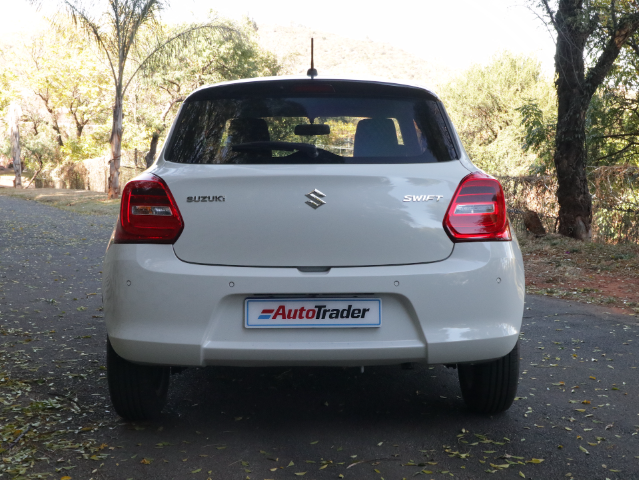
Pre-facelift Swifts had most of the basic safety equipment installed, and featured ABS with EBD, rear ISOFIX child seat anchors, and two airbags across the range. This has now been augmented by stability control (ESP), identifiable by its little push-button switch to the right of the steering column. It’s encouraging to note that all Swift variants carry the same basic specifications, ensuring consistent safety credentials for all derivatives.
The only fly in the safety ointment may revolve around the current-generation Swift’s actual crash test ratings. When Global NCAP tested the Swift in 2018, it only managed to score 2 stars for occupant protection. This was in the same specification as local 1.2-litre Swifts (with 2 airbags), unlike the European-market Swift, which scored 3 stars with 6 airbags.
Fuel Consumption
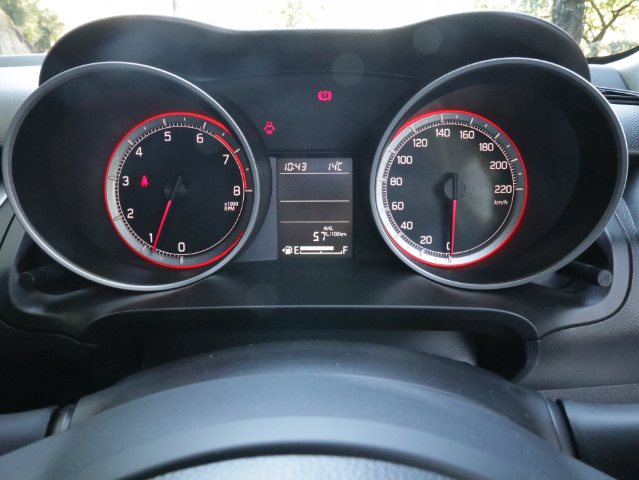
This has always been one of the Swift’s ultimate selling points, and the latest car is no exception to the rule. Suzuki claims an average consumption of 4.9 ℓ/100 km, and our test car returned 5.7 ℓ/100 km over a week’s worth of mixed-cycle driving.
It should be noted that the air-con was turned on for most of that week, and no effort at all was made to save fuel. Conservative drivers will definitely be able to better this test average, and some owners report average consumption of around 5.2 ℓ/100 km.
Price and Warranty
The Suzuki Swift 1.2 GLX’s list price of R 218 900 includes a warranty for 5 years or 200 000 km, as well as a service plan for 2 years or 30 000 km. That warranty is particularly generous, and applies (along with the service plan) across all Swift variants.
*Pricing includes all taxes and was accurate at the time of writing, but is subject to change without prior notice.
Verdict
There’s a lot to admire about the Suzuki Swift GLX. Not only is it extremely well-equipped for the money, but it’s also easy to live with and very cheap to run. And, while it’s not quick, the Swift has a surprisingly grown-up driving “feel” and good all-round comfort and refinement. Barring those questionable crash test results, there’s little reason not to recommend it as a high-value new-car purchase. That’s why it’s very nice to have ESP as standard now – it should at least aid in avoiding collisions in the first instance...