
2019 Subaru Forester: More of the same, now with improved (almost) everything.
2019 Subaru Forester: More of the same, now with improved (almost) everything.



By Martin Pretorius
The Subaru Forester has always been a favourite of those wanting a distinctive kind of family car, and internationally, it’s one of Subaru’s most important models. Now, having grown bigger and better in almost every way, the latest Subaru Forester has an improved chassis, more space, and ever-better safety equipment. It’s good value to boot – if buyers can accept one compromise.
Styling
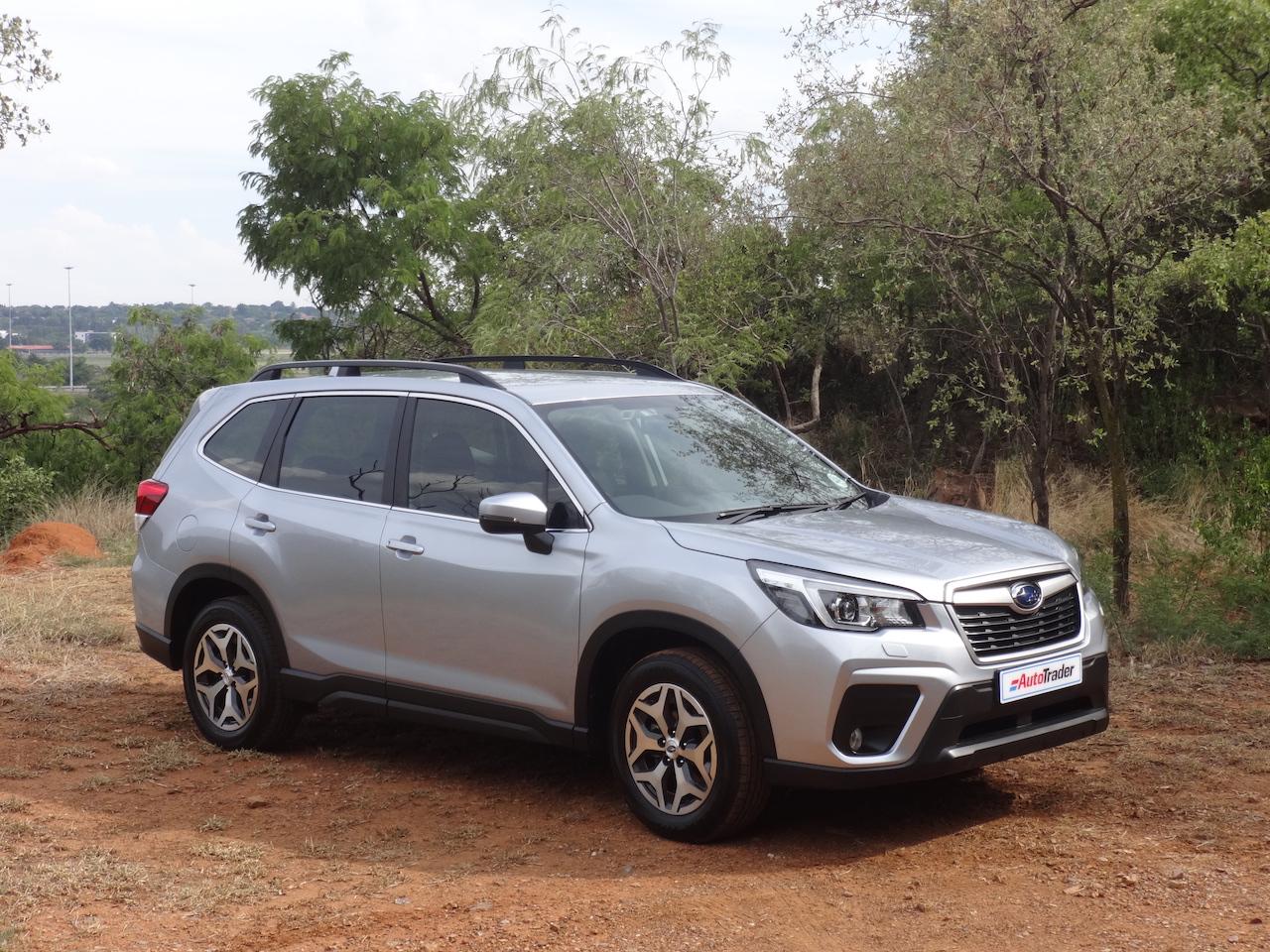
Going to the trouble of re-designing the Forester from the ground up, it still appears as though Subaru also went to great lengths to disguise the fact that this really is an all-new car. But don’t let that apparent same-ness deceive you, because, unlike many other “new” cars, the changes to the new Forester are far more than mere cosmetic updates.
The fifth-generation Forester rides on Subaru’s latest platform, and shares very little with its predecessor – it’s larger in every dimension except its height. The styling language is still from the “practical box with added ride height” school of thought, with a blunt, bluff nose and rather upright windows, but some interesting creases along its flanks, along with the side window line which raises towards the rear, do try to keep it from looking too slab-sided. Those big windows make for excellent outward visibility – an aspect boosted even further by the raised seating position.
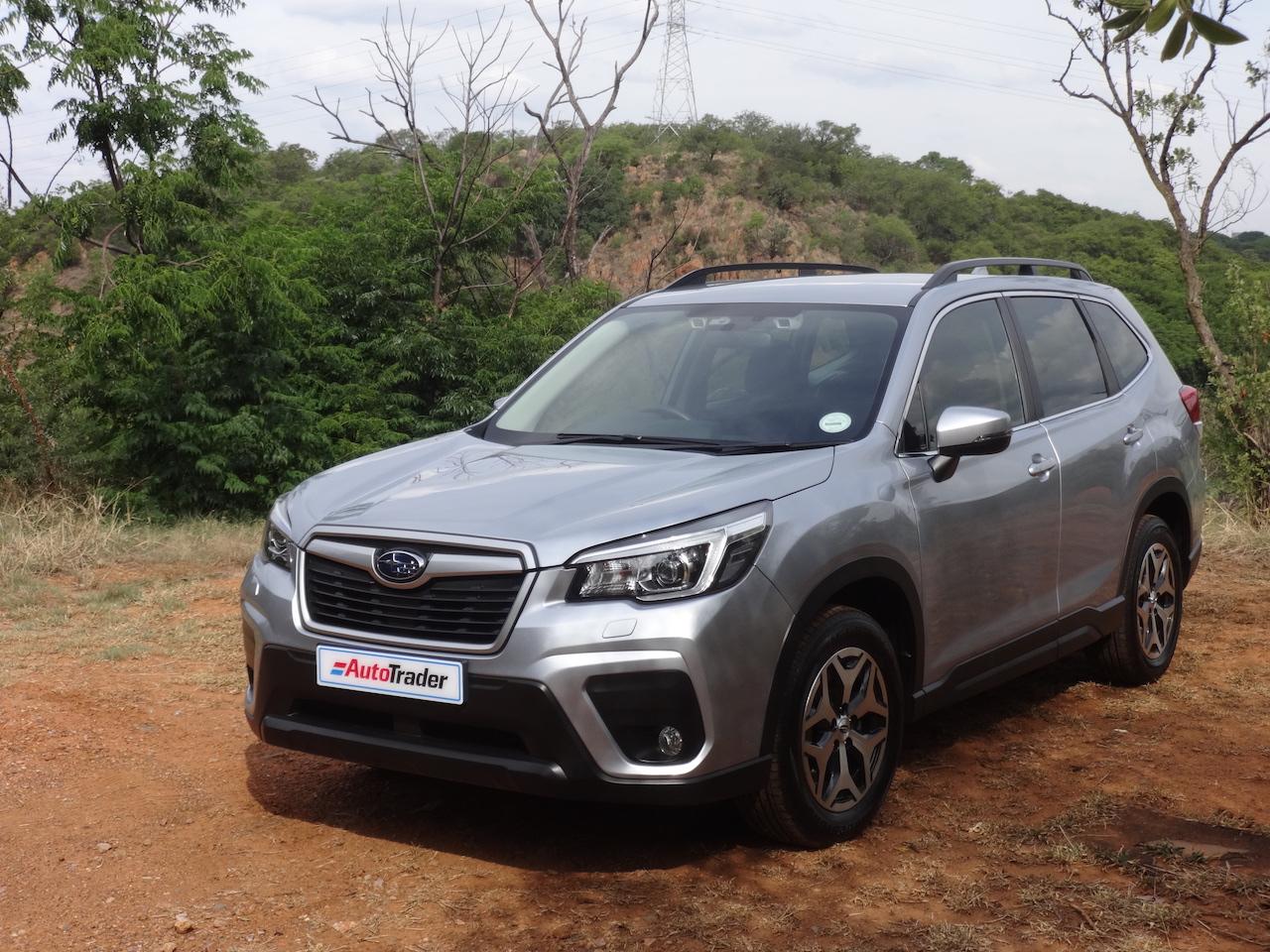
The frontal aspect is perhaps the most visually pleasing view of the new Forester, with a gaping grille flanked by slant-eyed, angular headlamps. Combined with the squared-off bonnet, it makes the Forester appear much more aggressive, more masculine even, than ever. The black body cladding and bumper detailing made for a nice contrast to the silver paintwork of our test car, further upping the butchness quotient.
A new tail light design helps to set the Forester apart at the rear end – it may not be as non-confrontational as most of the blocky designs employed on the older generations, but at least there’s no mistaking the new Forester for anything else in traffic. A rather ornate spoiler assembly is fitted to the tailgate for further visual distinction, which helps to tie together the mass of creases and styling angles around the rear three-quarters. But, even with all these new details, the car is still recognizably a Forester: familiar enough to soothe traditional buyers, even if it’s different enough to draw new feet into the showroom floor.
The Drive
The Forester’s new platform really makes its presence felt on the road, with top-shelf driving dynamics and a superb ride quality. Subaru’s engineers clearly spent a lot of time fine-tuning the springs and dampers, because this Forester strikes a perfect compromise between ride comfort, plenty of road grip, and secure, even sporty, handling dynamics. Fast cornering reveals well-controlled body motions with a minimum of wallowing and much less understeer than ever before, while the new, fast-ratio steering rack is responsive and free of any vagueness.
Even though X-Mode makes a repeat appearance on the Forester, alongside that body cladding and raised ride height, it’s not really an off-roader. However, it will be more than capable of handling the typical off-tar driving such a vehicle might encounter in normal use.
Add the secure traction on offer from Subaru’s full-time all-wheel drive to this mix, and you end up with one of the most dynamically-adept mid-sized SUV/Crossovers around. If anything about this Forester shows its kinship with the wonderful WRX, it’s the chassis development and steering – all of which makes the lacklustre performance that more frustrating.
Performance
I suppose that we might as well get the bad news over and done with now, so here goes. The latest Forester is a great car, hamstrung by one significant downside: it needs better motor skills. On paper, the mechanical specification looks reasonable, with peak outputs of 115 kW and 196 Nm on call from its naturally-aspirated 2.0-litre Boxer (flat-four) engine. These output figures are an improvement on its predecessor’s 2.0-litre derivative, thanks to detailed fine tuning and the addition of direct petrol injection.
In the fourth-generation Forester, the 2.0-litre only came paired to a 6-speed manual gearbox, which gave the driver a choice between reasonable progress and great fuel efficiency. It was even somewhat fun to drive. But that was then, and this is now... See, the new Forester is only available with a constantly variable transmission (CVT), which manages to suck every bit of spirit from the new engine. The reality is that this is a fairly big and heavy car endowed with a rather low-powered engine, which means that it needs to be flogged to achieve useful acceleration. CVTs generally don’t respond well to flogging, though – and this one enjoys it even less, because it’s very slow to respond to sudden power requests from the driver’s right foot.
Making matters worse, the non-boosted engine is quite feeble in the low-rev torque department, which makes the transmission’s laziness even more notable, especially in traffic and at Gauteng’s power-sapping altitude. This low-rev lethargy is probably also the reason why the CVT sends the engine speed soaring at the first sign of an incline on the freeway: driving from Johannesburg to Pretoria with the cruise control set at the national speed limit will often see the rev counter swing between 2000 and 5000 r/min, all in an effort to maintain momentum up the hills.
The planned introduction of a 2.5-litre engine in about a year’s time will likely improve on this situation, but as it stands, the small engine/CVT combination is the weakness in the new Forester’s armour. It should also be noted that there won’t be a Forester XT this time around, so forget about any serious performance credentials for this generation.
Space and Comfort
From the moment you open the driver’s door, it’s clear that comfort and ease of use were prime considerations in the design of this Forester. For starters, it’s really easy to get in and out, thanks to doors which open almost 90 degrees, and seats which are mounted at exactly the right height for comfortable entry. There’s plenty of space for occupants to move around as well, with enough room in the rear seat for a 1.95-meter-tall male able to sit behind himself without too much contortion.
This is a family-oriented vehicle, so it’s only appropriate that thoughtful touches abound. For example, the rear door openings are shaped to ease the fitment of child seats, and there are cup holders galore , and two pockets on the back of every front seatback. The large luggage compartment is equally thoughtfully laid out, with four retracting metal tie-down loops to secure your luggage, and plastic hooks to securely locate shopping bags located next to the neat remote rear seatback releases on both sides of the boot. In addition, the tailgate is electrically operated, with an adjustable opening height to suit drivers of different sizes.
Other convenience features in this mid-spec “L” derivative include a very good touchscreen infotainment system, incorporating Apple CarPlay and Android Auto as well a high-resolution rear-view camera, keyless entry with pushbutton start, leather upholstery, USB ports scattered throughout the cabin (including two charging-only ports for the rear cabin), and electric adjustment for the front seats with a two-position memory function for the driver. The seats deserve a special mention here, being just about the most comfortable pews you’ll find this side of a Volvo: cosseting yet supportive, they accommodated even my distorted 6-foot-4 frame without inducing any discomfort on a long drive, and that’s really saying something.
Safety
One of the new Forester’s main selling points is its safety credentials. In fact, Subaru is the only manufacturer whose entire range carries the American IIHS (Insurance Institute for Highway Safety) “Top Safety Pick Plus” stamp of approval as well as an NHTSA (National Highway Traffic Safety Administration) 5-star rating. Furthermore, the new Forester was designed with a raised bonnet for added pedestrian safety, while other touches such as the excellent sightlines from the driver’s seat and very rigid passenger cell contribute to its intrinsic safety credentials. The cabin is dotted with 7 airbags, ABS and stability control are standard, and then there’s Subaru’s EyeSight driver assistance suite on top of everything else.
The basic functionality of EyeSight isn’t really all that radical these days, because the adaptive cruise control and lane departure warning it offers has become commonplace in many premium (and even not-so-premium) products. However, it’s the seamless integration of EyeSight into the driving experience that is the really impressive bit: the adaptive cruise can be set to varying following distances and offers traffic jam assistance as well, while the level of aggression for the automatic acceleration when the road clears can also easily be adjusted.
In addition, the automatic emergency braking works brilliantly, priming the brakes and warning the driver when the car detects a possible collision, and even slamming on the anchors when an errant pedestrian wanders into the car’s path. Yet, with all this safety-first focus, the systems work so unobtrusively that they seldom disturb the driver. On top of all this built-in safety is a set of excellent LED headlamps with automatic alignment and levelling, bending function, and automatic on/off control.
There are some strange oversights, however: there’s no lane keeping assistance, and blind spot monitoring (standard only on the top-level “S” trim) was conspicuous by its absence in our test car. Parking sensors don’t appear on the spec sheet either – not really a problem at the rear, thanks to that hi-res rear camera, but a bit of a bother in front, when sticking that bluff nose into a parking spot.
Fuel Consumption
With the newly updated engine, Subaru claims an average fuel consumption figure of 7.6 litres/100 km – rather thirsty for this market segment, really. The reality is even less promising, as our test vehicle returned an average figure of 9.2 litres/100 km over the week-long test period. That said, this isn’t an altogether terrible result for such a heavy, relatively underpowered SUV, with full-time all-wheel drive and a CVT stuck between the engine and the wheels. On the open road, the consumption figure does drop into the high-7s, though, which means that long trips at steady speeds will result in decent enough fuel efficiency.
Price
Subaru South Africa pulled off a bit of a miracle in the pricing stakes, because the new Forester starts at only R429 000 in base spec. Mid-level “L” trim, such as our test car, includes EyeSight and retails for R469 000. The top “S” trim level still slips in below the R500 000 mark with a grand to spare, and adds a Harman/Kardon audio upgrade, 18-inch alloy wheels instead of 17-inch units, extra safety kit, an upgraded X-Mode system, and some cosmetic add-ons – still remarkable value for a spacious, mid-sized SUV with full-time AWD and a very comprehensive safety specification.
The Verdict
It would be easy to dismiss the new Forester simply because of its lacklustre on-road performance, but that would be a bit unfair. In reality, its leisurely performance won’t matter very much to most of the buyers in this market segment, and to be fair, very few competitors around this price point have any measure of lively performance anyway. Seen in this context, the Forester’s performance parameters are adequate for its target market, and its great driving dynamics, superb comfort levels, comprehensive specification level and solid value statement makes the new Forester a very appealing contender. Its continued sales dominance in Subaru’s range is practically guaranteed.
Expert rating:
3.5/5