
Peugeot 108 Review: When safety comes first.
Driving the little Peugeot 108 in a typically congested traffic scenario makes a strong case for this pint-sized city slicker. It need only a whiff of petrol to keep moving, and its dimensions makes it easy to thread through traffic. It surrounds its people with airbags, guards them with ESC, and has a nifty touchscreen to boot. The fact that it’s quite affordable is a nice surprise, too. But there are some downsides…


By any other name.
Let’s say you’re on a limited budget, need to buy a new car for your offspring or better half, and don’t want to compromise on safety features. Some research will soon show you that the Toyota Aygo with the most airbags costs more than R200 000 these days. Why bring the little Aygo into this? Because, up till very recently, it gave buyers the least expensive way to get the combination of 6 airbags and stability control.
But that’s changed now. There’s a challenger from Lyon, and it comes armed to the teeth and ready to do battle with its twin. That’s right: the smallest Peugeot and the smallest Toyota are essentially the same cars, even though they look quite different. The result of a joint venture which also spawned the Citroën C1, the three cars share a platform, drivetrain, electrical architecture, and interior design. The only differences are to be found in their outer skins, and in their respective equipment levels.
Related: Ané Theron tells us three things you should know about the Peugeot 108.
Styling
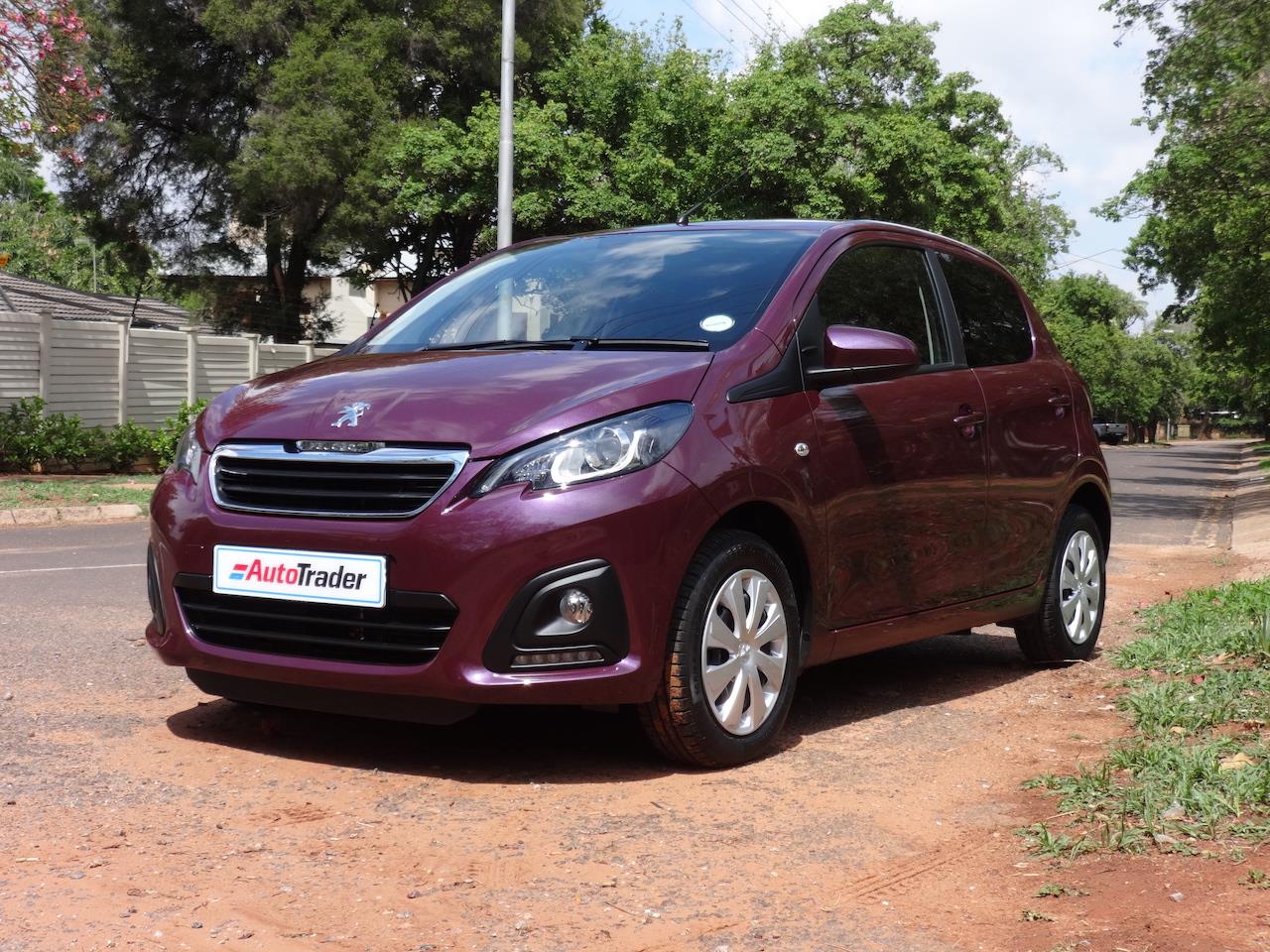
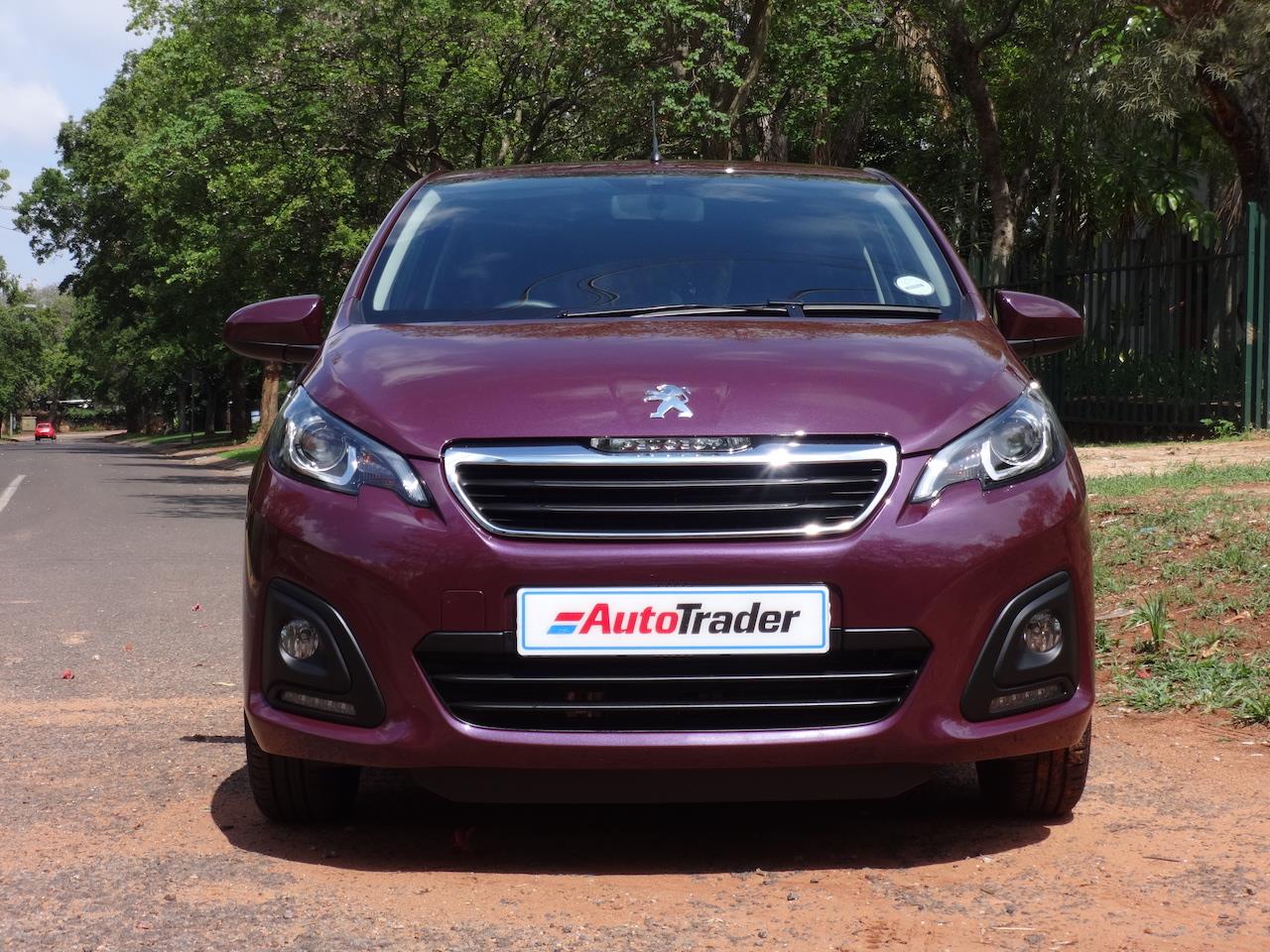
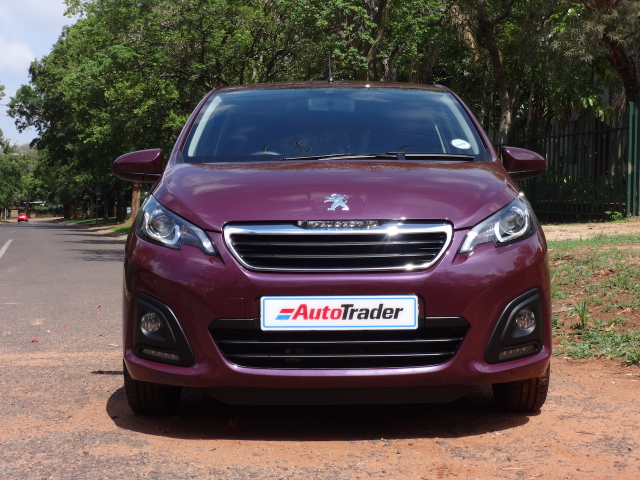
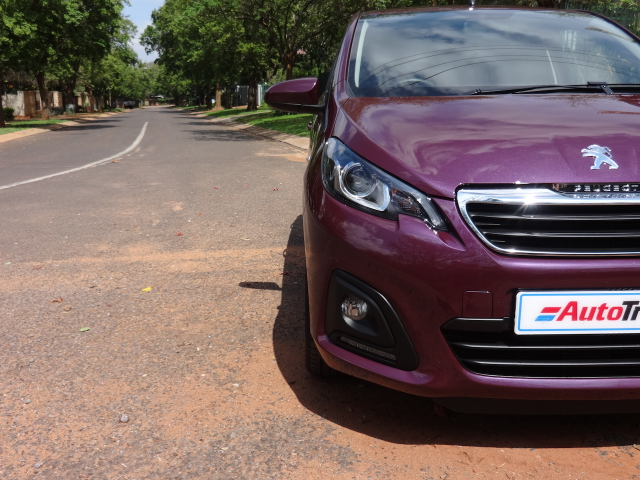
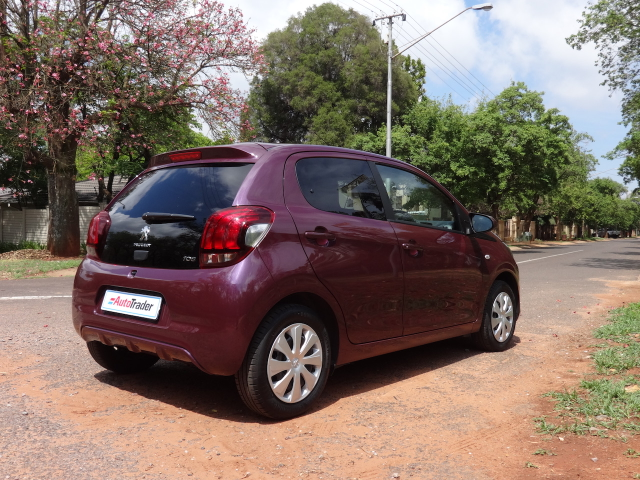
At first glance, it’s hard to believe that the Peugeot 108 rides on the same platform as its Toyota cousin, so startling is the difference in their appearance. Where the Aygo has a cross-looking face, the 108 looks cheerful and friendly, with a little LED make-up applied for good measure. If the designers were aiming for an upmarket appearance, they certainly succeeded as far as the confines of a very small car’s frame would allow.
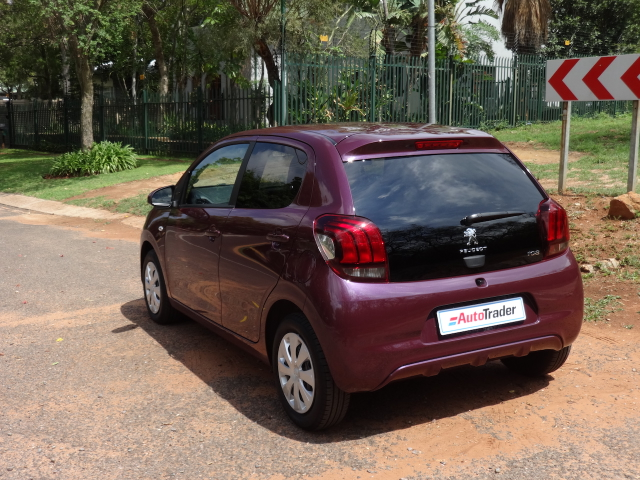
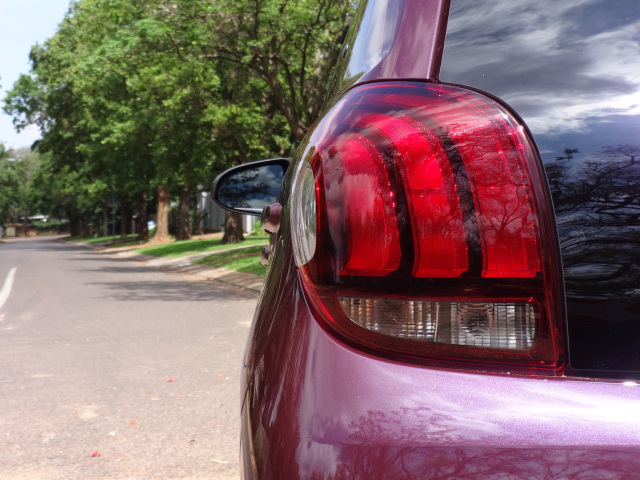
The rear end is quite a bit different as well, with Peugeot’s signature claw-like design applied to the tail lights and rounded curves, rather than the Aygo’s angular rear end. One feature they do have in common is the all-glass tailgate – a nifty way to reduce costs and simplify the design. Overall, the 108’s styling is sophisticated and modern, and it looks like it should cost quite a bit more than it does.
The Drive
This is a tiny city car, so it would be unreasonable to expect executive-car sophistication from the 108. Even so, the little one has a reasonably controlled ride quality and safe handling characteristics. It’s not meant to be a thrilling driver’s car, but its small size means that gaps in traffic are easily exploited and that parking is a breeze. The facts that it rides with acceptable fluency (for such a light car) and that it’s decent around corners are mere bonuses.
All controls operate easily, with the exception of the clutch, which proved to be devoid of feel and with a take-up that’s tricky to anticipate. The gearbox has that familiar light-but-notchy Toyota shift action, and the electrically-assisted power steering twirls easily, if devoid of road feel. Overall, the driving experience is just fine for its intended use.
It’s on the freeway where the make-up cracks somewhat. Due to the pint-sized engine’s peaky power delivery, and the gear lever sees a lot of stirring just to keep up with traffic (unless you’re prepared to live life in the slow lane). Under these conditions, engine roar drowns out the road rumble, making for rather frenetic progress. This is an endemic trait, though, common to almost all city cars with small, naturally-aspirated engines, so it would be unfair to penalise the 108 too much for this transgression.
Related: Our review of the range-topping Toyota Aygo X-Cite called it compact, economical fun.
Performance
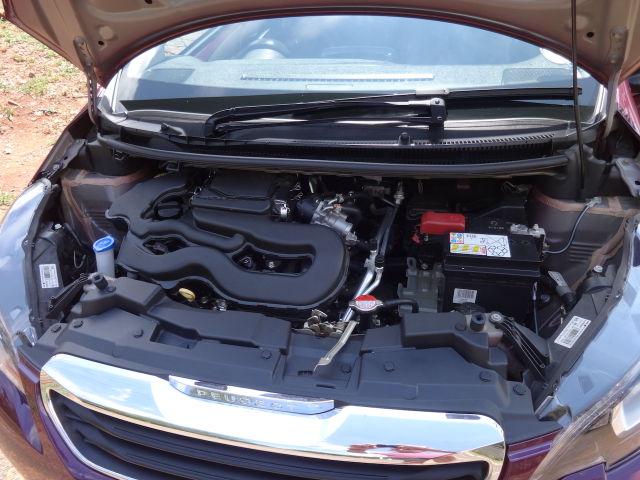
The small, naturally-aspirated engine in question is a Toyota-supplied unit (as is the 5-speed manual gearbox), with a 1.0-litre displacement and three cylinders. Quoted power outputs are 53 kW and 93 Nm, the latter of which only arrives at 4400 r/min. On paper, these outputs look competitive, but on the tarmac, performance is flaccid. The 0 – 100 km/h amble should take 13.1 seconds, with a top speed of 160 km/h, but our test car didn’t reinforce these official claims.
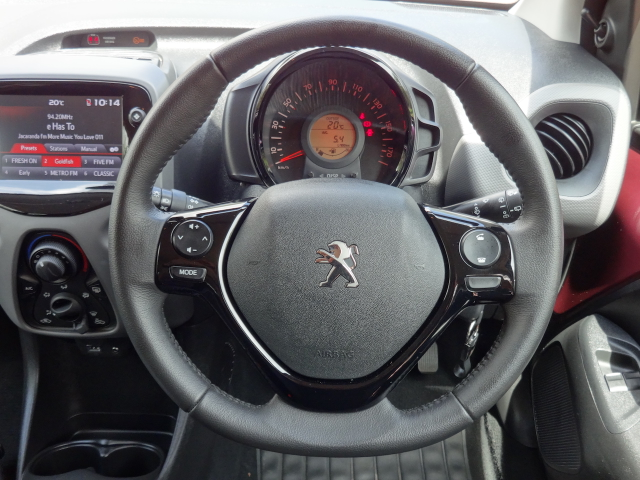
Making matters worse was the nature of the test car’s power delivery. The clutch had to be slipped somewhat to achieve useful acceleration from a standstill, which amplified the trembling from the little three-cylinder engine. The gear ratios are also quite widely spaced (relative to the available torque curve), which meant that plenty of raucous high-revving, gear-stirring action became the order of the day to keep the engine operating in its power band. There's no rev counter in the instrument cluster, either, making it tricky to gauge exactly where in the rev range the engine operates, so the noise level serves as a kind of tachometer.
Fuel Consumption
At least the 108 won’t penalise its driver at the pump, even when flogged hard enough to maintain reasonable forward motion. The test car didn’t come close to its officially-claimed average consumption of 4.3 ℓ/100 km, but our test average of 5.0 ℓ/100 km in mixed cycle use was still commendable for a car that was driven with no regard for fuel consumption at all, and with the air-con running at full blast to counter the summer’s first real heatwave.
Space and Comfort
As previously mentioned, the 108 shares its cabin design with its Toyota- and Citroën siblings. This gives it surprisingly spacious front-seat accommodation (albeit with limited shoulder room), at the expense of rear legroom, which becomes almost non-existent with anyone larger than 1.8m in front. Luggage space is also very limited, with only 196 litres available behind that glass tailgate. The seats are fairly comfortable and are upholstered in cloth with an attractive plaid pattern, but they’re located too low, making for a seating position that isn’t ideal for those larger drivers, who’ll need to splay their legs to fit behind the wheel.
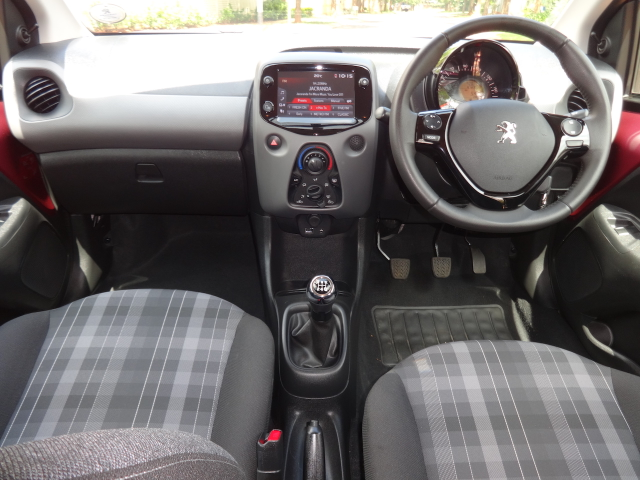
Nobody expects premium finishes in a budget car, so the 108’s hard plastic-clad interior is entirely within character. The layout is easy to get used to, but there’s a certain toy-like quality to much of the switchgear which doesn’t fit with the premium expectations created by its classy exterior. It’s very well screwed together, though, and the test car emitted no rattles or squeaks.
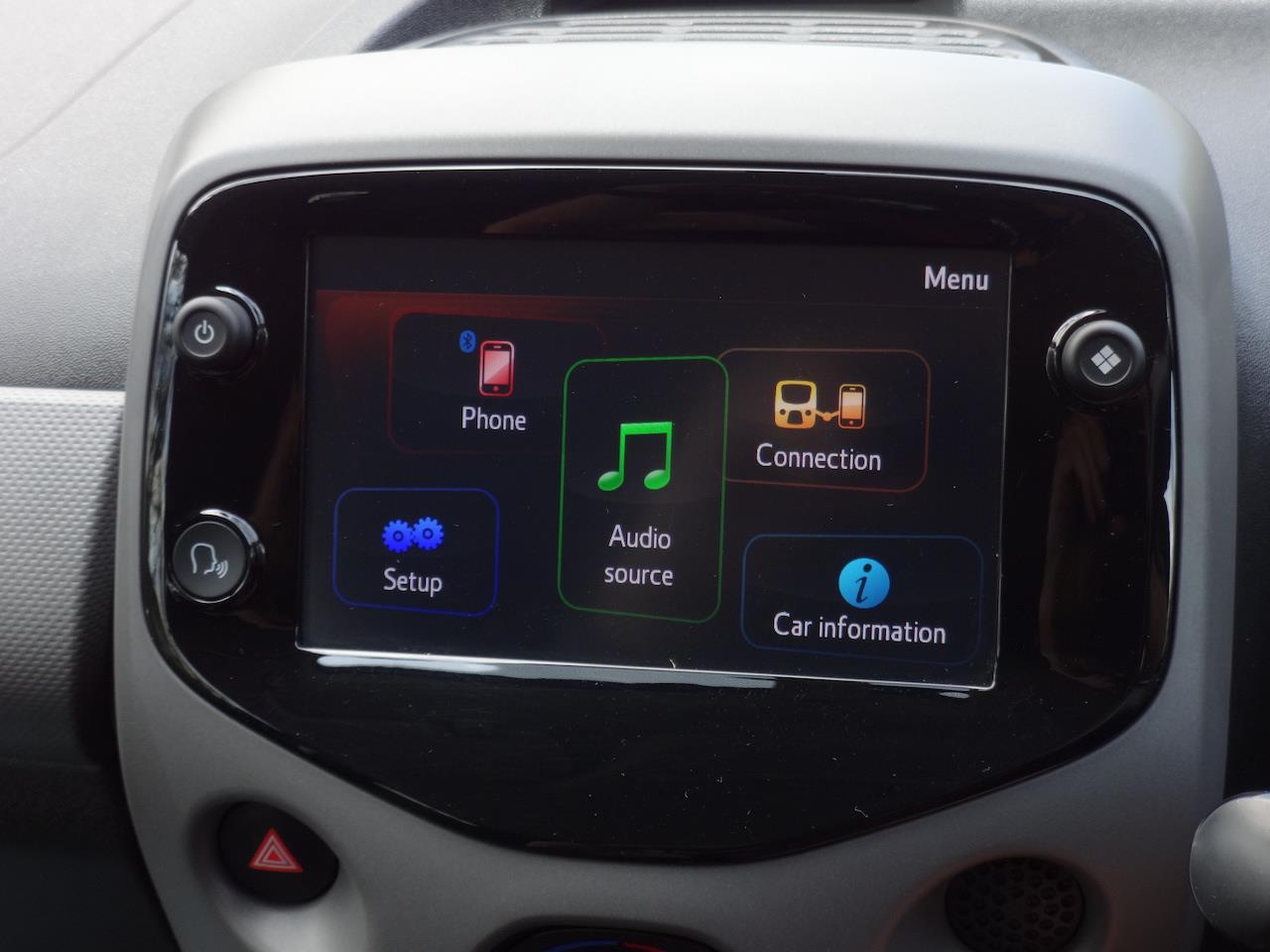
Most modern conveniences are present on the spec sheet, with power steering, air conditioning, a multi-function steering wheel, electric front windows (the rears swivel manually), remote central locking, and a rather nice colour touchscreen infotainment system with cellphone mirroring and Bluetooth- and USB compatibility. It all works seamlessly, and must count as a highlight for a car at this price point.
Safety
Now we finally get to the 108’s ultimate selling point: its safety specification. This is now the least-expensive new car in South Africa to feature a list that’s this full of safety features: ABS, 6 airbags, ISOFIX rear child seat anchors, stability control, and a hill-start assistant.
In addition, the 108 also scored a 4-star safety rating in Euro-NCAP crash testing, which is frankly remarkable for a car this small. It’s nice to know that the safety add-ons are actually supported by a sturdy frame, unlike many other small cars with similar pricetags.
Related: Find out more about the Peugeot 108's Euro-NCAP crash test results here.
Price
The Peugeot 108 is only available as a single derivative, called the 1.0 Active, and it retails for R 179 900. That puts it midway in the pricing order of the Aygo/108/C1 family, but with one of the most comprehensive feature lists available among the siblings. Included in the price is a warranty for 5 years or 100 000 km, as well as a service plan for the same time and distance. It might not be the absolute cheapest city car out there, but it definitely presents a very strong value proposition with its comparatively loaded spec sheet.
Related: Get more information about Peugeot's relaunch strategy in our special report.
The Verdict
Objectively, the Peugeot 108 makes a very strong case for itself: it’s good-looking, very fuel-efficient, perfectly-sized for city use, well-appointed for its class, has a great aftersales package, and carries very strong safety credentials. The chances are that those buyers who value these attributes won’t worry about the cramped rear seat, tiny boot, lethargic performance and noisy engine. Just for its focus on safety at the price (and its attractive face), we’ll give it the thumbs up. But buyers who frequently do long trips, are in a hurry, or carry more than one large passenger, probably shouldn’t sign on the dotted line…
Expert rating:
3.5/5
Pricing was accurate at the time of writing, but may change without prior notice.
Recommended next:
Interested in a new or used Peugeot 108? Browse our listings to find the car you want.