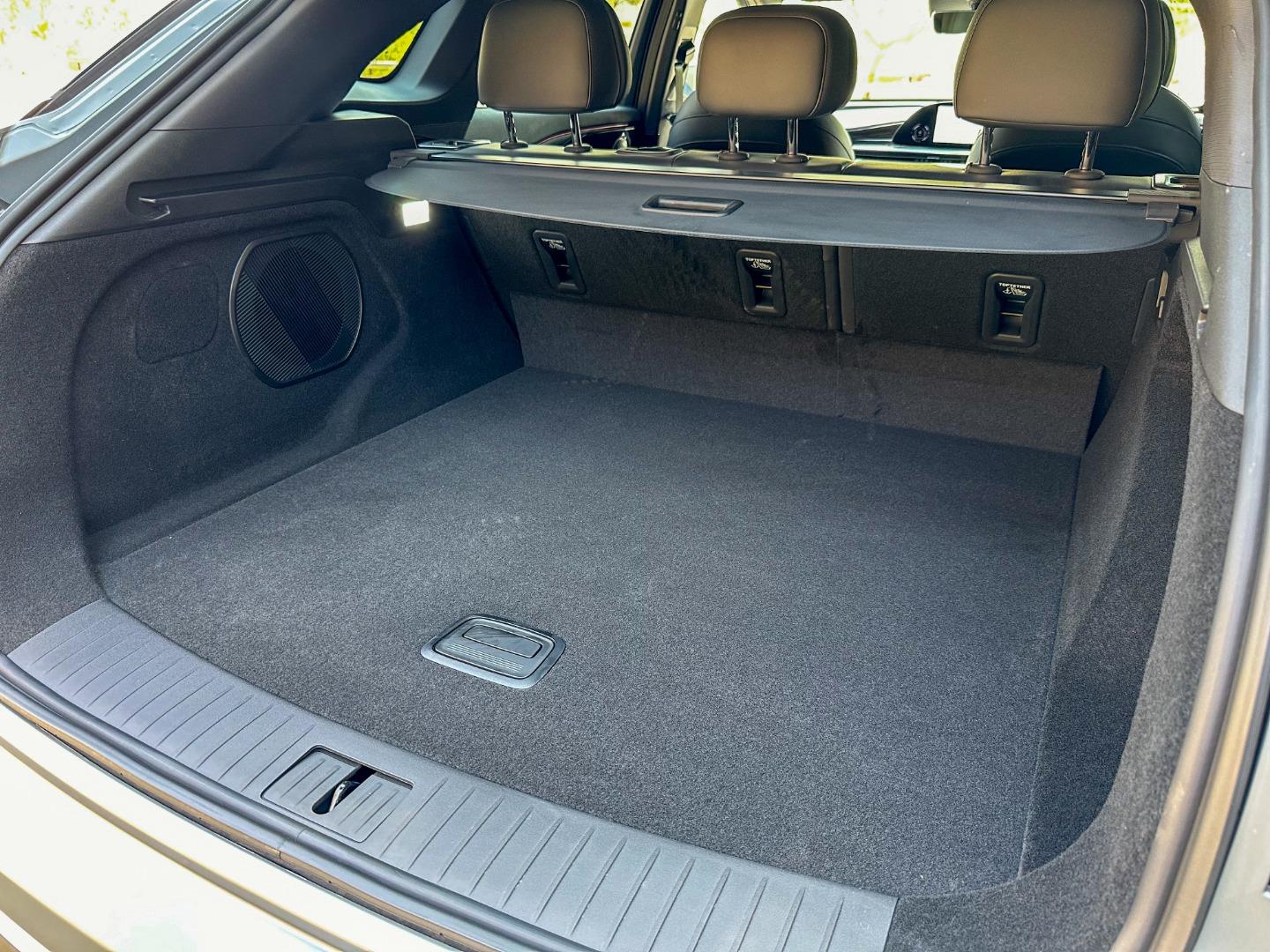
The Omoda C9 was recently launched locally as the Chinese brand's second model within the local line-up. I spent a week with the car, and there's a lot to like, but there are also some things you should know before you consider one.
Related: Omoda C9 (2024) First Drive Review

Pros:
-One of the best Chinese brand drivetrain combinations we've driven
-Ride comfort and refinement is impressive
-Feature-packed, value-filled
Cons:
-Final polish required on fit and finish to be truly exceptional
-Semi-autonomous systems are too intrusive
-The infotainment system needs some work
Omoda, in context
For those unfamiliar, Omoda forms part of Chery International, China's fifth-largest automotive manufacturer. Other brands available locally that fall under the same umbrella are Jaecoo and Jetour. Although Chery does not bring in the latter, it still forms part of the global company. To complicate things further, Omoda and Jaecoo (O&J) act independently and report sales separately from the parent company, Chery. September was a big month for O&J as the pair squeezed into SA's top 15 best-selling vehicle brands despite only offering two models, with Chery playing at the sharp end, competing to crack into the top 5. These figures are deeply impressive for companies that have been around for a few years. With this in mind, the C9 is an important model for the Omoda brand; with its smaller C5 range being restructured to aim for a more budget-friendly option, the C9 serves as its flagship and will be the torchbearer for the brand going forward.
Related: AutoTrader Industry Report
Styling
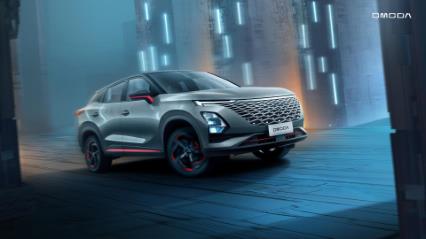
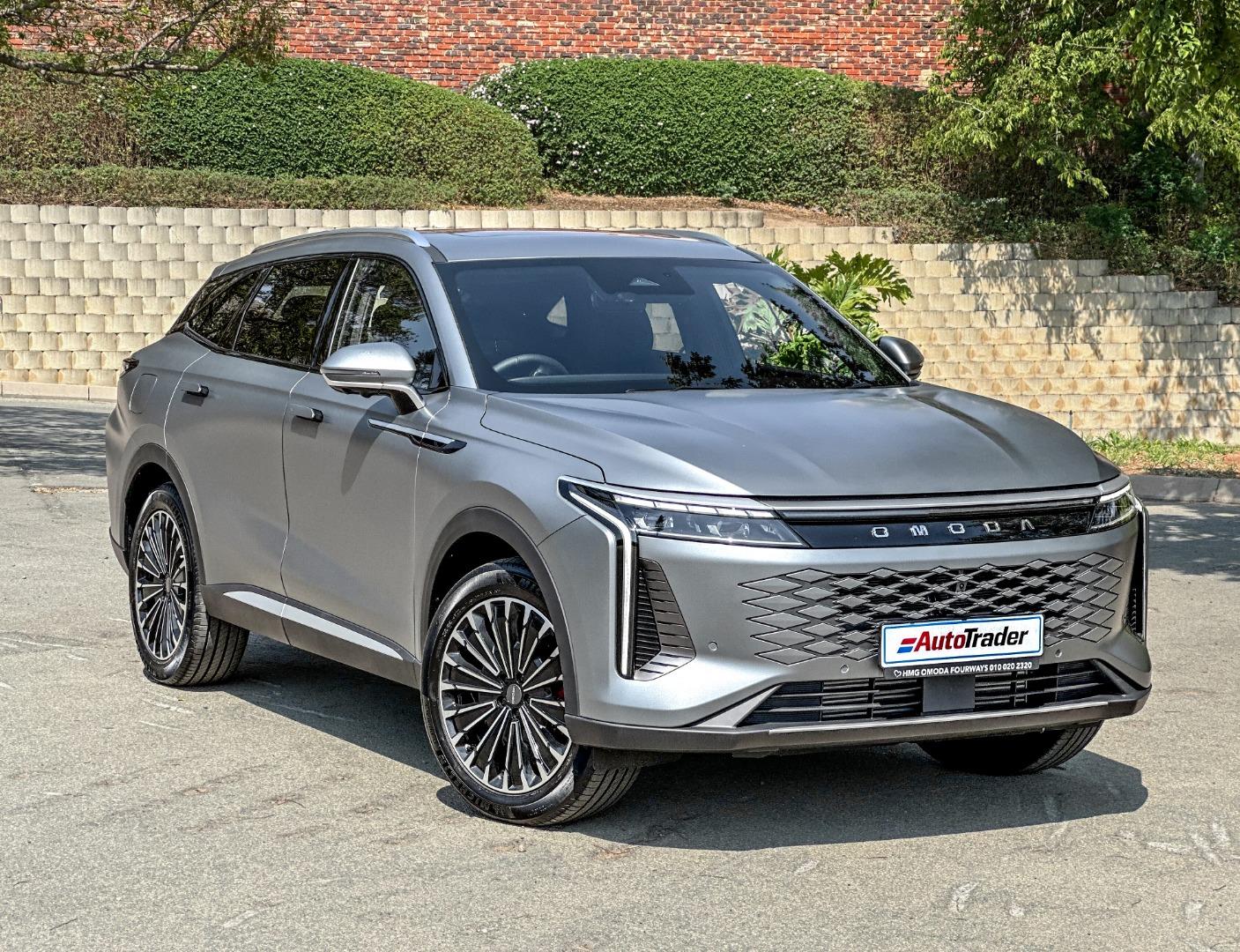
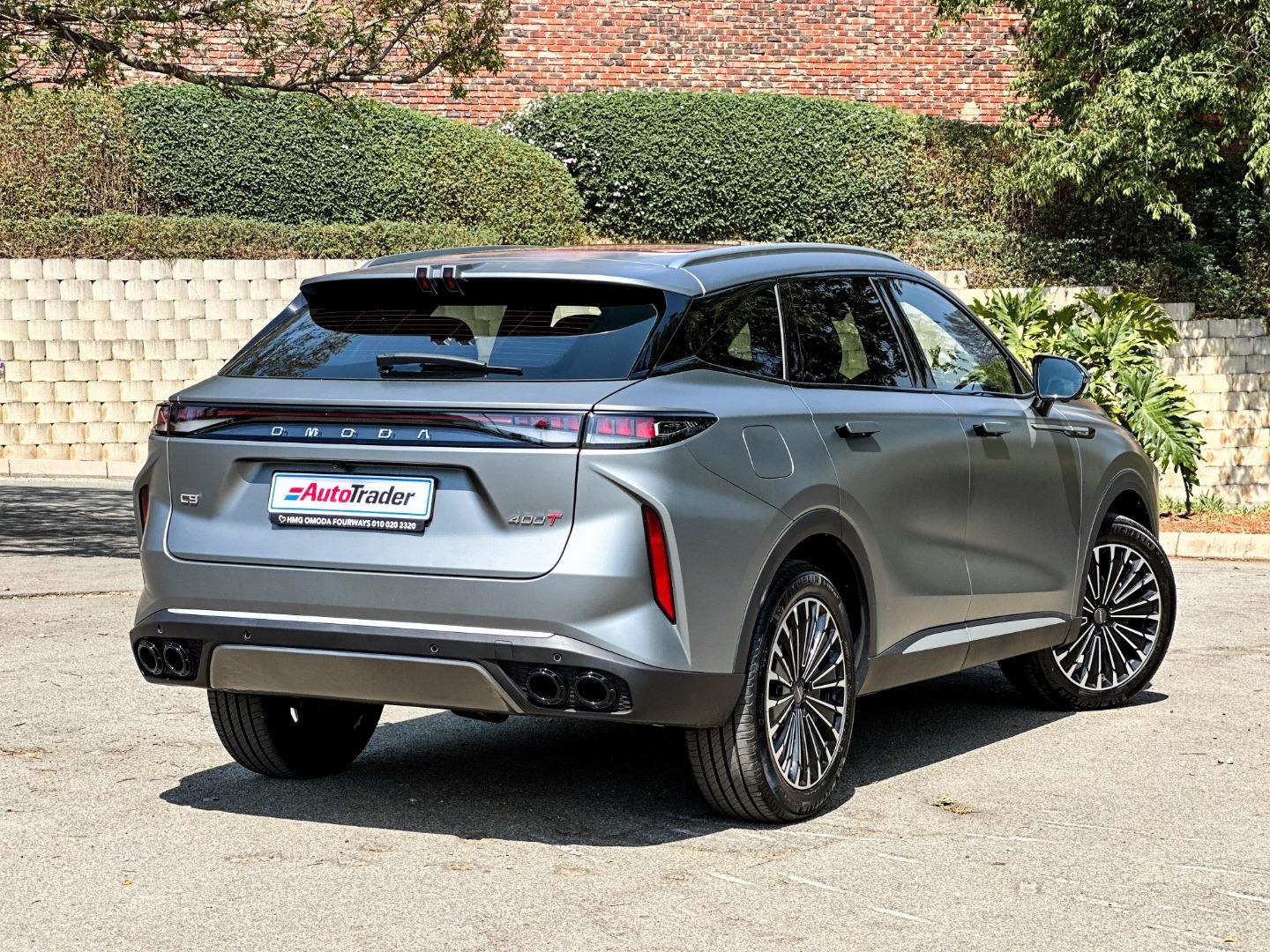
The exterior styling of any vehicle is inherently subjective, but from my admittedly anecdotal evidence throughout my time with the car, people seem to enjoy the exterior styling of the C9. From its sharp, angular design cues to its fancy door handles, which pop out of the body when unlocked and nestle back in, flush with the body, to its sloping roofline; it's certainly not generic. I see elements of Lexus in its design, and the matte grey paintwork of our test unit makes it look particularly premium.

Interior & Space
The interior of the C9 is impressive. Its design seems to be inspired by Mercedes-Benz. The dashboard has a slab-style panel, which houses a 12.6-inch digital instrument cluster next to an infotainment system of the same size. At the same time, the centre console features three toggle switches for climate control and driving modes. Below is a felt-clad docking/charging station for two smartphones and a wood-like panel that opens to reveal cup holders. A large storage area is located behind the cup holders, which is cooled/heated by the climate control system. The seats look wonderful, with a cross-stiched pattern across the Nappa leather contrasted by surprisingly supple grey floor mats.
Another feature on our flagship test car includes a 12-speaker Sony sound system, with two speakers housed within the driver's headrest responsible for projecting phone calls, an amazing feature that I found so useful, with the caller on the other side of the line always incredibly audible. Other features include a surroundview camera system, a host of semi-autonomous driver-assistance systems, adaptive suspension, off-road driving modes, an integrated fragrance system with three scents that can be pumped into the cabin and controlled via the infotainment system, and an adaptive LED front lighting system.
While many premium touches and an incredible number of tech features are available at the price, the model lacks the final polish required for a truly premium product. For example, the impressive ambient lighting system with over 200 colours looks great at night, but it also reveals gaps in the fitment of the door in relation to the dashboard, where the light strip from the door sits above that of the dashboard. The same can be said for many of the interior bits.
However, it's most certainly not a deal breaker, but it is an important consideration. We could get caught up with newcomers to the market and often see the features list and perceived quality but rarely examine the more minute details. For example, we compared the C9 with one of the best in the business, the Volkswagen Tiguan, and the C9 performed well (a video will follow this written piece), but it was when examining the final fit and finish where I noted some of these minor areas where you can tell that Volkswagen has its build quality dialled in.

The model's touchscreen infotainment system works well. It would be considered a good system in isolation, but when using it versus systems in key rivals, its resolution, layout, and speed is not class-leading. It features wireless Apple CarPlay and Android Auto, which is expected in 2024, while almost every conceivable vehicle function can be operated from the system itself, including opening the panoramic roof by sliding your hand across a digitised vehicle model displayed on the screen. I'm more of a physical button guy, and happily, the C9 features tangible switches and buttons for key functions.


Drivetrain
Powering the C9 is the brand's 2.0-litre turbocharged petrol engine, which produces 192kW and 400Nm of torque. This power is sent to all four wheels via an automatic 8-speed torque converter from transmission specialists AISIN. The engine's code is F4J20, and Chery's engine department, ACTECO, produces the Miller Cycle unit.
An excerpt from the ACTECO website boldly states:
More than 15 000 hours of engine bench test verification, which is equivalent to 10+ years of user experience; vehicle environment adaptability development footprints are all over the world covering extreme environments, like from extreme cold to extreme heat, from plain to plateau. And the durability and reliability of the vehicle has been verified to exceed 2 million kilometers.
I'm not too sure about the whole 2.0-million km durability claim, but it's admirable that the brand has such confidence in its products.
Related: Everything you need to know about the Omoda C5

Driving impression
I had a chance to drive the C9 briefly a few weeks before my road test, and the one attribute that immediately stood out for me was how much better the torque converter gearbox was versus the dual-clutch (DCT) systems in other Chery/Omoda/Jaecoo products. The gearbox allows for a smoother driving experience at low speeds, where pulling off and getting up to low and medium speeds is quite effortless. In true Chinese car fashion, the throttle calibration is still sharp but far more palatable, and for once, leaving the car in its default driving mode yielded the best driving experience. Having spent a week driving the car, I can confidently state that this is the best drivetrain combination among the Chery-derived products, and I think this 8-speed should replace the DCT systems where possible.
We often underestimate the importance of good tyres on production cars. In the case of the C9, its 20-inch wheels are shod with Michelin E Primacy tyres, which are exceptional and, in combination with the vehicle's adaptive suspension, endow the Omoda flagship with an exceptional ride quality, particularly in its secondary ride, refinement and NVH across a variety of surfaces. The primary ride, i.e., the initial ability of the car to control up and down motion, can feel a bit firm at times, especially over bumpier surfaces, but this is also perhaps more notable because the car is so smooth and quiet the rest of the time. There's much weight to shift around, more than 1 800kg, but there's also a lot of power and torque, making the C9 feel substantial on the road.
The various semi-autonomous driving aids can be helpful, but driver attention assistance, lane keep assistance, and adaptive cruise control are still far too sensitive for daily operation. The constant audible reminders and warnings became tiresome, and I did not use the systems, making their efficacy ironically counterintuitive.

Fuel economy
Omoda claims a fuel consumption figure of 8.5 L/100km, but our real-world figure was 9.2 L/100km, which I find to be more than acceptable for a vehicle of this type.

Safety
The C9 recently achieved a 5-star Global NCAP score.
Pricing*
At R860 000 for the flagship model as part of the launch promotion and R885 900 thereafter, the AWD model offers a lot of car for the money. Volkswagen, which has done a great job with its pricing, now has a turbodiesel version of its Tiguan available for R755 700, allowing prospective buyers R100 000 to choose in terms of options on the VW to match the price of the C9. I feel that the front-wheel drive C9 model, at R760 000 (R785 900 after the launch special), which does without the adaptive LED headlights, the headrest-mounted speakers and the adaptive suspension, is likely where most buyers will find the most value.
*All models come with a 5-year/150 000km warranty, a 10-year/1.0-million km engine warranty, and a 7-year/100 000km service plan, with service intervals every 15 000km.
Verdict
I was very impressed by the C9; it takes the fight right to key rivals from automotive giants such as Volkswagen and Kia while offering more specification and, dare I say it, a more luxurious slant. With its lower price tag, the front-wheel drive model will be where your money is better spent. That being said, convincing South Africans to part with this much money when there are so many competent rivals is Omoda's biggest challenge. I recommend you drive one when shopping in this segment.