
New Juke is a jol !
We review the Nissan Juke 1.2T Acenta+


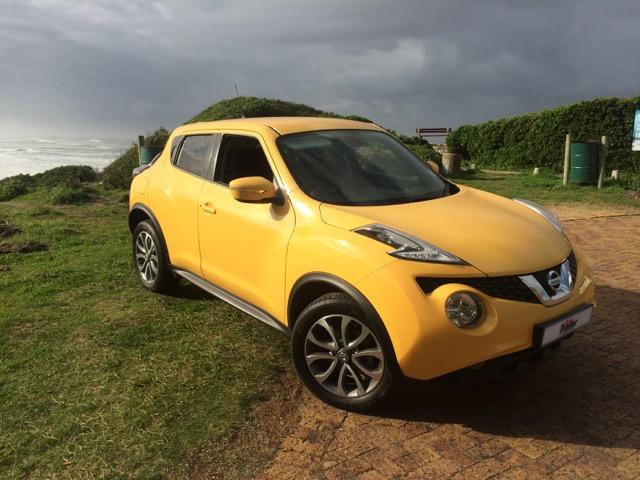
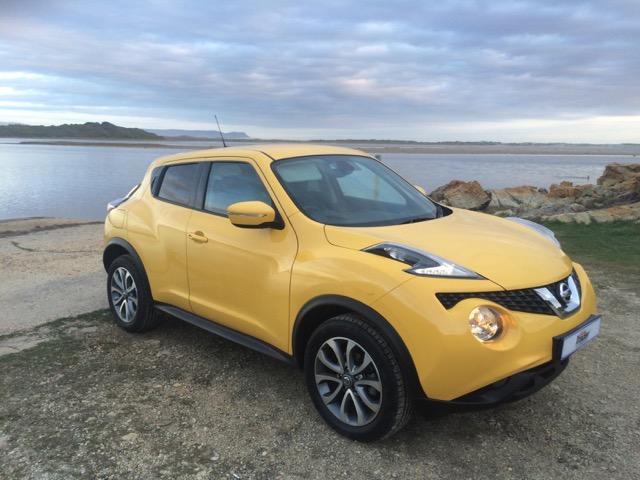
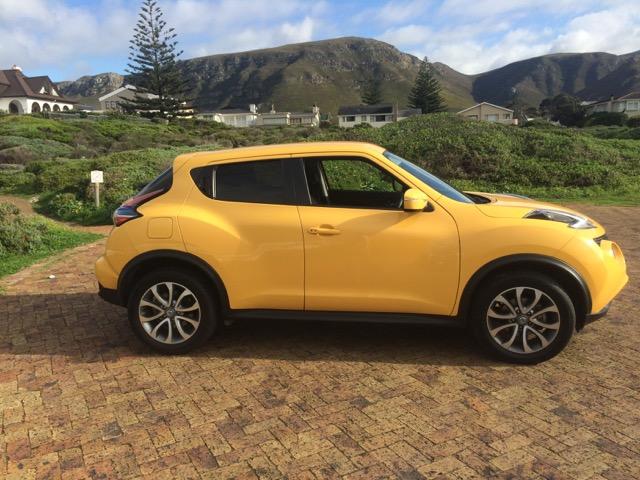
The Nissan Juke has been described in the weirdest ways possible. One typical description for the Juke is “a squatting frog”. Yes, much like Marmite, there’s no middle ground. If you don’t passionately love the Juke, you probably hate the way it is styled. But since it came to be in 2010, half a million people in the world found it agreeable enough to buy. Sales figures in SA are at a steady +/- 300 units per month – that’s a lot of Jukes. In a world where mediocrity is king, the Juke is still pushing the envelope and it has gained many fans with its adventurous design.
The Juke has recently been upgraded and received a welcome facelift to stay bang on-trend.
In the front, new boomerang-shaped, upper headlights replace the “squinty” ones, and already the Juke looks less bug-eyed. It also rides on nice new 17-inch alloy wheels. The winning recipe of the sloping roofline and hidden rear handles stays the same. Other changes include a subtly redesigned rear, daytime running lights, and a black air intake and front bumper. Looking at its side profile, it reminds me of a spicy yellow pepper. And spicy it is, considering that it is only a little 1.2 litre turbocharged engine that powered AutoTrader’s test model, the Juke1.2T Acenta+.
Indeed, the new Juke’s most significant change is the replacement of the 1.6 litre, naturally aspirated engine, by the new 85 kW 1.2 litre DIG-T powerplant, already doing its duty in the Renault Captur and Nissan Qashqai. When I drove the Qashqai in oxygen-poor Gauteng, it felt quite sluggish. In the new Juke at sea level, it’s an entirely different story. It feels like it’s raring to go, with very little turbo-lag. You just have to be in the correct gear, or it will stall. It is mated with a smooth, 6- speed manual box, and you’d be hard-pressed to find a little SUV that offers more engagement and better feedback from the pleasantly firm, leather-covered steering wheel.
The I-CON system is still part of the front dash layout, to control performance and other vehicle settings. Much like Audi’s Drive Mode Select, it should adjust the Juke to feel sporty, normal, or to be more efficient. Only, it doesn’t make much of a difference. On the tiny colour screen it looks all high-tech by showing torque and G-Forces and such, but in reality it doesn’t really alter the driver experience at all. But it’s not the end of the world - it is fun to drive just as it is, with great ride quality and suspension that is quite indifferent to road imperfections.
Nissan has added oodles of safety and convenience equipment to even the entry-level Acenta models, including Bluetooth and audio streaming, cruise control, stop/start technology and climate control. Safety features are aplenty – every Juke has Vehicle Dynamic Control, six airbags, and a 5- star EuroNCAP rating.
The superbike-inspired cabin is youthful and quite vibrant, with velvet-like seat upholstery, a rounded dashboard, some glossy piano black inserts and material in the doors. It doesn’t have the elegance of the French and German crossovers, but it doesn’t carry the hefty price tag either, and is solidly built nonetheless. The glove box is mysteriously deep, to compensate for the pokey boot, perhaps? The boot is larger than before though, up from 251 litres to 354. I used the Juke three mornings in a row for the daily school run. 3 primary schoolkids’ bags (and two sports bags) only just fit in, so imagine going away for the weekend in the Juke? Everyone would have to take an overnight bag at most. But the Juke isn’t aimed at families with 2.4 children. Much like the Ford EcoSport, the Juke is a hit amongst the older crowd as well. If you have intentions of carting more stuff about, the cargo floor (in 4 x 2 models) can be adjusted.
If you’re after otherwordly styling and a price tag that won’t make you wince, the Juke offers a high level of standard equipment, decent build quality and plenty of everyday driving fun. If you can live with the small boot, the Juke is a city slicker with plenty of high-riding heart. Your best buy would be the entry-level Acenta variant, at R258 700 it is thoroughly specced, unless you feel that things like a push-start button and rain-sensing wipers (in the Acenta+) are imperative.
| Price | : R 282 100 |
| Engine | : 1,2 litre, four-cylinder petrol |
| Power | : 85 kW |
| Torque | : 190 Nm |
| Top speed | : 178 km/h |
| 0 to 100 km/h | : 10.8 seconds |
| Fuel tank | : 46 litres |
| Realistic fuel consumption | : About 6.7 – 7.3 litres per 100 km (combined) |
| Boot size | : 354 to 830 litres |
| Ground clearance | : 180 mm |
| Also consider | : Ford EcoSport, Renault Captur |
All Jukes are sold with a 3-year / 100 000 km warranty and a 3-year / 45 000 km service plan.