
Nissan’s Hardbody keeps on truckin’
Nissan’s NP300 Hardbody bakkie has been around for two decades, and it still offers a certain charm that is appealing in the face of most Double Cab bakkies trying a little too hard to be passenger cars. But its old-school design does have some shortcomings you should be aware of.


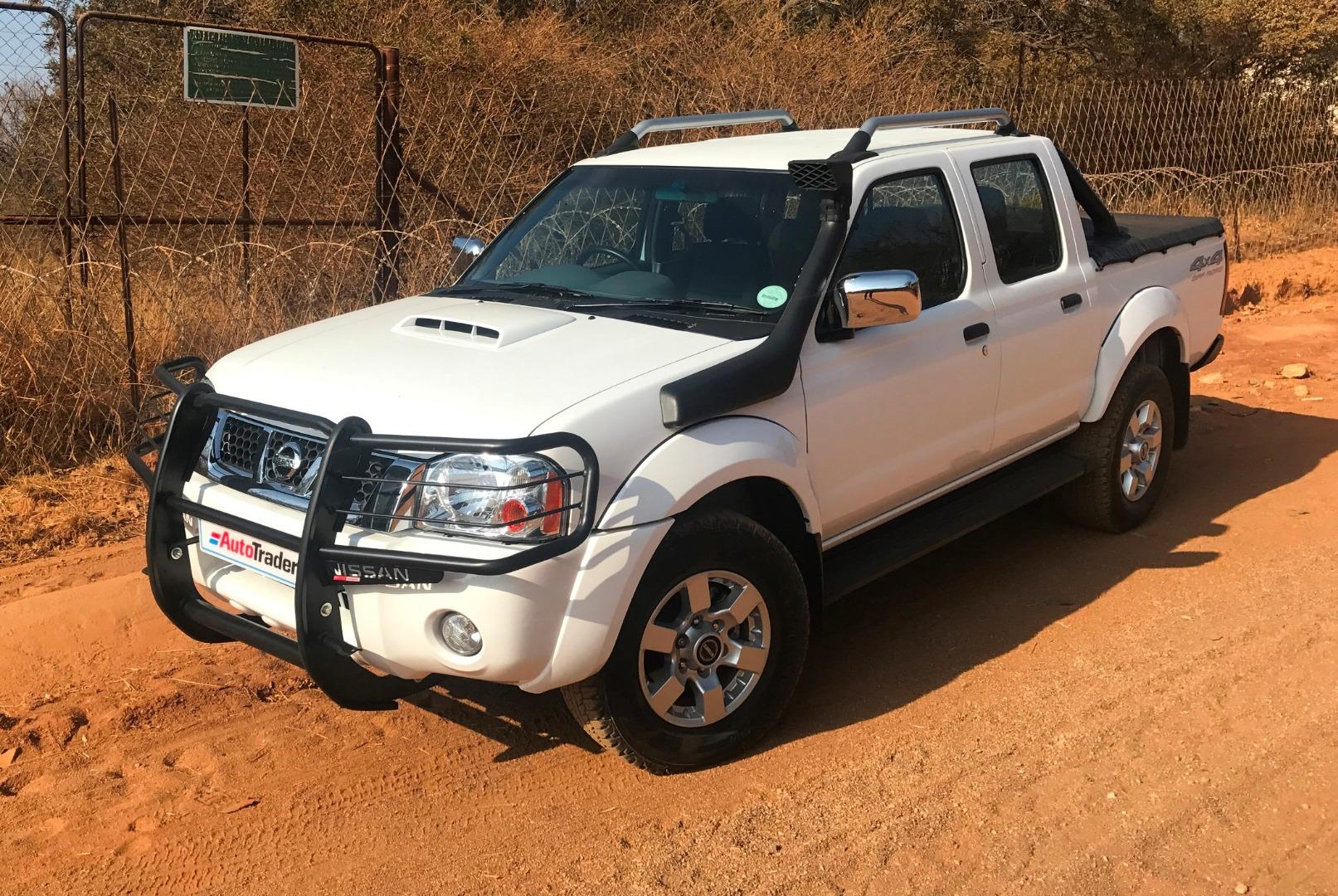

There’s a lot to be said for a proven design being kept on in production, with all the early faults that most model ranges suffer from attended to, and all the rough edges ironed out. Such is Nissan’s NP300 Hardbody bakkie range, and if you consider that the design has been around since the late 1990s, then it must be nearly perfect by now!
Of course, times change and in today’s world the Nissan NP300 does have shortcomings when measured against a range of bakkies that are far newer in both concept and detail. But what is surprising is how many fans the NP300 range still has out there, as Nissan notch up overall monthly sales (this is a figure for all NP300 derivatives) of close to a 1 000 units on occasion.
Styling
In Double Cab 4X4 form, you realise that many of the Nissan NP300’s competitors have grown enormously in size since the turn of the milllenium. The Nissan looks decidedly small by comparison. One also realises, however, just how essentially good-looking the NP300 still is. It has rounded edges, pronounced wheel arch flares and good overall proportions. Our test model was fitted with a special off-road package that included such items as a bull-bar and snorkel, and it has to be said that these attracted lots of attention. Especially when driving around areas where pick-ups are considered very desirable. The good-looking Nissan alloy wheels also play their part in making this old-school Nissan still look attractive.
The Drive
Engine options have evolved over the years in the Nissan NP300 Double Cab. The 2.5 TDi, the top diesel-engined model which we had for test, uses a 98 kW direct-injection four-cylinder turbo diesel that offers up 304 Nm of torque. It’s quite noisy by modern diesel standards on start-up, although we think that the Isuzu diesel in this league is even noisier! The more expensive Navara uses a more refined 140 kW 2,3-litre diesel.
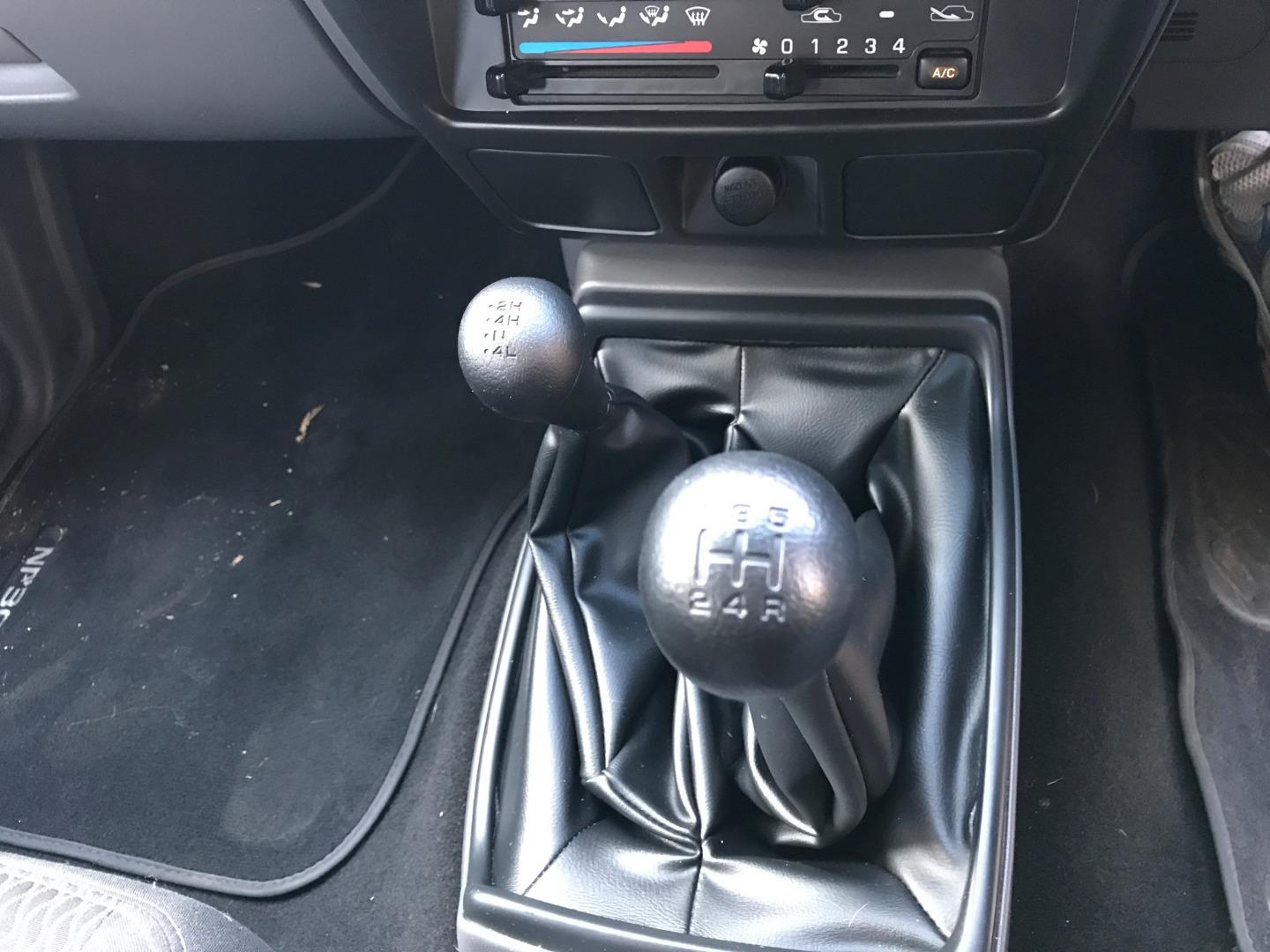
The NP300 engine noise settles a bit once things warm up, and then it’s time to notice other aspects of the drive in general. The gear lever is particularly pleasant to operate, as is the clutch action, and the ratios on the five-speed gearbox offer easy suburban pottering at low revs. There is not much in the way of lag with this turbo diesel at very low revs.
The ride quality, it has to be said, is very old school. Unlike its much more modern Navara sibling, this Nissan NP300 still uses leaf springs at the rear, and you are always aware you are in a stiffly-sprung bakkie. In a way this is reassuring, as somehow the unsophisticated Nissan engenders a feeling that things are so firm because it is meant to last for a long, long time.
This vehicle is very much a 4X4 of the old school, and the chassis and suspension shows up very well on rough dirt roads and in serious off-road conditions. It still utilises a secondary gear lever to select four-wheel-drive and low range, and this does add reassurance that there won’t be any electronic glitches that are going to prevent proper off-road performance. One thing that is lacking is a diff lock, which is strange as the early versions of this bakkie in 4X4 form were fitted with rear diff locks.
Parking
One thing about this earlier design is that it accentuates just how cumbersome modern Double Cabs have become. Especially when it comes to manoeuvring in tight spaces. Parking in underground parkades is much easier in this NP300, because the nose is shorter and more visible than in most modern double cabs.
Performance
With 98 kW and 304 Nm of torque the Nissan has reasonable performance for a Double Cab 4X4. It will run to 100 km/h from standstill in about 14 seconds and on to a top speed of between 160 and 170 m/h.
Acceleration through the gears is quite good, but one must keep in mind that at 98 kW the NP300 is some way off the more expensive Double Cab 4X4offerings and should be compared rather with mid-range bakkies in other ranges. Here you might like to view our following reviews: GWM Steed 5E, Isuzu KB 250 D/C and Mahindra Pik Up.
At the National speed limit in fifth gear (top), it is revving at just under 2 500 rpm in top and this makes for good usability on the freeway, as the diesel is right in the sweet spot of its power band at this speed.
Fuel Consumption
The Nissan NP300 Hardbody is not fitted with a trip computer that displays fuel consumption readings. Nissan rates overall consumption on the NP300 Double Cab 4X4 2.5 TDi at 8,9 litres/100 km, and we suspect in real-world driving you will easily achieve figures in the 9,5 to 10,0 litres/100 km range. We didn’t have the Nissan on test for long enough to conduct tank-to-tank tests, but consumption should be very reasonable as the engine’s power band is well matched to the gear ratios. However at over 1 700 kg un-laden, it is no lightweight!
Space and Comfort
Many modern double cab bakkies are quite awkward to get into at the front because their windscreen pillars are angled too steeply. The Nissan NP300 is not too bad in this regard, but one does find that you sit with your knees bent at quite a steep angle behind the wheel.
The access to the rear, however, definitely shows the NP300’s age! Access through the rear doors is very tight, and legroom is limited. You also sit at an odd angle because the backrest is very upright. It is a reminder of how far double cab bakkies have come in recent years in terms of rear passenger accommodation.
As for driving comfort, I found the Nissan NP300 to be quite comfortable, with good seat support. I also enjoyed the feel of the durable-looking cloth upholstery.
The dashboard is very much a plain-Jane blast from the past, but the quality of the mouldings is very high. The overall effect is of a dated interior, but one that is bound to last a long time. And while the NP300 lacks the modern fitments of the latest bakkies (including the Navara), the overall effect is that the materials used in this old warhorse are possibly of higher quality than materials used in many modern bakkies.
The infotainment system, added in recent years, is not complex at all, and contains the two essentials, that of navigation and a rear-view camera. Oh yes, and it has CD playing capability. I enjoyed the easy operation of the basic ventilation/air-con system. There are no mod cons like automatic lights and the like, but I didn’t miss these types of functions too much. However, you have to remember to switch the lights off as there is no warning buzzer!!
Safety
Safety is a bit of a prickly point with the Nissan NP300 Hardbody pick-up. It was criticised quite severely in a recent NCAP (safety) test. However, the Nissan does come with dual airbags and ABS braking. As far as stability goes, it is good, with acceptable straight-line stability even though the steering system doesn’t exactly impart a modern cutting-edge crispness. But this rather indirect steering is one of the old-school charms of the NP300 and never really bugged us. A poor point for some will be the fact that there are no ISOFIX child seat mounting points in the NP300.
Verdict
If you want to be picky there is lots of modern equipment that is missing on the NP300 Double Cab. But this is also one of its charms, as there is nothing fiddly about it. There is a solidity about the whole package that is very pleasing. We also enjoyed the more nimble feel that this earlier-generation, dimensionally smaller bakkie offers.
If you have to transport large adults in the rear on a regular basis, however, we suggest you look elsewhere as that lack of rear space and an awkward seating position is one area where the NP300 shows its age.
The price of R445 600 for the Hardbody Double Cab 4X4 2.5 TDi is, however, reasonable for a Double Cab with a strong diesel engine and very good off-road performance.
The warranty is excellent at 6 years/150 000 km, but a service plan is optional.
As an alternative, you may like to consider used examples of Nissan’s more modern and more expensive (when new) Navara. Click here to see our listings of over 360 examples.