
Review: Mercedes-Benz E300 Cabriolet AMG Line
Review: Mercedes-Benz E300 Cabriolet AMG Line


By Martin Pretorius
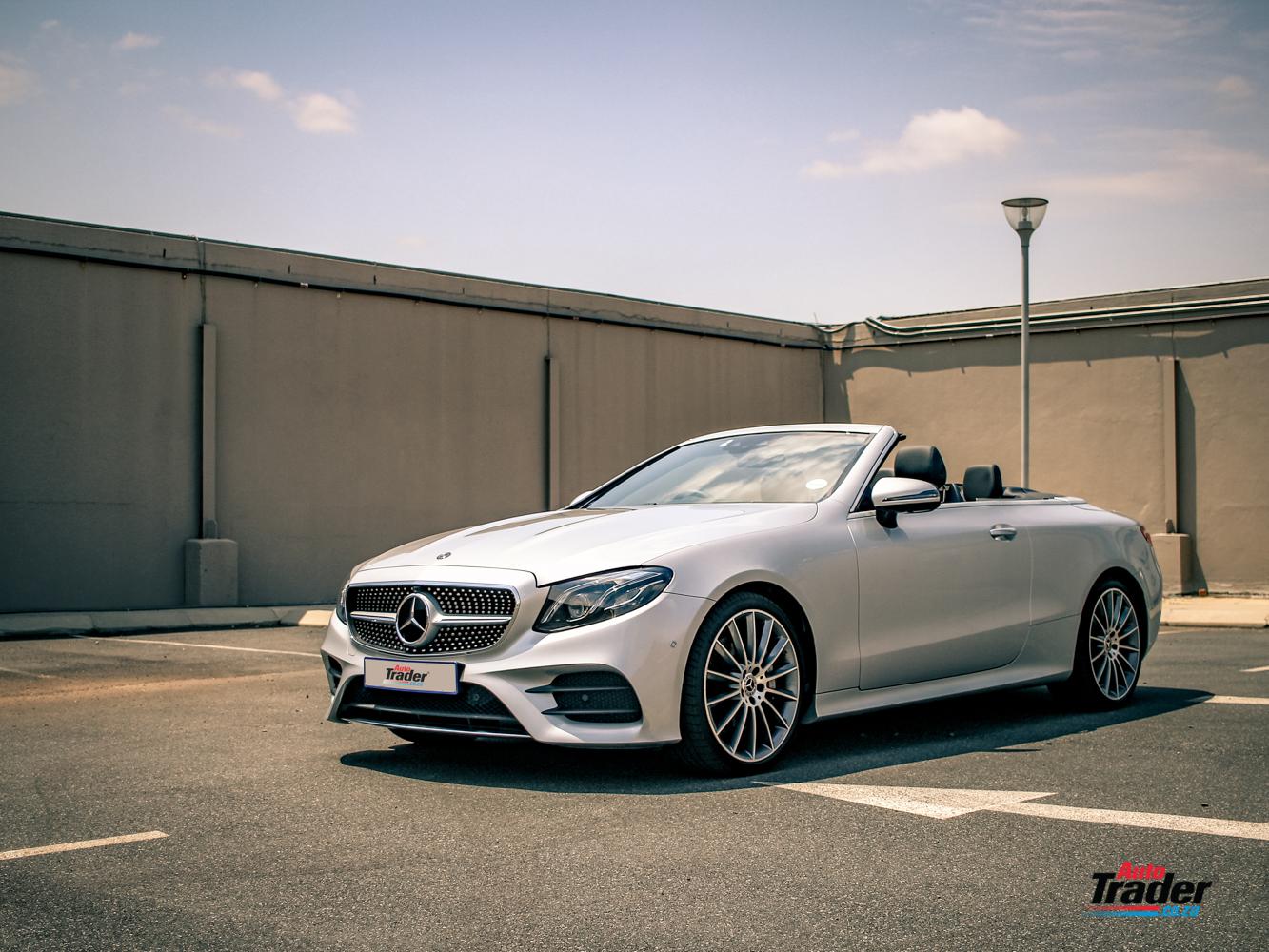
There's a definite sense of occasion about the Mercedes-Benz E-Class Cabriolet, especially when it's kitted out with all manner of AMG-line paraphernalia. There's a moderately aggressive body kit, big wheels, and an unmistakeable air of menace to the way it crouches on the road. Make no mistake, this new drop-top Mercedes has serious head-turning chops. It's also a hugely advanced car, with a plethora of semi-autonomous driving features and the latest safety- and information technology hidden under its skin. But does the new mid-sized Mercedes-Benz Cabriolet deliver on its promise of all-round excellence? Let's find out.
It's a looker, that's for sure.
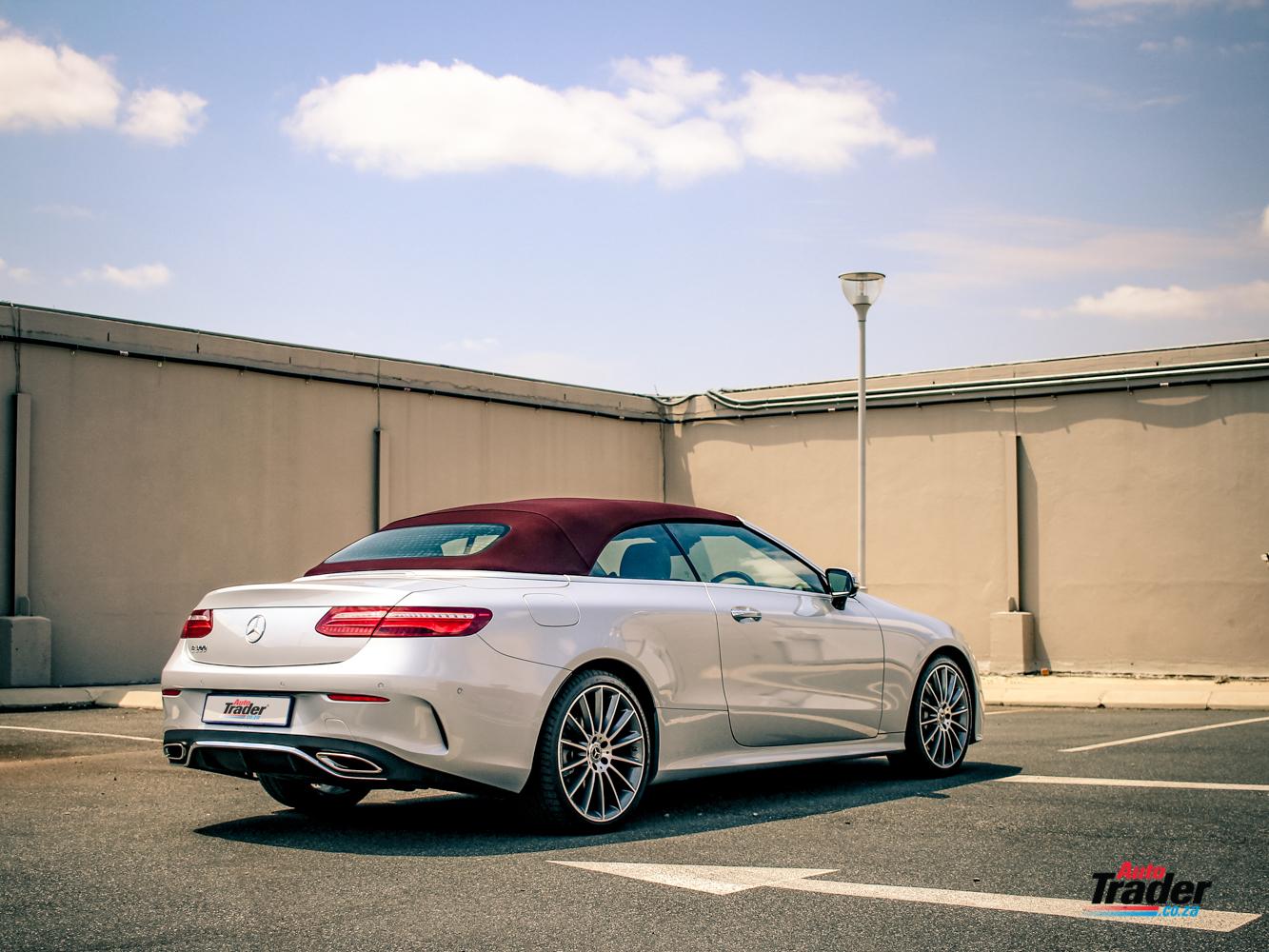
Up front, there isn't very much to tell the Cabriolet apart from its sedan stablemates. It wears the current Mercedes “face”, with its protruding grille (here, finished with AMG's intriguing “diamond-stud” insert), frowning headlights, and gaping air intakes in the bumper. It only gets interesting as you move towards the rear, where the fabric roof's reddish-grey colour contrasts with the test car's silver paintwork, offsetting the frameless side glass and tapering beltline to great effect.
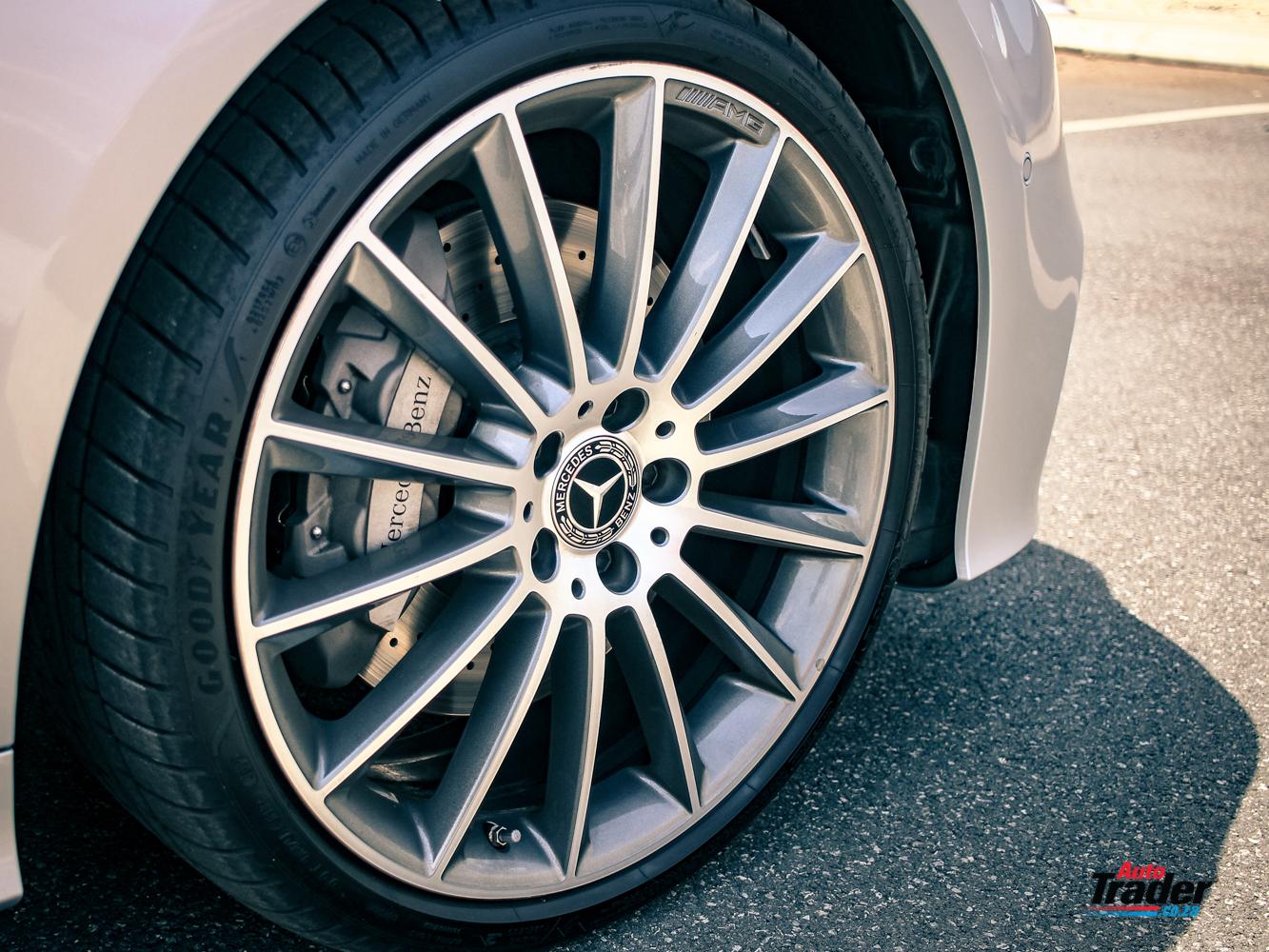
Around the back, horizontal tail lights replace the sedan's vertical units, and the boot lid ends in a jaunty little upturned lip – the combination of which immediately eradicates the sedan's rather droopy-looking side profile. Excellent. The wheels are also gorgeous to behold, being multi-spoke items with a machined face and 20-inch in diameter. Rounding off the rear end are some (non-functional) air vent-like inserts at the edges of the bumper, along with chrome-tipped exhaust outlet trim pieces.
The cabin is something to behold, too.
Sliding into the cockpit does nothing to break the spell, as it's a very agreeable place to spend time. Soft-touch coverings are everywhere, and the design manages to look classic and futuristic at the same time. The switchgear are all aluminium-look items, and the air vents recessed into the dashboards' middle layer are a feast for the eyes. They not only look great, but also operate with a very satisfying feeling of heft and solidity.
Ambient lighting (adjustable for colour and intensity) distributed along the full width of the dashboard further reinforces the “upmarket night club” vibe inside the cockpit. The seats are just as nice to look at as they are to sit in, and the test car's massaging function did as much to alleviate the stress of rush-hour traffic as the excellent radar-guided cruise control and lane-keeping systems.
But the main attraction is that dual-screen digital display unit, recessed into the dashboard housing. When the car is switched on, it erupts into a display of vivid colours and beautiful graphics, and really brings the future of car interior design into the present.
There are some glitches, though.
Hopefully that future will work more smoothly than the interface in our test car, because the COMAND system didn't really want to co-operate with our inputs. We suspect it might be a case of rushed programming or glitches with our specific car rather than actual hardware failures, but nonetheless, our car's user interface was slow to respond to inputs most of the time, and at other times completely oblivious to our instructions.
The new touch-pad controls integrated into the steering wheel certainly didn't help. There's a pad in the left spoke to control the larger, centrally-mounted screen, with an identical pad on the right to control the display which serves as instrument cluster, which is a nice idea.
What's not so nice is that those touch pads operate with all the sensitivity and finesse of a 2010-vintage BlackBerry, and can only control whatever display is called up on that specific screen. The result? You can't skip audio tracks from the steering wheel while the central display is on navigation duty and the cluster is showing trip computer data, to give one example of this rather clunky interface.
In that case, it's down to the third touch-pad, mounted atop the COMAND control dial in the centre console... so what's the point of steering wheel controls again? Our suspicion is that these glitches might be ironed out with future software updates, which will probably get installed during routine servicing.
Onto the mechanical bits.
In line with the modern downsizing philosophy, the “300” in our test car's model name denotes a turbo charged 2.0-litre 4-cylinder engine, tuned to produce 180 kW and 370 Nm in this application. It drives the rear wheels through Mercedes's new 9-speed torque-converter automatic gearbox, which impressed with its smooth upshifts and prompt downshifts. The engine is related to the firecracker in the A45, but offers a far more linear power delivery in the E300.
It's a very accomplished powertrain, but when faced with the E300 Cabriolet's bulk (it weighs just shy of 1.8 tons), performance is adequate rather than scintillating. Mercedes-Benz claims a 0-100 km/h sprint time of only 6.6 seconds, but felt rather less lively in cut-and-thrust driving, perhaps as a result of the superbly insulated cabin. Highway cruising is effortless, however, and that excellent gearbox does a very good job at helping the engine do its best work.
Why AMG Line?
The E300 cabriolet has very little sporting pretensions, with its slightly flat power delivery and droning engine note, so it's not a car which encourages sporty driving. This calls into question the decision to specify this test car in AMG Line trim, and casts doubts upon the wisdom of equipping it with adaptive air suspension and 20-inch wheels.
Putting it another way, its appearance writes cheques the drivetrain can't cash, while those sporty (but beautiful) wheels actually distract from what the E300 Cabriolet really wants to be: a cruiser. Far better to skip the AMG Line completely, and stick to the smaller standard wheels, for it will suit the car's character far better.
To its credit, the air suspension does ride very nicely in comfort mode, and puts in a valiant effort at quelling the road shocks which causes the less-rigid Cabriolet body to shimmy and creak, but its efforts simply can't eliminate the jittery secondary ride quality induced by those low-profile tyres. Really, unless looks is everything to you, you'd be best advised to rather choose the standard 17-inch or optional 18-inch wheels of the non-AMG Line E300 Cabriolet – and save almost R 60 000 in the process, chopping the pre-option pricetag from the AMG Line’s R1 017 785 to a far more palatable R 960 858.
It's not you, it's me
This review might come across as highly critical, but it's through no fault of the car itself. Instead, the finger should be pointed at the inappropriate specification sheet, which tries to force the poor E300 Cabriolet to be a car it really doesn't want to be. The engine and gearbox tries to prioritise smooth, efficient and unobtrusive progress (and largely succeeds), but its good work is undone by the overly aggressive wheel choice.
In the end, this specific E300 Cabrio was nowhere near the car it could clearly be, all due to vanity overruling common sense. Because make no mistake, the E-Class Cabriolet is a hugely desirable car: gorgeous inside and out, with a solid dose of extreme technology and beautiful detailing all round. If only it didn't try so hard to be sporty as well...