Lexus RZ 500e DIRECT4 SE (2026) Review
Lexus's first EV whooshed into town, and expectations were high. Can a 7-year warranty and Lexus build quality justify R1.84 million? We drive the RZ 500e SE to find out if it's worth the premium over cheaper Chinese rivals and if it's better value than pricier Germans.


While BMW, Mercedes and Audi have been selling electric SUVs here for a few years, Lexus stuck with hybrids. The RZ is their first proper, ground-up battery-electric vehicle, and it's quite special. I drove the middle-spec SE model. Read our RZ launch review.
Pros
- Quiet, luxurious, handsome
- Instant EV power
- A segment-leading maintenance plan
Cons
- Finicky steering wheel buttons
- Not a fan of the automatic door handles
- Beeping/warning tones can be a bit much
Lexus RZ Fast facts
| Lexus RZ 500e DIRECT4 | |
| Price | R1,842,000 |
| Powertrain | Dual-motor electric (Direct4 AWD) |
| Outputs | 280 kW / 537 Nm |
| 0-100 km/h | 4.6 seconds (claimed) |
| Battery Capacity | 74.6 kWh |
| Claimed Consumption | 18.2 kWh/100 km |
| Driving Range | 456 km (WLTP claimed) |
| Boot Capacity | 522 litres |
| Maintenance Plan | 7-year / 105,000 km |
What does the Lexus RZ look like?
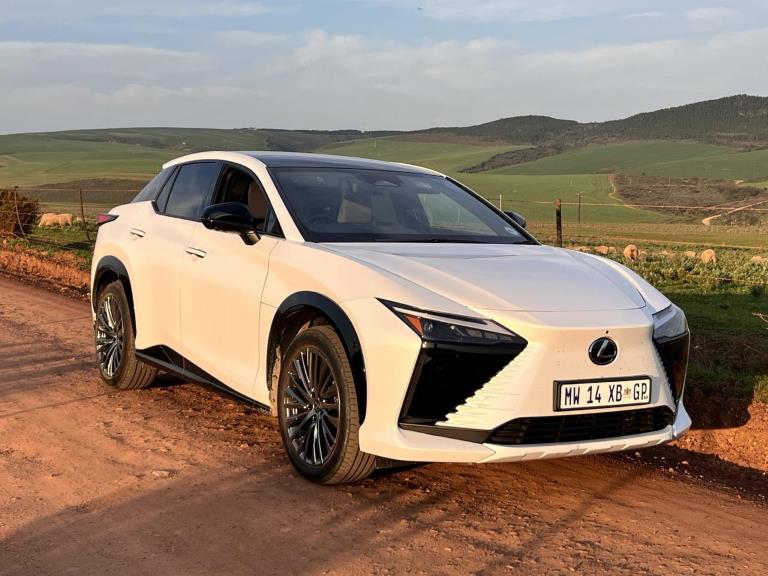
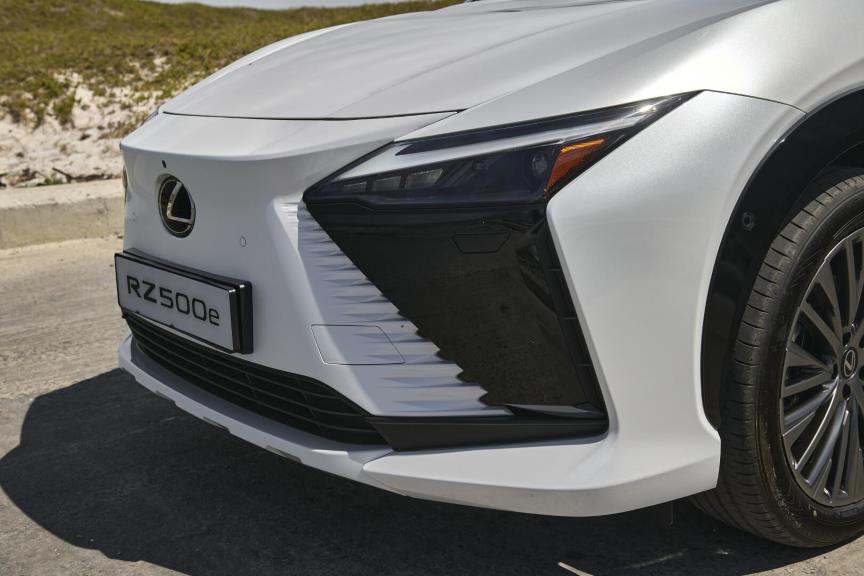
The RZ ditches the traditional Lexus spindle grille for what they are calling a "spindle body". Basically, the whole front end becomes the design statement.
The SE I drove sits on 20-inch staggered alloys (235/50 front, 255/45 rear), which give it serious presence. It is sleek, low-slung for an SUV at just 1,635mm tall, and unmistakably Lexus. The styling is edgy, yet elegant, as you would expect from the brand; sharp lines, sculpted surfaces, and those dramatic wheels make it a car that's difficult to ignore when it quietly rolls by. It measures 4,805mm in length and slots neatly between the compact and mid-size luxury EV brackets.

Lexus RZ interior: Quality, space, and comfort
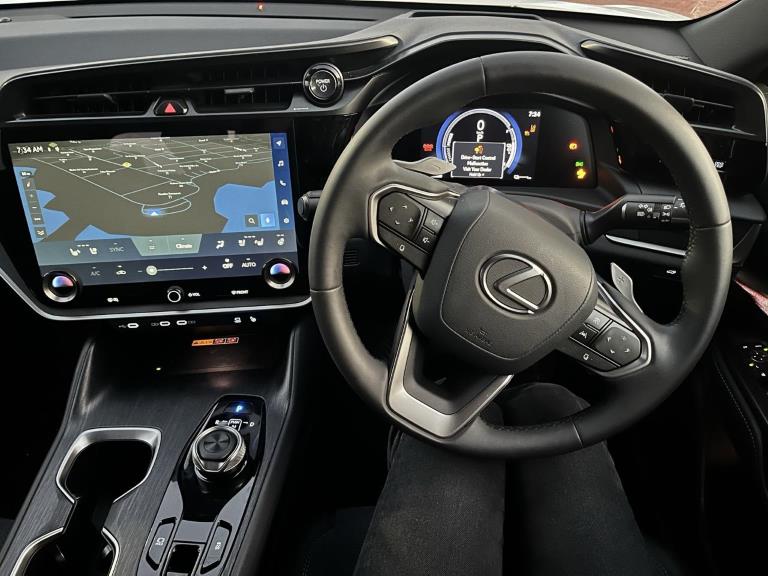
The cabin is exceptional, and among the best-finished EV interiors in SA at the moment. The Tazuna cockpit layout wraps controls around you in a driver-focused semi-cocoon. The SE gets Ultrasuede trim (not real suede, but a convincing synthetic material), and everything you touch feels deliberately placed and built to last.
While I do appreciate the softness and luxury of the material against my skin, in a family car, it's bound to cause problems when the kids tuck into their lunchbox contents. The entry-level SE model has faux leather seats, which are preferable in a car that will often contain children.

I didn't fancy the steering-wheel controls much; I didn't think they were super intuitive, and neither was the operating system on the massive central touchscreen, although the graphics were really good. Compared to the Google Automotive System in Volvo, it all seems a bit too complicated. I didn't particularly like having to dig around for basic settings and features.
There are three proper seats in row two and decent headroom despite the low roofline. The wheelbase is 2,850mm, so legroom in the back is very generous, even for taller adults. Bottle holders, door bins, and cubby storage are all well thought out. The large armrest cubby is spacious and opens on both sides, which makes up for the lack of a glove box.
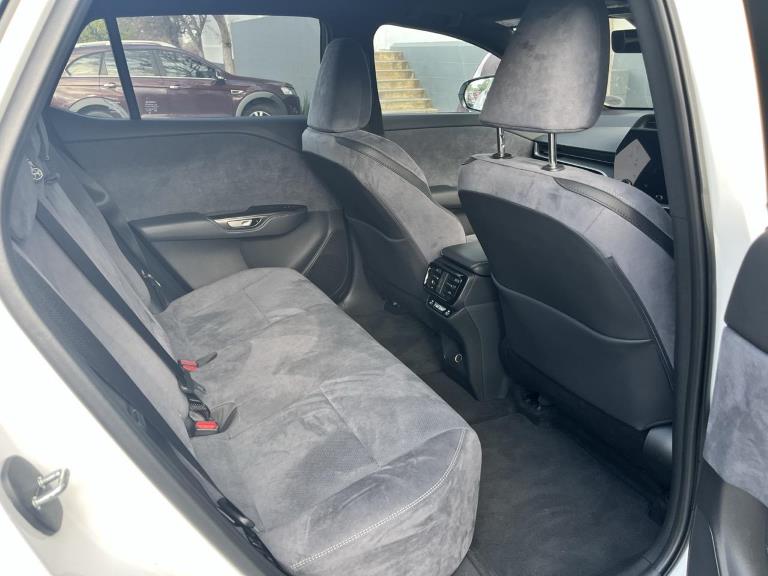
The boot is 522 litres, which is decent but not huge. (A BMW iX3 offers around 510 litres of space, so it is competitive.) The rear seats fold 60/40 if you need to stow longer items. There is no frunk (front trunk), which is a missed opportunity for cable storage.

The dual-panel panoramic sunroof is a cool feature; it uses electrochromic dimming technology, which lets you switch it from transparent to semi-opaque at the touch of a button, so there is no need for a fabric blind. However, I doubt whether it will offer significant protection against the heat on a hot summer's day in Paarl or Pretoria.
Then, there are the Lexus door handles. When you want to exit, you can either press the door handle button or pull the lever twice to open the door. I think this is a bit much; it doesn't fit in with the Japanese minimalist philosophy that I love - it's just more admin.

Lexus RZ features and technology
The SE sits in the sweet spot for equipment. You get:
- 14-inch touchscreen (responsive, clean interface)
- 13-speaker Mark Levinson sound system (genuinely excellent)
- Head-up display (clear, uncluttered)
- Digital rear-view mirror (takes getting used to, but better in rain)
- 360-degree surround-view cameras with intelligent park assist
- Wireless charging pad
- Full Apple CarPlay and Android Auto (both wireless, though connections can drop occasionally)
- Adaptive cruise control
- Lane-trace assist
- 3 USB ports up front
- 2 USB ports in the rear
- Dual-zone climate control with digital temperature display
- Multi-colour ambient lighting (customizable)
- Keyless entry and start
- Electric tailgate with hands-free opening
- Adaptive LED headlights with auto high-beam assist
- Headlight washers
- Rain-sensing wipers
- Auto-dimming and auto-folding mirrors (with memory)
- Electric front seats with memory function (driver)
- Ventilated front seats
- Heated front and rear seats
- Roof rails
- Rear privacy glass
How fast is the Lexus RZ?
The SE makes 280 kW and 537 Nm from its dual-motor setup. That translates to 0-100 km/h in 4.6 seconds, which is quick for a 2,100 kg SUV. Top speed is limited to 180 km/h. Power delivery is typical of an EV. It is instant, linear, and effortless, offering a relentless burst of speed when you need it.
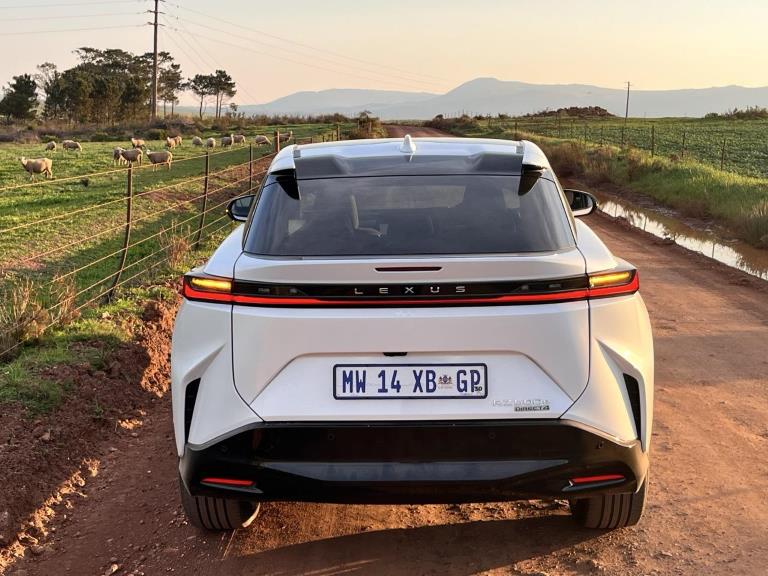
The back end is what most other road users will see!
Lexus RZ range and charging: What to expect
The battery is a 74.6 kWh lithium-ion pack with active water cooling to prevent degradation during fast charging or spirited driving.
The official range is 456 km on a full charge, with claimed consumption of 18.2 kWh/100km. Real-world figures are less optimistic: International long-term tests consistently show energy consumption between 21.4 and 24.9 kWh/100 km in mixed driving conditions, with highway cruising at 110-120 km/h pushing closer to 22-23 kWh/100 km.
In mixed driving (city, suburbs, highway mix), expect 380-420 km depending on how much of a hurry you're in. Sustained highway cruising at 110 km/h is less efficient, so you should budget for around 310-330 km range on a trip from Cape Town to Bloemfontein. Those 20-inch wheels on the SE and climate control usage may reduce that range further.
Charging infrastructure in the Overberg is the usual headache (Gearings Point in Hermanus was out of order, and the others in town are AC, so slow going), but the RZ helps with a 22 kW onboard charger (faster than most rivals). On a DC fast charger, Lexus claims 10-80% in about 30 minutes if the battery is preconditioned. Real-world experience varies with charger and battery temperatures, but 30-40 minutes is typical for most sessions on a 60 kW charger.
I charged at my usual spot at the Freshstop service station (just outside Caledon, on the N2) from 30% to full in about an hour on their 60kW charger, which is the going rate for most 400-Volt EVs. The RZ's charging port is conveniently located on the front left side of the car, so you don't have to reverse into charging stations. (When you're driving a car that costs the same as a house, you tend to be a bit more careful!)
Electricity costs will vary depending on your municipality and tariff structure. For home charging, budget around R0.60-R1.00 per kilometre based on real-world consumption of 22-24 kWh/100km. That is still significantly cheaper than petrol equivalents.
Public DC fast charging is significantly more expensive at R7.00-R7.35/kWh (Rubicon and GridCars networks), which translates to R1.54-R1.76 per kilometre. Some premium locations, like BMW dealerships, charge even more.
(Are EVs cheaper to maintain? We unpack it!)
An important note about charging certain devices in an EV
Like all EVs, the RZ has two separate battery systems. The big 74.6 kWh lithium-ion battery pack drives the motors, but all the car's electronics (infotainment, lights, door locks, USB ports, climate control) run off a conventional 12V auxiliary battery.
I learned this the hard way when I plugged a laptop charger into the 12V socket while parked with the car off (we had a 3-day power outage, and I needed to work). Within a short time, the 12V battery had drained completely, and the RZ refused to start, despite the main battery showing plenty of charge. We needed a jump-start. Fortunately, I was parked in my driveway, and the AA came to my rescue (it's part of the roadside assist service, valid for the duration of the 7-year/105,000 km manufacturer's warranty).

My first question to the AA guy was: why can't EV manufacturers just design their cars so the big battery runs everything? It's not that simple: Running everyday electronics directly from it would require complete redesigns, heavy insulation, and extensive safety systems to prevent electrocution. Instead, EVs use standard 12V automotive parts and a DC-DC converter to step down voltage when the car is running. When the car is off, the converter stops, so the 12V battery drains under load. A laptop charger pulls far more current than a phone charger. Once the 12V battery is flat, the car cannot boot its systems or engage the high-voltage contactors.
Once jump-started, the AA technician advised leaving the car in Ready mode in the driveway for about an hour to recharge the 12V battery. You do not need to drive around - the DC-DC converter operates whenever the car is on.
Lesson learned: do not use high-draw devices, such as laptop chargers, from the 12V socket when the car is off. Phones, etc., are fine.
How does the Lexus RZ drive?
Like a supercharged magic carpet, just quicker. The 280 kW dual-motor setup delivers instant, addictive acceleration that will make you grin from ear to ear when you plant your right foot.
The SE does not get the F SPORT's steer-by-wire system or performance dampers, but the conventional MacPherson-strut front and double-wishbone rear suspension is beautifully tuned. Turn-in is sharp, body control is excellent through corners, and the low centre of gravity (thanks to the floor-mounted battery) gives it a planted, confidence-inspiring feel that belies its SUV body shape.

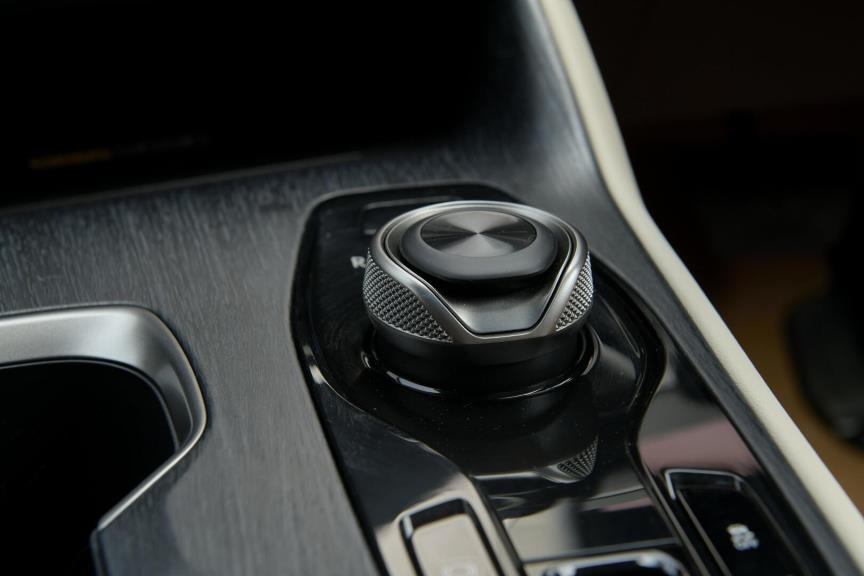
What impresses most is the DIRECT4 all-wheel-drive system. It is standard across all RZ derivatives and uses dual motors (one per axle) to constantly adjust torque distribution between front and rear wheels in milliseconds. Starting off, it sends more torque rearward for traction. When cornering, it shifts torque progressively to the rear as you exit, giving excellent grip and stability. On loose surfaces, it intelligently manages wheelspin before you even notice it.
This became obvious on my road trip from Caledon to Hermanus via the pretty Swartrivier farm road. Ground clearance is 200mm, so rutted dirt roads are no problem. The RZ felt utterly composed, with the DIRECT4 system shuffling torque seamlessly to maintain traction. It is not a dedicated off-roader, but for wine estate visits, coastal routes, and the occasional gravel detour, it is remarkably comfy. I was quite convinced my test car had air suspension until I checked the spec sheet.

Refinement is exceptional. Wind noise is virtually non-existent, and tyre roar is well-damped even on those big 20-inch wheels.
Is the Lexus RZ safe?
There are eight airbags (including a driver-side knee airbag), plus a full suite of active safety features: Collision warning with automatic emergency braking, Blind-spot monitoring, Lane-keeping assist and lane departure warning, Rear cross-traffic alert, Adaptive cruise control, Hill-start assist, Traction and stability control.
There is a lot of beeping from the various safety systems, which got on my nerves. The worst offender is the reverse gear buzzer: a continuous, loud beep while you are in reverse. Bizarrely, it beeps inside the cabin, not outside, where pedestrians might benefit. Other alerts, like lane departure warnings and speed limit notifications, can be adjusted through the settings menu, but that reverse buzzer is something a technician will need to disable.
Lexus has not yet confirmed an official crash-test rating, but it's a Lexus after all, and safety is probably the least of your problems.
Lexus RZ price: EX vs SE vs F SPORT
The pricing structure is as follows:
1. RZ 500e EX: R1,649,400 (18-inch wheels, synthetic leather, 280 kW)
2. RZ 500e SE: R1,842,000 (20-inch wheels, Ultrasuede, Mark Levinson, Head-Up Display, 280 kW)
3. RZ 550e F SPORT: R1,938,600 (300 kW, steer-by-wire, sport seats, performance dampers)
For context, competitors include:
- BMW iX xDrive40: R1,735,000 (240 kW)
- Mercedes-Benz EQE SUV 350 4Matic: R2,185,050 (215 kW)
- BYD Sealion 7 Performance AWD: R1,299,900 (390 kW)
The RZ sits in a compelling middle ground. It costs R107,000 more than the BMW iX but delivers 40 kW extra power and a superior warranty package. It undercuts the Mercedes EQE SUV by R343,000, positioning it as the better-value German alternative. Against the Chinese challenger, you pay R542,000 more for Japanese build quality and long-term peace of mind.
The SE is the sweet spot. You get the luxury kit without paying for the F SPORT performance you might not use.
.

Lexus RZ running costs and warranty
This is where Lexus leads the segment:
- 7-year/105,000 km vehicle warranty
- 7-year/105,000 km maintenance plan (included)
- 8-year/160,000 km battery warranty
- 7-year/105,000 km roadside assistance
- Service intervals: 12 months or 15,000 km
Mercedes recently introduced a 7-year/140,000 km service plan to match, but most German rivals offer only 2-5 year vehicle warranties and 5-year maintenance plans.
Roadside assist, as we've mentioned, is also part of the deal.
Should you buy the Lexus RZ?
Buy it if: You want a refined, well-built electric SUV with exceptional warranty coverage, you enjoy the driving experience but do not need absolute track-day performance, and you trust Lexus' reputation for reliability. The entry-level EX model is better value, and the seats will be easier to keep clean.
Skip it if: You don't want absolutely everything to be electronic, or you are not ready to deal with SA's public charging infrastructure.
The RZ is not revolutionary, but it is deeply competent and enjoyable to drive, and a wonderful family car. It manages to be both serene and entertaining, which is a difficult balance to strike.