Land Rover Discovery D300 R-Dynamic SE review (2021): All-terrain luxury at its finest
Those not looking for the old school charm of the Nissan Patrol and Toyota Land Cruiser 200 have products like the Land Rover Discovery to choose from when looking for an off-road-ready luxury 7-seater. We had a go in the updated Discovery recently.



The Series 1 Land Rover Discovery was first introduced in 1989, offering something more luxurious than a Defender, but more attainable than the Range Rover. The first generation went out of production in 1998 and was replaced by the popular Series II before the Discovery 3 and 4 totally revised what the Discovery was about,
With a greater emphasis on electronics and technology, the 3 and 4 were incredibly popular vehicles and still are to this day. Now in its fifth generation, but not called the Discovery 5, the latest model showcases the very best that Land Rover has to offer, before heading into the Range Rover sphere, of course. The recently revised Land Rover Discovery features more than just an aesthetic update, as we found out during our recent weeklong experience in a D300 variant.
Styling
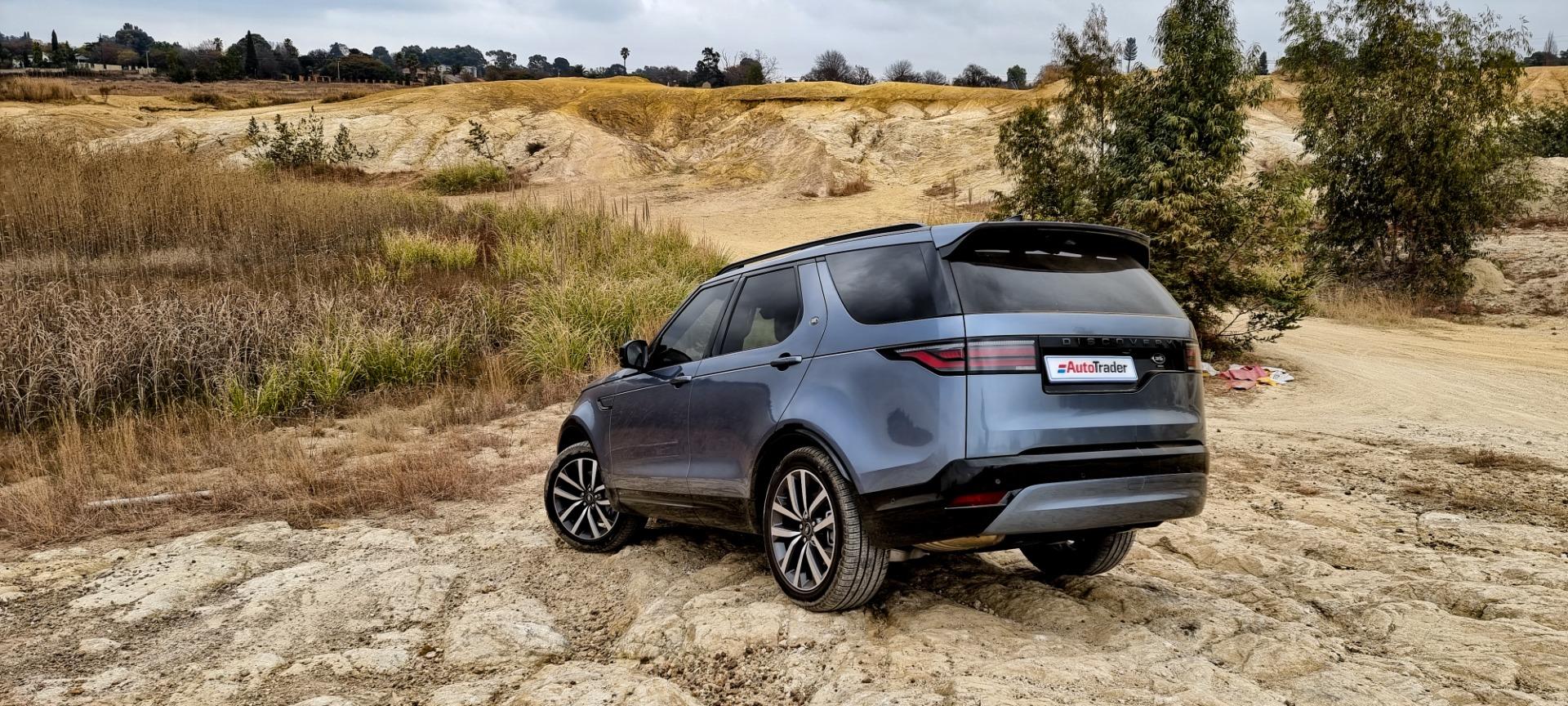
The styling updates made to the Discovery are relatively mild, with revised LED headlights and taillamps as well as reshaped front and rear bumpers. Our press unit was the R-Design model though, a new package that adds black accents to the exterior of the vehicle, a look enhanced by the diamond-cut alloy wheels on our press car.
Unfortunately, even though we rather like the front-end of the Discovery, the rear styling remains a contentious issue, with the off-centre number plate and large rear glasshouse looking rather ungainly, especially when comparing it to some of the brand’s other products.
Looking back to the first-generation Discovery, we see the off-centre number plate coming through as there was a rear-mounted spare wheel, which begs the question, why does the fifth generation need this when its spare wheel is neatly tucked under the boot’s false floor?

Interior and space
Stepping inside, the Discovery feels every bit as premium as you might imagine, with leather, aluminium and high-quality plastics that wouldn’t be out of place in a more premium Rane Rover product. The R-Design package extends to the interior too, with two-tone leather seats with contrasting stitching, which may not appeal to everyone.
The front pews are comfortable and cosseting and the large storage bin in the centre console is as useful as ever. Engineers have redesigned the second row of seating to be more comfortable too, while the relation of the rear air vents to the B-pillar is a welcome addition.
The Discovery now features the brand’s latest 11.4-inch Pivi Pro infotainment system with Apple CarPlay and Android Auto functionality. The system has a far improved resolution, is faster and more intuitive than the previous version, while the Meridian sound system is truly exceptional. The new infotainment system in combination with the 12.3-inch digitised instrument cluster and digitised climate control panel gives the new model a bang up-to-date aesthetic.

In terms of practicality, the Discovery is a massive vehicle, measuring nearly 5.0-metres long with 258-litres of boot space with all three rows of seats in place. Drop the third row and you have a voluminous 1 232-litres while the folding of the second row frees up a gargantuan 2 500-litres of space. The third row of seats is acceptable for adults on shorter trips but are really only suitable for children.

Performance and driving impression
There are two new straight-six engines in the Discovery line-up, one turbo petrol and one turbodiesel. We received the latter, badged D300, and went to work evaluating how it compares with the older V6 diesel. The new engine is potent, producing 221kW and 650Nm of torque. The engine is paired with an 8-speed automatic gearbox that sends power to all four wheels.
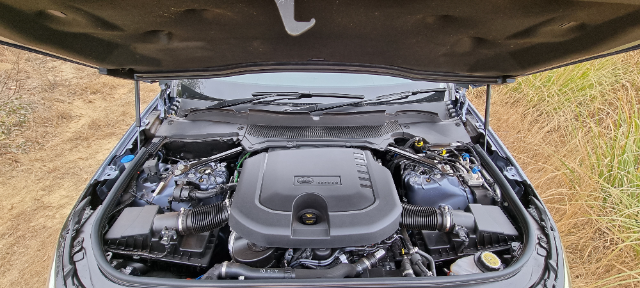
Out on the road, the new engine not only sounds better but is also more efficient, has smoother power and torque delivery and provides better acceleration, with a claimed 0-100km/h time of 6.8 seconds, not bad for a 2.3-ton-plus diesel SUV.
The refinement of the straight-six is befitting of the rest of the product, with its air suspension and light steering, which all combine to create a product that is devoid of any real feel, which may be an issue in a performance car, but in a big diesel SUV, it’s ideal. You feel relaxed while aboard, even if you are aware that the Discovery is rather massive, a problem addressed by the surround-view cameras and various sensors which help you avoid parking lot dings.
While we enjoyed the D300 on the road, it was only when we took it to our local off-road trail where we really discovered, if you’ll pardon the terrible pun, just how capable this vehicle is. With the Terrain Management 2 system set to sand, and later to rocks and mud, we tackled a variety of obstacles, many of which were quite daunting at first, but proved easy in a car with 283mm of ground clearance.
From our experience, you would have to be taking on something truly difficult to really get stuck in this car, it really is incredibly capable. We also found the ClearSight Ground View technology helpful, allowing us to check for obstacles in front of the car on the infotainment system screen via front-facing cameras.

The Discovery was crash-tested by the Euro NCAP new car assessment programme in 2017. It achieved a 5-Star rating including 90% for adult occupant safety, 80% for child occupant safety, 75% for pedestrian safety and 73% for its safety assistance systems.
Fuel economy
The impressive performance from the new straight-six diesel extends to the efficiency too, and while we were not able to replicate the claimed consumption figure of 7.4 L/100km, we were able to achieve a figure of 9.3L/100km, which is impressive for such a large vehicle.
Pricing
The base price for our Discovery D300 R-Dynamic SE line press car is R1 574 862 without options, making it a great alternative to the likes of the Volvo XC90, BMW X5 and Mercedes-Benz GLE.

Verdict
The latest Discovery is a fantastic example of an automotive isolation tank that can provide a comfortable, luxurious, and enjoyable ride regardless of the prevailing terrain. While we are still not sold on the styling, those that can handle the looks and are in the market for a luxury 7-seater that can take the family anywhere will have to consider a Discovery. For those that don’t require the additional seating, we’d suggest the new Defender, which is a far more appealing product, to our minds at least.