
Kia Seltos 1.5CRDi EX (2020) Review: Hitting the sweet spot?
With family-focused SUV/crossovers growing in popularity, the Kia Seltos is perfectly placed to take advantage of the growth in this market segment. We’ve previously sampled both petrol-engined bookends and liked them a lot, but each one nonetheless showed some room for improvement. Does the mid-range diesel Seltos finally strike the perfect balance between performance, affordability and efficiency? Spending a week with one yielded all the answers.


It’s time to face the reality that, for most modern families, a compact SUV or crossover offers an unbeatable combination of practicality, space, and ease of driving – and the era of conventional sedans and hatchbacks is slowly coming to an end as a result. Fortunately, most of the newest crop of crossovers are essentially just somewhat lifted station wagons, with no real aspirations of driving on anything worse than a gravel road and with a decided focus on on-road manners.
The Kia Seltos is a prime example of this car/wagon/cute-ute mix, and effectively replaces the slow-selling Cerato in Kia’s model line-up. Fortunately, the Seltos has a solid set of virtues, being as easy to live with as a traditional sedan/hatchback, good-looking enough to turn heads at the office car park, and comparatively well-priced to sweeten the deal.
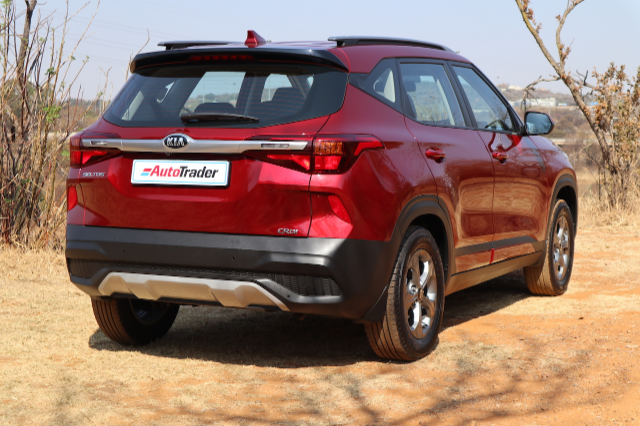
Within its model range, the Seltos diesel is arguably the best-balanced offering, with a frugal and torquey engine, a decent standard features list, good handling, and a reasonable cost of entry. As it were, the Seltos 1.5CRDi is the Goldilocks of its family: not too spartan inside, not too slow, and not too thirsty.
Related: Find out more about the Kia Seltos range in our launch report.
Styling

There’s no denying that the Seltos is a very good-looking car. Kia’s signature “Tiger Nose” front-end design language is very much in evidence, but it’s evolved to the point where it merely forms part of an attractive greater whole instead of being the main focal point.

Horisontal design elements are used to emphasise its width, and extend into the stylish “double-decker” headlamps, which use wrap-around LED DRL elements to create a distinctive visage. Further visual interest is generated by the knurled finish applied to the silver decorative strips that form the grille's upper- and lower edges.

In profile, the Seltos has generic compact SUV proportions and the practical shape that’s most-commonly employed in vehicles of this type. Discreet surface detailing and horisontal crease lines keep it from looking slab-sided, and neatly-applied black accents in the lower doors and on the rearmost roof pillar visually break any impression of bulkiness.

Much the same applies to the rear end, where LED light cluster detailing maintains some visual interest in a familiar-looking design. That familiarity is no accident, mind you – the larger Sportage and Sorento SUVs employ similar light cluster shapes and compound-curved bumpers to add some distinction to styling that largely fit the moulds of their respective classes. In short, the Seltos won’t win any awards for avant-garde design, but it’s a handsome car that’s sure to age gracefully.
Related: In our review of the Kia Seltos 1.4T-GDI, we loved the performance and spec level, but expressed concern about its pricetag.
Engine and drivetrain

Even though many passenger car manufacturers are now abandoning diesel propulsion, Kia still releases new oil-burning vehicles on a regular basis. The engine in the new Seltos is a great example of Kia’s diesel expertise, and even manages to hide the fact that it runs on "heavy fuel" very effectively. Our test car’s motive power was provided by a 1.5-litre turbodiesel engine, rated at 86 kW and 250 Nm, mated to a lovely, slick-shifting 6-speed manual gearbox (there are two 6-speed automatic diesel Seltoses available as well, in two trim levels).
It’s a really nice power unit, with a strong torque delivery as soon as the rev counter points to the north of 1 500 r/min, and it offers useful urge almost all the way through to its limiter at 4 500 r/min. Most importantly, the engine is generally very quiet in operation, and only reveals its fuel source briefly from a cold start. The clutch operation is equally easy to live with, thanks to low pedal pressure and a consistent take-up point.
Performance

The Seltos isn’t exactly a featherweight, with a kerb weight of 1 438 kg quoted for our test car. As a result, performance is steady but not really rapid by conventional metrics: the 0 – 100 km/h dash is dispatched in a claimed 11.5 seconds, and it runs out of steam at only 176 km/h. On paper, these figures make it slightly slower than the base 1.6-litre petrol, albeit with a marginally higher top speed.
Fortunately, real-world driving gives a completely different impression, and it’s all thanks to that wide torque spread and overall engine refinement. In short, the Seltos CRDi feels punchy and eager on the move, while the positive gearchange and well-chosen gear ratios make it easy to smoothly build momentum. These characteristics are particularly handy in overtaking scenarios or when nipping into a gap in traffic, lending a fuss-free character to the driving experience.
Related: Which Kia Seltos is better – petrol or diesel?

Fuel consumption
In addition to its effortless power delivery, this diesel engine’s fat wedge of mid-range torque enables the driver to short shift, keeping the revs low to minimise fuel consumption and reduce noise levels in general driving. That smooth-shifting gearchange also helped in this aspect, and enabled reasonably rapid progress that was both unobtrusive and frugal.
Kia quotes an average consumption of only 5.1 ℓ/100 km for the manual diesel Seltos, but a week’s worth of mixed-cycle driving without any particular effort to conserve fuel revealed a real-world average figure of 5.8 ℓ/100 km. That’s a highly commendable result for a vehicle of this size and weight, and really represents the upper limit of what buyers could expect in real-life usage.
Freeway cruising brings this number down to the low-5 ℓ/100 km range, making the Seltos 1.5CRDi an excellent cross-country cruiser as well as a nippy commuter. Hence this variant’s “Goldilocks” status: it’s neither too slow nor too thirsty, making it “just right” for the majority of usage cases.
The Drive

Continuing the easy-driving theme, the Seltos offers a finely honed blend of comfort and control. The suspension is clearly tuned for a smooth ride, but in spite of its tall-ish stature, the Seltos somehow manages to avoid feeling soggy or ponderous in more-spirited driving. Make no mistake, there are no sporting pretences at play here: this is unashamedly a family-biased vehicle, so enthusiastic drivers likely won’t rave over the driving experience.
However, there’s still enough control built into the compliant suspension to allow quick direction changes without any signs of lurch or wallow. In fact, the Seltos feels decidedly French in its execution: at first acquaintance, it seems too soft to handle well, but when the driver turns up the wick, it surprises with superb composure and unfeasibly high cornering speeds. Given the constraints of its FWD, high-riding architecture, the Seltos hits an impressive balance between comfort and dynamic prowess.
Related: When we reviewed the Kia Seltos 1.6 EX+, we loved its looks and spec level, but protested against the limp-wristed petrol engine.
Space and Comfort

As befits a family car, the Kia Seltos is endowed with a spacious cabin and plenty of usable boot space. There’s enough room in the back to allow reasonably spacious accommodation for 3 average adults, with plenty of head- and legroom all round. The front pews have more than enough space for even beanpoles to stretch out in every direction, and the deep side glass makes for an airy atmosphere and good sightlines to the outside.

The luggage compartment can handle a middling 433 litres with all seats in use, and can be expanded via the split-folding rear seatback. Lifting the large boot floor out of the way reveals a full-sized spare wheel, which is a handy thing in a car that will most likely see plenty of long-distance travel.

As for comfort, there’s very little to fault. All the user interfaces are intuitively located, the leather-rimmed steering wheel is nice to hold, and the cloth-trimmed seats are contoured to cosset their occupants for long stretches at a time. Combine that with the smooth ride quality and well-contained overall noise levels, and the Kia Seltos becomes a companion you’d want in your life for many years to come.
Standard equipment
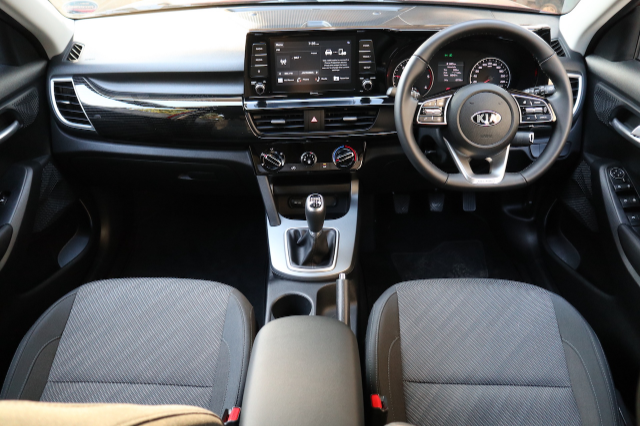
Seeing as “EX” trim (as tested) represents the entry level of the local Seltos range, it makes do without some of the luxury items you’d find in the more-expensive variants. However, the bases are all covered, and occupants won’t feel deprived or inconvenienced in any way.
Standard kit includes 16-inch alloy wheels, manual air conditioning, cruise control, a multi-function steering wheel, electric side mirrors and -windows (the latter, curiously, with one-touch functionality only when opening the driver’s window), remote central locking, auto-on headlights, and a colour touchscreen infotainment system with USB/Bluetooth functionality and full smartphone mirroring.
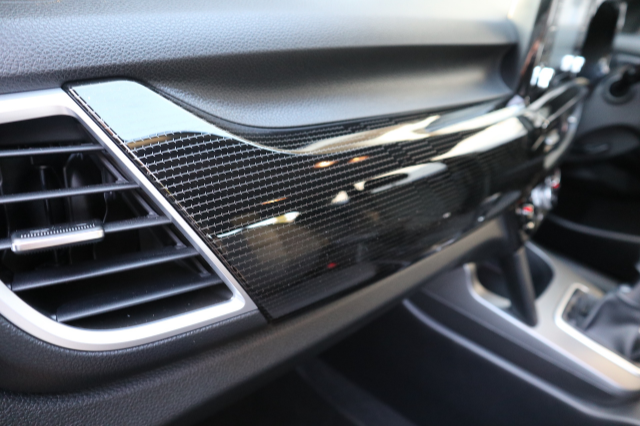
It’s not like it looks stripped-out, either, as the manual air conditioning’s control setup looks particularly good in its piano-black setting and the trim quality is of a high level throughout (albeit with plenty of hard plastics in evidence). It’s all screwed-together tightly as well, and our test car didn’t exhibit a single rattle or squeak during its time with us.
There’s a high-trim (EX+) diesel in the range as well (albeit only with an automatic gearbox), which adds upsized (17-inch) alloy wheels, folding rear-view mirrors, leather seat upholstery, and some cosmetic add-ons inside and out. Unfortunately, it carries quite a hefty price premium, and costs R 18 000 more than the lowlier EX diesel automatic.
Related: The top 5 things you need to know about the Kia Seltos.

Safety
It’s impossible to make any pronouncements regarding the local-market Seltos’s crash protection, as it hasn’t yet been hurled at an obstacle by any official testing authority (and neither has the second-gen Hyundai Creta/ix25 with which our “developing-market” Seltos shares its platform). The international-market Seltos scored 5 stars in ANCAP (Australasian NCAP) testing, but it’s built on a different platform (related to the Hyundai Kona), so it’s not clear how the change to a lower-cost platform would influence its crash safety.
The basic safety hardware items are mostly in place, except for one thing. Standard equipment includes 6 airbags, ABS with brake assist, rear ISOFIX child seat anchors, rear parking sensors, and a rear-view camera across the range. EX trim strangely loses out on one crucial element, however: the stability control system which is fitted to the more-expensive EX+ (and GT Line) variants. In its market segment, this is a notable omission, and its inclusion to the EX+ trim makes it worthwhile to rather fork out the extra money for added peace of mind.

Price
Listing at R 410 995 at the time of writing, the Kia Seltos 1.5CRDi EX manual (R 428 995 for the automatic) goes up against some formidable opponents. Less money can buy a quicker and better-equipped Suzuki Vitara 1.4T GLX, for instance; a Renault Duster 1.5dCi Prestige automatic if you’re adamant about diesel power and prefer an automatic transmission; or a Mitsubishi ASX if excellent safety ratings and very comprehensive standard features are a must-have.
Seen in this light, it’s arguably better to rather buy a Seltos 1.5CRDi EX+ automatic (R 446 995), which has the same nice engine and all the safety bells and whistles included as standard, and undoubtedly feels a bit more plush inside. But even there, it’s under pressure from larger opponents like the Renault Koleos. Once again, its pricetag seems to be the very likeable and capable Seltos’s main shortcoming.
In mitigation, the Seltos does have an excellent aftersales package as part of the deal, with a warranty for 5 years without a distance limit and a service plan for 5 years or 90 000 km included in the base price – but then, many of its opponents offer similar coverage as well.
Related: How much are the repayments on a new Kia Seltos?

The Verdict
Make no mistake, the Kia Seltos is a very good and charming family car. It looks great, has enough convenience items and space to keep its occupants satisfied, is refined and very nice to drive, and sips fuel at a miserly rate. There is also no doubt that the 1.5CRDi is the most sensible engine for real-world usage, thanks to its refinement and strong torque delivery.
Unfortunately, many of its competitors do most of the same things, and often at a smaller asking price. Rather than any real deficiency in the Seltos itself, this merely points towards a very crowded market segment, filled past the brim with equally-capable and desirable alternatives. Seen in this light, the Seltos 1.5CRDi EX is an offering that’s at least as compelling as many others, but doesn’t really do much to distinguish itself, either.
* Pricing was accurate at the time of writing, but may change without prior notice.
** Included in the standard list price is a warranty for 5 years with no mileage limit, and a service plan for 5 years or 90 000 km.
Expert rating:
4/5: It would have been higher if it was cheaper, or had stability control as standard.
Recommended Next:
Shop for new and used Kia Seltos cars for sale here.
