
Does the Rio remain the best hatch of the batch?
Auto Trader reviews the Kia Rio hatch 1.4 TEC Auto



Hatch of the Day
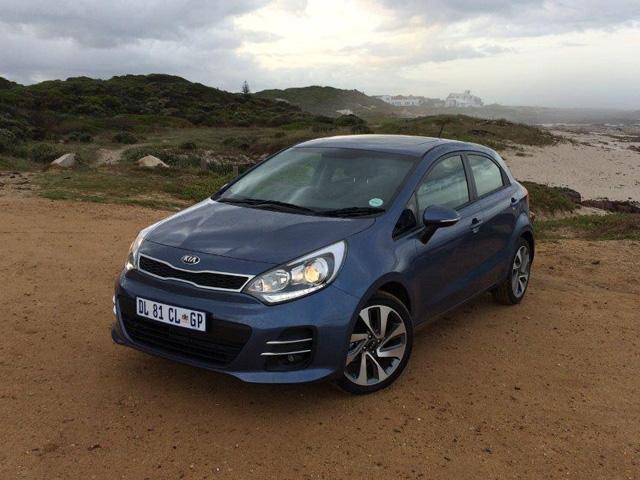
When your face is already quite fetching, there’s no need for much of a make-over, now is there? Kia’s top-selling hatch, the Rio, recently had a bit of cosmetic work done. The changes are not drastic, yet they serve to make the Rio look (and feel) a little more in tune with modern times.
We had the range-topping 1.4 Tec Auto (R228 995) for a week, and as I‘ve never driven the outgoing Rio before, it was good to finally see what all the fuss is about. And with fuss, I’m referring to the Rio’s spot in the finals of the 2013 Car of The Year competition. However, it was the Rio 1.4 Tec Manual who was a finalist, now available at R 216 995.
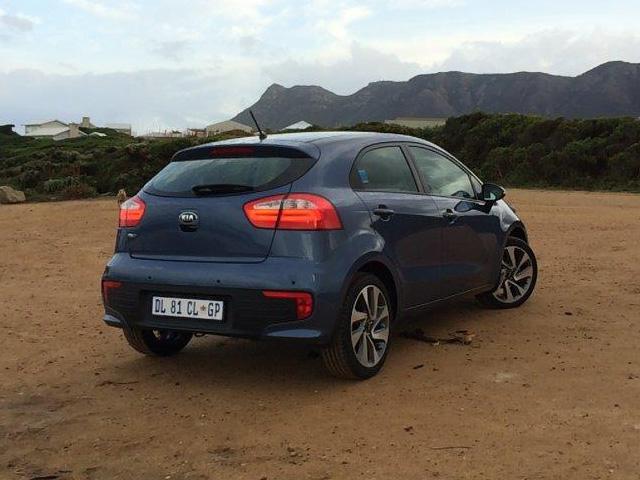
From the outside, the Rio is an elegant, sporty-looking hatch, and on the inside one can see the German influence when it comes to cabin quality. The centre dash is decidedly minimalistic and neat, with plenty of gloss piano black inserts and thin chrome strips to liven things up a bit. All in all, it feels very upmarket and clean, without being boring or clinical. And if you thought the Rio Hatch is only a compact, B -segment car aimed at childless couples, you thought wrong. For car-pooling duties, I easily fit three primary school kids on the back seat and one in front, and all 4 school bags, 4 kit bags, 2 hockey sticks and 2 tennis racquets easily slipped into the Rio’s 288 litre boot. The rugrats’ only complaint was poor outside visibility due to the Rio’s high beltline – they’d have to be in a booster seat to see more than just treetops flashing past. My visibility to the rear was not fantastic either, as the back window is rather narrow. Speaking of what goes on behind the Rio, rear-parking sensors are standard on both Tec models. Other highlights (in both the 1.4 Tec Manual and 1.4 Tec Auto) include leather seats, a cooled glove box, six airbags, alloy wheels and alloy pedals. The six-speaker audio system is easy to operate and has good sound quality. All derivates have Bluetooth, but the lower-specced models have four speakers each.
Our Rio’s 1.4 litre (naturally aspirated) petrol engine was quite sufficient, but teamed with a primitive-sounding four-speed auto gearbox, I won’t encourage too many sudden moves. If you floor the accelerator, the gearbox kicks down and the engine revs a little too enthusiastically, and quite noisily at that. The four-speed auto box would not be my first choice, unless your style of driving is quite chilled in general. I’d much prefer the six-speed Kia Rio 1.4 Manual at R199 995, which is probably your best buy. I also expected my fuel economy to be slightly better – we averaged about 7.9 litres per 100 km’s on the combined cycle.
When it comes to design and build quality, the Rio Hatch is top-notch. Performance wise, there are more lively hatchbacks out there. But are they as pretty and as solid inside? If you’re looking for a handsome, sensible hatchback, the Rio should be one to consider - but I’d definitely go for the manual gearbox.
Facts & Figures:
| Price: | R216 995 |
| Engine: | 1398 cc, four-cylinder petrol |
| Power: | 79 kW at 6300 rpm |
| Torque: | 135 Nm at 4200 rpm |
| Top speed: | 183 km/h |
| 0 to 100 km/h: | 13.2 seconds (11.5 in manual models) |
| Fuel tank: | 43 litres |
| Realistic fuel consumption: | About 7.8 litres per 100 km (combined) |
| Boot size: | 288 to 923 litres |
| Ground clearance: | 150 mm |
| Warranty: | 5 years/150 000 km |
| Service plan: | 4 years/60 000 km with 15 000 km intervals |
| Roadside Assistance: | 3 years, unlimited km’s |
| Also consider: | Ford Fiesta, Hyundai i20, Opel Corsa |