
Review: Jeep Wrangler Unlimited Sahara 2.8 CRD Automatic
Review: Jeep Wrangler Unlimited Sahara 2.8 CRD Automatic



By Martin Pretorius
This will most likely be one of the last reviews you'll read about the current generation of Jeep's evergreen Wrangler. We've already seen pictures of the next-generation model, which was recently shown in the USA, and is due to land in South Africa towards the end of 2018. It's about time too, as this version has been with us for a decade already. Minor updates can only go so far to disguise the age of any design, and a lot has changed in the 10 years since this one arrived.
It's the Jeep we know and love, warts and all...
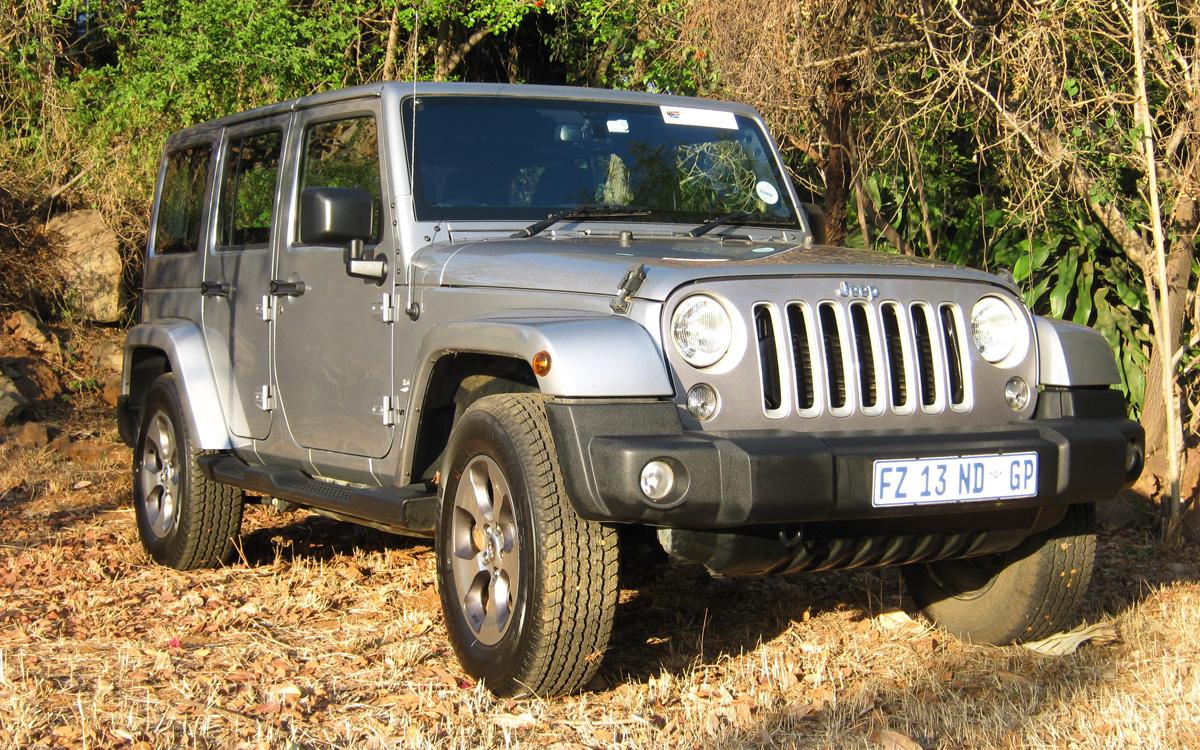
But don't think that its age means that the Wrangler is outdated – or rather, that it's any more outdated than it was at the time of its introduction in 2007. Make no mistake, even with its compliment of airbags and some concessions to modern luxuries, the Wrangler is one of the most archaic vehicles still on sale today.
That boxy body hides a basic architecture which hasn't changed all that much since the first “Civilian Jeeps” first hit the roads after World War II drew to a close, with a ladder-frame chassis and live axles at both ends, detachable roof and doors, and easily-replaceable body panels.
And oldie, but a goodie.
Not that this apparently primitive design matters in the world occupied by the Wrangler, mind you. There's a good reason it's still being built with an essentially 70-year-old design, and that's because this design is perfectly suited to this application. Sure, the leaf springs may have made way for coils to give a more supple ride, and the Unlimited (4-door) variant has a lick of practicality thrown in courtesy of usable rear seats, but the Wrangler's main focus will always be to head out into the wild, climb over boulders and wade through rivers. For this job, there's nothing better than a ladder-frame chassis and solid axles under both ends, and sophistication and refinement be damned.
Heading into the bush
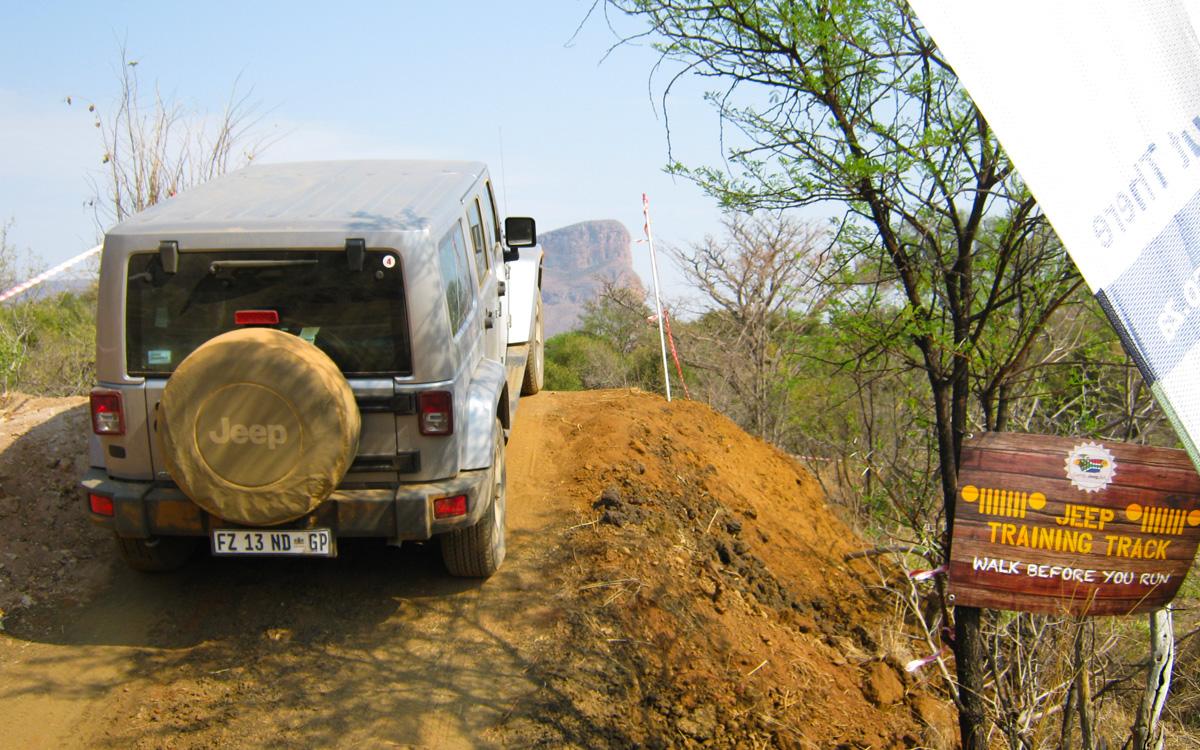
So let's examine the Wrangler Unlimited's off-road prowess, then. First off, it has to be mentioned that the long-wheelbase Unlimited isn't really the optimal choice for extreme off-roading, especially while it's still riding on the standard-sized tyres and without the benefit of a body lift conversion. Those extra inches between the axles does the break-over angle no good at all, and, combined with the deep chassis rails underneath the cabin, care needs to be exercised to ensure that the Unlimited doesn't end up bottoming out over sharp crests.
Of course, raised suspension and taller tyres will alleviate this issue, but serious off-roading is still better tackled with a short-wheelbase Wrangler. Sahara specification isn't really the ideal Wrangler configuration for heavy-duty bundu bashing either, losing out to the de-coupling sway bars and twin (front- and rear) differential locks fitted to the more rugged Rubicon variants.
It's still amazingly competent
Given all these disadvantages, it's not looking too good for the Unlimited Sahara. It may just be too long to traverse sharp ridges, the fixed sway bars might limited axle articulation, and the lack of diff locks may just lead to a loss of traction when it's needed most urgently. And to top it all off, the Sahara comes from the factory with a set of Bridgestone Dueler A/T tyres – hardly what a hard-core off-roader should use when its faced with sharp rocks and a muddy, slippery track. Right?
Well... Wrong. On paper, the odds appear to be stacked against the Unlimited Sahara, but fortunately, the Wrangler is designed to operate in the bush, not on paper. There's something almost supernatural about this less-than-ideally-configured, relatively unsophisticated 4x4 heading onto a challenging trail, and then surprising all onlookers by climbing over tree trunks and scurrying across a rock-strewn path as though there's no challenge at all.
Care still needs to be taken
The only concessions it demands from the driver is due consideration for that break-over angle, and care needs to be taken to avoid damaging the relatively soft sidewalls of those all-terrain tyres, but apart from these caveats, the Wrangler Unlimited Sahara is more than capable of tackling all but the most extreme terrain.
While opting for a short-wheelbase Rubicon will give you a ready-made solution for 99.99% of all the terrain you could imagine, even the other end of the Wrangler spectrum (like this LWB Sahara version) is still immensely capable. There's a clever traction management system which channels torque between the four driven wheels, mimicking the effect of real diff locks, and even though the sway bars are always connected to those axles, there's still an impressive amount of flex available to keep the tyres in contact with the trail. Slap a set of heavy-duty tyres on a Sahara, and it will easily keep up with far more exotic machinery where the road ends and the wilderness begins.
Out of the bush and into town.
So far so good: the Wrangler Unlimited Sahara is still as capable of crossing continents and flattening mountains as its reputation suggests. But the picture gets somewhat less enticing when it's used on tarmac – and this is where the majority of Wranglers end up being imprisoned.
That traditional body-on-frame construction leads to high door sills and causes quite a climb to get into the cabin, and the combination of a built-in roll cage and wide roof pillars creates some rather intrusive blind spots. Those free-standing fenders also make it difficult to gauge where the Wrangler's extremities end, and combine with the restricted sightlines to make tight manoeuvres a bit of a guessing game.
Not that you'd prefer to engage in too many tight manoeuvres anyway, because the Unlimited has a pretty atrocious turning circle. And to top it all off, the ride quality is merely acceptable around town, with constant kickback through the steering wheel and a heavy feel around corners. Secure, and surprisingly sure-footed on tar, but hardly athletic...
The engine is still a masterpiece.
Under the bonnet lives a 2.8-litre 4-cylinder turbo diesel engine, mated to a 5-speed automatic gearbox before (naturally) sending the power into the 4WD system. Sourced from the Italian diesel experts VM Motori, the engine packs a punch which was eyebrow-raising a decade ago, and still commands respect even today. There's 147 kW and 460 Nm to work with, but on-road performance makes it feel even more potent than the figures suggest.
Effortless urge is on tap at all times, and the diesel's wide power spread largely alleviates the dim-witted and slow-shifting gearbox's best efforts to sap the joy out of driving. As good as the engine is, that's about how old-fashioned the gearbox feels. Either way, performance is a real drawcard even with the diesel engine: the 0 – 100 km/h sprint is dispatched in an impressive 10.7 seconds, for instance. Real speed freaks will probably enjoy the torquey, free-revving 3.6-litre V6 petrol a whole lot more, though – until they have to refuel, that is: this diesel's tested average consumption figure of 10.2 ℓ/ 100 km is about 50% better than we could get out of an Unlimited Rubicon V6 a few years ago...
Concessions to modernity
There are some other highlights to this specific Wrangler, too. Multiple updates through the years have given it a modicum of on-road comfort, and most of the mod-cons are present. You get electric windows, mirrors and central locking, automatic control for the air-con, steering wheel-mounted controls for the radio, trip computer and cruise control, and an absolutely thumping audio system, complete with a sub-woofer mounted under the boot floor.
The audio system is, just like the Wrangler itself, a mix of old-fashioned and new-fangled. Yes, it has some touch-screen functionality, and it can obviously boast of serious volume and very good sound quality, but Bluetooth connectivity is conspicuous by its absence, and the USB port only serves as an access point to load music onto the Jeep's built-in hard disc drive. Yet, weirdly, you can't play any tracks directly from the USB port.
It comes at a price – a rather steep price.
R 731 900 is a lot of money for a vehicle which, in some respects, verges on the downright primitive. But to dismiss it on these grounds would be doing it a disservice, and besides, other, equally archaic alternatives cost just as much or even a lot more. Land Cruiser bakkies are even less civilised for similar money, and the (now-discontinued) Mercedes G-Class diesel cost about half as much again at the end of its production run in 2017. The reality is that there is nothing else quite like the Wrangler out there, and with its indisputable off-road prowess, it's still the king of its class where the tarmac ends and the trail of boulders begin. If you're in the market for a real, hairy-chested go-anywhere vehicle, there are many pretenders, but only One Real Jeep.