
Has the newer 3.6L engine made the Wrangler even tougher?
Auto Trader reviews the Jeep Wrangler 3.6L Rubicon


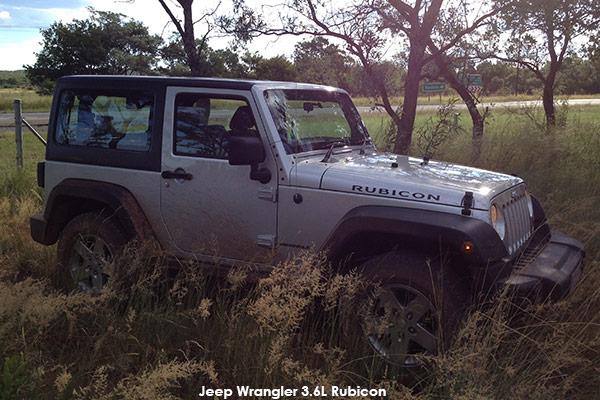
The Jeep Wrangler is one of those “old school is cool” retro-inspired cars that have been modernised, and has been an iconic 4x4 for years.
In 2007, when the “new” Wrangler was first introduced, it had the 3.8L engine. The more modern engine was expected to be a great leap forward after the old (really old) 4-litre straight 6 which could do no more than 130kW – it had retired from both private and military service. New recruit was a 3.8L, changed to a V6, with high hopes… but soon found that a mere 146kW (despite its size) and 315Nm were not enough for obstacle courses in the urban jungle or mission trips, so had it dropping out too soon.
Early 2012 saw Jeep commandeering some fresh blood – let’s call up the new 3.6L from the new-generation 2010 Grand Cherokee to give it some much-needed muscle. A huge workout made it see results, jumping to a much more impressive 209kW (as much as the old muscle cars, an owner pointed out). Torque is up, but 347Nm peaking at a high 4300 does not help its drivability, and that power output is at 6350, which means unusually-high revving for this type of vehicle.
The Jeep tested was the 3.6L in tough-as-leather-mountain-boots Rubicon trail-rated spec. This means the addition, over the less able Sahara model, of a panel marked “Off-Road” for the driver’s engagement, where the switches marked Sway Bar and Axle Lock basically sum up its 4x4 seriousness level.
A shorter wheelbase on 3-door Wrangler than on the 5-door Wrangler Unlimited makes it more talented off-road, thanks to its greater ramp-over angle and tighter turning ability – this is very helpful in challenging 4x4 spots, which can arrive quickly and unexpectedly. But on the open road this short wheelbase packaged in a high short vehicle with high-profile tyres had its occupants rocking forward-and-backward and side-to-side over a twisty uneven country road. Pushing the Wrangler Rubicon over these roads gave an unwanted rodeo-horse ride. The standard-fit stability control jerked in the reigns, seeing instrument warning lights flickering on even a slightly sporty drive.
On rutted dirt roads the soft suspension above big wheels and tyres (with classic white outlined Wrangler lettering on the side walls) made it totally comfortable as it simply blocked any vibrations from entering the cabin. These are off-road rated chunky tyres, which have superb grip for the rough tough stuff, but also caused more road noise than in most modern SUV types. Off-road, though, you’ll appreciate these tyres having grip, and being too thick to be cut by sharp stones.
The 5 broad-spoke wheel is so simple and timeless, and also echoes the US Army 5-pointed star on the door which some (private) owners enjoy displaying, for that army look. Old-school bonnet clamps and instantly-recognisable 7-slot grille with simple round lamps hark back to the original General Purpose (GP) from where its name “Jeep” stems.
The windscreen can fold flat, the doors can come off, and – great idea – the hardtop is removable, so can stowed at home. However, the mission of unbolting several studs and clamps, and the sheer weight and size of the hardtop, had us abandoning our intended Sunday-afternoon bushveld drive in the all-open-air Jeep. Instead, we quickly unclipped the other great idea – removable twin roof panels in front are easy enough to deploy. So with roof panels off and lowered windows… well, not quite what the kids had in mind for a fun bush drive out. Great idea, the hardtop, but too difficult to remove and refit, unless you summon up the troops. Make it easier, please Jeep. Fortunately, with the hardtop removed, a foldable soft-top can make a quick tent to cover the rear of the Jeep.
Where does the Wrangler fit into the Jeep line-up in today’s world? In the same place ever since it first changed from US military to public vehicle – firmly on attention. In today’s Jeep roll-call, the Compass and Patriot are small modern-ish cross-over urban cadets and corporals, while new Cherokee and big Grand Cherokee fill the sergeant and captain SUV roles. Wrangler is the General – old and tough, enforcing strict discipline, and set in his ways. Like the station commander who has had to learn email, the Wrangler is also available with a modern option: MyGIG navigation radio, complete with touch-screen, Bluetooth and voice control.
Prices start at R 450 990 for the Wrangler 3.6L Sahara while this Rubicon costs R 475 990. Jeep seems to have limited-edition models of Wrangler all the time – choose from a Polar Edition (based on Sahara) at R 482 990, or the 10th Anniversary Rubicon X model at R 525 990. Wrangler Unlimited prices from R 490 990, with 3.6L Rubicon automatic at R 511 990, and 2.8CRD Sahara auto at R 544 990, and Polar Edition, Altitude and Rubicon X in-between. The Rubicon spec can only be mated to a 3.6 petrol engine, whereas Sahara variants have the 2.8 CRD option but only in the 5-door Unlimited, after Jeep stopped offering this diesel engine in Wrangler 3-door.
Being such an icon means it doesn’t really have challengers from enemy camps. The other old-school 4x4s are only available as a 4-cylinder diesel in station wagon body style as the British-uniformed Land Rover Defender 90 (also an old international icon) and the Japanese-flag Toyota Land Cruiser 70 Series. Perhaps the most modern closest Wrangler rival is the heritage-inspired charismatic Toyota FJ Cruiser, which also prices around the R500k mark.
So the 3.6L engine, then. Is it the star of the Jeep show? No, the newer 3.6 engine sounds nice and is perhaps ideal for a person wanting a more usual Jeep sound and V6 smoothness, but the CRD is definitely the engine of choice, as its 147kW (uprated from 130 in 2011) has a full 460Nm from just 1600r/min, and vastly better fuel consumption – the 3.6L is lazy and 14+ litres/100km thirsty. Its outputs may match the old muscle cars, and 206kW seems quite a lot for a Wrangler, but overtaking or steep(ish) uphills on the open road will need a down-shift from 6th to 4th gear by hand, and fuel fully fed by foot. The Wrangler Rubicon is the only manual variant in the line-up, where all others get a 5-speed automatic. Both have low-range transfer cases packed.
The engine is lazy and the Wrangler’s on-road manners not well-trained… yet its standard-issue military heritage looks, character, toughness, 4x4 ability and iconic status make it so likeable. Old’s cool. Sir, yes sir!