
The Isuzu KB, revisited
The Isuzu KB, revisited



By Stuart Johnston
Isuzu’s KB range of pick-ups has been around for many years now, with a new model launching at month-end. But just before we bring you our driving impression of the newcomer, we took the outgoing, top-of-the-range KB 300 4X4 LX model for a road test.
It was early in 2013 that the current Isuzu KB series of pick-ups was launched in South Africa, and since that time the range received a quite significant face-lift in 2016, which introduced various driver aids and a quite effective re-style job, which modernised the look of this mainstay pick-up quite substantially.
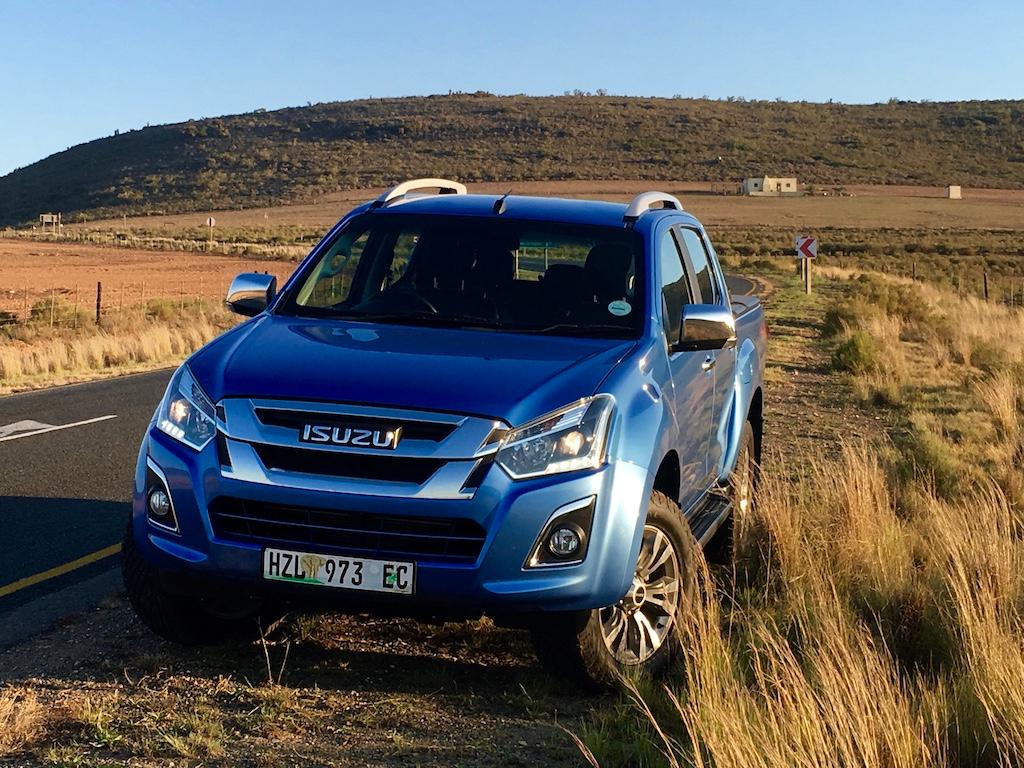
At that time a new bonnet, radiator grille and fog-lamps were introduced, and this was most effective on the “bakkie” we recently sampled, the top-of-the-range KB 300 LX 4X4 Double Cab Automatic.
The LX model gets a big bold grille in chrome which does a lot to lift the KB image-wise, so important in the double cab market, where the likes of Ford’s Ranger with its strong American pick-up styling has proved that looks are extremely important.
The writer attended the initial launch of the current KB series back in early 2013 and remembers feeling that the KB had lost a few key elements which had seen it become such a success in its previous (pre-2013) guise. One was its ride quality, which was generally superior to the likes of Hilux, the bench-mark bakkie here at that time. And the other factor was that the plastic quality used in certain areas of the interior had taken a step backwards.
The ride quality was attended to in that facelift of 2016, with new damper rates being used to improve on-road ride. There has never been an doubt that the Isuzu is one tough bakkie as far as load-carrying and durability is concerned, but in the modern double-cab market the likes of VW’s Amarok has shifted the playing field to areas previous thought to be unobtainable in a bakkie.
Sampling the KB in late 2018, with a new model not that far away on the horizon, my feelings were that the ride is better than I remembered it at launch, but still a bit behind its other competitors in this market, in terms of on-road harshness.
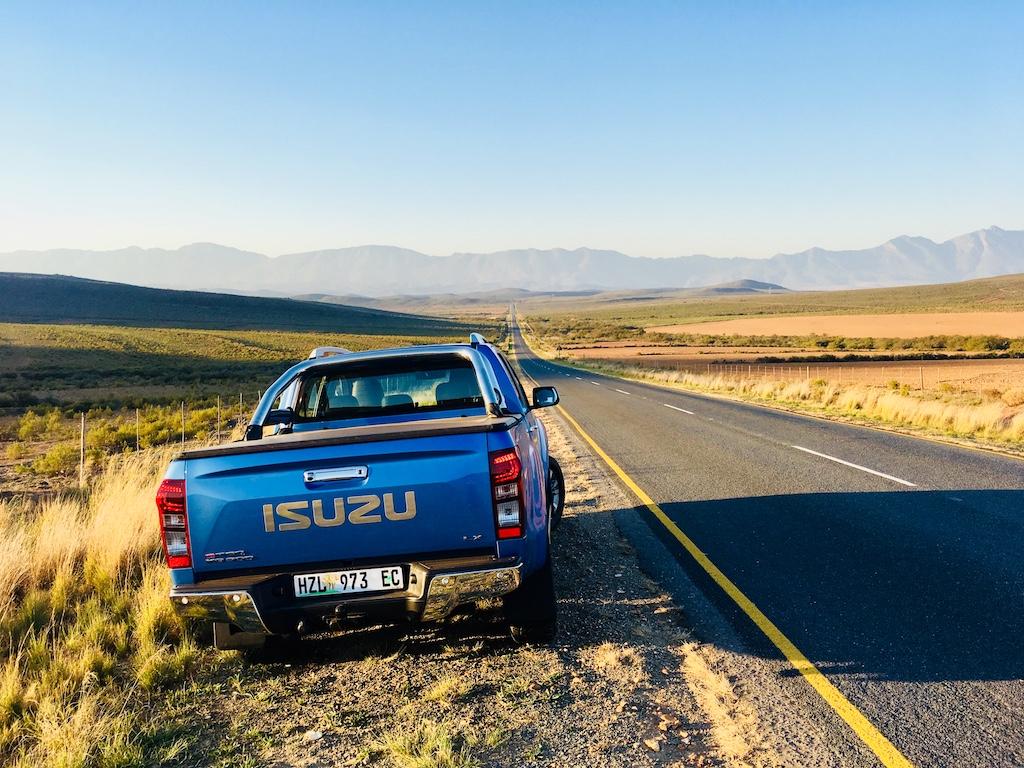
The latest KB 300 LX 4X4 does enjoy some modern features that we have come to expect from the latest double cab lux-bakkies, and these features include , crucially, a rear-view camera integrated into the tailgate, which is essential when accurately reversing these big Double Cabs.
Also in 2016 a new instrument cluster was introduced, and this has freshened up the interior. The LX model is identified by badging, a tow bar, a sports bar, roof rails, and it also has very attractive 18-inch alloy wheels as standard. These can be ordered with tyres more specified towards off-road work or on-road work. The test vehicle had relatively low-profile 255/60 R18 rubber fitted, adding to the overall sporty exterior highlighted by the attractive chrome roll bar and snug-fitting tonneau cover.
The LX 300 Automatic was introduced some month after the initial launch, and the gearbox is a five-speed traditional fluid-drive automatic, mated to an effective four-wheel-drive system, which employs a central rotary knob on the console to switch from two-wheel-drive to four-wheel-drive and low range.
Also on offer, for serious off-roading, is a rear differential lock, while electronic driver aids include traction control and electronic stability control. Further on the lines of safety equipment, the KB has six airbags, and ISOFIX child restraints at the rear.
The KB range comes with two basic engines, both of them turbodiesels. The KB 300 is fitted with the more powerful three-litre (2 999 cc) D-Teq diesel, which produces 130 kW and 380 Nm of torque at 1 800 rpm.
There is no shortage of urge with this engine. However, what is surprising, in late 2018, is the high amount of engine induction noise in the cabin. This is evident from start-up, and continues when pulling away, although the engine noise does settle down somewhat once underway. However, it has the effect of making the KB feel distinctly “old-tech”, and while the noise is not unpleasant, it is unexpected in this era where diesel have been increasingly been refined in terms of NVH (noise, Vibration, Harshness) in the past decade.
Coupled with the distinctly firm ride, one feels that the KB series is in fact in need of a redesign in some areas. This is not to say the KB is any way bad, simply that it feels so much more like a workhouse than some of its competitors, which have been offering ever-increasing ride refinement and engine refinement. Vehicles that come to mind here are the VW Amarok (at the top of the list as far as overall refinement is concerned), the Nissan Navara (which now enjoys an improved ride quality on tar) and the Navara-based Mercedes-Benz X-Class.
In other areas, though, the KB has much to offer. It is very easy to drive, and frugal on fuel, returning 9,0 litres/100 km without too much difficulty, thanks in part to being very aerodynamic for a pick-up.
The standard-spec leather seats with power-adjustment for the front seats, is also an attractive feature for many drivers.
As the current Isuzu KB series has evolved since 2013 it offers a nice equipment package, including that reverse camera , and the afore-mentioned leather seats, which are smart and comfortable. It is also well-priced in this top-of-the-range guise at R594 500, being some R25 000 less expensive than the equivalent Hilux Double Cab 4X4.
Isuzu has a great name in pick-ups here, which it has retained despite the withdrawal of General Motors over a year ago, and Isuzu dealerships having to regroup. The Japanese-designed bakkie line is still produced in South Africa in Port Elizabeth, and it is heartening to see that sales range between 1 200 and 1 500 units a month, which is respectable for