
The new 6th generation Isuzu KB presents itself as a rugged, stylish, efficient and technology bakkie.
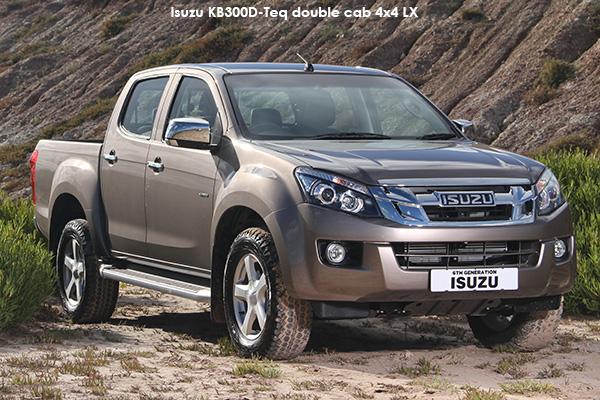
Auto Trader reviews the new Isuzu KB300D-Teq double cab 4x4 LX



Look around the local landscape of the light commercial vehicle – a spread of Japanese and semi-Australian or Chinese and a single German manufacturer build their latest versions of what South Africans love so much – the local-is-lekker bakkie… and especially the double cab 4x4.
Have a closer look at what all the abovementioned manufacturers have in common – they all build passenger cars, SUVs, vans and the like, with pick-ups as part of their arsenal to try hit all market targets. Compare that to Isuzu, dedicated to building only trucks and pick-ups. Sure, Isuzu is part of the General Motors stable which has cars too, but Isuzu is a strong brand with its own product development, of only bakkies and trucks. That should say something important about a company’s dedication to sticking to its knitting (keep doing what it does best, without digressing from its core business). Isuzu even call themselves the bakkie specialists.
Something Isuzu enthusiasts have not seen in a while is an all-new KB pick-up. As pick-up lifecycles go, these usually last for a good couple of years – the previous “big” KB was sticking around from 2004 to 2013! As rival pick-ups kept getting refreshed, and growing in sheer bulk like they’re absorbing some of the fertiliser they carry, the KB fans had to wait their turn. More interior space, comfort and convenience are traits of the new-generation of big bakkies, and the new Isuzu KB is as finally as big.
Reliability and durability – both of paramount importance in the world of any light commercial vehicle. Good to hear then that a significant portion of this rigorous test and development programme was conducted in Southern Africa by General Motors, in preparation for local production of the new Isuzu KB in Port Elizabeth.
A noticeable feature on all 4x4 and high-ride models is the adoption of integrated steel wheel arch flares in place of the plastic overfenders used on the previous model, adding to the overall bold appearance of the new Isuzu KB.
Some safe thinking went into the new Isuzu KB: the front-end was designed to limit the scale of injury to a pedestrian, it has projector-style headlamps (not usually seen on a bakkie) which improves visibility, deeper rain-water channels in the A-pillars inhibit the water flow (for improved side vision in rain) and on top-end LX models the taillights are LED, where brighter illuminations is beneficial in especially daylight. Rear park distance control is incorporated into the rear bumper on LX spec, and optional on LE.
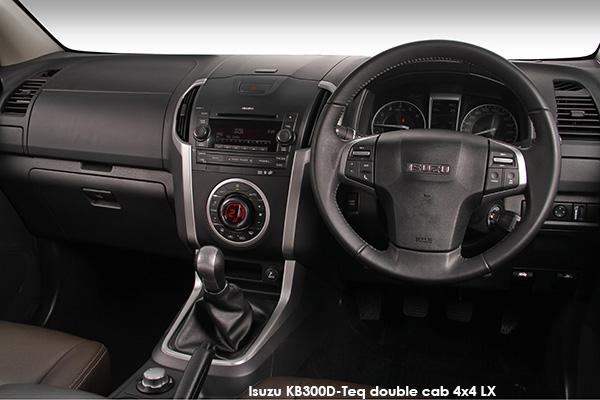
Rear foot room – often a shortage in a double cab – has been enlarged, and all doors have been optimised to make entry/exit to the bakkie easier. The dashboard has also evolved from a squarish clearly commercial-vehicle layout, to a friendlier modern console. Out with the square old – in with the new round. The interior of base and Fleetside modesl is trimmed in vinyl, while LE and LX upholstery promises to be hard-wearing, and leather an option on all LE and LX (in all body styles, unusually) with the dark brown being very practical, and a welcome departure from the usual drab grey.
The list of 23 models is made up of 4 trim steps, 3 body styles and various drivetrains: standard-height base, Fleetside with raised suspension (for that 4x4 stance), and mid-spec LE or lux LX; in rear-wheel drive (either with a rear diff lock standard or as factory option) or 4x4 with low and high range gearing; single cab, or Extended cab (with rearward-opening “Flex Doors” that can be opened from outside or inside, accessing plenty extra packing space) or as double cab (where the rear split bench seat can fold up vertically to allow for extra storage, cleverly solving the usual “where do I put the stuff?” dilemma).
Isuzu stays with its proven range of diesel engines – in fact where Toyota still sells many petrol Hiluxes, Isuzu sales show the majority go for a diesel engine. With an update due soon, the petrol engine will actually be ended. Manual gears for most, and a single auto available only with 300D-Teq double cab 4x2 – strange that no automatic is available in 4x4. Fuel options are both diesel and petrol, with a choice of 240 petrol or 250 base or stronger 250D-Teq, or 300D-Teq. Isuzu claims the 300 has class-leading tow capacity of 3 500kg! Pricing spans R 204 000 to R 473 400.
Tackling a 4x4 course in the 300D-Teq double cab 4x4 showed how comfortable and very capable this bakkie is off-road. On-road, the engine is still a bit clattery, but that’s not necessarily a bad thing as some owners enjoy the reassuring diesel krr-krr-krr.
The new 6th generation Isuzu KB presents itself as a rugged, stylish, efficient, latest design and technology bakkie from the bakkie specialists – ideally suited to either commercial or recreational use – where single cabs likes being called the workhorse, the Extended cabs and double cabs are great at both roles.