
Infiniti Q50S Hybrid
Infiniti Q50S Hybrid


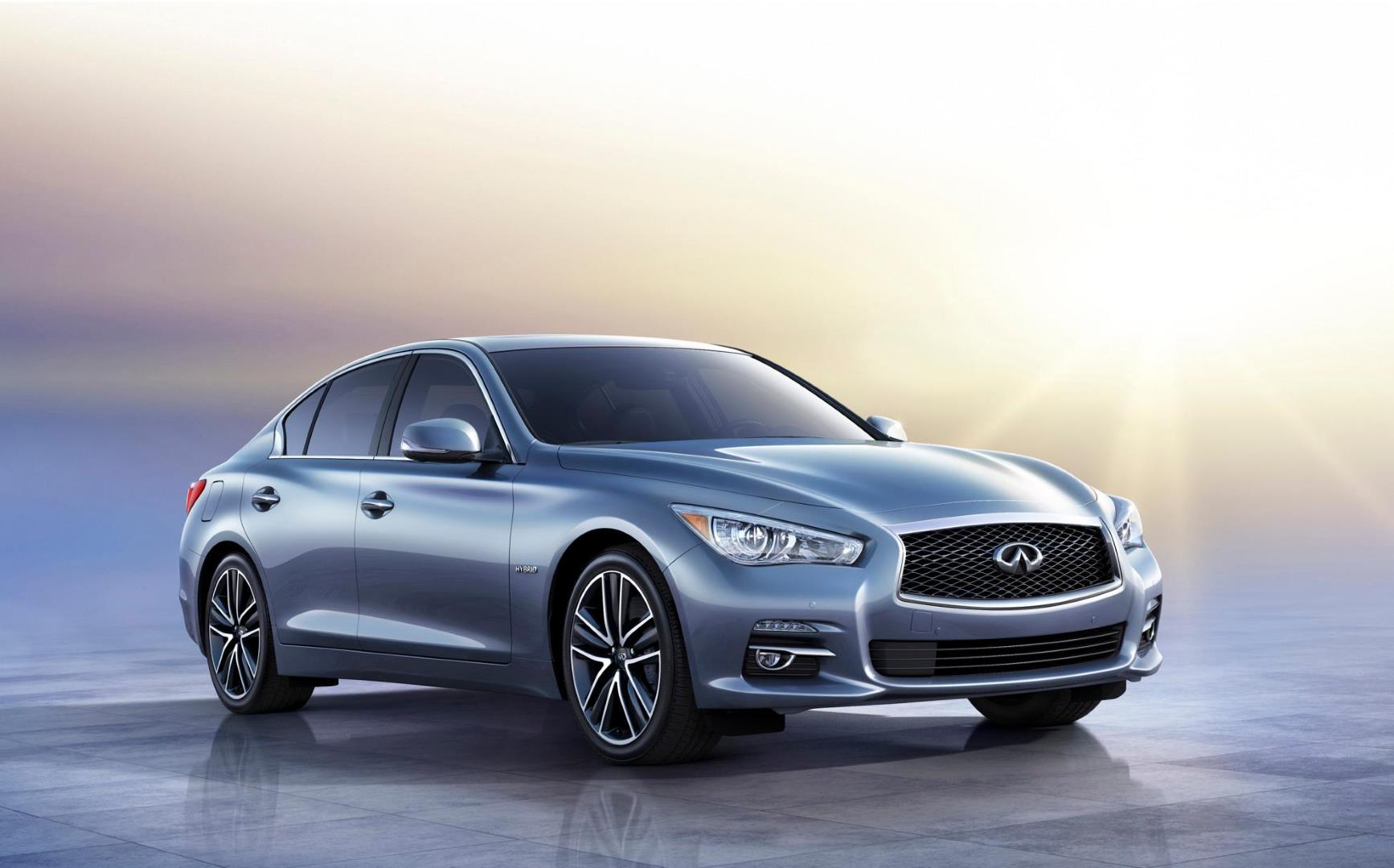
Saving the planet, one burnout at a time.
By Martin Pretorius
The emotional appeal of any performance car revolves to a large extent around its powertrain. For instance, it's hard to argue against the charisma of a wailing Porsche flat-six or the rumble of an American V8, and there's real joy to be found in slicing through the ratios of a slick-shifting manual gearbox. It's therefore no wonder that most motoring enthusiasts despise hybrid vehicles, as they usually represent everything we hate about the near future of motoring. There's no charm to be found in the droning of a CVT transmission trying to eke out some acceleration from an asthmatic little four-cylinder engine, and chasing impressive consumption figures and maximum electrical range, pales into insignificance when compared to the excitement of chasing the redline in a performance car.
But there's another side to this equation, something which has been exploited to great effect by Ferrari (LaFerrari), McLaren (P1) and Porsche (918 Spyder): electric motors can add a handy measure of extra performance. This is due to their power delivery characteristics, which sees maximum torque arrive literally from standstill, giving these hypercars an impressive surge of power out of the starting blocks. Saving fuel and reducing emissions are secondary considerations in these cases, leaving performance enhancement as the primary motivation for electrification. And yet, most mass-market hybrids still push the ecological benefit above all.... with one notable exception, in the form of the Infiniti Q50S Hybrid. Forget what you remember reading about Priuses and Honda Insights, for this is a different kind of hybrid.
Infiniti who?
Let's examine the Q50 itself, before we look at the electrical aspect in greater detail. Since its local launch in 2014, the Q50 has been struggling to find traction in our market. It's a very straight-forward problem: buyers who want a premium compact executive sedan will head to an Audi, BMW or Mercedes dealership, regardless of the fact that Volvo, Lexus and Jaguar all offer very enticing alternatives of their own. It gets even worse for fringe players without wide dealership networks, such as Infiniti, which currently has only four dedicated retailers. There's a widespread lack of brand recognition, and their model range is quite limited as well. Against these odds, it's no wonder that one sees so few Q50s (or any Infinitis, for that matter) on the road.
Infiniti Q50 design and interior
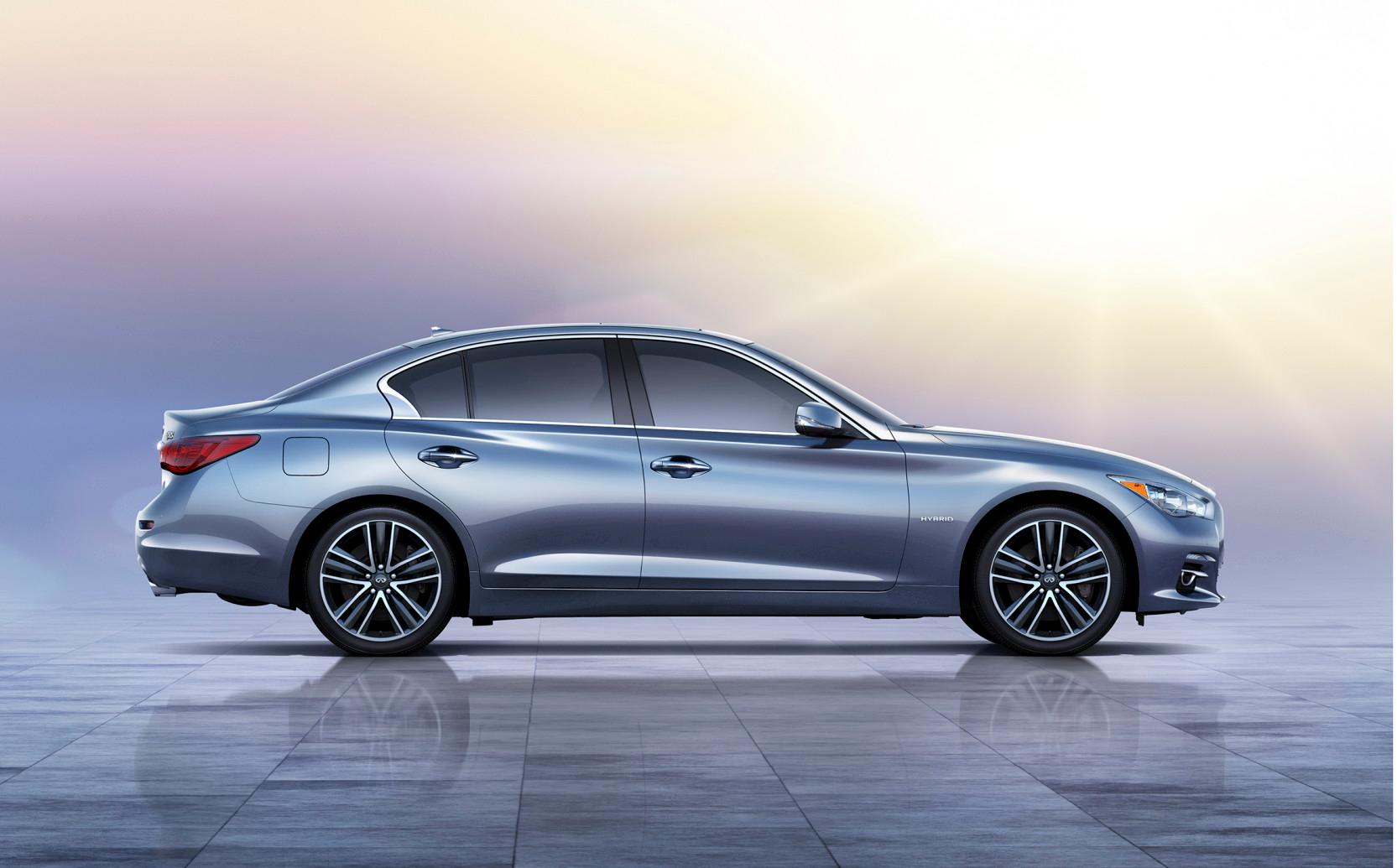
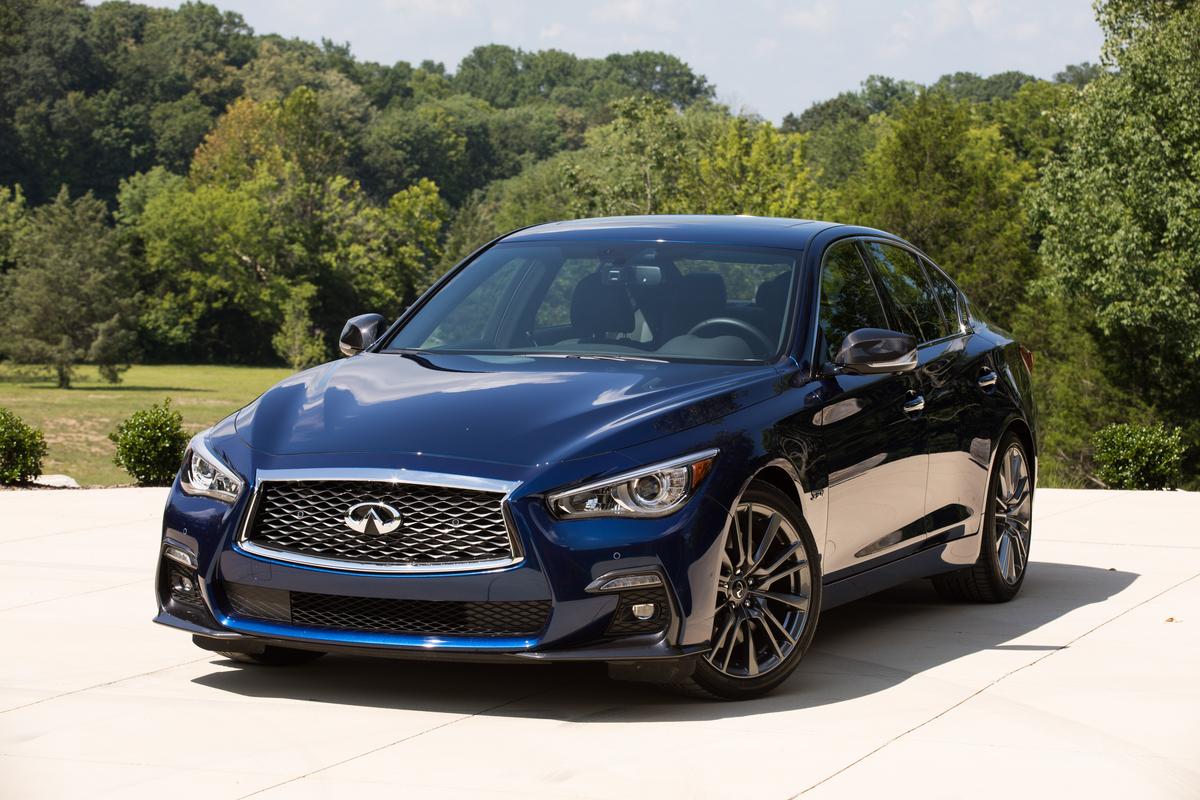
It doesn't help that the Q50 is a bit weird, either. It looks conventionally attractive on the outside, with classic rear-drive proportions (long bonnet, short boot, and cabin pushed slightly to the rear), capped off by a selection of interesting creases down its flanks and a front end with an assertive grille design. Open the door and settle into the driver's seat, and you'll be greeted by a reasonably contemporary (if not cutting-edge) instrument cluster.
However, the centre console is where it all veers dramatically off-course. There are two colour touch screens taking pride of place in the middle of the car, with the top one taking care of infotainment and navigation and the lower one handling the car's main configuration settings. It must be said that neither screen is on par with the latest touchscreen systems from Volvo or the Germans, and the menus feel more like Windows Mobile than iOS.
For the rest, there are rows of buttons flanking the lower screen on three sides to provide shortcuts for the climate control and audio system, and most surfaces are trimmed in the leather one would expect from a car in this class. But barring those two screens, it's all about par for the course.
Q50 technology overload
The Q50S hides some technology cards up its sleeve, and not all of them are game-winning aces. One could go so far as to say that the Infiniti Q50S answers questions which nobody has ever asked while presenting some genuine innovations all of its own. Most of these innovations revolve around the plethora of cameras and radar sensors spread around its exterior, giving us some clever things like Back-up Collision Intervention, which not only warns the driver if there's something out of sight behind the car, but will actually apply the brakes all by itself if the driver doesn't heed these warnings. And you think radar-guided cruise control is clever? Try out the Q50's system – it actually scans two cars ahead for potential hazards (instead of the usual one car), while the lane keeping assist scans road markings with optical cameras to keep the car bang in the middle of its lane.
The only steering is Direct Adaptive Steering
That name sounds high-tech, doesn't it? Well, it is very much so. Using an array of sensors and electric actuators, Infiniti's engineers managed to remove the traditional steering linkage from the steering system – well, not literally: the steering column is still there, but it's de-coupled by a clutch which will only engage in the event of a system malfunction. In other words, the steering wheel is connected only to its position sensors and its force-feedback motors (just like in a driving game console). At the other end, the front wheels are steered by electric actuators, again with individual position feedback sensors.
This all sounds very complicated, because it is. There are obviously a number of failsafe features built into the system, which will return it to old-fashioned mechanical operation, but one has to wonder why all this complexity is necessary in the first place. The upside of this virtual steering setup is that it's possible to select various combinations of “steering ratio” and “assistance” on the lower touchscreen, giving adjustable response and weight to the steering wheel. But, no matter which mode you choose, it always feels as artificial as it is.
Driving the Infiniti Q50S Hybrid
After a few days of living with the Q50S, one does get used to the simulated steering feedback and response, and then the temptation arises to see what it can really do down a twisty road. With the sportiest settings selected, it turns into corners really sharply, and then exhibits a lot of front-end grip all the way through the corner. The rear end is nicely planted as well, giving way to predictable, smooth oversteer if the driver is a bit brutal with the throttle – at least in the rear-wheel-drive version we tested. (An AWD version is also available.)
Make no mistake, underneath all that electronic wizardry is a really competent driver's car, making one wonder what it would have been like with a normal steering system (which is only available on the lowest-spec, least-powerful 4-cylinder Q50 derivatives). Ride quality is equally surprising, in spite of those low-profile tyres and 19-inch wheels. Set the steering to a relaxed mode, and the Infiniti Q50S becomes a really smooth cruiser with low noise levels and a long-legged stride.
It's a hybrid, remember?
One of the party tricks which usually comes along with drivetrain electrification is the ability to disengage the petrol-engine while cruising or at low speeds, and the Q50S implements this in a particularly nice way. On the freeway, the Q50S would frequently kill the petrol mill and sail along on electric power only, often for kilometres at a time. Increased load on the engine prompts the petrol unit to turn back on, usually seamlessly and quietly, to put the full stable of ponies at your disposal again.
This smooth operation is partly due to the integration of the electric motor into the gearbox housing. It's a 7-speed automatic transmission, but uses a clutch and electric motor instead of a torque converter. This immediately sharpens up its responses, and the fact that the electric motor turns at engine speed and sends its power into their shared gearbox makes it feel and act like a much larger non-hybrid powerplant. There's no whiny CVT here, instead, you get aluminium-look paddles behind the steering wheel which select actual ratios. The end result is probably one of the most agreeable hybrid drivetrains currently out there, and while it's still not as engaging as a manual gearbox, there's no disputing its prompt shifts, efficiency and smoothness.
Infiniti Q50S Hybrid performance and economy
Its best trick comes in its sprinting performance, however. Disengage the traction control, select the sportiest drivetrain settings (again on that lower touchscreen), kick the right pedal into the carpet, and hold on tight. From complete silence (the petrol engine turns off at rest) to a hearty V6 bellow, from calm to a cloud of tyre smoke, and from standstill to 100 km/h in 5.1 seconds: this is a very rapid car, dramatically so for a (relatively) affordable hybrid.
That's proper sports saloon performance, and yet doesn't punish at the pumps, returning an average fuel consumption of only 8.0 ℓ/100 km over a week of fairly enthusiastic driving. That's very good indeed for a car whose 261 kW and 536 Nm (combined) was frequently put to good use. The claimed average is 6.8 ℓ/100 km, a figure which should be easily attainable with more conservative driving. Top speed is claimed at 250 km/h, and there's no reason to doubt that it will get there – easily.
Is it good value for money?
It feels strange to call a car with a starting price of R709,100 (including emissions tax) “good value”, but it actually is. The only other compact executive hybrid saloons currently on the market are the Mercedes-Benz C350e and BMW 330e eDrive, which both offer turbocharged four cylinders instead of the Infiniti's V6. They offer a lot less power, yet cost upwards of R58,000 more. Add the Infiniti’s addictive performance and loaded specification sheet to the equation, and it really begins to look like amazing value. Peace of mind is bolstered by a warranty for 3 years or 100,000 km and a maintenance plan for 5 years or 100,000 km.
Verdict
Hybrid cars usually only appeal to the frugal or those of a Green persuasion, but the Infiniti Q50S manages to add storming performance and loads of equipment to the characteristics of reduced consumption and emissions. It almost manages to add “sports sedan” to its list of attributes as well, were it not for the synthetic steering system. Once you get used to that, you can appreciate the intrinsic dynamic goodness of the Q50S, even if it always feels like you're driving a Playstation. Will it draw German-biased buyers to the showrooms? Never in a million years. But the few who do take a step into the future will be pleasantly surprised.
Infiniti Q50S Hybrid RWD Specifications
| Engine | :3498 cc V6 Petrol, single-motor parallel full hybrid |
| Gearbox | :7-speed auto with integrated electric motor, rear wheel drive |
| Output |
:261kW @ 6800 r/min, 536 Nm @ 4800 r/min (combined) |
| Performance | :0-100 km/h in 5.1 seconds, max speed 250 km/h |
| Consumption (official) | :6.8 ℓ/100 km |
| Luggage compartment | :400 litres |
| Price (before options) | :R 709,100 |