
In this article:
Hyundai has steadily, over the course of nearly two decades, carved out a name for itself in the local market, casting off the image that was created before the turn of the millennium. One of the models that was pivotal in this change was the Tucson. Released over 16 years ago, the family-friendly compact SUV showed the local market that the brand was serious about reliability, durability and that this didn't have to come at an exorbitant price. Now, the 4th generation Tuscon takes the tried and tested recipe and adds some spice to the mix.
Related: Hyundai Tucson N Line (2023) - First Drive Review
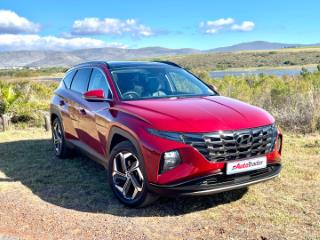
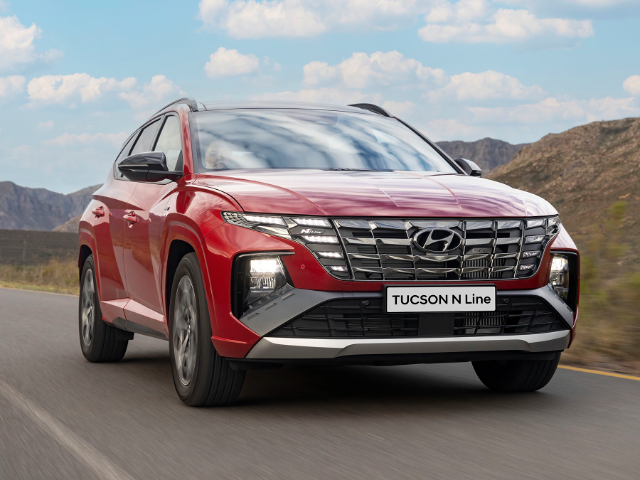
Wrapped in attractive styling and an innovative design, the Tucson still offers the famed reliability and ease of use that made earlier models so appealing. The pricing remains agreeable, and the tech has duly shuffled along to match what the modern consumer expects from a vehicle in this hotly-contested market segment. The Hyundai Tucson N Line takes its spot at the head of the table as the flagship offering in the Tucson lineup, adding a touch of sportiness to proceedings.
Styling
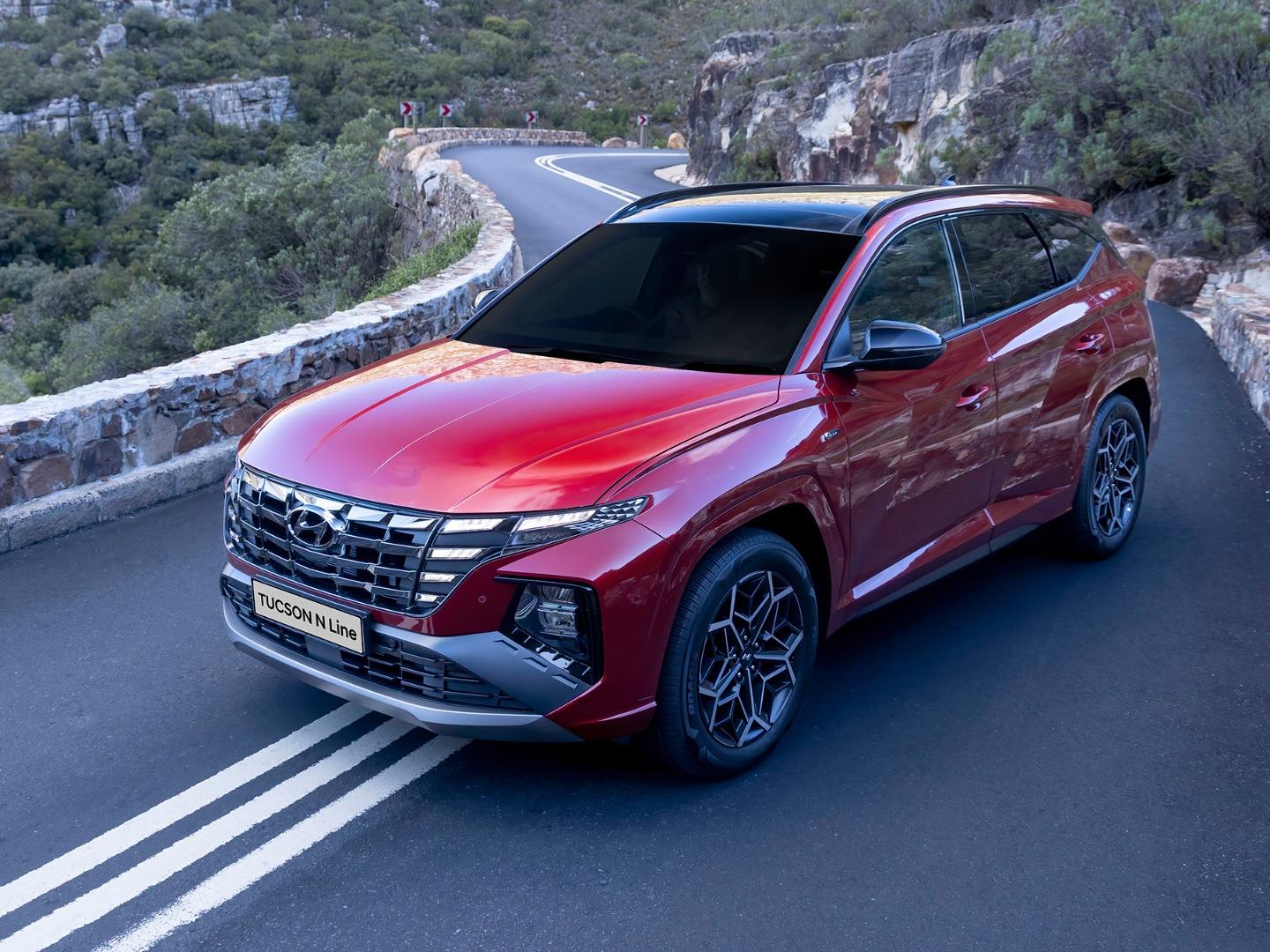
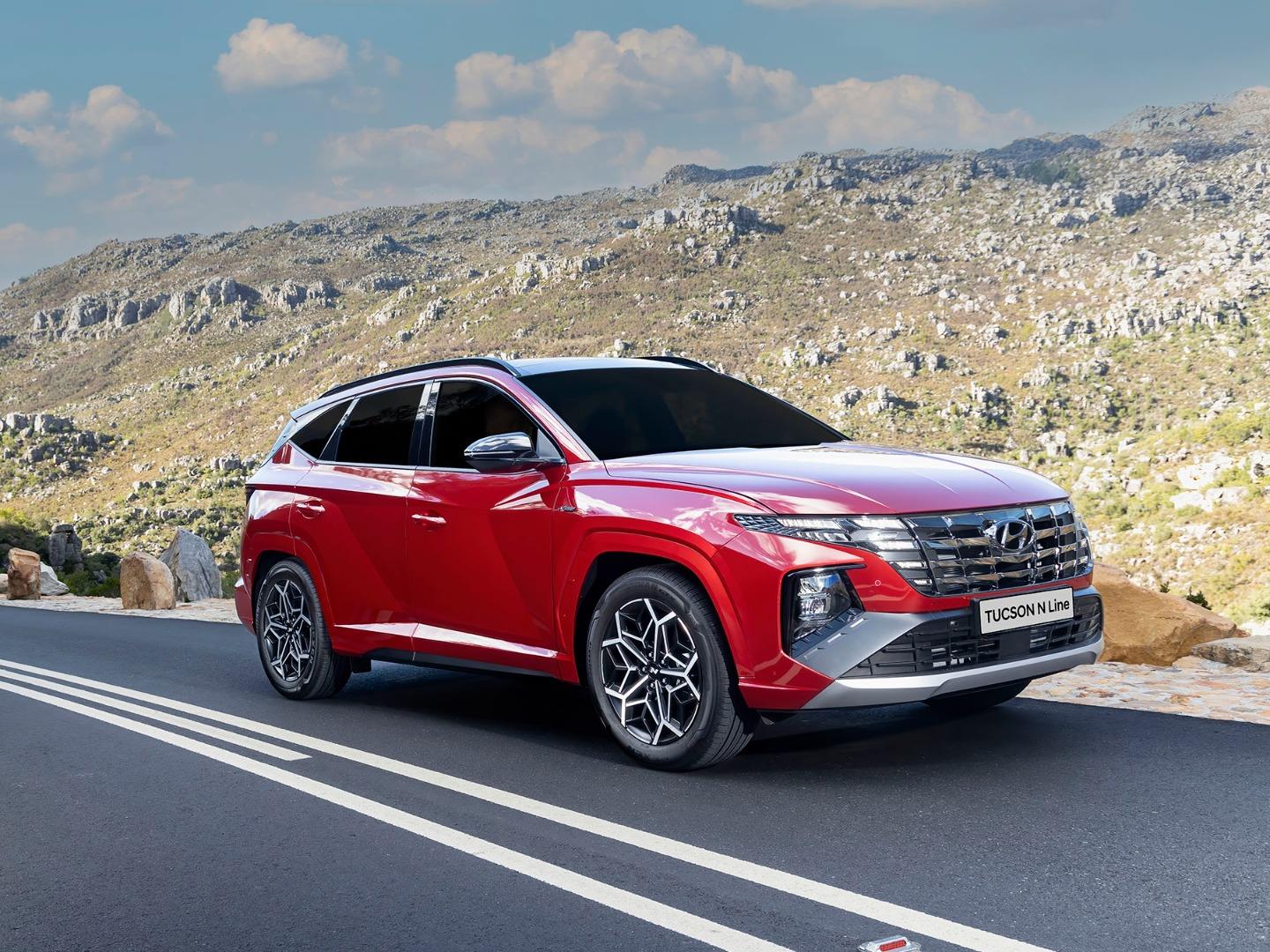
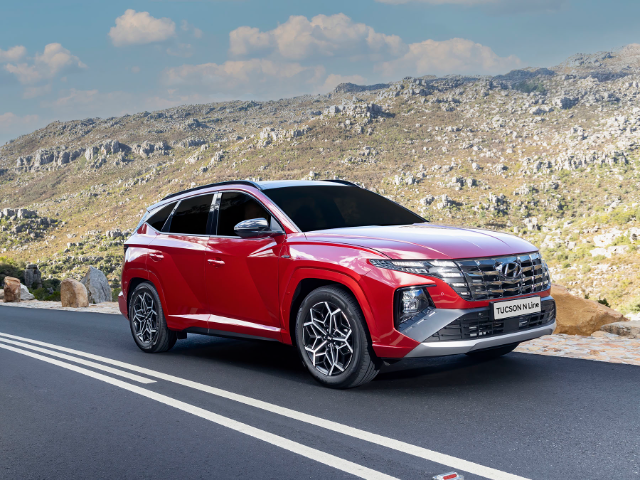
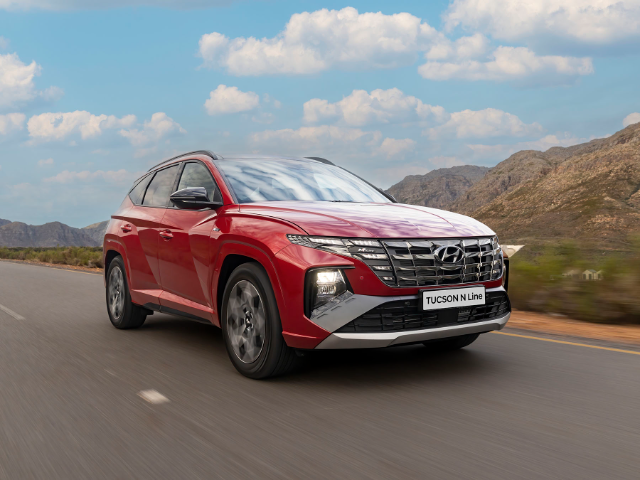
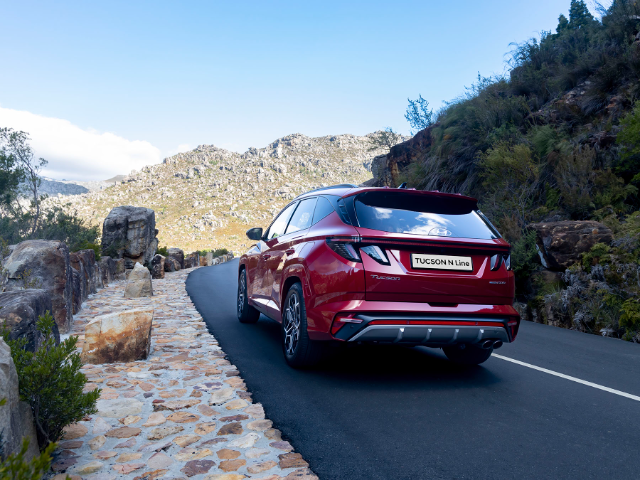
Through all their various iterations, the Tucson has retained a familiar form, and the new, 4th generation Tucson is no different. Short overhangs, a pronounced upward kink of the rear shoulder line and a blocky visage have all been carried over to this latest incarnation. The bold new approach comes in the form of what Hyundai calls "Parametric Jewels", curved shapes with crisp, hard edges that help refract light. You'll see this theme in the flanks of the new Tucson as the angular creases intersect with the inherent curves of the sheet metal. Squared-off wheel arches (finished in body colour on the N Line) offset the diagonal lines of the bodywork, and the form you see will largely depend on the lighting conditions.
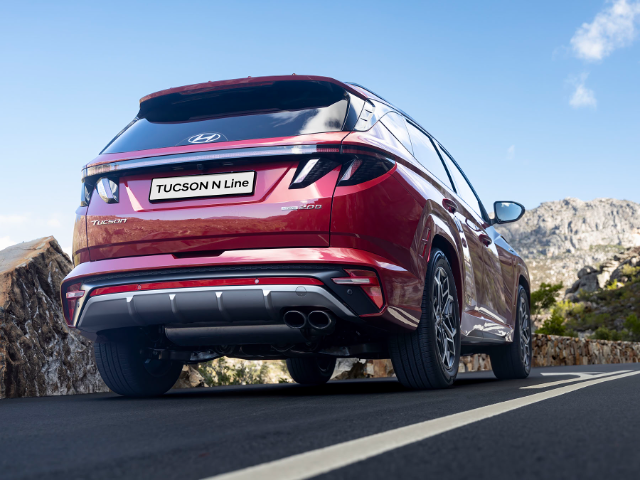
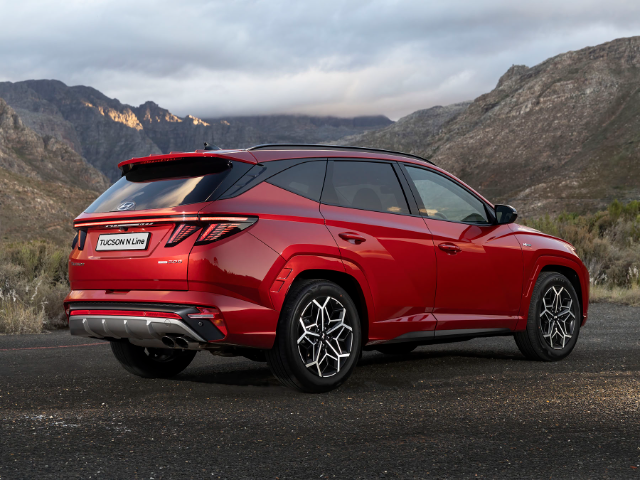
N Line models get a larger rear window spoiler and sporty twin-exit tailpipes resting on either side of a silver diffuser-style lower garnish. Black mirror caps, dark window trims and N Line badging further separate the N Line from the masses.
Space & Interior
The new Hyundai Tucson is larger than before and has grown by 150 mm in length and 15 mm in width. They increased the wheelbase by 85 mm, giving rear passengers more legroom. The boot has also grown to 539 litres, swallowing virtually anything you can think of and making the Tucson even more practical than before.
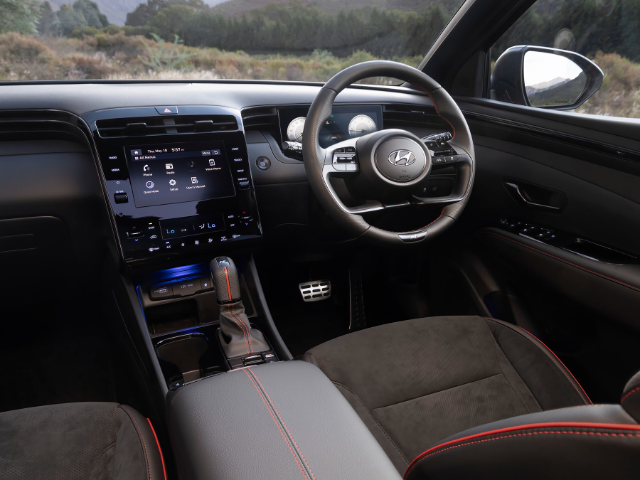
The cabin has been sculpted to surround the occupants with the dashboard featuring a curved upper section that blends into the doors, creating a boat-like keel with air vents that have been tucked away and integrated into the design for a seamless appearance. Quality materials don't leave you wanting for much, and all the touch surfaces feel solid and upmarket. Overall, the interior build quality is of a very high level and pleasant to both the eye and touch. This design approach also gives off the impression of space with very little claustrophobia setting in at any point.
Comfort & Convenience
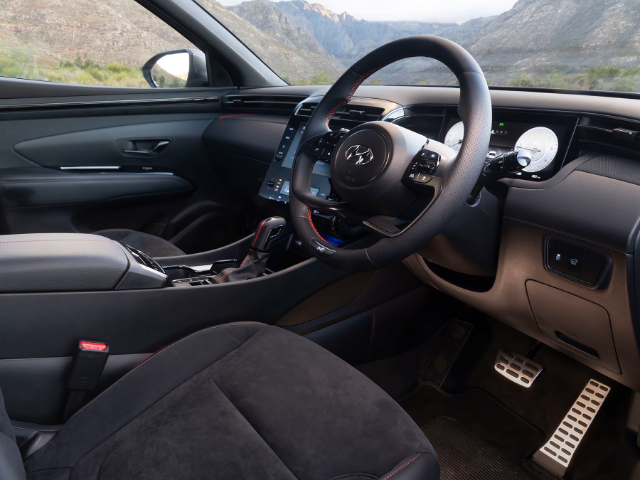
There's now more tech in the Tucson, too, with the 4th generation becoming the first Hyundai with a full-touch interface. The large, 8-inch infotainment screen (on our N Line test unit) rests above the digital climate controls and above the tiered storage bin that houses a convenient wireless charging shelf for your mobile phone. The infotainment system is robust and includes wireless Android Auto and Apple CarPlay.
Ahead of the driver rests a 10.25-inch digital display, replacing the traditional instrument cluster. This allows the driver to select a look and feel that suits them best and also allows for access to necessary driving information. The artificial leather seats are heated and cooled, and the heated steering wheel was a boon in these past few chilly weeks. It's a very European feature that has a place in our market, even if it is only for two weeks of the year.
Performance
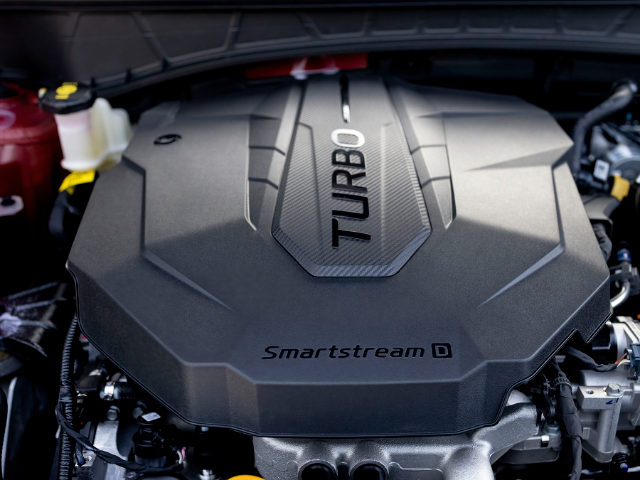
Powering our test unit was a 2.0-litre turbodiesel engine. This 2.0 CRDi engine produces 137 kW and 416 Nm torque to ensure that the Tucson has ample power for all your daily requirements. At no point in time did I wish for more power underfoot, and the generous torque delivery meant that the additional weight of passengers was hardly felt. This engine is paired with an 8-speed automatic gearbox, sending power to all four corners through an HTRAC All-Wheel Drive (AWD) system.
Despite the large, 19-inch wheels, the ride was acceptably compliant. Hyundai has revised the suspension of the Tucson, employing MacPherson struts in the front and a multi-link arrangement at the rear. This helps give it a surefooted presence on the road without sacrificing too much comfort. In the N Line, these springs have been stiffened somewhat in a bid to improve the handling. Road undulations can still be felt, but nothing so intrusive as to both you and your passengers.
Fuel Economy
Hyundai claims that you can achieve a combined cycle fuel consumption of 6.5 l/100km from the 2.0D Elite Tucson, and while we believe this to be achievable, our urban commuting saw the number much closer to the 8.0 mark. On a 54-litre tank, you can expect up to 840 km from a full tank if you manage to achieve those claims.
Hyundai Tucson vs Haval H6 vs Chery Tiggo 8 Pro: Which has the lowest running costs?
Safety
Safety systems are in full effect in the new Tucson. You get six airbags as standard and on N Line models (like our test unit), a comprehensive array of assistance systems form part of the Hyundai SmartSense active safety and driver assistance systems. These include the likes of blind spot monitoring and lane keep assist, adaptive cruise control and forward collision avoidance control. Rear cross-traffic alert and rear cross-traffic collision avoidance help you back out of parking spots, while fatigue detection and high beam assist help with night driving.
Price
There are 5 Tucson models to choose from, with prices starting from R572 900 for the Hyundai Tucson 2.0 Premium.
| Model | Price (incl. VAT) |
| Hyundai Tucson 2.0 Premium | R572 900 |
| Hyundai Tucson 2.0 Executive | R626 900 |
| Hyundai Tucson 2.0 Elite | R697 900 |
| Hyundai Tucson 2.0D Elite | R764 900 |
| Hyundai Tucson 2.0D AWD N Line | R799 900 |
Competitors
Naturally, eyes will be cast towards the likes of the Kia Sportage GT Line. Still, consideration should also be given to the Toyota RAV4 VX models and the Volkswagen Tiguan in R-Line trim.
Verdict
The Tucson, it seems, is here to stay, and that's not a bad thing. The new styling approach is better than that of some of the other players in the segment, and don't be surprised to see others copying some of these styling traits. The N Line is an excellent option for those that want a sporty-looking SUV but don't want to sacrifice all their practicality, fuel economy and ride quality. The new interior styling is welcomed, and the tech is impressive in its execution, even if it's nothing revolutionary.