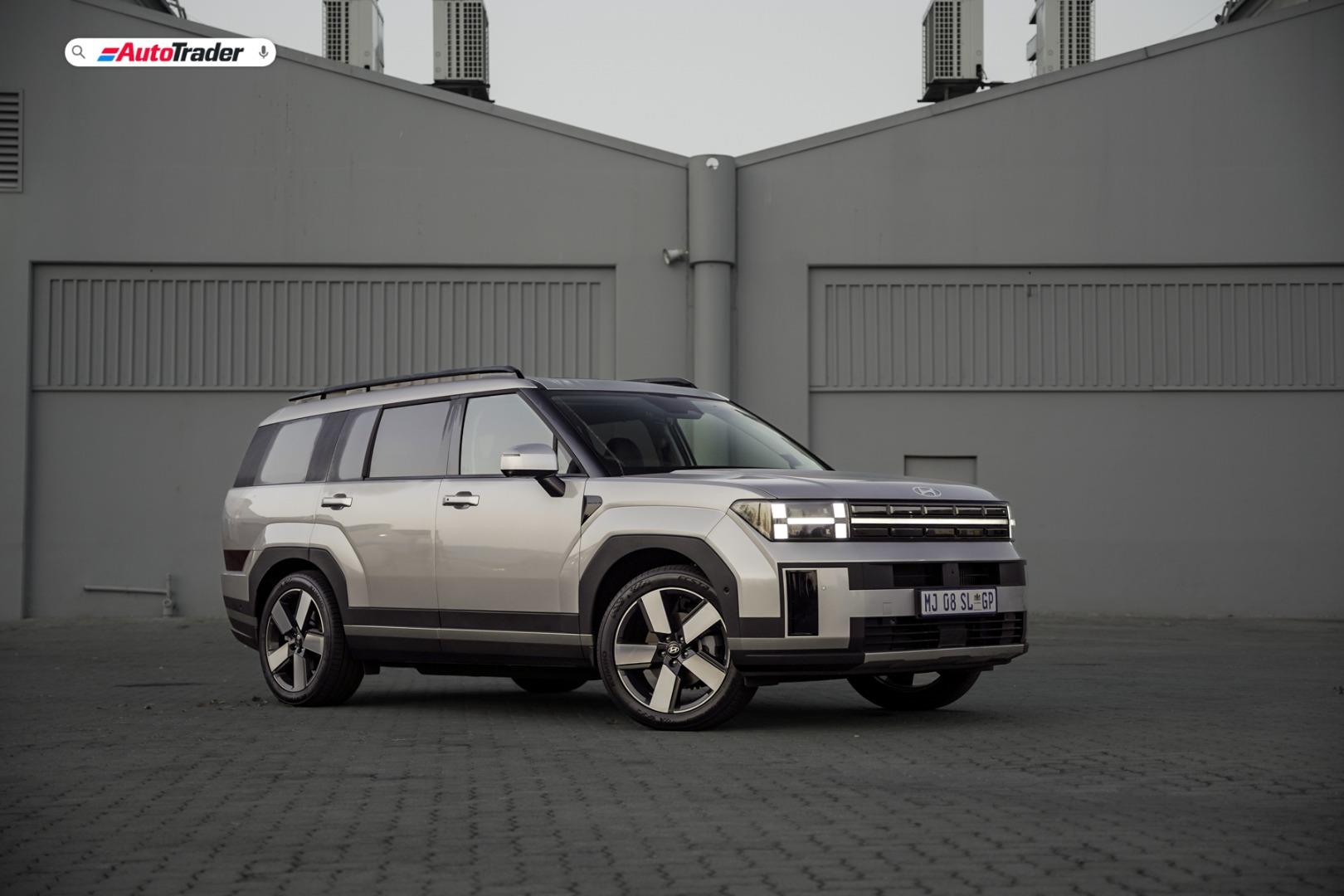
Hyundai has never been shy about taking risks with design, but the all-new Santa Fe pushes things into bold, unapologetic territory. Boxy, upright and unashamedly different, it feels like a clean-sheet rethink of what a family SUV can be. And in Hybrid Elite AWD guise, it’s not just about looks – there’s some real substance under those sharp creases.
Related: The 5 best similar cars to the 2025 Hyundai Santa Fe hybrid
Fast Facts
Model: Hyundai Santa Fe 1.6T Hybrid Elite AWD
Price: R1 249 900
Engine: 1.6-litre turbocharged 4-cylinder petrol + 44 kW electric motor
System Output: 175 kW / 367 Nm
Transmission: 6-speed automatic
Drivetrain: All-wheel drive
Fuel Consumption (claimed): 7.5 l/100 km
Warranty: 7-year/200 000 km (battery 8-year/160 000 km)
Pros
Smooth, quiet, and genuinely comfortable ride
Hybrid drivetrain delivers excellent real-world economy
Doesn’t feel underpowered despite the size
Thoughtful, minimalist interior layout and driver display
Loaded with safety and tech features
Cons
At this price, it faces strong rivals offering plug-in hybrid options
Third row is still better suited to kids or occasional use
Styling
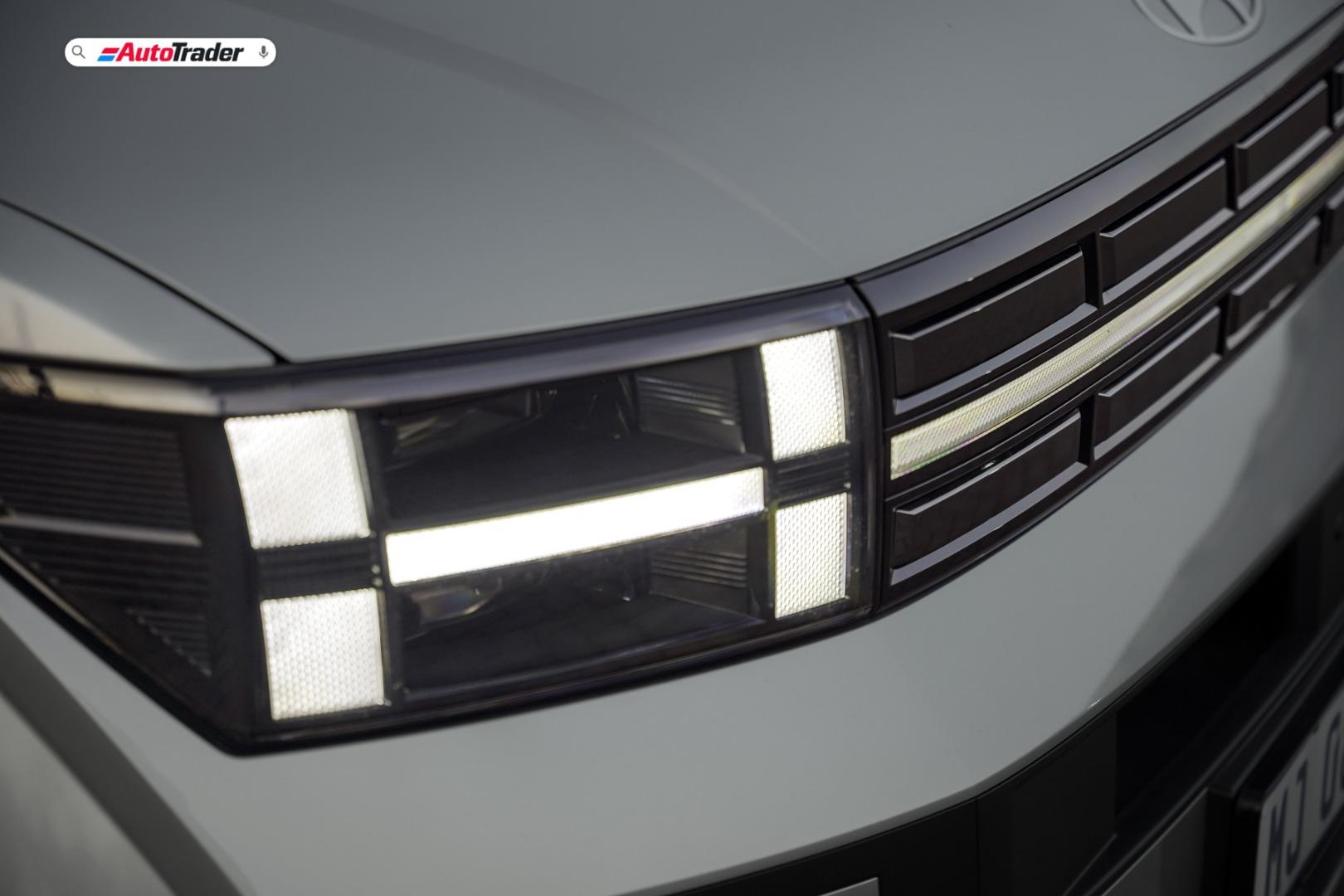
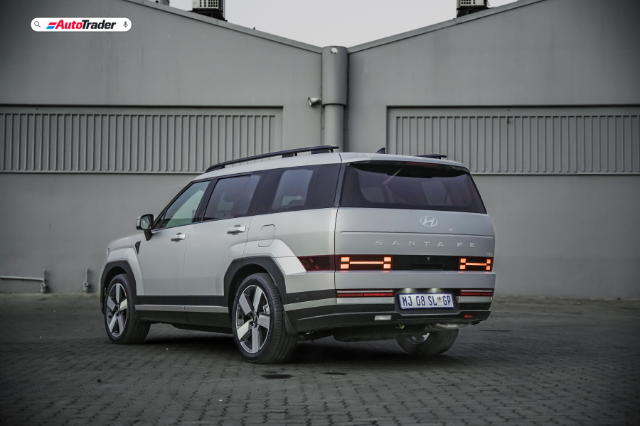
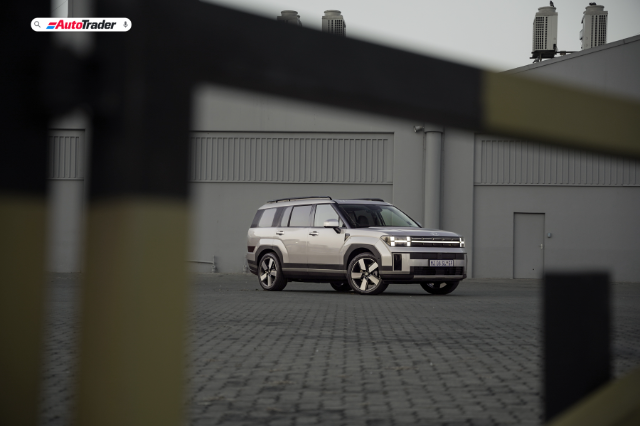
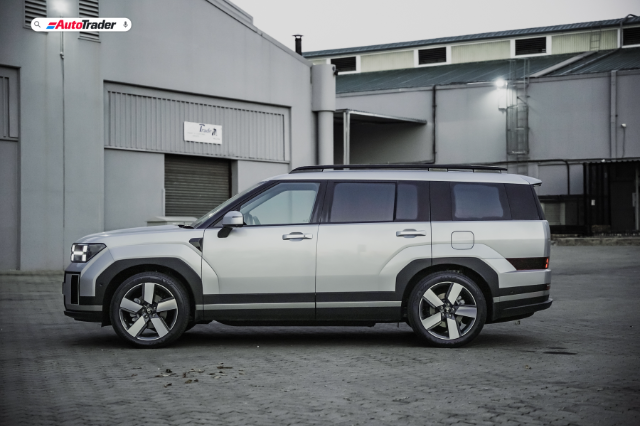
Hyundai hasn’t just facelifted the Santa Fe — they’ve reinvented it. The sharp fenders, high hood, and squared-off lines give it a presence more akin to a luxury SUV. The H-shaped LED headlights are divisive but bold, and on the road, it certainly doesn’t get lost in a sea of cookie-cutter crossovers. Sitting on 20-inch alloys, it looks modern and rugged, which isn’t an easy trick to pull off.
Interior
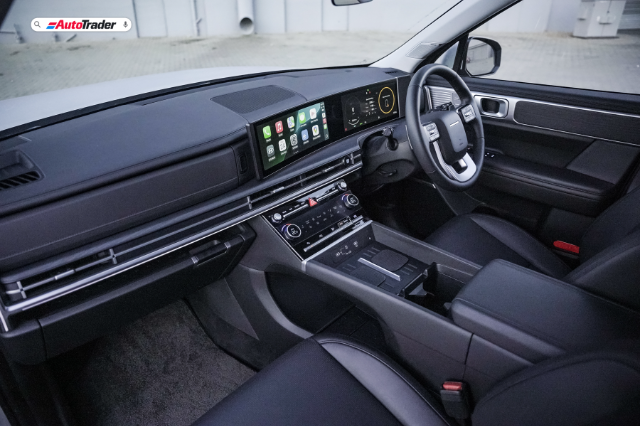
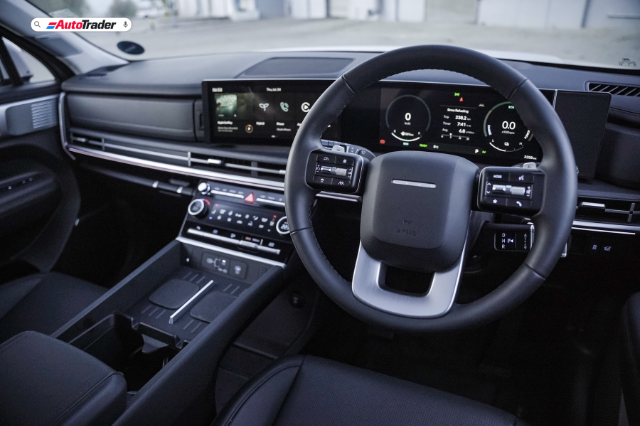
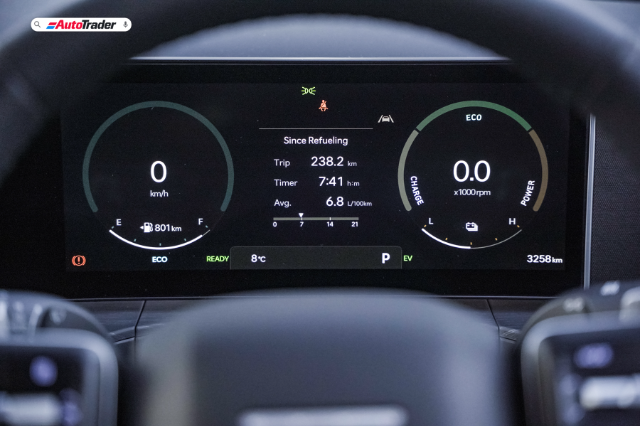
Inside, the Santa Fe nails the brief. The cabin feels light, open, and cleverly laid out. I particularly liked the new curved 12.3-inch driver display — minimalist without feeling bare. Materials feel premium, with H-Tex trim, soft-touch finishes, and heated/ventilated seating for the front row. The second row gets heated seats, while the third row benefits from ISOFIX mounts.
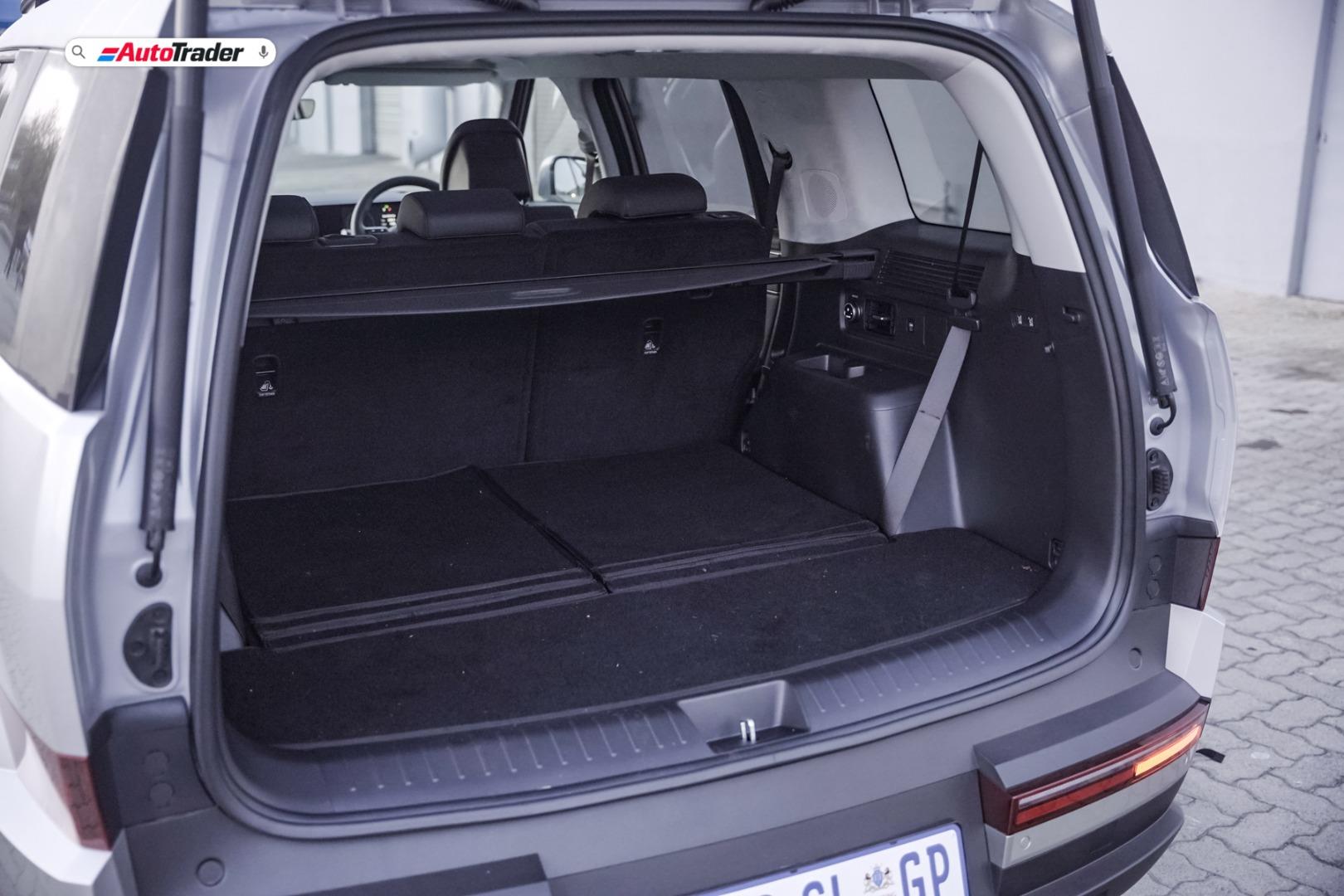
Practicality is strong too. The Santa Fe offers decent boot space with all three rows up (just over 400 litres) and a cavernous load area when folded flat. Many 7-seaters force you to choose between the third row and storage, but in the Santa Fe, you can have both.
Drivetrain
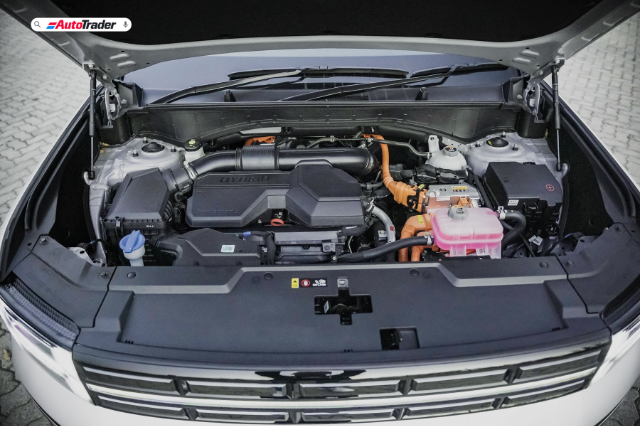
The hybrid setup pairs a 1.6-litre turbo petrol engine with an electric motor, combining 175 kW and 367 Nm. The numbers don’t scream performance SUV, but it feels more than up to the task out on the road. Power delivery is smooth, the six-speed auto is well-matched, and there’s never a sense that the car is straining under its own weight.
Selectable drive modes and regenerative braking paddles add an extra layer of usability. You can tune the braking feel to suit your preference, whether you’re aiming for maximum efficiency or just a more natural ICE-like experience.
Driving Impression
The standout here is refinement. The Santa Fe glides along with a calm ride that isolates road noise better than many of its rivals. It feels lighter on its feet than its size suggests, making it easy to manoeuvre both in traffic and on the open road.
Crucially, it doesn’t feel underpowered — something hybrids in this segment sometimes struggle with. Instead, it balances efficiency and drivability superbly. And with real-world consumption landing under the claimed 7.5 L/100 km, it delivers on Hyundai’s promise of hybrid economy without asking you to compromise on usability.
There’s very little to criticise here. It’s the sort of car you step out of at the end of a long drive and realise you’re not tired, which says a lot.
Safety
Hyundai has thrown the full Smart Sense suite at the Santa Fe. Expect everything from adaptive cruise and lane-follow assist to blind-spot monitoring with camera feed, forward collision avoidance, driver attention warning, and a 360-degree view monitor. Add six airbags, ISOFIX in both rear rows, and central safety locking, and it’s hard to argue that this SUV doesn’t take family protection seriously.
What safety features does the Hyundai Santa Fe have?
Fuel Consumption
Officially rated at 7.5 L/100 km, and in mixed driving, I got this down even lower, to 6.8 L/100km. For a large, AWD seven-seater, that’s an impressive figure. The hybrid system’s seamless handoff between petrol and electric helps here, and the regenerative braking paddles make it almost a game to stretch each litre further.
Rivals
At just over R1.2 million, the Santa Fe Elite Hybrid has one foot in the premium camp and the other planted firmly in mainstream territory. That makes its rivals an interesting mix: newer Chinese plug-in hybrids offering big numbers for less money, and established European brands flexing their premium badges.
| Feature | Hyundai Santa Fe 1.6T Hybrid Elite AWD | GWM Tank 500 2.0T HEV Ultra Luxury 4WD | Chery Tiggo 9 1.5T CSH Vanguard AWD |
|---|---|---|---|
| Price | R1 249 900 | R1 228 950 | R989 900 |
| Power | 175 kW | 255 kW (combined) | 455 kW (combined) |
| Torque | 367 Nm | 648 Nm (combined) | 920 Nm (combined) |
| Seats | 7 | 7 | 7 |
| Fuel cons. | 7.5 l/100 km | 8.5 l/100 km | 1.4 - 6.2 l/100 km (claimed) |
| Warranty | 7 yr / 200k km | 7 yr / 200k km | 7 yr / 150k km |
On paper, both the Tank 500 and Tiggo 9 Pro appear to have the Santa Fe's number (although we suspect the Tiggo 9 Pro figures to be inflated after our first drive of the new model) in the power stakes, the Santa Fe poses a genuine, tangible argument with a fuel consumtion that will rival the best, and a warranty on par with the opposition.
Verdict
The Hyundai Santa Fe 1.6T Hybrid Elite AWD is one of those rare SUVs that feels like it has no real weak spots. It’s comfortable, easy to drive, impressively efficient, and loaded with features that families will use.
Yes, at R1.25 million, it plays in a premium space, and plug-in hybrids might offer lower headline fuel figures. However, few can match Santa Fe’s refinement, practicality, and distinctive style.
Hyundai set out to build a family SUV that’s future-ready without being intimidating, and in the Santa Fe Hybrid, they’ve nailed it.