
9 out of (Grand i)10
9 out of (Grand i)10


By Ané Theron
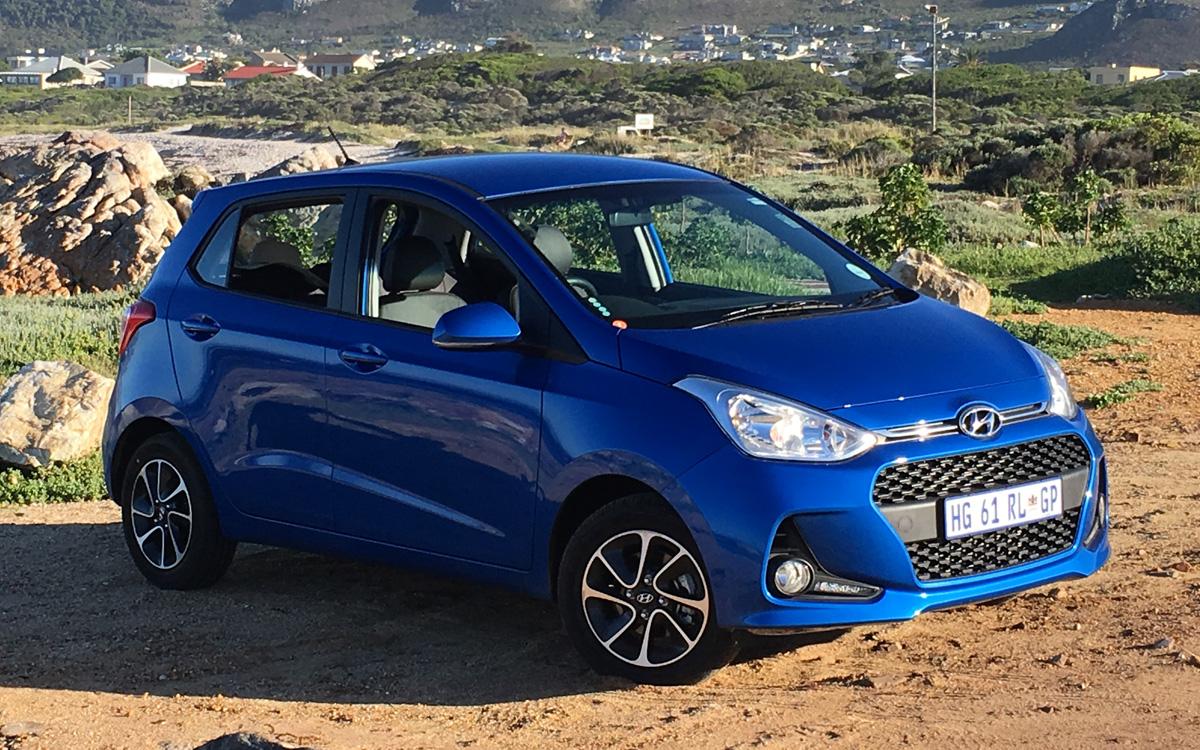
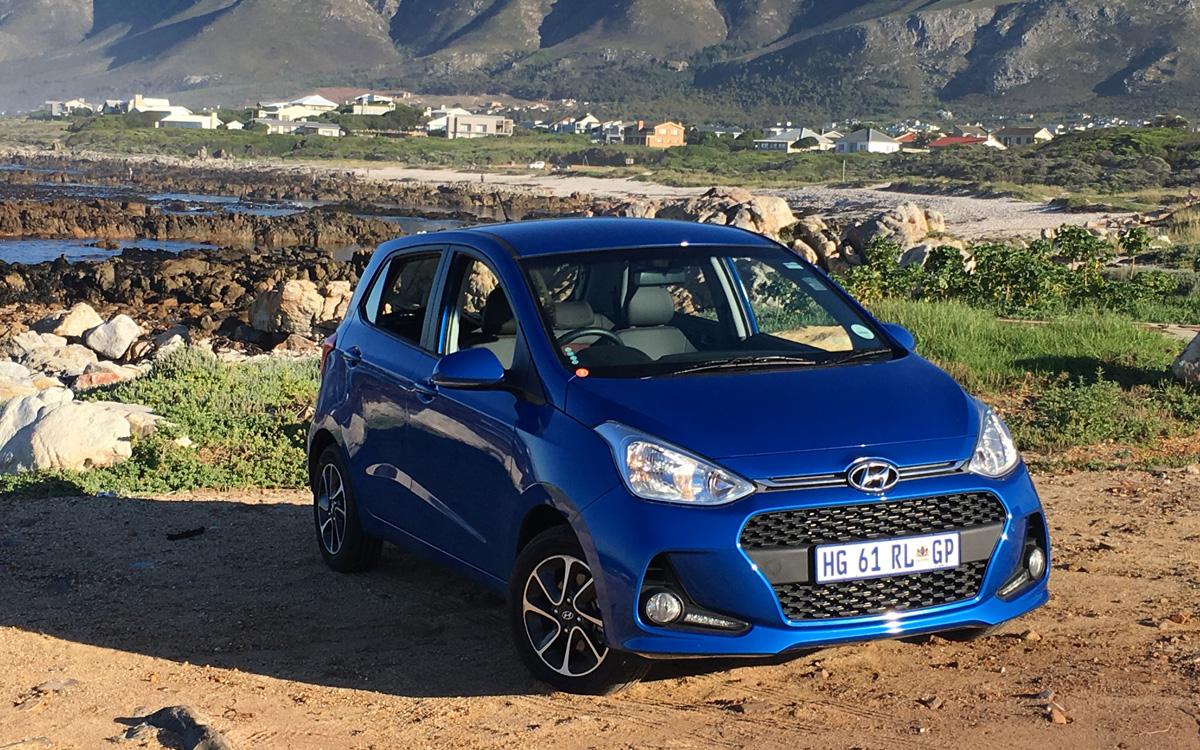
I am always happy to test small, budget offerings. It’s easy to design and build a premium car which will carry a R600 0000 price tag, but to build a high quality, yet affordable little city runabout? Now that takes real talent.
The Grand i10 has a rock-solid reputation as a durable and practical buy that doesn’t cause its owner unnecessary grief, and is a real volume seller in Hyundai’s arsenal. The sales stats don’t lie, but as a single mom of two primary school kids, I always pay special attention to daily driveability and ease of use. The Grand i10 had its work cut out during its week with us in Hermanus.
Test 1: A cabin that can withstand children’s fingers
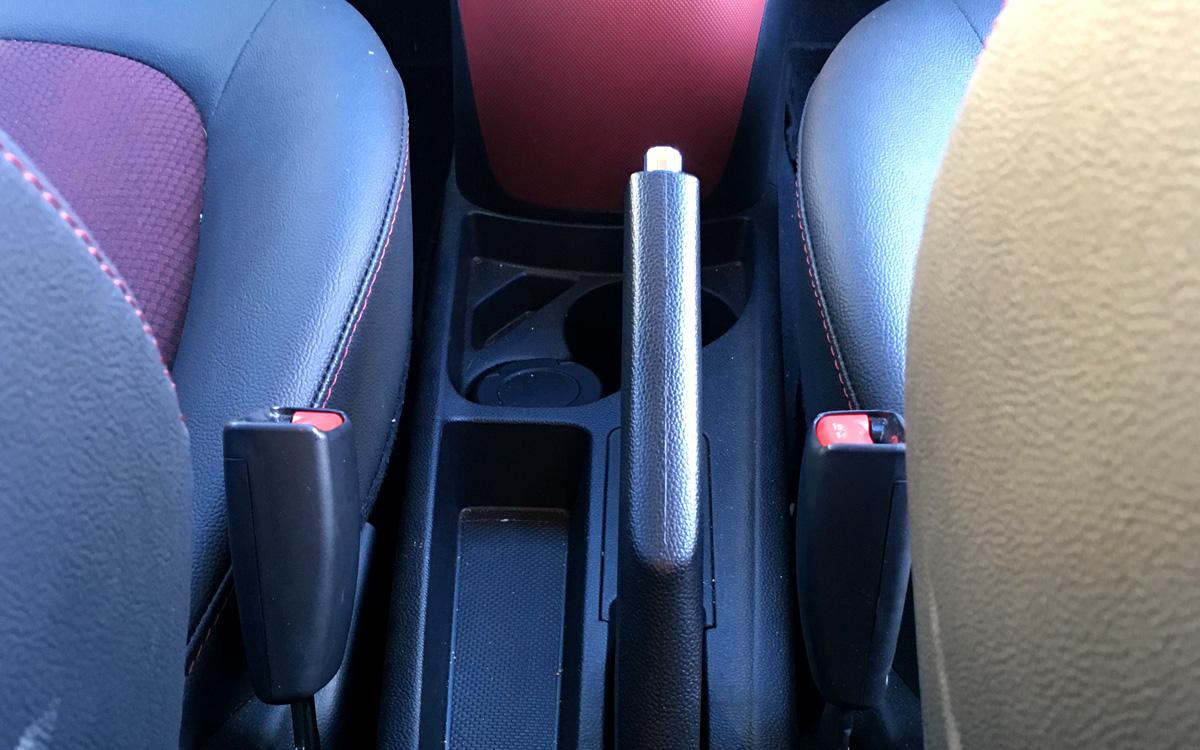
Children just cannot help themselves; the moment they get into a car they start fiddling with every button, switch and dial within reach. Fortunately the Grand i10’s cabin and switchgear look and feel relatively childproof, and its build quality is solid. The layout of the dashboard and instrument cluster is clean and logical, with red inserts for youthful vibrance. The seats in our Glide-model is a combination of vinyl and red fabric, and will be easy to clean if that ice-cream scoop should plummet from its sugar cone.
Fluid and Glide models now come equipped with the same infotainment touchscreen system as you’d find in the Creta and Tucson, and you can also use the satellite controls on the leather steering wheel to make selections on the system. I wish the Koreans would take a few notes from the French though - Renault’s MediaNav system is just so much easier to operate. The Hyundai’s system also has USB and AUX ports as well as Bluetooth telephone connectivity, but the poor sound quality of the latter could have been due to a defective speaker on my specific test model; I could hear my contacts perfectly while they struggled to hear me. I suggest pairing your phone to the system and phoning a friend when you’re test driving the Grand i10.
Other equipment and spec in the Fluid and Glide models include alloy wheels, a chrome grille, heated/foldable side mirrors (with integrated side indicators) and daytime running lights. For the full list, kindly click here.
Test 2: A shopping trip with the grandparents on a rainy day
The Western Cape is in the throes of a terrible drought, but all the rainfall in the Overberg region happened on the exact day my elderly parents needed to buy necessities at Woolies, Checkers and Pick n Pay. “Please don’t go on a spending spree, and be mindful of the available boot space ,” I request of them, “this isn’t a Volkswagen Passat.” But as my luck would have it, Woolies is having a sale. Despite being only a little car, we still manage to fit eight standard-sized grocery bags and an extended family-sized watermelon into the 246-litre trunk, as well as their clumsily-shaped crutches. Another hidden storage tray underneath the passenger seat is the perfect place to stow secret purchases (like French perfume, for example).
Granddad sits in the back with the two grandkids, and his long legs have surprising amounts of room, even more than on the back seat of the Toyota Hilux Double Cab. (This we find out on another family road-trip to Stellenbosch, the following Sunday.)
With shopping-weary feet and frizzy hair from the rain, we leave our parking bay at the busy shopping centre with the assistance of rear parking sensors (standard in only the Glide derivative). Other safety features across the range include ABS with EBD, two airbags, side-impact protection beams in the doors and three-point safety belts for all the passengers except the unfortunate one in the rear middle seat. This would have been most welcome; If Toyota can put five three-point seatbelt in their Etios, so can Hyundai in their Grand i10. Front fog lights are standard and the spare wheel is full-sized.
Test 3: The Houwhoek Pass, without traffic (when you’re slightly late).
The Grand i10 is a nimble little thing that turns in sharply, and eats every twist, curve and bend for breakfast. It’s light on its feet as well as the scale, and as a result its 1.25 litre free-revving engine (64 kW/ 120Nm) feels peppy and inspired. Its electrically assisted steering feels direct and precise, and the Grand i10’s roadholding is worthy of praise - you almost feel as if you’re doing the Grand i10 a disservice by not giving in to its supercharged go-kart aspirations. Hyundai says the body shell of the Grand i10 has excellent torsional rigidity due to the use of high-tensile steel that forms 29% of the car’s body structure. Even at highway speeds it never feels anything less than sturdy. Hyundai builds good gearboxes and gear changes are smoothly done.
Does the Grand i10 make the cut?
The Grand i10 makes the grade where the most important vehicle characteristics are concerned: It’s really roomy (for a city car), its handling is excellent, it’s nicely bolted together, and it’s quite safe too. Its fuel economy isn’t class-leading, but the Grand i10 will still give you nearly 750 km on a single tank! I’d much rather have the extra space in the Grand i10 instead of opting for a smaller German runabout. The Hyundai’s warranty period is another strong selling point: it gets a 5-year/150 000 km manufacturer’s warranty, an additional 2-year/50 000 km powertrain warranty, and 5 years /150 000 kilometres roadside assistance.
Pricing
Grand i10 1.0 Motion manual R149 900
Grand i10 1.0 Motion automatic R169 900
Grand i10 1.0 Fluid manual R169 900
Grand i10 1.25 Fluid manual R189 900
Grand i10 1.25 Fluid automatic R206 900
Grand i10 1.25 Glide (5-speed) manual R202 900