GWM takes on the likes of the Toyota Land Cruiser Prado and Ford Everest with their Tank 500 HEV, a self-charging hybrid, coming in at over 1.2 million Rand. Can it truly compete with the giants in this segment, especially concerning daily life? We had seven days with this luxurious seven-seater SUV to find out.

Styling

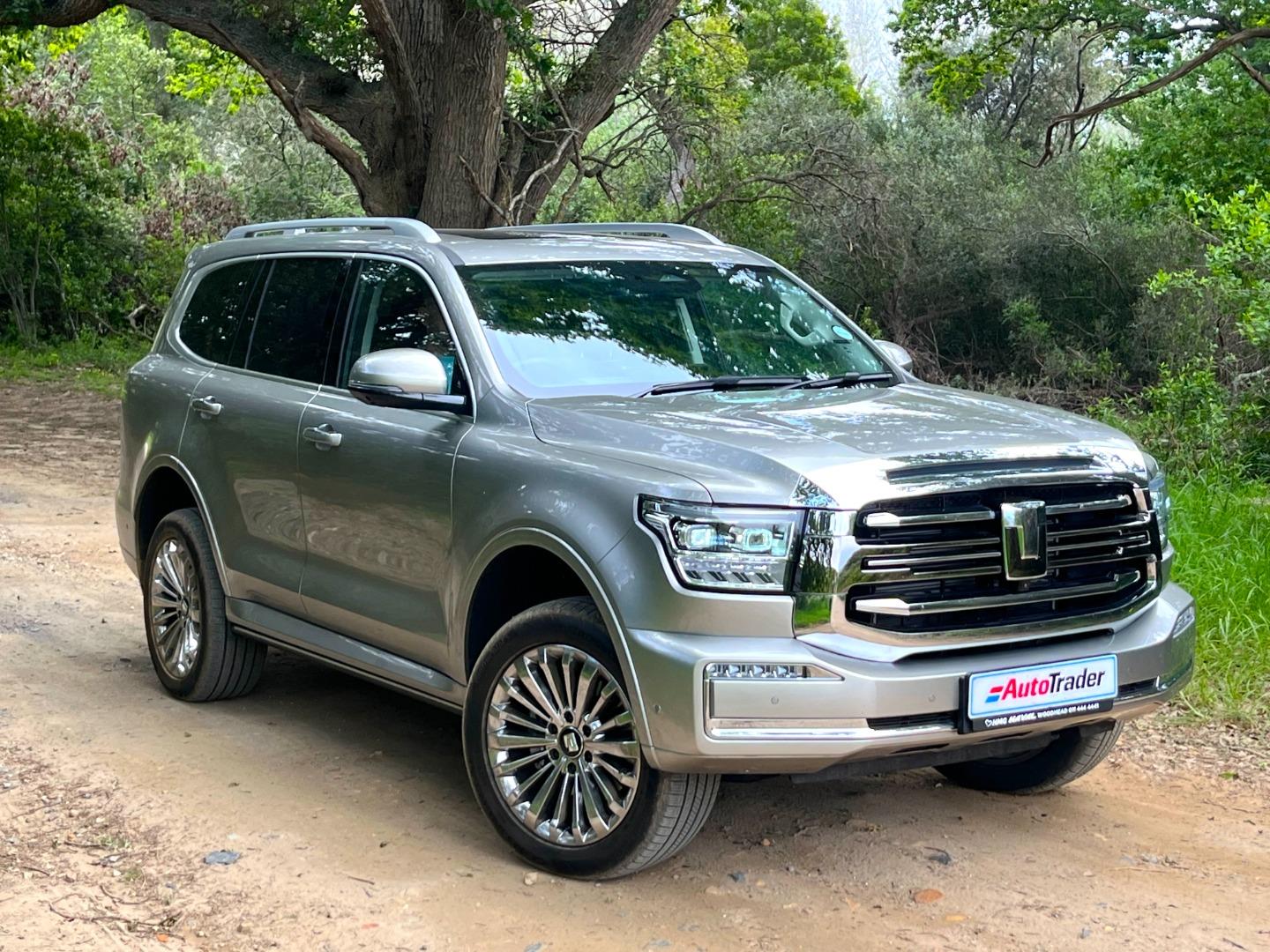
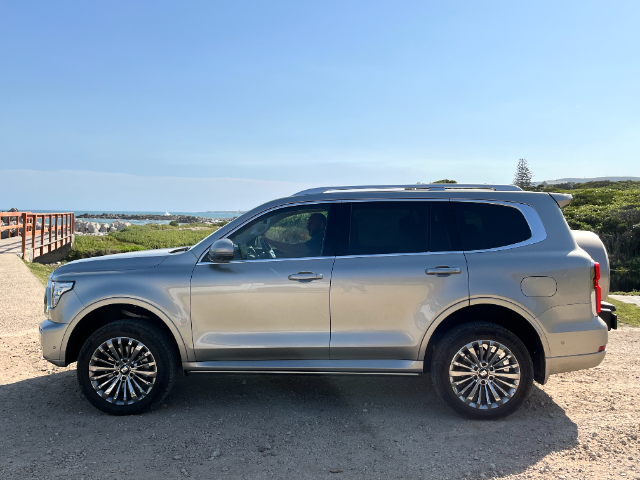
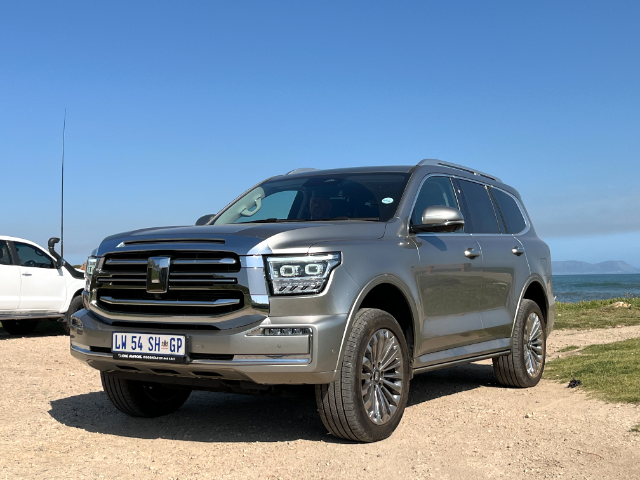
GWM takes much of its inspiration from large, American bruiser-SUVs (I get a lot of Dodge and RAM influence). The result is quite brash and bling, with lots of chrome-effect silver plastic and a multitude of shiny surfaces. Even the 20-inch wheels are bright chrome. While this isn't exactly the look I'd go for, people stared unabashedly. Some even slowed down while walking across the road for a good look!

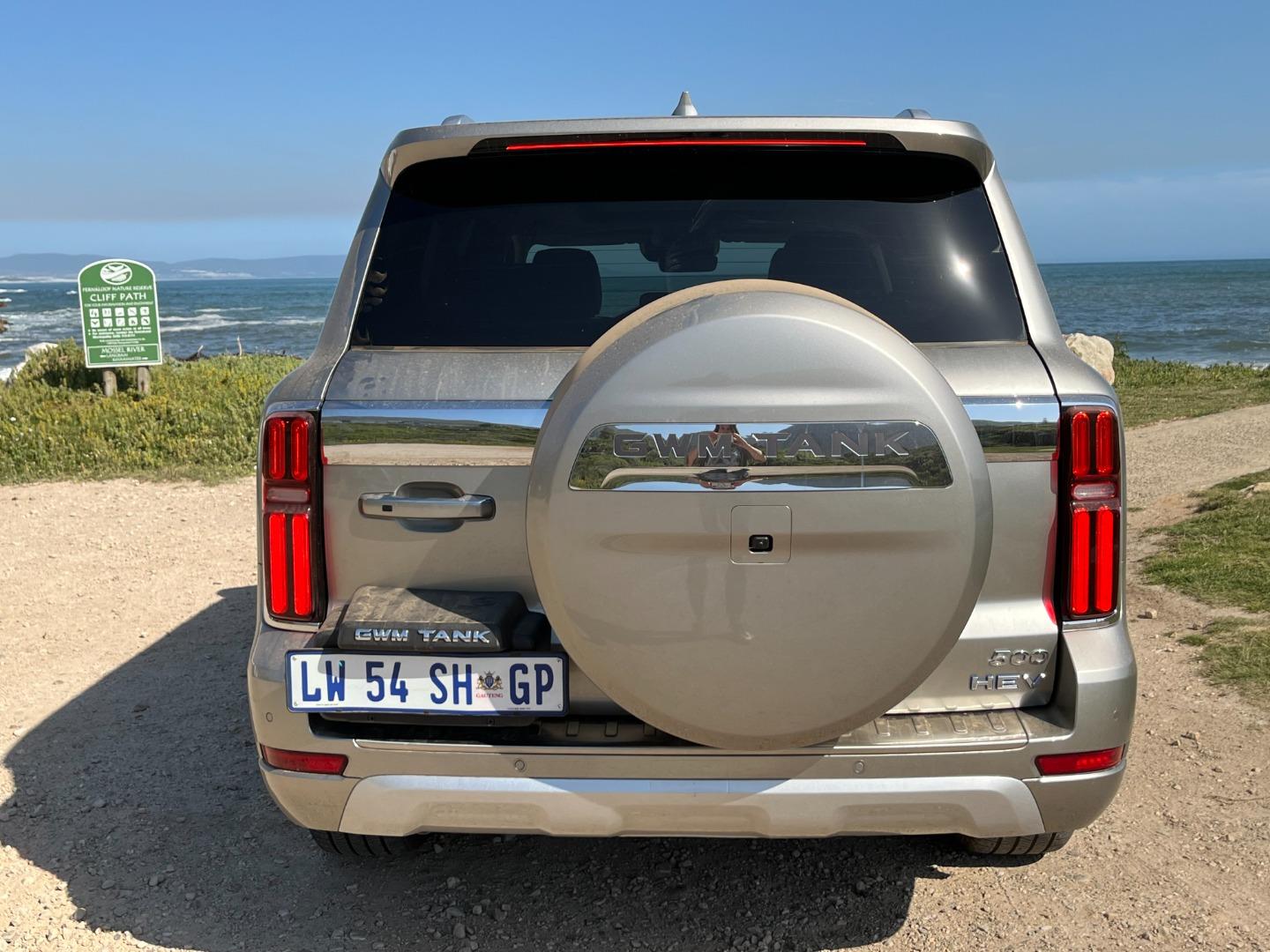
The view of the P500's rear is relatively generic for this type of vehicle, but the large, vertical LED taillights (surrounded by more bright work) add visual appeal to a high-end appearance.
Interior

GWM pulls out all the stops inside, and no detail is overlooked. Brushed chrome and glossy piano black surfaces are everywhere, with a massive touchscreen in the centre. Thankfully, there's a heads-up display in the windshield because fiddling with the menu-heavy screen while you drive is not advised. Apple CarPlay and Android Auto enable your favourite apps, such as Google Maps and Whatsapp.

In an attempt to live up to Japanese and Swedish design standards, there appear to be wooden trim inserts, but upon closer inspection, these turned out to be plastic. However, this is the only substandard-looking (and—feeling) feature inside the cabin; the rest is all top-notch.
The main A/C vent below the large screen looked swish with silver faux-snakeskin edging. The brushed metal covers of the speakers in the doors also looked sophisticated - after all, the sound system is by Harman Infinity, so nothing less would be acceptable. A massive panoramic sunroof lets in the light.

There's also an array of interior ambient lighting options including a star-themed backlit strip at the bottom of the dashboard that I liked, but my husband thought it didn't fit in with the rest. A wireless charging pad and USB ports in the front and rear take care of recharging devices.
Space and Comfort

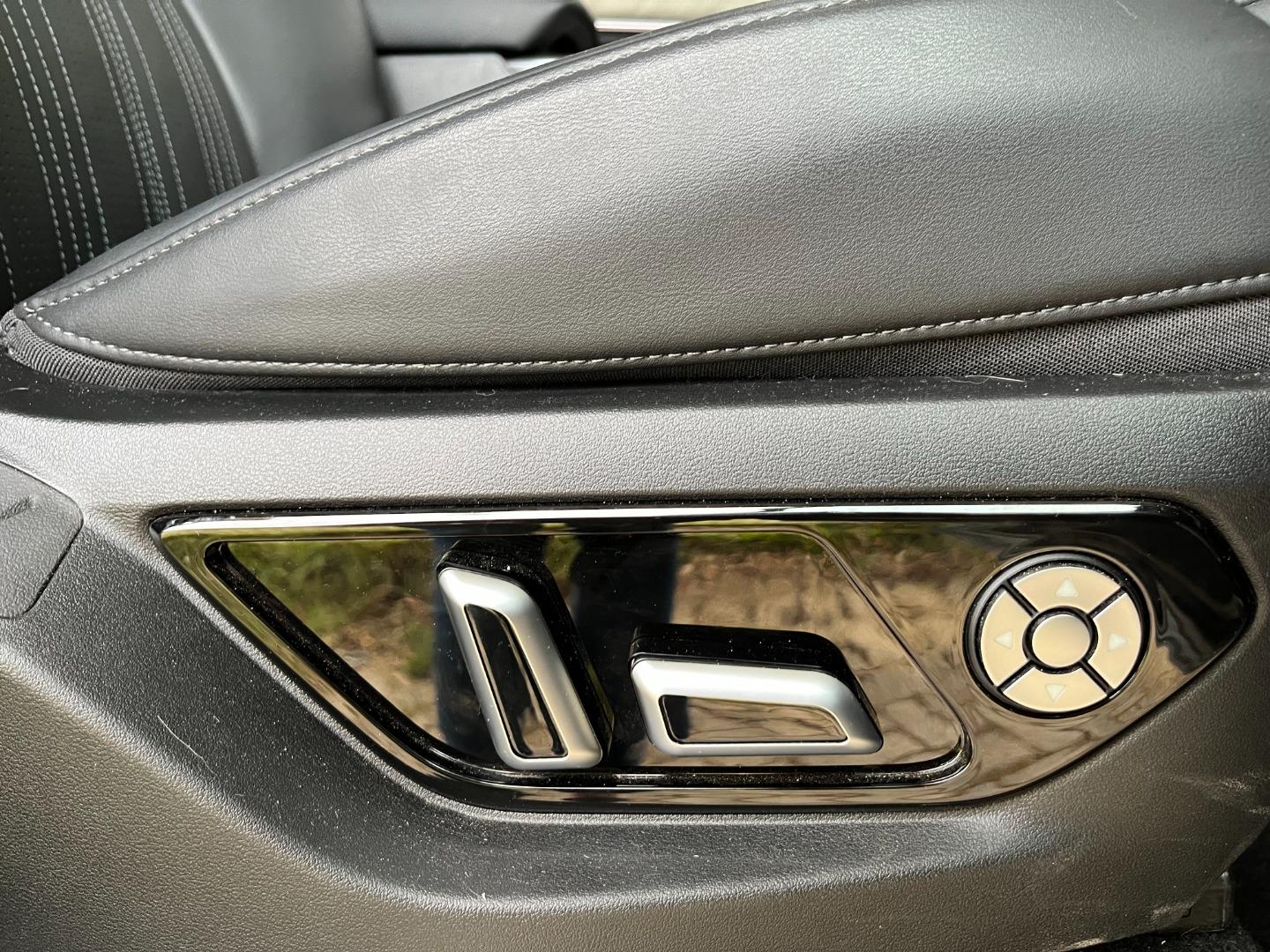
'Premium' is the name of the game with sumptuous Merc S-class style seats, adjustable in every which way, heated, ventilated, and massaging, for both the driver and front passenger. You have choices of massaging styles, and we settled on Wave and Catwalk. That takes the frustration out of deadlocked traffic!
The second row is also ventilated, and reclinable seats and the flat floor make it more comfortable for the third passenger in the middle. The rear seats are cramped but can be folded flat or returned to their original position with a button.

With these rearmost seats up, there's hardly any space (around 98 litres, as with most cars of this ilk), but folded forward, there's a lot of room—795 litres, to be exact, which can be increased to 1459 litres if you flip the second row forward. The boot also has a 220V power socket.

The Drive

To a certain extent, the Tank 500, at 2 605 kg, drives as a tank would, I imagine, especially in Eco mode, where it feels quite cumbersome, like it just doesn't want to get going.
Despite the hybrid system, it guzzles petrol like a student downs shots during happy hour. Ride quality is supple, however, and the surround-view cameras that turn the Tank translucent on screen (so you know exactly what's around and beneath you) make manoeuvring this behemoth easy.

Driving in Standard or Automatic mode is a pleasant way to travel with enough power from the turbocharged 2.0-litre petrol-electric hybrid engine. In Sport mode, the 9-speed auto-gearbox can feel slightly indecisive, and we were serious about stretching our fuel budget, so we didn't spend much time in this setting. We put in R600 of petrol, yielding 250 km of range in Eco.
If you have plans to take the Tank off-road, you had better have a limitless budget. Off-road modes include Slippery, Off-road (including Mud, Sand, Rock, 4 High, 4 Low), and Expert. There are two diff locks and you can also select Drift Mode or Off-Road racing, much like some of the driving modes in the Ford Raptor.
Chad drove the Tank 500 HEV on launch. Read his first drive review.
The Tank 500 is equipped with every conceivable driving assistant. I was disappointed that the adaptive cruise control system had the same flaw as the Haval Jolion Pro - you set it to your desired distance between you and the car in front. Still, it doesn't listen, even if you have it in the closest setting. The Tank 500 stays way too far behind the car in front, and other traffic will then cut in front of you. This is very annoying and it defeats the entire purpose. However, the massaging seats, immersive sound system, and all of the other luxury features on board tend to make up for this.

Our shorter passengers enjoyed the electronically retractable side steps that appear out of nowhere when you want to enter or exit the car.
The Tank 500 has a braked towing capacity of 2 500 kg, which isn't quite the 3 500 kg offered by other brands such as Ford.
Performance
The 2.0-litre turbo-petrol engine plus the electric motor supply a combination of 255kW and 648Nm of torque, and acceleration is sufficiently brisk with the Tank 500 reaching 100 km/h from zero in 8.3 seconds, and it switches seamlessly between full-EV, hybrid, and petrol-only modes. Since our daily drive includes a combination of dirt and tar, we mostly drove the Tank 500 in Automatic mode. This lets it decide when to engage front- or all-wheel-drive so that there's always enough traction and optimises fuel efficiency.
Safety

The Tank 500 is equipped with seven airbags, ABS with EBD, brake assist, adaptive cruise control with lane departure warning and lane-keep assistance, rear collision warning, traffic sign recognition, cross-traffic alert, a blind spot monitor, attention assist, auto-intelligent parking, downhill descent control, high-beam assistance, and tyre pressure monitoring. The previously mentioned surround-view cameras, park distance control in the front and rear, child locks, and ISOfix seats are also part of the deal.
Fuel Consumption

My biggest issue with the Tank 500 was its huge thirst. It has all the lovely perks of driving quietly on electric power at low speeds, only to burn through petrol when the engine is running. GWM claims a figure of 8,5 litres per 100 km, which isn't accurate. You'd be hard-pressed to see figures below 12 litres per 100 km. (It is not uncommon to see 17 litres/100km on the trip computer display when your foot is heavy out on the open road.)
Price
The Tank 500 2.0T HEV Ultra Luxury 4x4 wears a price tag of R1 222 900.
Competitors
The Tank 500's direct rivals include the Toyota Prado, Hyundai Palisade and Ford Everest, but more affordable seven-seaters such as the Kia Sorento, Toyota Fortuner, Mitsubishi Pajero Sport, and Isuzu mu-X also compete with it to a lesser extent, even if they are priced in the region of the GWM Tank 300.
Related: GWM Tank 300 vs Mitsubishi Pajero Sport vs Isuzu mu-X
To put things in perspective, the Everest 3.0TD V6 4WD Wildtrak costs R1 199 500, the Hyundai Palisade 2.2D 4WD Elite costs R1 204 500, and the Land Cruiser Prado 2.8GD TX costs R1 296 300.
(It's worth noting that GWM plans to bring a diesel Tank 500 to SA soon.)
The Verdict
Why would buyers spend mega bucks on a hybrid car that isn't going to give them much range, especially when overlanding, which is a whole other kettle of fish? And if I broke down in the Tank 500 HEV in some remote part of Africa or in the middle of the Tankwa Karoo, how quickly would I be mobile again? And what about depreciation? One has to consider these things.
If I had this money, I would probably get myself the top-spec Ford Everest (read my review of the Platinum model) or pay a little more and buy a new Toyota Land Cruiser Prado (or a lightly pre-loved one).
Don't get me wrong, I loved driving the Tank 500, I enjoyed its multitude of tech and luxury features, and its over-the-top looks even started to grow on me, but there is a fair bit that can go wrong according to Haval/GWM owners' Facebook groups. Owners' reviews on Hello Peter also reveal that parts can be pricey and there is a waiting period. Am I willing to take that chance when spending over R1.2 million bucks?
Probably not.