
The luxury and large-family SUV segment in South Africa is no longer just about off-road prowess; it's about aesthetics, cutting-edge technology, value and effortless long-distance touring.
Pros & Cons
Pros
Masterclass in cabin space and second-row legroom
Fuel efficiency during urban commutes
Incredible tech integration and standard features list
Crisp, silent electric power delivery in daily driving
Longest vehicle warranty in its price bracket
Cons
Lack of all-wheel drive limits its true off-road capability
2 000 kg towing capacity lags behind traditional ladder-frame rivals
Massive 5-meter dimensions make tight mall parking a chore
Minimal physical buttons in the cabin require tech reliance
Gloss black interior trim is a magnet for fingerprints and dust
Industry context
It is no coincidence that the BYD Atto 8 feels so heavily loaded with technology. Globally, BYD has transitioned into an absolute powerhouse of alternative energy vehicle (NEV) production. While traditional manufacturers have incrementally updated their turbodiesel engines, BYD has scaled its vertical integration to a point where it can offer advanced Plug-in Hybrid (PHEV) technology at the same price point as conventional internal combustion rivals.
In South Africa, buyers looking at the R1-million mark have historically defaulted to rugged, bakkie-based options or premium mid-sized diesels. By launching the DM-i (Dual Mode intelligent) platform locally, BYD isn't just selling a family vehicle; it's challenging the need for the traditional diesel engine in suburban South Africa.

The R1-million badge dilemma
To understand the value on offer here, you have to look under the skin at BYD’s unique corporate superpower: absolute vertical integration. Unlike traditional legacy automakers who source components from a web of global suppliers, BYD builds almost everything in-house. From the microchips and electric motors right down to its Blade Battery packs, BYD controls its entire supply chain. This self-sufficiency is exactly how it has managed to cram an unprecedented amount of luxury and tech into a single package without the price tag spiralling into the atmosphere.
However, despite building an objectively good product, BYD faces a steep psychological hurdle in Mzansi. Crossing the R1.0-million threshold moves a car out of the shrewd, budget-conscious buy category and into the emotional realm of luxury status symbols. The brand seems to have done well with its Shark 6 bakkie, securing strong monthly sales, but in the passenger car segment, South African buyers spending a million bucks are historically incredibly brand-loyal and status-conscious; they want the badge on the nose to signal prestige, robustness, or deep-seated heritage. Convincing a family to look past the decades-long trust built by established badges like Ford, Isuzu, or Kia—and hand over seven figures for a relatively new Chinese brand—is a hurdle that spreadsheet numbers and tech features alone cannot easily solve.

Styling
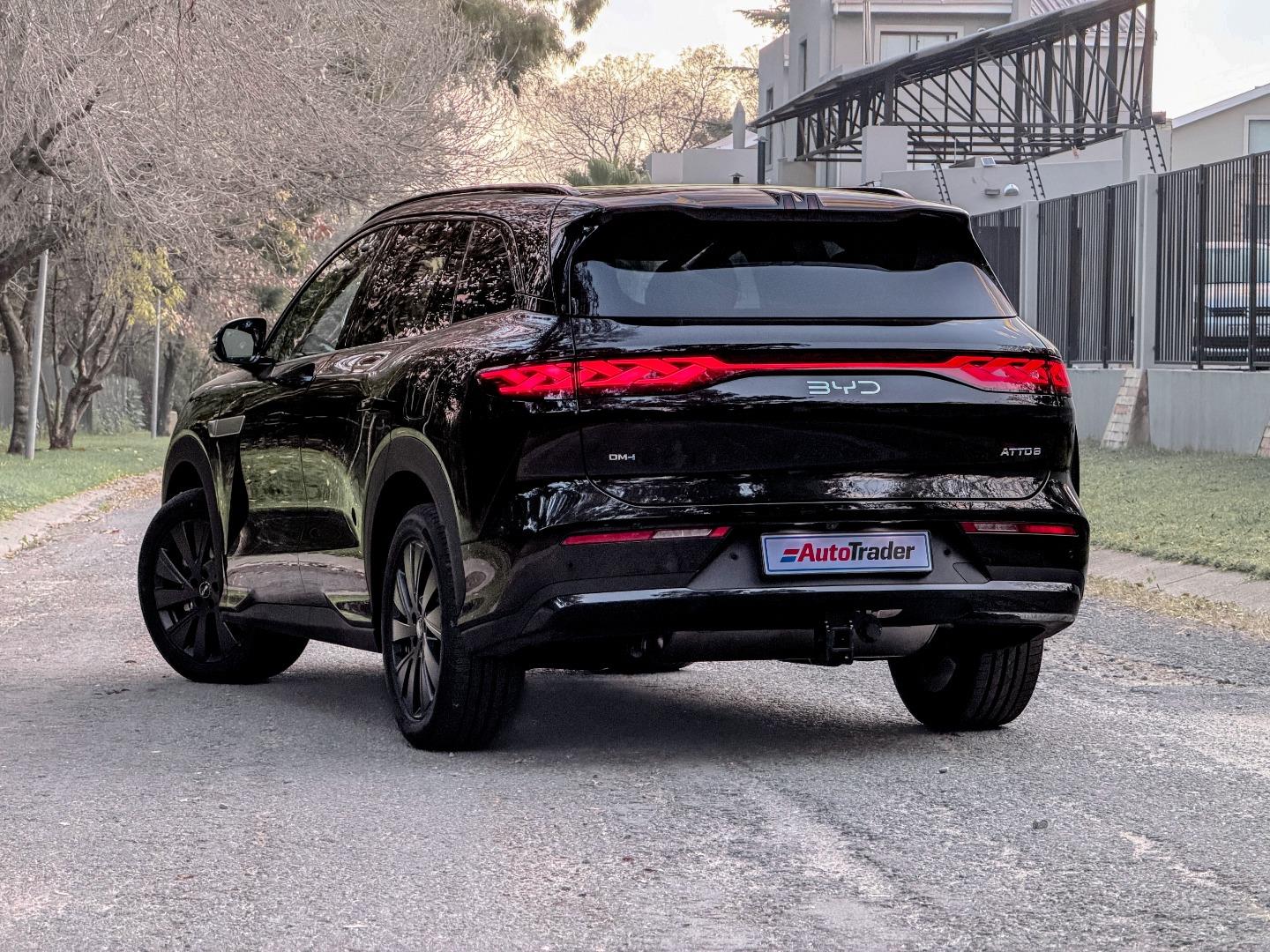
Despite its name, which might suggest the Atto 3 to those familiar with the smaller Atto 3, the Atto 8 is a physically imposing machine. At 5 040 mm, it is a massive vehicle that commands serious road presence. The design balances a clean, modern aesthetic with LED headlights and chrome accents. Sitting on 20-inch alloy wheels wrapped in chunky 255/50 rubber, the Atto 8 opts for a more refined, upscale highway cruiser look rather than the rugged, utilitarian stance of its ladder-frame competitors. Suffice to say, the sheer scale of the vehicle, combined with its distinctive daytime running lights, gathered plenty of attention during our week-long test period.

Interior
Step inside the Premium DM-i, and you are met with a cabin that feels very well put together. The focal point is undoubtedly BYD’s massive touchscreen dominating the dashboard, supported by a digital instrument cluster. The system itself works well, with great resolution and responsiveness, but, as with so many new cars, almost all key vehicle functions are operated through the screen, which can, ironically, be less functional from a safety perspective. The sound system, while acceptable, lacks the punch of premium systems from other manufacturers.

The focus here is entirely on tech and luxury. The artificial-leather seats are heated and ventilated up front, and the 2 950mm wheelbase means second-row passengers enjoy near-limousine levels of legroom. However, like many modern tech-forward cabins, there is a liberal use of gloss black plastic across the centre console. While it looks magnificent on the showroom floor, it proves to be a relentless magnet for fingerprints and dust in our dry, sun-drenched climate.

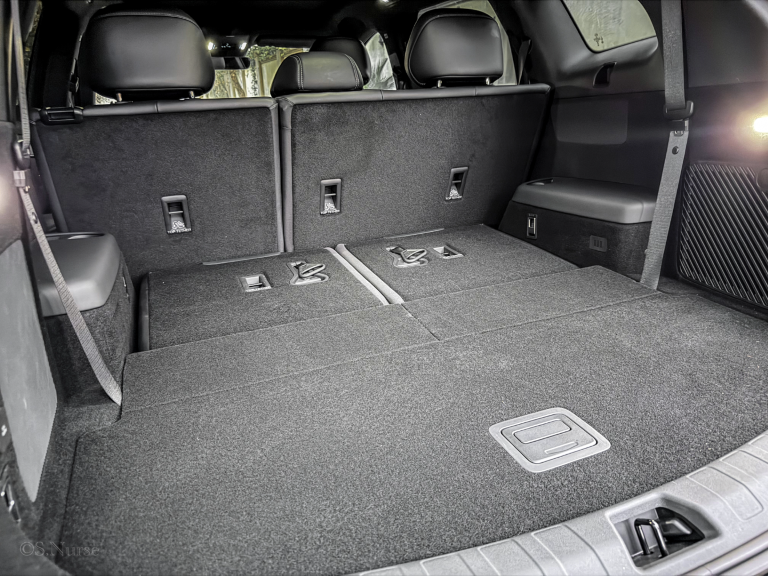
Practicality remains excellent with 7 seats as standard. When configured as a 5-seater with the third row folded flat, the boot offers 1 960 litres of utility space. The third row isn't really suitable for adults, but the second row, which is seriously spacious, can be moved forward to provide an acceptable amount of room for third-row occupants on shorter journeys. If you treat this as a four or five-seater, it will be an absolute pleasure on family holidays and longer trips.
Drive Impression
The driving experience is defined by a level of mechanical refinement that will catch traditional premium buyers completely off guard. Under the bonnet sits BYD's 5th-generation DM Super Hybrid packaging, pairing a 1.5-litre turbo engine with an electric motor and its Blade Battery. Generating a combined 205 kW, power delivery is instantaneous, smooth, and near-silent, propelling this large SUV from 0–100 km/h in a claimed 8.6 seconds. However, from a dynamic perspective, the car feels big, the steering is vague, and the suspension isn't really up for the task of dynamic driving, but that's perhaps to be expected from a 2.3-ton+ family car.
Where the Atto 8 utterly distances itself from its diesel competitors is its sheer isolation from the outside world. The doors feel heavy, and the cabin insulation is impressive, with double-layer soundproof glass and smart frequency-selective dampers, providing a quiet and comfortable driving experience that even those well-versed in luxury products will appreciate.

Fuel consumption
In an era of unpredictable fuel costs, the DM-i system offers a Jekyll-and-Hyde approach to efficiency that depends entirely on your charging habits.
Claimed average: 2.9 L/100 km (with a fully charged hybrid battery)
Actual average: 5.8/6.2 L/100 km (combined highway and urban long-run testing)
With the battery topped up via a wall box, a pure-electric commuter range of up to 75 km is achievable, meaning your daily school runs and office commutes could realistically use zero petrol. Once the battery is depleted on longer trips, the vehicle defaults to a traditional hybrid setup, returning between 5.8/6.2 L/100 km during my testing across a week.

Safety
The Premium DM-i trim leaves nothing on the options list when it comes to occupant protection:
Airbags: 7 as standard, including front, side, curtain, and a front-centre airbag to prevent front occupants from colliding in a side impact.
Driver Assist: A full Advanced Driver Assistance System (ADAS) suite featuring Adaptive Cruise Control, Lane Keeping Assist, Blind Spot Monitoring, Traffic Sign Recognition, and Attention Assist.
Parking: A comprehensive surround-view camera system paired with front and rear park distance control makes navigating this 5-metre-long vehicle into standard parking bays manageable.
The model has not yet been independently crash-tested, so keep an eye on our content for future updates.
Pricing
BYD Atto 8 Premium DM-i: R1 059 900
Includes a 5-year/100 000 km vehicle warranty, an 8-year/200 000 km battery warranty, and a 5-year/100 000 km maintenance plan.
Quick Rival Comparison
| Model | Price | Power / Torque | 0-100 km/h | Service plan |
| BYD Atto 8 Premium DM-i | R1 059 900 | 205kW / 315Nm | 8.6s | 5-yr /100 000 km maintenance |
| Kia Sorento 2.2CRDi EX+ | R999 995 | 148kW / 440Nm | 9.5s | 6-yr/90 000 km maintenance |
| Isuzu mu-X 3.0TD Onyx 4WD | R1 032 190 | 140kW / 450Nm | - | 5-yr /90 000 km service |
| Ford Everest 2.0 BiTurbo Sport | R1 041 000 | 154kW / 500Nm | - | 6-yr/90 000 service |
Verdict
The Atto 8 Premium DM-i isn't just another entrant into the family market; it showcases that the BYD brand means business and can compete in the luxury market. It manages to blend solid second-row legroom, urban efficiency, and a level of cabin refinement that makes established seven-seaters look a bit dated. While the psychological hurdle of spending R1-million on a newer badge is real, the depth of engineering on display here proves that BYD isn't competing on price anymore—they are competing on pure merit. If you are looking for a stand-out family cruiser that delivers a luxury EV driving experience without the range anxiety, the Atto 8 makes a strong case for itself.