

First introduced in 2005, the first generation of Audi’s Q7 was based upon the Volkswagen PL71 platform that it shared with the likes of the Volkswagen Touareg and Porsche Cayenne of the time. It was in production from 2005 until 2015 and during that period it established itself as one of the most practical products within its segment.
Its replacement came through in 2015, with an all-new MLB Evo platform that it shares with many a distinguished Volkswagen Group product such as the Touareg, its Q8 sibling, the Porsche Cayenne, the Bentley Bentayga, and the Lamborghini Urus. Having spent half a decade in the local market, the Q7 was updated recently, with the facelift arriving late in 2020, sporting enhanced looks and more technology. We spent some time in the newcomer recently to see how the updates have improved this German giant.
Styling
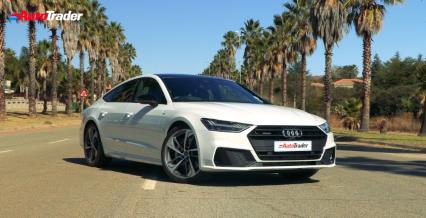
The exterior changes made to the updated Q7 are mild, with an updated version of the brand’s octagonal grille first seen on the Q8, a reshaped front and rear bumper, revised air inlets and headlights up front as well as new exhaust exits and chrome detailing for the tailgate. The package, in S line guise, is rounded-off by new 20-inch alloy wheels, creating an exterior that is certainly an improvement but ultimately lacks the visual appeal of its rivals. Having said that, some may find the understated looks of the Q7 appealing.

Interior and space
The interior of The Q7 has grown marginally as Audi increased the length of the product by 11mm which is said to increase interior dimensions, offering more space for occupants. The Q7 is an incredibly practical machine, offering an impressive 865-litres of boot space when in 5-seat mode, with this increasing to 2 050-litres with the second row folded flat.
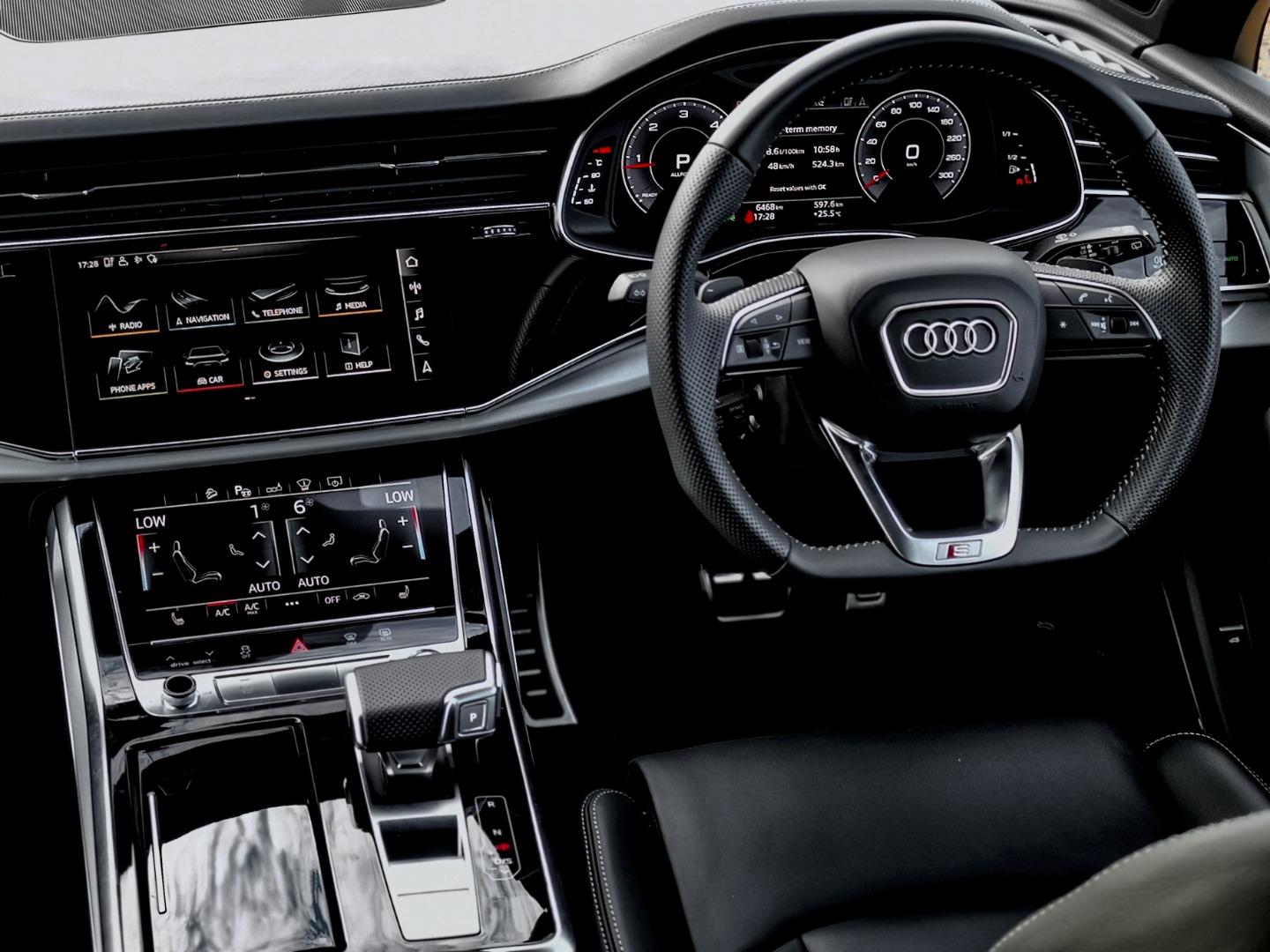
The biggest changes can be seen in the cockpit, with two touchscreen systems in the centre console, the lower screen used for the climate control system and some parking and off-road settings and the top screen for the various media functions, which include Apple CarPlay and Android Auto. The upper screen and virtual cockpit form part of the MMI navigation plus system which comes standard and includes a SIM card, a Wi-Fi hotspot and the Audi connect system that provides access to services such as Google Earth, live traffic, the MyAudi application as well emergency functions.
The updated in-car technology combined with the sublime quality and segment-leading ergonomics makes the interior of the Q7 one of the nicest places in which to spend your time, at this price point.

Performance and driving impression
The Q7 is powered by the Volkswagen Group’s ubiquitous 3.0-litre turbodiesel engine which produces 183kW and 600Nm in this guise. The power is transmitted through a ZF-sourced 8-speed automatic gearbox to all four wheels. Performance is adequate, with 100km/h coming up in 6.9 seconds while top speed is a claimed 225km/h. The true use of the Q7’s performance comes when overtaking, where the 600Nm really assists, while our air suspension-equipped press unit offers 3 500kg of braked towing capacity.
Out on the road, the Q7 is simply sublime, offering effortless progress and absolute comfort for occupants. As is to be expected, the general refinement and noise cancellation on board are top-notch, with only the faintest wind intrusion audible, while the diesel up front is surprisingly subdued. An area where the Q7 impressed was in tight parking areas, where its four-wheel steering make manoeuvring far easier, while on twisty roads, the vehicle also now feels more direct, flowing from corner to corner, just do not expect sportscar-like dynamics.
With the air suspension system comes the Audi drive select function, allowing you to switch from ‘auto’ to ‘dynamic’, to ‘comfort’, ‘allroad’ and even ‘offroad’ modes. We spent most of the time in comfort, while dynamic proved slightly frustrating, holding on to gears for too long to mimic a performance setting, a difficult feat in a diesel. The allroad function allowed us to make our way through exceptionally muddy terrain, despite the road-bias tyres.

Safety
The Audi Q7 was tested by Euro NCAP in 2019 where it attained a maximum 5-Star rating, achieving 92% for adult occupant safety, 86% for child occupant safety, 71% for pedestrian safety and 72% for its safety assistance systems. At the time of writing, the testing programme still considered the rating as valid.
Fuel economy
Audi claims that the Q7 will consume diesel at a rate of 8.0L/100km. During our weeklong stint in the car, we managed to achieve a combined consumption figure of 8.5L/100km, which is very respectable for a luxury SUV weighing in excess of 2.0-tons.

Pricing
Excluding options, our Q7 press car was listed at R1 435 000, certainly not cheap considering the Volkswagen Touareg with which it shares a platform, powertrain and many other technologies, retails for R1 297 200 in Luxury R-Line guise. The S line Q7 does compare favourably with its key rivals though, coming in at a lower price point than both the BMW X5 xDrive30d M Sport and Mercedes-Benz GLE300d 4Matic AMG Line.
Verdict
The Q7 is a product that is hard to find fault with, however, its key rivals are just as impressive in most areas, making the Q7 blend-in more than stand out in what has become an exceptionally competitive segment. For those fortunate enough to afford a seven-seat luxury SUV, it may simply come down to brand preference. The offerings from Audi, BMW, Jaguar, Land Rover, Mercedes-Benz, Volkswagen and Volvo, in particular, are all worthy of consideration, however, those with a penchant for the Audi brand will not be disappointed by the Q7.