Daily commuting reality, real-world fuel stops, and quirks of our long-term Ford Ranger
After a month of driving our long-term Ford Ranger, the vehicle has begun revealing its inherent quirks. This is the daily commuting reality, real-world fuel stops, and annoying tech quirks of our long-term Ranger.


It has been just under two months since we took delivery of our long-term SuperCab Ranger. During this time, most team members have had the opportunity to drive the Danger Ranger, and in our lunchtime chats and some note comparisons, a few key points have become evident.
Related: Ford Ranger 3.0TD V6 SuperCab Wildtrak 4x4 (2026): Long term update 1
The Ranger is a great vehicle, but it isn't without its faults. Here is a brief update on the aforementioned key points, along with a few small things we picked up during our travels.
Ford Ranger 3.0TD Double Cab Platinum 4WD (2024) Quick Review

The day-to-day
If there were one word to describe the Ranger, it would be "comfortable." The driving position, seating arrangement and climate control combine to make a vehicle that feels like a plush lounge chair. The cold, frosty highveld mornings are easily offset by the heated seats, and then there's the drive aesthetic. The extra power and torque delivery of 184kW and 600Nm from the 3.0 V6 diesel are welcome, but one does have to control the pressure of the right foot or else provoke a healthy dose of oversteer while turning. If well modulated, the Ranger is an absolute peach, and we're not just talking about the Ignite Orange paintwork; it is a fantastic drive in and around town, but if you don't watch your throttle inputs, you are going to pay for it at the pumps.

Fuel economy
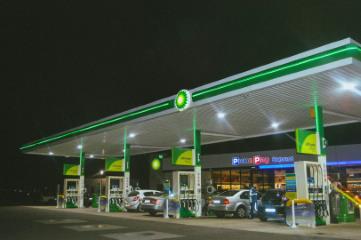
When it comes to filling the Ranger, the 80L tank will take just shy of R2 800. Day-to-day driving in and around town, with runs on the freeway, should return 9.6 L/100 km, which means you get roughly 780km on a tank. If you go full ECO mode and keep freeway speeds to 100km/h, you can extend to 6.9L - 7.8L/100km, which can yield a round 980km on a tank. Realistically, the Ranger will hover around 9.2 L/100km across terrain and conditions, which means that under standard daily use or 120km per day, you should visit the fuel station three times a month, so budget around R9 000 a month for diesel.

Small annoyances
There is very little that annoys when it comes to the Ranger, but it does have some idiosyncrasies. Some of the climate control settings revert to factory once you switch off the vehicle. The Auto high beam setting does the same, which, coupled with the overly sensitive activation setting, means that if you are driving in the early-morning dark, the auto high beams activate on the freeway when not needed, making it look like you are flashing oncoming vehicles. Outside of that, the brakes feel somewhat wooden on the initial sweep of the brake pedal and then bite right at the end, making the nose dive. This is not normally noticeable, but when sitting in stop-start traffic, it becomes rather annoying.

Verdict
The V6 Ranger is proving to be a valuable tool for our team. It's the perfect size and has just the right number of features, making it an absolute pleasure to live with. It is a bit heavy on the pocket, but most diesels today are. The small annoyances are not enough to render the Ranger undrivable, but are simply the very small things you pick up after driving the bakkie for some time. Once you get your head around them, the Ranger is a great drive and goes to show why it's become a favourite of consumers across the country. Our second update is coming soon after we take the Supercab on a weekend away in the bush to see how it handles a rough camping expedition.