
By Stuart Johnston
An A-Ha! Maintenance Moment – getting those headlight covers clean!
An A-Ha! Maintenance Moment – getting those headlight covers clean!


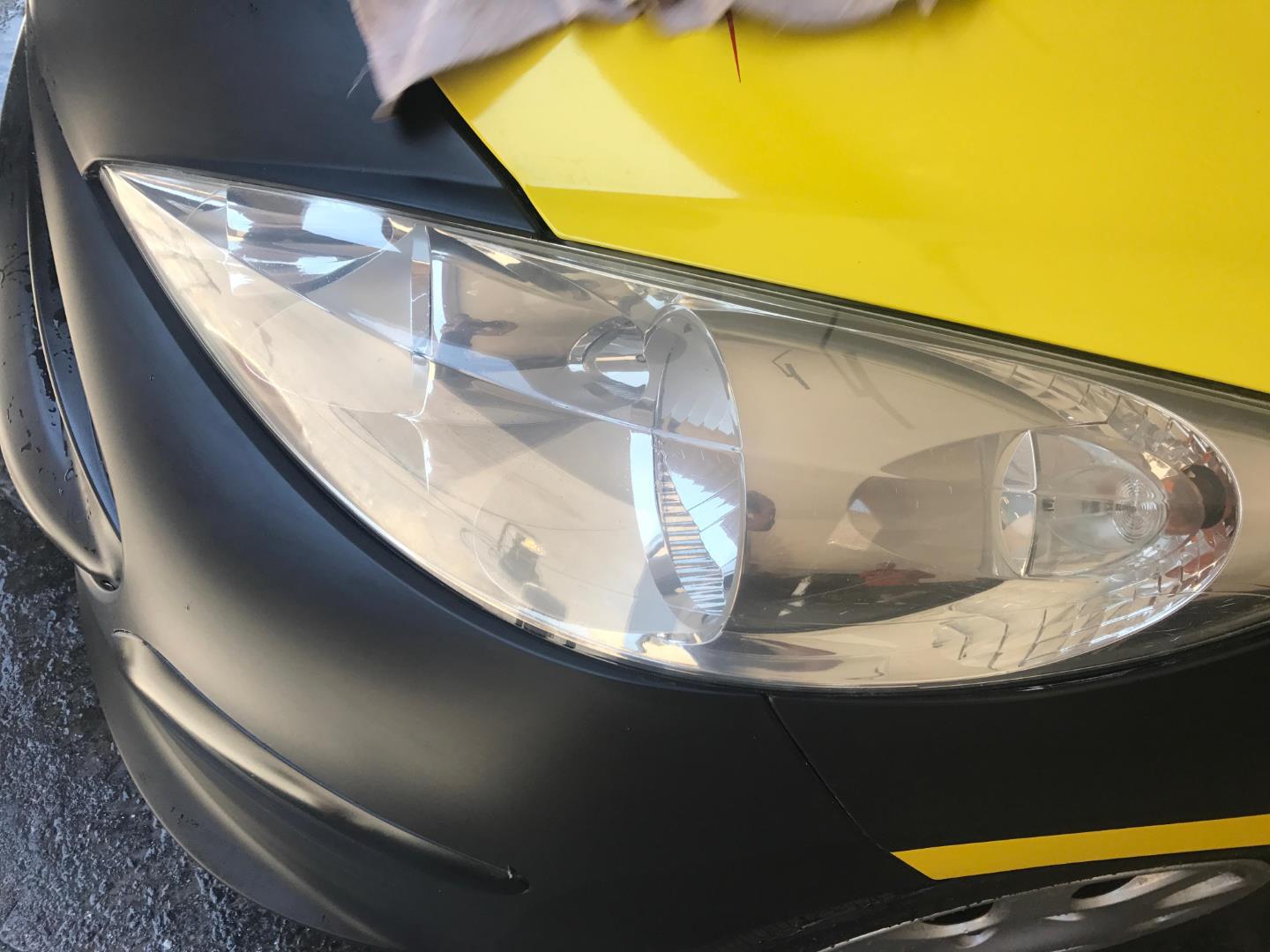
A number of cars these days have plastic headlight covers. And after half a dozen years in direct sunlight they can become cloudy and milky, due the effect of ultra-violet rays. Here’s a quick run-down on how to restore them to their former clarity.
Misty, milky head light covers not only spoil the looks of your car, they diminish the amount of illumination reaching where its most import – to the road up ahead. You might well be tempted to replace the covers, but that’s going to be expensive. Fortunately, with a good polish you can restore them to close to an as-new-condition.
Why do headlight covers become cloudy and misty?
These days a number of the cars on our roads are fitted with plastic headlight covers. Cars that spend much of their time out in the sunlight – especially in harsh South African conditions – suffer from their plastic surfaces becoming opaque, due to the reaction of the ultra-violet rays on the clear surface.
Does this happen quickly?
Usually you will notice these headlight covers becoming cloudy after the car is about half a dozen years old. It can happen more quickly if the car is regularly parked all-day in direct sunlight. If it is garaged and used rarely, the cloudy effect may be very mild even after a decade. This process happens gradually over time, and it’s not something that is immediately noticeable. You may well think that the plastic covers are leaking water in some way, as this process has an effect similar to that when moisture forms a mist inside a window.
Is it safe to drive with the lights like this?
The misting-up effect diminishes the reach and spread of your headlights. Again it happens over time, so you may not notice it happening. But it is definitely a safety concern, and once you have cleaned the covers you will experience an “ A-hah! light-bulb -type moment”. You can suddenly see clearly now!
So, how do I clean them?
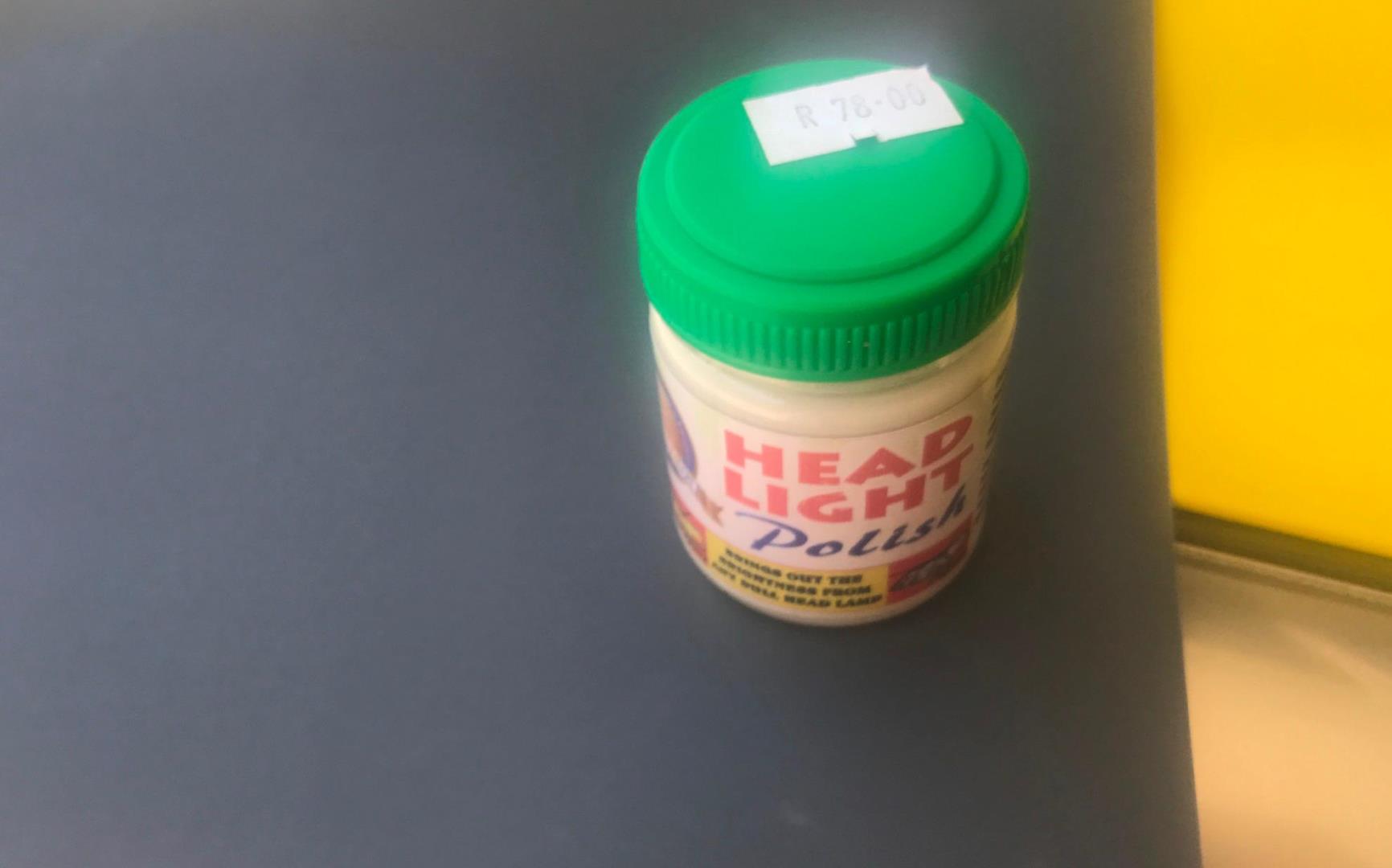
Spares shop sell polishes especially formulated for UV-damaged cloudy plastic headlight covers. We used one of these on our polishing test with a car that was 10-years-old, and it worked very well. But some enthusiasts swear by using plain-old toothpaste!
We played it safe and used a product called simply “Headlight Polish”, produced by a company called Fitumi SA. It cost R78 from Midas Blackheath, Johannesburg.
What’s the process?
If the headlight covers are only faintly cloudy, the process is to clean them thoroughly with car shampoo and then apply the headlight polish. If the clouding is not severe, you should achieve good results after a good polishing of about 10 to 15 minutes.
If clouding is severe, flat the surface with fine-grit water paper first
Our car had badly weathered headlight covers, and we sought assistance from paintwork specialists The Snake Pit in Randburg. Paul de Klerk, the proprietor, suggested flatting the surface first with 1200 grit water paper and then using a 1500 grit paper to achieve a good finish for the final polishing. After flatting, wash the light cover to asses that you have removed all the UV build-up damage. But you will now need to finely polish the cover to get it clear again.
If you flat it with water paper, can you then polish it by hand?
De Klerk says it is possible to flat it by hand after water papering, but that it will take half a day per light to then restore a clear finish using headlight polish.
He helped us achieve a good finish much more quickly by using a professional polishing machine fitted with a sponge polishing pad.
How long did the entire process take?
Using the machine polisher, the entire process for both headlights took under an hour. A buff fitted to an electric drill can achieve similar results, but professional electric polishers provide more variable control over the rotation speed, and are preferable.
The results are shown in the “after “ photographs – 10-year-old light covers that now look almost new once again, and are much safer!