The Cooper nameplate remains one of the longest-serving under the MINI banner and for good reason. Cooper models follow the same recipe that made traditional MINI cars so successful, being stylish, compact, frugal and easy to drive. Now though MINI is taking one of those characteristics to the next level, hence the MINI Cooper SE returns with average fuel consumption of 0.0 L / 100 km.
Related: MINI SE (2020) video review: All-electric first drive
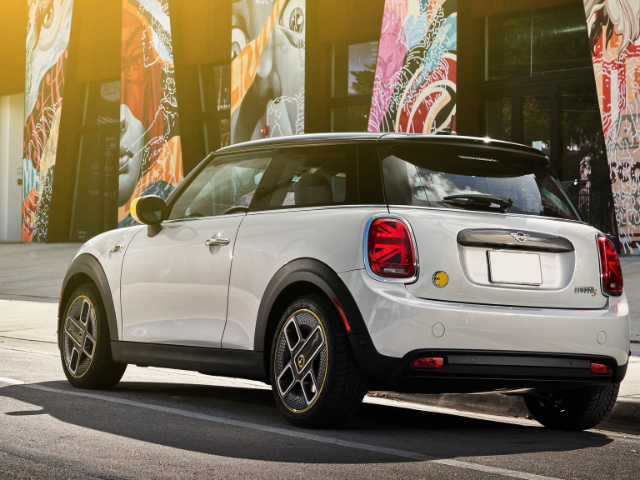
The non-existent fuel consumption is the result of MINI utilising an electric motor instead of a traditional internal combustion engine. Now although the biggest change is with the powertrain, MINI incorporated a few functional and decorative styling cues. Upfront, customers will notice the model-specific grille which is largely closed similar to the undercarriage. The rear apron also received an update as it no longer has to accommodate exhaust outlets. All around the vehicle are the MINI Electric logo and in all four corners feature 16-inch light-alloy wheels, unique to the model.
The figures
The MINI Cooper SE might be 5 mm shorter and ever so slightly taller than the conventional Cooper S model, and incorporate a few design elements to set itself apart, however, the biggest difference comes in the form of its powertrain. Let us see how it compares to the petrol model.
| MINI Cooper S | MINI Cooper SE | |
| Engine | 2.0-litre, turbocharged, 4-cylinder | Single electric motor |
| Transmission | 7-speed, dual-clutch, automatic | Single gear electric |
| Power | 141 kW | 135 kW |
| Torque | 280 Nm | 270 Nm |
| 0-100 km/h | 6.7s | 7.3s |
| Top speed | 233 km/h | 150 km/h |
| Fuel consumption | 5.5 L / 100 km | 0.0 L / 100 km |
| CO2 emissions | 127 g/km | 0 g/km |
| Range average | 800 km | 217 km |
*The information contained in this table have been sourced from duoporta.co.za

Verdict
Once compared side by side, one can quickly see that the performance figures of the electric SE variant are similar to that of the petrol derivative. However, in terms of acceleration and top speed, the Cooper SE lacks behind mostly due to the single gear transmission setup and heavy battery pack. Another area in which the electric MINI suffers is the range, offering 217 km of a single charge whereas a full tank of fuel can get you closer to 800 km in the petrol variant.
But comparing the two models only on figures and without context is unfair. MINI Cooper models offer compliant suspension, a host of creature comforts and frugal fuel consumption returns that will make you want to take a road trip every weekend, however, what about those customers who only want a stylish city commuter? This is where the Cooper SE makes more sense as not only does it retain the design appeal of the Cooper S models but offer a powertrain that consumes no fuel, with enough range to comfortably get you to the office and back a few times before you need to recharge.

This convenience does come at a premium, the MINI Cooper SE is priced at R 642 000, just over R100 000 more than the equivalently specified Cooper S model. However, by consuming no fuel and having less moving components that might need servicing or replacement, the Cooper SE will see a lower cost of ownership over its lifecycle. So if you are looking for a vehicle that can be used to take you to your office but also on long trips, the Cooper S is the one you want. If you are in the market for a city runaround with almost no running cost to take you to the office or the airport, the Cooper SE is the one to have.
*Pricing was accurate at the time of writing this article but may change without prior notice.
Recommended next:
Which MINI Cooper Countryman is better: diesel or petrol?
#AutoCentral: Smarter mobility, driving local EV sales & the challenges in their widespread adoption