
Which Land Rover Range Rover Velar is better: diesel or petrol?
It’s easy to identify the Ranger Rover Velar as the most attractive car in the brand’s stable, fall in love and get ready to commit. Then it gets tricky, because customising the vehicle before placing the order is a task that will even keep Hercules busy. Here we weigh up the engine options to make that part of the build a little easier.


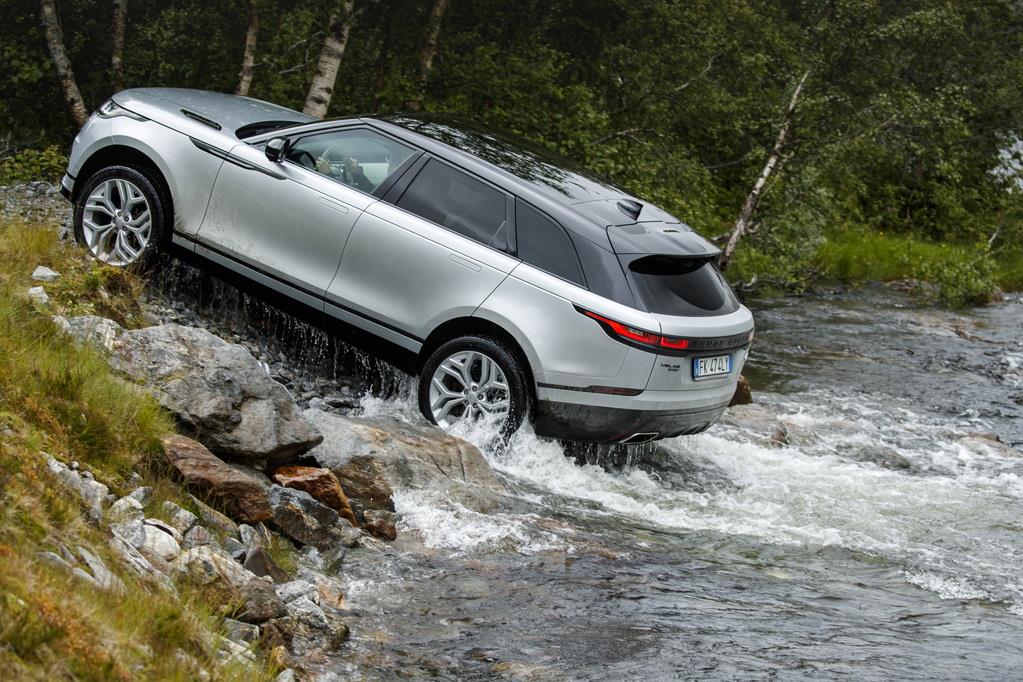


Range Rover offers a daunting array of Velar model derivatives, starting at R1 047 400. Additionally, there are a multitude of safety, comfort and style options available for personalising your dream car. As for the engines, there are 2-litre and 3-litre units running diesel or petrol, and a 5-litre, petrol V8 in the SVAutobiography Dynamic Edition.
Related: The Range Rover Velar – Unveiling Success.
Because of different methods of forced induction (turbo- and supercharging) and software settings, there are four power levels in the diesel category and five in the petrol group. In each vehicle all four wheels are driven via automatic transmission.
Diesel engines
|
|
D180 |
D240 |
D275 |
D300 |
|
Cylinders |
Inline-four |
Inline-four |
V6 |
V6 |
|
Size |
2.0 litres |
2.0 litres |
3.0 litres |
3.0 litres |
|
Induction |
Turbo |
Twin turbo |
Twin turbo |
Twin turbo |
|
Power |
132 kW |
177 kW |
202 kW |
221 kW |
|
Torque |
430 Nm |
500 Nm |
625 Nm |
700 Nm |
|
0-100 km/h |
8.9 sec. |
7.3 sec. |
7.0 sec. |
6.5 sec. |
|
Consump. |
5.4 l/100km |
5.8 l/100km |
6.6 l/100km |
6.4 l/100km |
Petrol engines
|
|
P250 |
P300 |
P340 |
P380 |
SVA DE |
|
Cylinders |
Inline-four |
Inline-four |
V6 |
V6 |
V8 |
|
Size |
2.0 litres |
2.0 litres |
3.0 litres |
3.0 litres |
5.0 litres |
|
Induction |
Turbo |
Turbo |
S-charged |
S-charged |
S-charged |
|
Power |
183 kW |
221 kW |
250 kW |
280 kW |
405 kW |
|
Torque |
365 Nm |
400 Nm |
450 Nm |
450 Nm |
680 Nm |
|
0-100 km/h |
7.1 sec. |
6.2 sec. |
6.4 sec. |
5.7 sec. |
4.5 sec. |
|
Consump. |
7.6 l/100km |
7.8 l/100km |
9.4 l/100km |
9.4 l/100km |
11.8 l/100km |
What’s in a name?
You might have guessed that the numbers, e.g. (P)250 and (D)180 refer to power output in horsepower (hp), albeit rounded off, and excluding the V8. As such, the petrol engines have more impressive numbers than the diesels. But, with heavy 4×4 vehicles that have to traverse technical terrain or tow heavy leisure trailers, torque is often more valuable than kilowatts. Here the diesels have the upper hand. Even the 2.0-litre D240 makes more torque (500 Nm) than the most powerful V6 petrol engine of the P380 (450 Nm). Similarly, the D300 makes more torque (700 Nm) than the V8 petrol (680 Nm).
Related: Is the Land Rover Discovery Sport good for families?
Fuel consumption
Consumption figures also differ vastly when comparing the diesel and petrol engines. These numbers are optimistic, but they still highlight a substantial difference in mile-for-buck between the two fuel types. For example, the V6 P380 petrol burns almost 50 percent more fuel on average than the V6 D300, while the latter has a maximum torque output of 700 Nm. This makes the P380’s torque figure of 450 Nm seem paltry by comparison.
Most Velars are confined to urban roads and freeways, but those who want to visit far-off destinations have to take into account the petrol engines’ thirst and the fuel tanks’ capacity of just 60 or 66 litres.
Vehicle capability
There’s no difference in towing capacity between the petrol and diesel cars, according to Land Rover. All Velars can pull unbraked trailers of 750 kg and braked trailers of 2 400 – 2 500 kg. However, towing a boat or horse box with a car that has abundant torque, is more satisfying than using a petrol-powered vehicle. It’s true that the V8 petrol will hardly feel a trailer, but its much thirstier and more expensive than a diesel derivative with ample torque.
All Velars have 213 mm of ground clearance (unless optional air suspension is fitted) and they can wade through water up to 600 mm deep. All have full-size spare wheels.
Verdict
Diesel has developed a bad reputation in Europe, but South Africans still love the stuff – even though the engines emit more harmful gases and particles than petrol engines. To be fair, modern diesel engines are very ‘clean’. The bigger problem lies with South Africa’s outdated refineries.
Some components of diesel engines are frightfully expensive to replace; injectors being a prime example. Fortunately, Range Rovers come with a standard 5-year or 100 000 km maintenance plan, that will cover replacement of the injectors, diesel pump and so on.
With all things considered, the diesel engines are better than the petrol engines.