Which cars are best for low maintenance?
It’s one thing to have a nice car, but it’s another to maintain it at a reasonable cost. This goes further than mere mechanical repairs, and include some expenses you may not have considered before. Let’s see which cars are best for low maintenance.


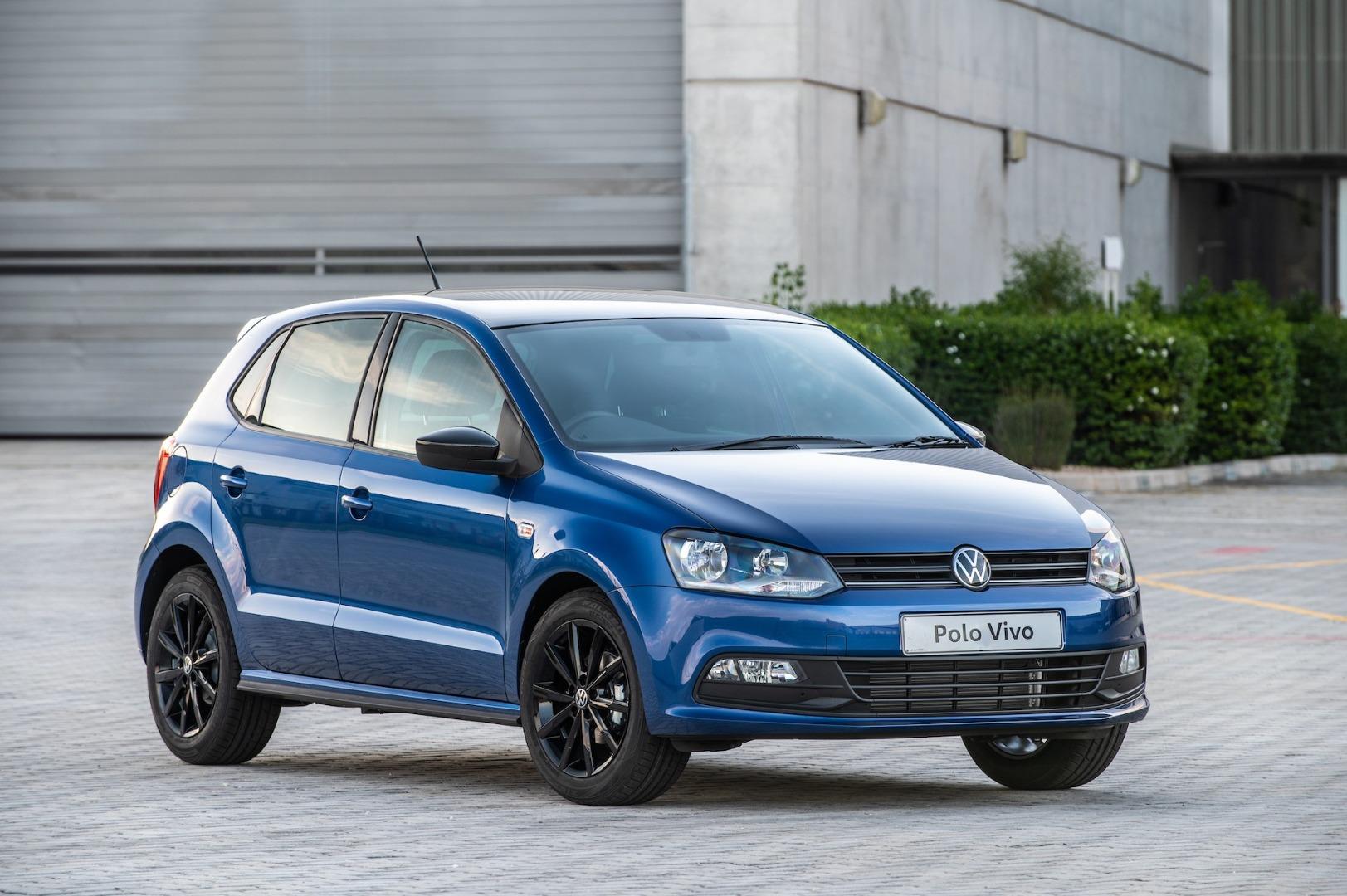


Times are tough and money is in short supply, so choosing your next car with low maintenance costs in mind definitely makes financial sense. Along with the instalments, fuel, and insurance, maintenance will be a key decider regarding your car’s running costs: The lower its maintenance requirements are, the more money will remain in your bank account.

Which cars tend to be maintenance hogs?
There is no magic formula to determine whether a car will be maintenance-intensive or not, but there is one basic truth which applies across the market: Complex cars are more likely to develop complications as they age. It’s only logical, really, because the more “stuff” (features/gadgets/display screens/control units/electric whatnots) a car has, the greater its potential for something going wrong.
This isn’t a criticism of technological advancement, though. Elaborate technical solutions get refined over and over, becoming ever more-affordable and more durable with time. Consequently, in the time it took for ABS and electronic fuel injection (as examples) to filter down from the 1980’s premium-brand products to today’s entry-level cars, these systems have become durable to a fault. But nothing is infallible...

Ageing exotics
Common wisdom says that premium (or luxury) cars are likely to become money pits as the years roll by, which also neatly explains their catastrophic depreciation when their maintenance plans expire. This assertion is partly true, purely because when things do go wrong with such cars, it usually costs a lot to repair.
Their spares are expensive, and they may even need specialist mechanics to fix them. And they’re usually complex as well, introducing a host of new and interesting points of failure in the process – usually with new or developing technology thrown in as well, for good measure.

However, if you have some excess cash lying around, buying an old exotic car could get you something awesome for a comparative bargain price. There’s no denying the appeal of an E46 BMW M3 for less than a quarter of a million Rand, for instance, but don’t even contemplate buying one if you’re already strapped for cash.
Cars like these (or, for that matter, any high-performance or luxury car) are not meant for buyers on a tight budget, and taking the plunge if you can’t keep up with the maintenance (which can be ruinous, if you're incapable or unwilling to do it yourself) will only decimate the value of your investment and perhaps even destroy a near-collectable (and, by now, exotic) car in short order. You need to keep a firm hand on older cars, especially specialist models, and doing so usually involves substantial financial input.
Related: Should you buy a new or used car for a long commute?

Keep it simple
We’re not saying that you should hunt down something extremely simple like a Nissan 1400, just because it has a carburettor and a distributor, however.
As explained above, electronic engine controls, ABS, air conditioning, electric power steering and the like are so well-developed by now, that these systems may as well be considered “lifetime parts”. They may not be cheap to replace if they do go wrong, but they also shouldn’t require more than minor attention in the car’s normal lifetime.

There are nonetheless some things to avoid (especially with older cars or cars out of maintenance plan) when your aim is to keep maintenance costs as low as possible as long as possible. The potential issues are usually found in high-end cars, most of which feature some combination of forced induction (turbocharging), direct injection, dual-clutch gearboxes, and touchscreens.
These are all wonderful and marvelous when the car is new (or new-ish), but as they age, some of their man-made electronic and mechanical gubbins may stop working the way they should. Then, because almost everything on a modern car is interconnected, the chances are that it will bring your car to a halt (or at least send it into limp mode). And that’s when the money starts flowing.
Related: Should I trade in my car when it is 5 years old?
Our top picks for low-maintenance new cars
Keeping all of the above in mind, we’ve compiled a list of some of the cars that are best for low maintenance costs. You won’t see a turbo petrol engine here, and dual-clutch gearboxes are verboten. Simplicity is the name of the game, and affordable parts prices and durability are even more important. What should you buy?

Budget/City cars (sub-R 250 000)
Almost all budget-priced contenders are known for low maintenance requirements, but a few stand out: The Ford Figo had the cheapest overall parts basket price of all the cars surveyed in the , and the Datsun Go, Hyundai Atos and Suzuki Swift were not very far behind.
Other suitable choices include the Suzuki S-Presso (and Celerio and Baleno), Renault Kwid, Hyundai Grand i10, Kia Picanto, Toyota Agya and Starlet, Peugeot 108, and VW Polo Vivo. Good thing that most budget cars are inexpensive to run as well as buy, then!

Compact car/SUV/crossover (R200 000 – R 500 0000)
This includes one of the fastest-growing segments in the local marketplace, but we’ll apply the same criteria as for the entry-level cars above. Once again referencing the , the Suzuki Vitara Brezza (and it's Toyota Urban Cruiser sibling) has the least-expensive total spare parts basket of all the evaluated cars in its segment, earning it our recommendation here. First owners will also smile about the 4 year/60 000 km service plan included as standard.

Special mention has to go to the Mazda CX-3, which posted the least-expensive maintenance parts basket in its class in the 2021 Guide, with the Peugeot 2008 following closely behind in this regard. However, the latter doesn’t conform to our “no turbo” rule, so the Mazda CX-3 secures a second position here, with the CX-5 and CX-30 almost certain to have similar maintenance requirements to their smallest sibling.
The Toyota Corolla Cross (along with its sedan- and Quest siblings) should also receive your attention. Not only do they come with a well-earned reputation for durability, but these models are also known to require minimal extra work outside of their scheduled (and affordable) routine maintenance.

Mid-to-high-end SUV/crossover (R600 000 and up)
For this segment, we’ll need to forego the “no turbo” requirement, simply because finding a naturally-aspirated engine among them all is almost impossible, and many car-based contenders employ dual-clutch automatics by default. To compound this matter, premium-branded cars really rule the roost in the high-end price bracket, making for more-expensive maintenance almost by default.
SUVs in this price bracket are usually diesel-powered, especially those with bakkie-based architectures. Of this bunch, we’d recommend the Toyota Fortuner and Prado as the lowest-maintenance choices among their peers, although all these bakkie-based offerings should perform well in the maintenance stakes, purely because they’re all built to be tough.

Premium SUV/Crossover/Sedan
It’s unlikely that maintenance cost would be too much of an issue for the first-time buyer of a premium-badged car, simply on account of their generally strong maintenance plans. However, second- and third owners may want to know where to send their money, to ensure that incurred maintenance costs don’t ruin their bank balances.

The first choice here would be the Lexus IS or ES model ranges. Not only do they benefit from Toyota’s durability reputation (and are thus likely to have less need for unscheduled maintenance) and the excellent Lexus maintenance plan for 7 years or 105 000 km, but they also offer available naturally-aspirated petrol/electric hybrid propulsion, to save you money on fuel in the longer term.
Yet again, forced induction is the order of the day, so a turbo may become an unavoidable item. In this case, it’s best to stick with vehicles that have as wide an aftermarket support base, thus negating the need to visit the agents for maintenance, and making OEM-equivalent parts available. For this reason, Audis, Mercedeses and BMWs would be the prime choices, simply because there are plenty of specialists and non-OEM parts for these brands to keep you moving.
Related: Should you buy a car even if it gets negative reviews?

Verdict
It is impossible to accurately predict any car’s maintenance costs, but applying the basic rule of thumb (keeping it simple) should at least help you to avoid unpleasant surprises in the future. And remember, a car’s reputation is earned over time, and usually comes with very good reason. If you suspect that a car may eventually become too expensive to maintain on your budget, keep on shopping – the ideal blend between your needs and resources is out there!