


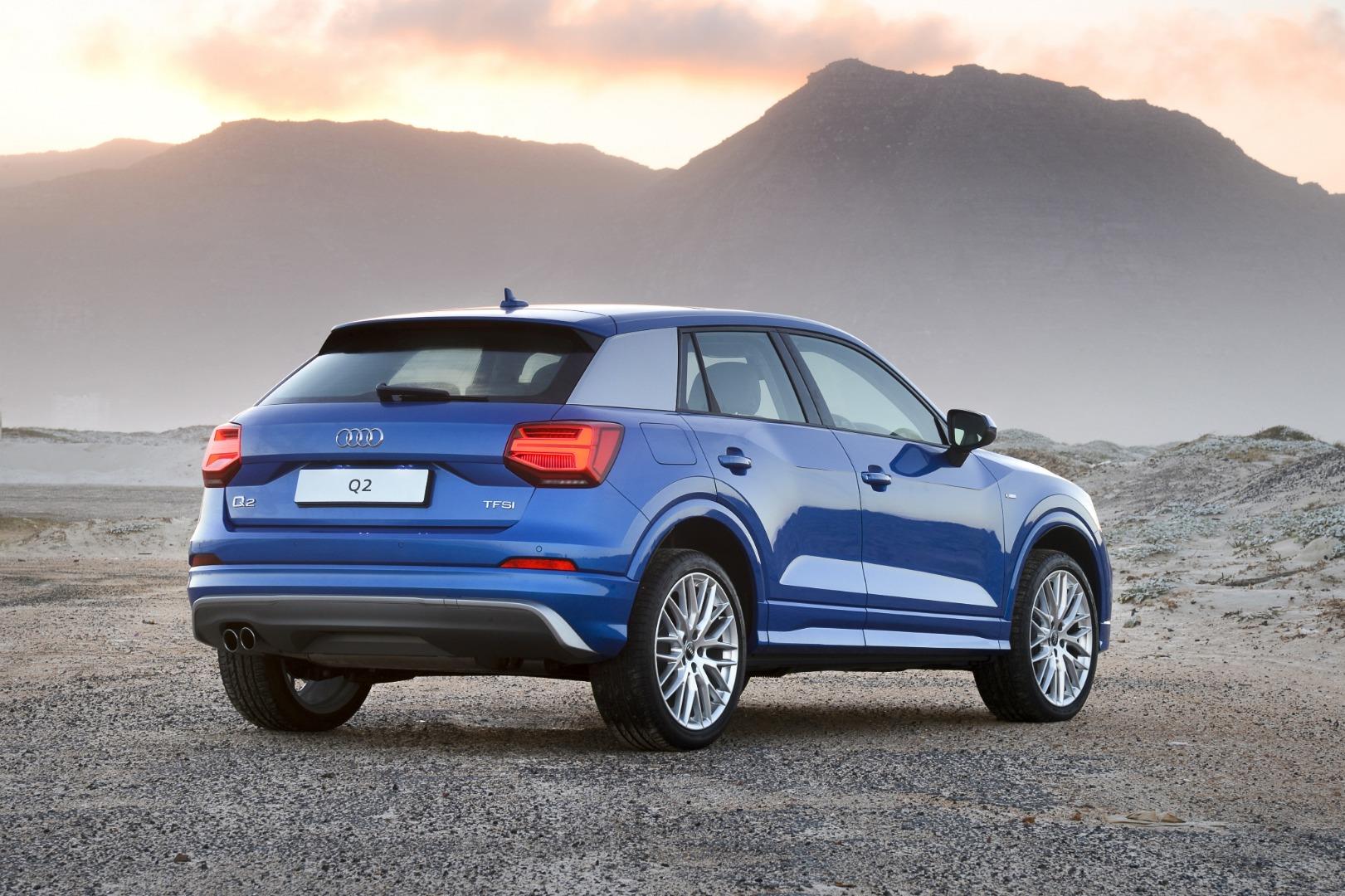


Audi’s cute little cross-over, the Q2, was introduced here in 2017. Initially there was a diesel model in the range, but this has since been discontinued. So right now, you can choose between two engines: a 3-cylinder turbo-petrol unit and a 4-cylinder turbo-petrol which has quite a sophisticated specification.
The Q2 range

There are nine models in the Q2 range, incorporating the two available engine sizes. The entry model is known as the 30 TFSI Lite Edition, and this sells for R461 000. There are various trim levels, including “standard”, Sport, Black Edition and Sport S-Line models. The most expensive model is the rather laboriously-named 35 TFSI sport S-Line Sports model, which sells for R604 675.
The so-called “30” designated models in the range use the 1,0-litre 3-cylinder engine, while the “35” designation refers to the more powerful 1,4-litre 4-cylinder turbo petrol engine. All models are now only available with a 7-speed dual clutch transmission, which Audi refers to as its S tronic automatic. The Q2 models are all front-wheel-drive.
Engines

The 30 TFSI models use the 999 cc triple-cylinder engine that produces a punchy 85 kW and 200 Nm of torque, delivered between 2 000 and 3 500 rpm. Claimed fuel consumption for this little 3-cylinder engine is 5,1 litres/100 km, and the CO2 emissions are 117 grams per kilometre, which makes the car exempt from CO2 tax.
Performance for the 30 TFSI models is strong, with 0-100 km/h claimed at 10,5 seconds, and a top speed of 194 km/h.
The 35 TFSI models use the 1,4-litre 4-cyinder turbocharged TFSI unit, with direct fuel injection. This engine is very much profiled towards low emissions and fuel consumption, and in this regard the 35 TFSI engine has cylinder deactivation technology.
Known as cylinder-on-demand technology (COD), this system deactivates the number two and number three cylinders when load demands on the engine are 100 Nm or less. The deactivation of the two cylinders also occurs when coasting, with engine speeds between 1 400 rpm and 3 200 rpm.
All this results in an extremely low overall fuel consumption figure of 5,2 litres/100 km and emissions of just 119 grams per kilometre. Again, this means the Q2 in 35 TFSI form is exempt from CO2 tax in South Africa.
Performance on the 35 TFSI models is significantly stronger. Maximum power is 110 kW, and the peak torque of 250 Nm is produced between 1 580 and 3 000 rpm. This gives a 0-100 km/h time of 8,5 seconds and a top speed of 212 km/h.
And the efficiency crown goes to…

Both these engines are remarkably light on fuel, and deliver strong performance. It is notable that Audi customers for the Q2 are content with these two small-displacement turbo units, and there has been no talk of introducing a special S or RS variant here. These days, if power is “adequate”, many customers are more intent on spending money on extra luxury an styling features, and this is evident in the Q2 range. As an example, the least-expensive 35 TFSI model, at R545 500 is over R 9 000 less expensive than the top-trim 30 TFSI model, the 30 TFSI sport S-Line Sports, at R554 175.
As for efficiency, there is no doubt that the 35 TFSI engine is the champ. Despite delivering a 0-100 km/h time that is 2,0 seconds quicker than the 30 TFSI, and a top speed that is 21 km/h faster, its average fuel consumption and CO2 emissions are within a whisker of the 1,0-litre unit’s efforts.
Thanks to that cylinder deactivation technology, the 1,4-litre 35 TFSi engine pretty much allows you to enjoy your cake and eat it!
Recommended next:
2017 Audi Q2 1.4 TFSI Sport - Car review
Volvo V40 Cross Country vs Mercedes-Benz GLA vs Audi Q2: which one has the best infotainment system?