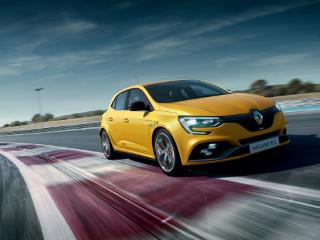
We compared Renault Megane engines, and the efficiency crown goes to...
Any new Renault Megane you may see on a showroom floor will be one of the last ones to reach South Africa, as this model has now disappeared from Renault’s local line-up. But, just because Renault doesn’t bring them here anymore, doesn’t mean that a used one is any less appealing. Let’s look at the fourth-generation Megane’s engines, to see where the efficiency crown should go.


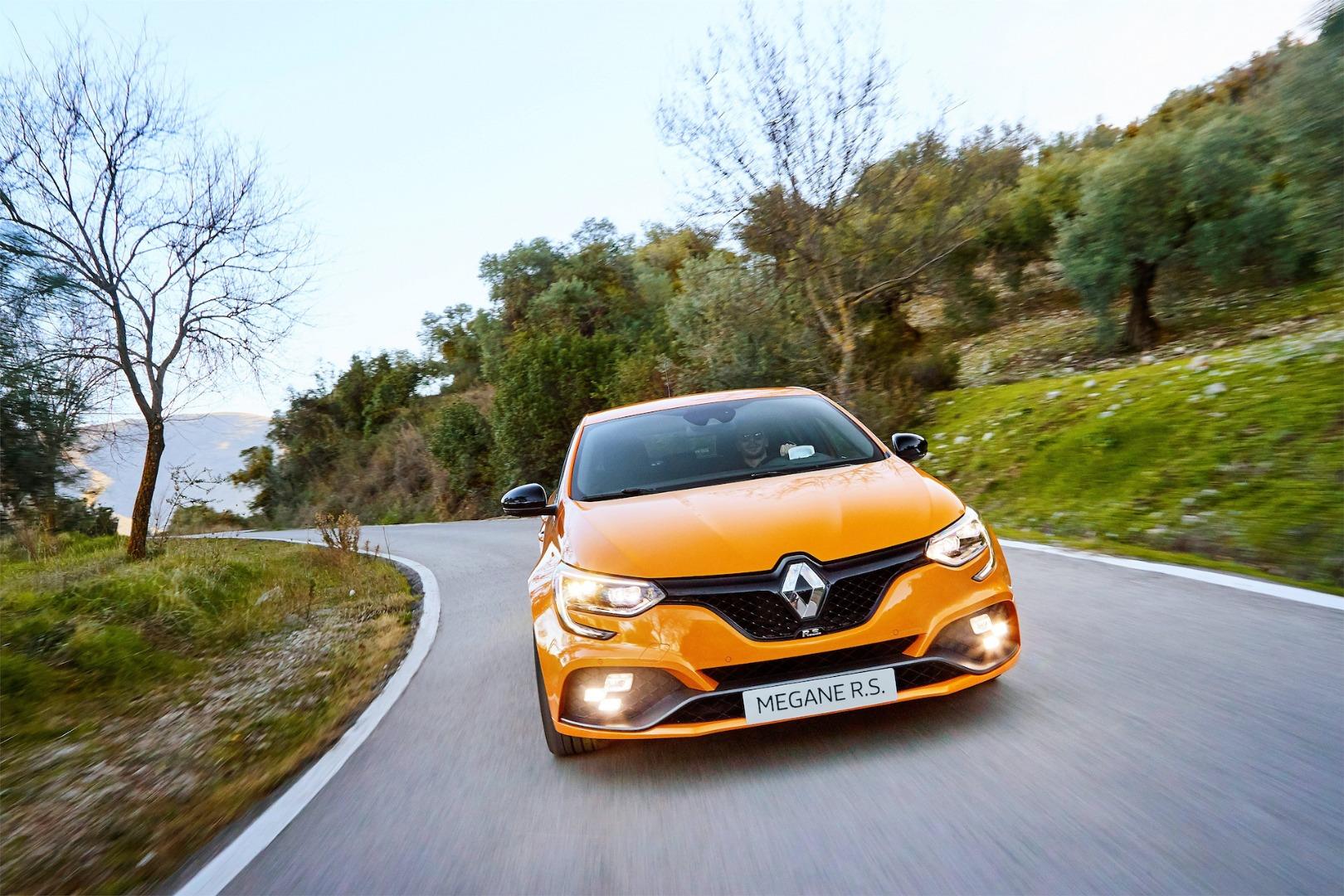
Highlights from the Renault Megane’s 25-year local availability run include various Renault Sport variants, finally topping out at 221 kW for the RS’s final local hurrah: the Megane RS 300 Trophy, of which only 7 were imported to South Africa. We won’t talk about those today, because those 7 Trophies definitely found homes with enthusiasts and collectors already...
For this article, we evaluated the mainstream engines available in the Renault Megane IV range, all of them petrol-fueled 4-cylinders. The range included a 1.6-litre non-turbo unit at entry level, but the others were all turbocharged and direct-injected, and offered either manual- or automatic transmissions.
Efficiency was quantified with two criteria: Claimed average fuel consumption, and specific power output. The former is self-explanatory, and the latter indicates the power density of the engine, expressed in kilowatt/litre.
Related: Shop for new and used Renault Megane cars for sale here.
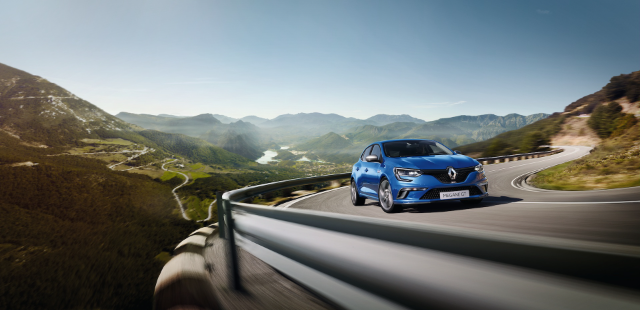
Renault Megane 1.6
Outputs: 84 kW and 156 Nm
Claimed Average Fuel Consumption: 6.4 ℓ/100 km
Specific Power Output: 52.6 kW/litre
The Megane’s entry-level engine was certainly not the most efficient one. Not only did it have the lowest specific power output, but its claimed fuel consumption was also rather higher than the smaller turbo engine's figures. In addition, buyers got a 5-speed manual with no automatic option, unlike the turbo variants.
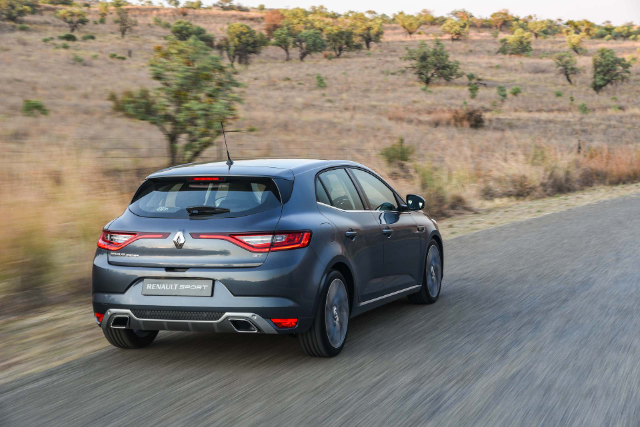
Renault Megane GT-LINE (1.2T)
Outputs: 97 kW and 205 Nm
Claimed Average Fuel Consumption: 5.3 ℓ/100 km (Manual) or 5.4 ℓ/100 km (Auto)
Specific Power Output: 81.0 kW/litre
Available with either a 6-speed manual or a 7-speed dual-clutch automatic (EDC), the smallest turbocharged Megane posts lower fuel consumption claims, as well as a much higher power density than the naturally-aspirated 1.6-litre. Its specific power output of 81.0 kW/litre is roughly on par with other downsized economy engines, so it's not quite in the realm of extraordinary yet.
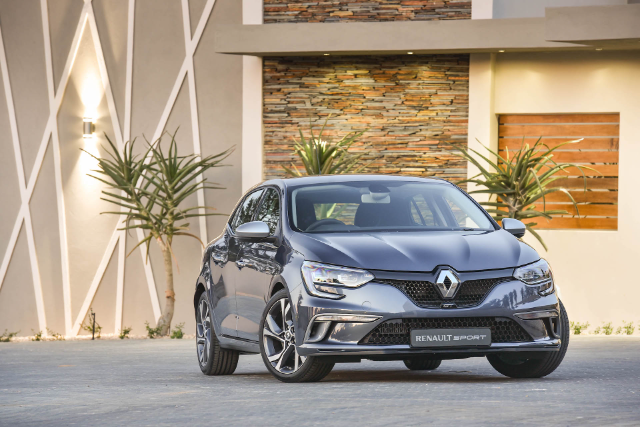
Renault Megane GT (1.6T)
Outputs: 151 kW and 280 Nm
Claimed Average Fuel Consumption: 6.0 ℓ/100 km (Auto)
Specific Power Output: 93.2 kW/litre
Now that’s more like it! 93.2 kW/litre is a respectable specific power output for a car with some sporting aspirations, and gives the Megane GT the strongest performance in the initial range. It isn’t even too thirsty, with a claimed average consumption of only 6.0 ℓ/100 km.
Note that the Megane GT was only offered with a 7-speed EDC, so manual-shift lovers should look either up or down the model range. This variant was dropped when the RS 280 arrived in 2018, to take over the role of star performer.
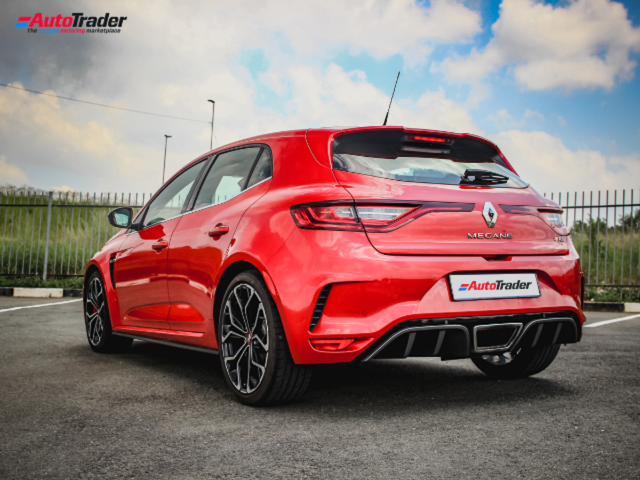
Renault Megane RS 280 (1.8T)
Outputs: 205 kW and 390 Nm
Claimed Average Fuel Consumption: 7.2 ℓ/100 km (Manual) or 7.0 ℓ/100 km (Auto)
Specific Power Output: 114.1 kW/litre
Available with both 6-speed manual (Cup) and 7-speed EDC (Lux) transmissions, the top-performing Megane brought some serious numbers to the table. Seen in the context of its excellent 114.1 kW/litre specific power output, the RS 280’s claimed average consumption of (at worst) 7.2 ℓ/100 km could even be deemed acceptable.
It was the thirstiest car in its range, however, and if fuel consumption matters at all, that alone disqualifies it from taking the efficiency crown. Performance-oriented drivers wouldn’t really care, though, because the storming acceleration on offer more than compensated.
Verdict
With fuel efficiency as the primary concern, it’s clear that the 1.2T GT-LINE engine was the efficiency king. But, should things like all-round usability enter the equation, the focus will shift to the mid-range 1.6T Megane GT. Its outputs were respectable enough to ensure strong real-world performance, yet its drinking habits were quite mild.
Cutting it from the line-up after only two years was a puzzling move, which may have contributed to the Megane IV’s sustained slow sales and eventual demise. Yes, the RS 280 is brutally quick and great fun, but for a balanced spread of abilities and overall efficiency, the Megane GT is the one to hunt down – even if it will be 3 years old by now...