


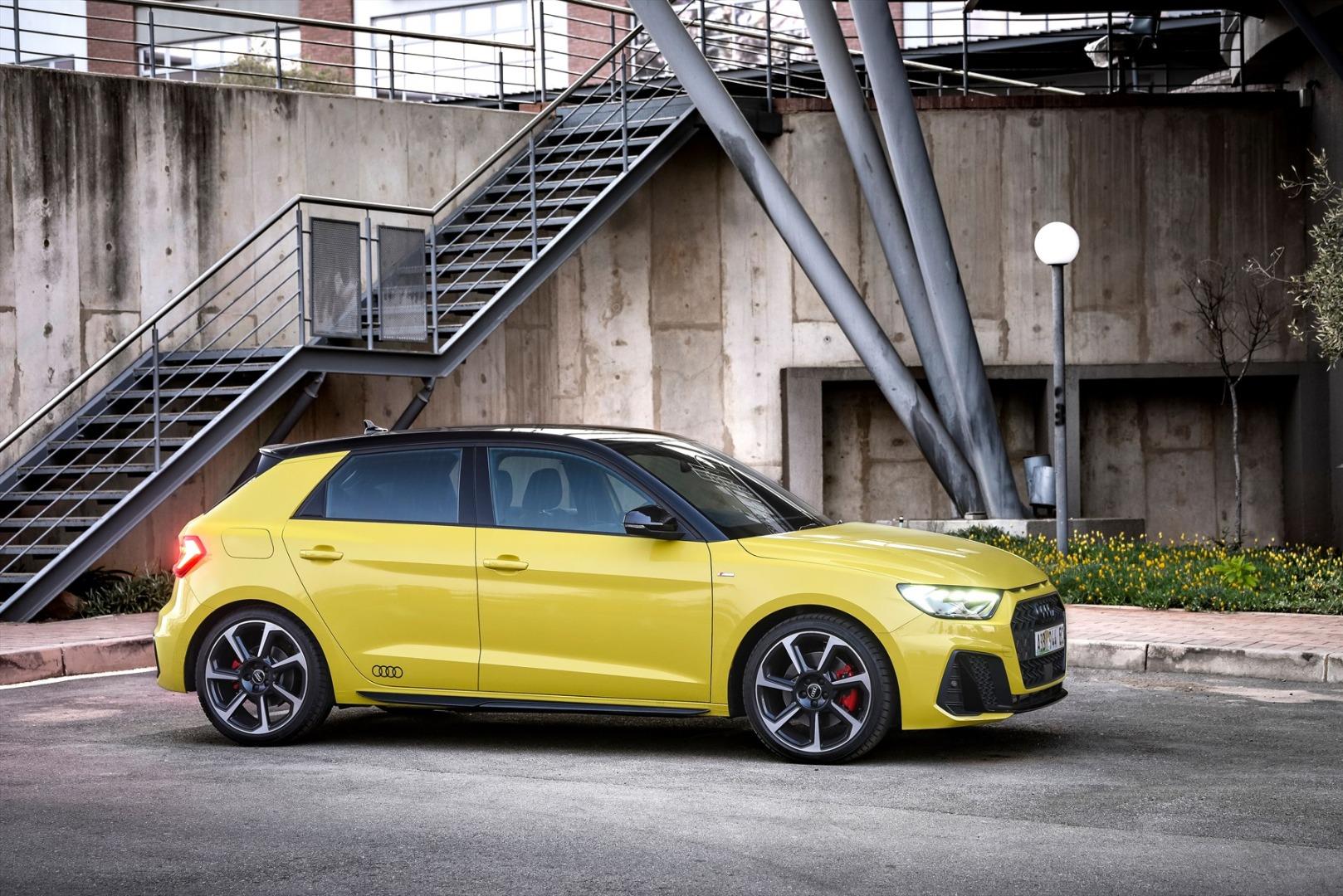
Audi’s A1 has a good track record in South Africa. The initial version of the baby Audi was introduced here in 2011 and since then the model range has racked up close to 14 000 sales.
In the early part of 2019 the model dropped from the Audi price lists but any fears that the A1 was to be discontinued were unfounded. Audi was merely regrouping for the introduction of the all-new A1, this time coming only in five door Sportback form. A month ago we ran a September 2019 new car launch report on the new A1 Sportback.
The second-generation A1
The new A1 is slightly longer than its predecessor, but the width and height have remained much the same. The body overhangs on the new car are shorter, and the overall impression is of a very sleek sporty hatchback. The distinctive Audi daytime running lights have been re-styled slightly, still employing the distinctive hydrofoil shape. Along with the single-frame grille the detailing gives the new A1 a more muscular, yet sophisticated appeal.
New model nomenclature
In recent months Audi has re-jigged its model nomenclature. No longer do you get an A1 badged as a “1.4” or a “2.0”. The latest A1, consequently bears model names that have nothing to do with engine size. A clue to their significance is that the lower the number, the less-power a model has.
The range now kicks off with the A1 Sportback 30TFSI, and this is powered by the smallest engine in the range. Next up is the more powerful A1 Sportback 35TFSI, while the top model in the current range is also the most powerful, the Sportback 40TFSI.
The engines
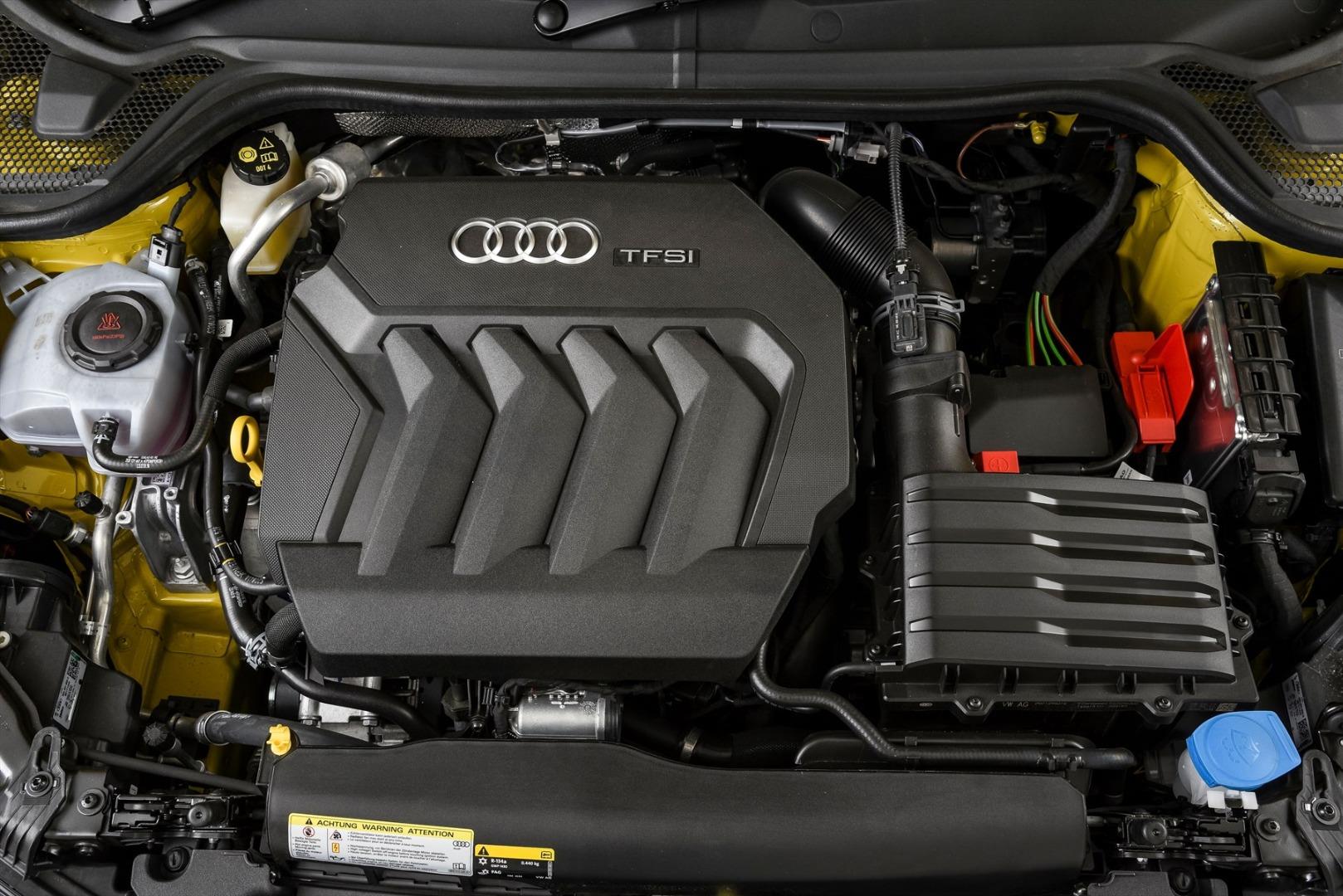
There are three engine sizes available in the current range, as indeed there were in the previous model range. All of them are petrol-fueled, with no diesels in the line-up, and two of them are up-rated carry-over engines from the most recent line-up of the first-gen A1.
The Audi A1 Sportback 30TFSI. This model (known as a 1.0in the previous model line-up) uses the 999 cc triple-cylinder turbocharged petrol engine. It now produces 85 kW at a fairly modest 5 000 rpm and 200 Nm of torque at 2 000 rpm. It is mated to a 7-speed DSG gearbox and drives through the front wheels.
The Audi A1 Sportback 35TFSI. This model uses a new 1 498 cc four-cylinder direct-injection petrol-turbo engine that replaces the previous 1 395 cc unit used in the previous-gen A1 Sportback 1.4 TFSI. The previous 1,4-litre unit was rated at 92 kW, while this new 1,5-litre punches out 110 kW and 250 Nm at a low 1 500 rpm. This engine also uses the 7-speed DSG gearbox
The Audi A1 Sportback 40TFSI. This 2,0-litre model uses a 1 984 cc turbo-petrol four-cylinder to power the range-topping A1 Sportback. The engine is also used in the Volkswagen Polo GTI. It produces a relatively un-stressed 147 kW and 320 Nm of torque. The gearbox used here is a six-speed conventional automatic transmission.
So which engine wins our efficiency prize?
All these engines are extremely efficient, providing performance and fuel consumption levels that would have been unthinkable for their relative sizes a few short years ago. If our efficiency rating was based purely on fuel consumption then the nod would go to the 30 TFSI’s little 999 cc three-cylinder motor.
Officially the one-litre triple is rated with an overall fuel consumption figure of 4,8 litres/100 km and we know that with careful driving over long distances you can in fact achieve this figure. But around the city, you are more likely to get a consumption figure in the region of 5,5 to 5,8 litres/100 km with careful driving, and up to 6,5 litres/100 km if you drive with a heavy foot.
The 2,0-litre four-cylinder fitted to the 40TFSI model is in fact still quite mildly tuned. Volkswagen has proven this with its hot Golf GTi and Audi with its S3 versions of this engine that prove power figures in the 220-plus kW region are easily possible with the 1 984 cc motor. Rated fuel consumption is 6,0 litres/100 km and the 0-100 km/h run takes 6,5 seconds.
What we don’t particularly enjoy about this engine in the A1 40TFSI spec is that, from a pure driving pleasure point of view, it is not as free-revving as it might be in this 147 kW form. Also, the six-speed automatic is not as “sharp” as the 7-speed DSG gearbox fitted to the other models.
So the winner is…
Our efficiency award, then, goes to the new 1,5-litre TFSI four-cylinder. It allies very sporty performance and a free-revving nature to impressive fuel consumption that we believe speaks best of an overall efficiency package.
The fact that it produces its maximum torque at just 1 500 rpm means you can shift up to a higher gear (or let the DSG do it for you) on a very light throttle opening, thus maximising your return for each litre of petrol used. The official figure for this motor is 5,1 litres/100 km and you will find in the TFSI35 version that your about-town average will be very close to the consumption achieved by the (less powerful) little 1,0-litre three-cylinder model.
Conversely, if the red mist takes hold and you feel like having some full-throttle fun, well, the 35TFSI’s 0-100 km/h rated figure of 7,7 seconds is getting up close to hot-hatch territory. As indeed is the rated top speed of 222km/h.
For the best performance/fuel consumption ratio, the new 1,5-litre engine fitted to the 35TFSI model is our winner. The pricing on this mid-line A1 Sportback model starts at R429 900.
If you are keen on buying a used, previous-generation Audi A1 you might like to read Top 3 Audi A1 and S1 articles on AutoTrader, featuring information on the models available prior to September 2019.