
By Martin Pretorius
Used car running costs: Audi
Used car running costs: Audi


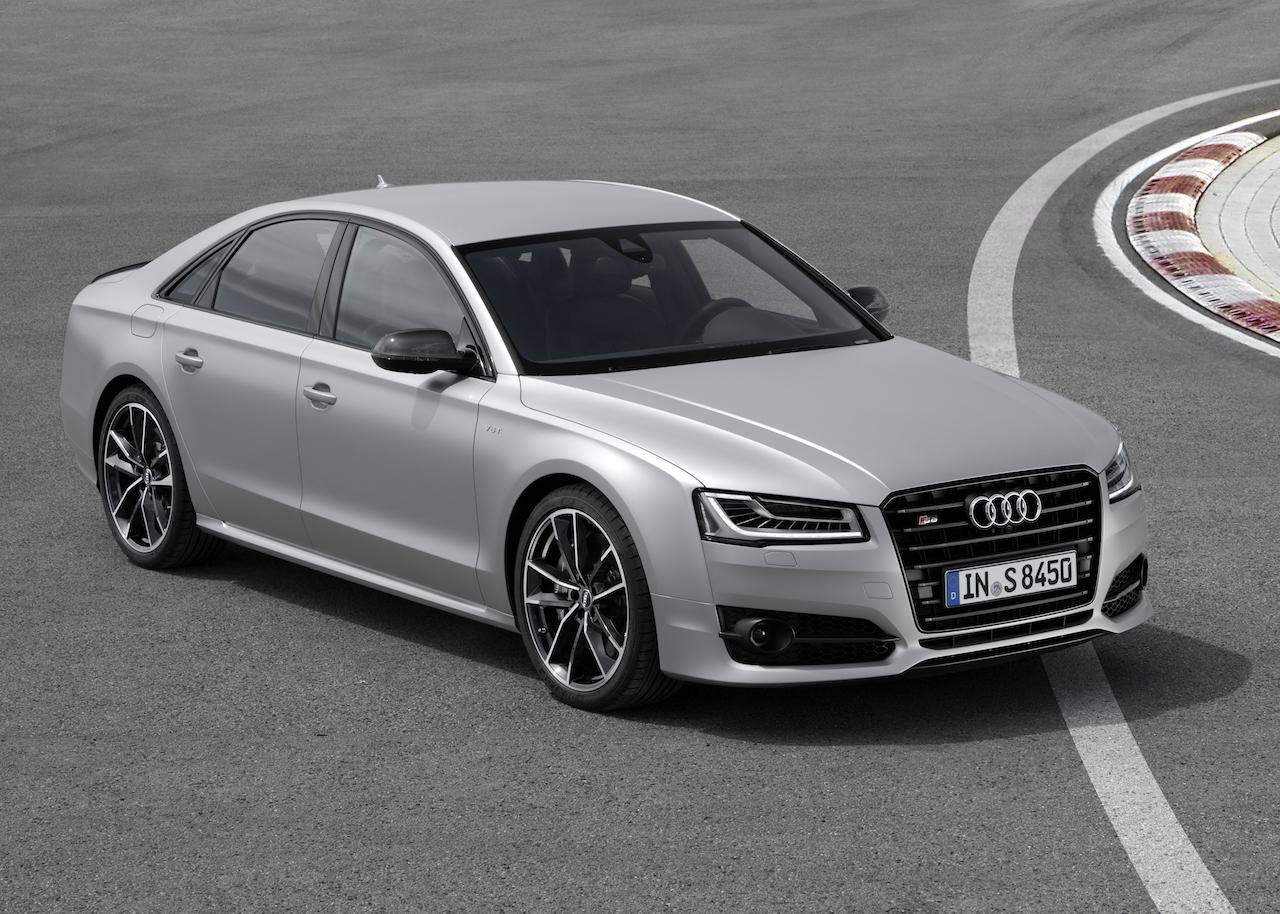
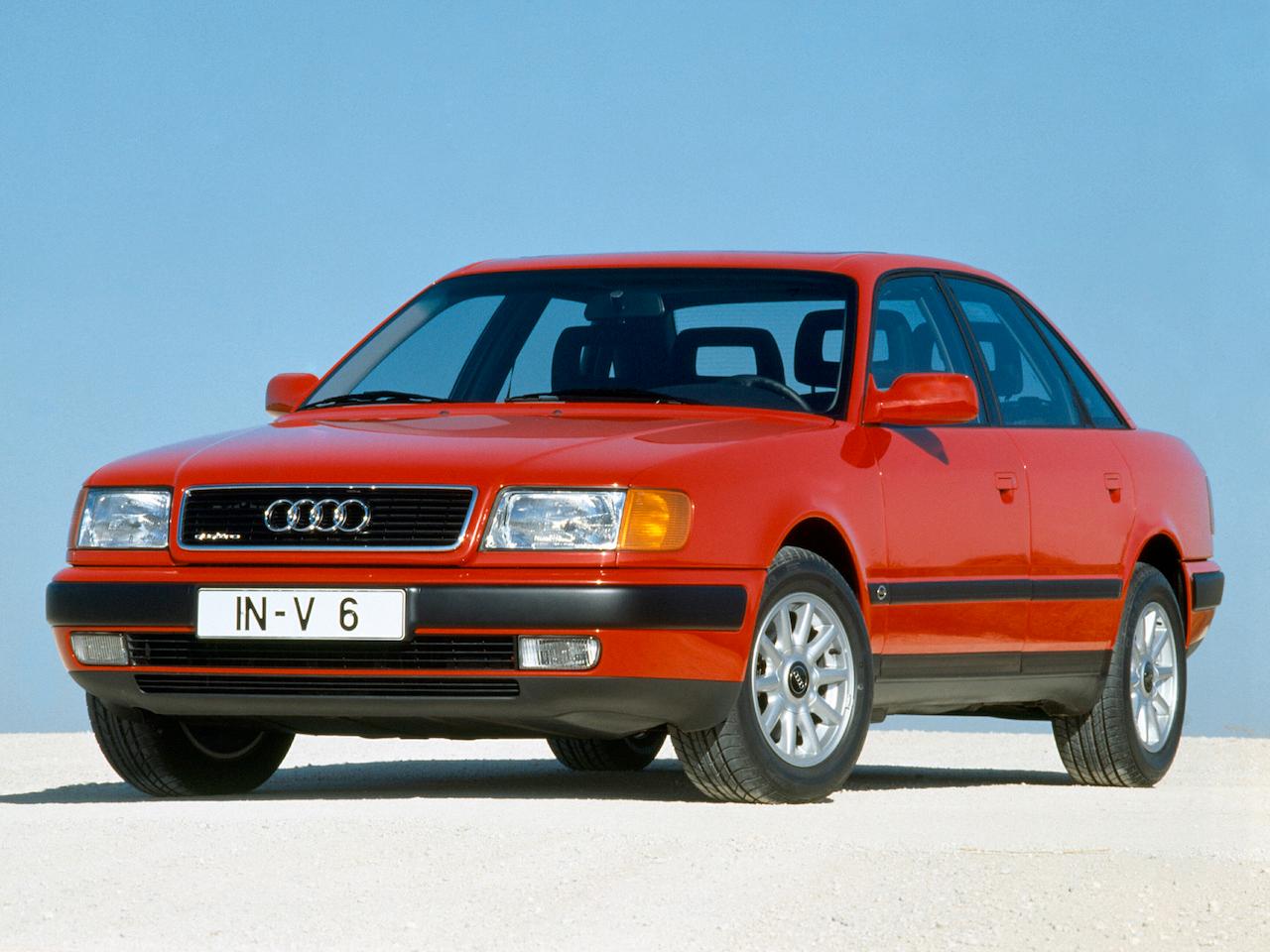
With considerable success in motorsport over the decades, along with innovative technology and an increasing emphasis on high performance, Audi has built a solid reputation for making well-engineered cars which tend to answer those questions that other manufacturers haven’t even asked yet.
Think about quattro all-wheel drive, for instance, or their early adoption of turbo-charging, or direct-injection diesel engines, or highly-aerodynamic saloon cars: in all these examples, Audi was either the pioneer to introduce the technology, or a very early adopter of radical ideas.
But Audi has taken some penalties as a result of being a trailblazer, and the biggest of these penalties is a reputation for being overly-complex and somewhat fragile. How deserved is this reputation, though? Should you consider buying an older Audi, or is that a road that leads to financial ruin and broken dreams? Let’s take a look at some older Audis, and discover the truth.
Audi 500 (C3-generation, 1983-1992)
Along with the Ur-quattro (which was based on an older, smaller platform), the C3-generation Audi 500 was the first Audi to really re-write the rules. When it arrived in Europe at the end of 1982, the motoring world was stunned: here was a large executive saloon with such outlandishly smooth styling and innovative engineering, that it turned its entire market segment upside down. The C3 was a true pioneer, and remained in production for the better part of a decade. It introduced flush side glazing, the first 20-valve turbo 5-cylinder engine (not seen in SA), and even served as the base for the Audi V8 (Audi’s first luxury saloon, and predecessor to the A8).
But there were some problems. As the C3 aged, it showed widespread niggles with its central hydraulic system (especially when serviced with non-OEM hydraulic fluid), drive shafts, cooling system, and suspension mountings. While the engines were mechanically robust, models equipped with an automatic transmission acquired a bad (and somewhat deserved) reputation for their poor durability, and the later examples exhibited the electrical- and electronic issues common to most late-1980s VW Group products. As a result, not many survive today. It’s unloved by collectors, and too expensive to maintain to use as a cheap old car.
However... if, like me, you have a soft spot for these old barges – we had one in our family when I was growing up – and you see a nice one in the classifieds one day, grab it. The same applies to the evolutionary C4-generation (which eventually became the first A6). They really were special cars, and any survivor needs to be cherished.
A4/A5 (B5 to B8)
B5: The car that changed Audi’s fortunes arrived in 1994, and laid the template for generations of small- and mid-sized Audis. Armed with modern multivalve 4-cylinders, turbos and V6 engines, the first-generation A4 led Audi’s resurrection in the USA, and in the process took the fight right to the class-leading BMW E36. It was a beautifully-styled, well-engineered, and well-made compact sedan, with a beautiful interior and a driving experience unlike any Audi that came before.
Clever front suspension almost eliminated torque steer, even in higher-powered derivatives, and quattro all-wheel drive pushed the performance envelope for cars of this class in the hot S4 and scorching RS4 derivatives (neither of which we received in South Africa). In fact, the B5 RS4 was the first hot Audi to convincingly overpower and out-perform its BMW M3 counterpart, even though its handling wasn’t quite up to the same entertainment levels.
Good though it was, the B5 had its share of problems as well, chief of which being the 20-valve 4-cylinder engines’ propensity to turn their engine oil into sludge. This problem was later solved by a change-over to fully-synthetic oil, and the 20-valve has since proven itself to be surprisingly hardy and tuner-friendly. That trick front suspension also had a weakness for wear, with the ball joints and rubber parts wearing out every 80 000- and 150 000 km, depending on the road surfaces the car had to negotiate.
Fortunately, suspension kits are available on the aftermarket (as they are for all the subsequent A4 generations) at far more reasonable prices than owners would pay at the dealers. Other than that, the B5 A4 has potential for a long service life, provided the right preventative maintenance is performed. Cut corners, though, and the B5 will drain your wallet in record time. Four-cylinders are cheaper to run over the longer term, because the V6 variants were quite thirsty and even more maintenance-intensive.
B6 and B7: Much the same applies to the B6 and B7 generations which followed. These cars were essentially variations on the B5 theme, albeit with a sophisticated independent rear suspension across the range, and the addition of Audi’s first-generation petrol direct injection 2.0T (FSI) engine for the B7-generation (similar to the one used in the Golf 5 GTI). The other noteworthy step for the B6 was the first arrival of a V8 engine in an A4 (for the B6 and B7 S4), and the first direct-injection 4.2 V8 in Audi’s stable (in the B7 RS4).
By the time the B7 went out of production, any shortcomings of this platform (the B7 was a thorough facelift of the B6, really) had been exposed, and to an extent, remedied. Known issues include Multitronic (CVT) transmission problems, dual-mass flywheel (on manual cars) failure, random electronic gremlins, and a tendency for the direct-injection petrol engines to clog their intake ports with carbon deposits. The 1.9 TDI had a brief stint as a turbo-eater, but later upgrades eliminated this issue, with these remedies also becoming available on the aftermarket.
As far overall running costs go, it’s mainly dependent on the level of complexity of the specific B6 or B7 in question: the more things there are to possibly go wrong, the more things will eventually go wrong. Furthermore, as these cars start to age, some electronic gremlins may appear. Apart from the known high-pressure fuel pump problem, general maintenance on the FSI variants are surprisingly affordable, provided their cylinder heads are regularly “de-coked” and all filters and drive belts are replaced religiously. Consumption-wise, the diesels were quite spectacularly efficient, and the lower-powered petrol cars were also quite frugal, so those will be the least expensive to run.
B8 and B9: The B8 A4 was an entirely new car, built on the VW Group’s MLB platform, which also spawned the A6 and A5. It was larger and more sophisticated, and more powerful than ever. The S4 uncorked a solid 245 kW from a new supercharged V6, and the RS5 had 331 kW from its evolutionary V8 FSI engine. Economy-minded types could choose a selection of direct-injection 4-cylinder engines, all with turbo charging, in either petrol- or diesel flavours, with a bewildering array of transmissions – either front- or all-wheel drive, from a normal 6-speed manual through torque-converter automatics of varying ratio counts, to the infamous Multitronic and a 7-speed dual-clutch transmission.
Running costs of the B8 and B9 will vary, depending on the derivative. Diesels are extremely frugal, and so are the lower-powered four-cylinder petrols. However, maintenance costs are quite steep on most models, mainly due to the exacting standards demanded by the drivetrains. As with their predecessors, any shortcuts in the maintenance schedule will result in punishment for the driver.
Essentially, the current-generation (B9) A4 and A5 are evolved from the B8 platform, now known as MLB Evo. It’s still too early to cast a verdict on their running costs, but they’re already proving to be very fuel-efficient in the real world. Besides, this generation should still be under Audi Freeway Plan, so no need to worry about the maintenance just yet...
A6/A7 (C5-C8)
Being derived from their contemporary A4’s platforms, the A6 has followed a similar evolutionary path. Their running costs are however generally a fair bit higher than those of the related A4, because of added complexity, higher fuel consumption (due to their greater size and weight) and more-intensive (and expensive) servicing requirements. Much the same buyer’s advice also applies: it’s cheaper to maintain an A6 expensively, than it is to repair it after even a short period of cost-cutting maintenance. Look after it, and it will last a long time; neglect it, and it will give your bank manager apoplexy.
A8 (D2-D5)
Like the A6, but even more so. That space-age spaceframe body costs a bomb to fix after an accident, and even though the A8 is usually lighter than its competitors, it’s always been a large, heavy vehicle. Consequently, fuel consumption takes a beating, helped in no way by the potent but thirsty V8s engines up front. The 3.0 TDI (when it finally arrived) addressed the consumption issue nicely, however, and would be the least-expensive of all A8s to run.
Maintenance costs are often downright scary, and because the A8 always shows new technology first, there’s a lot of relatively untried complexity to keep in working order. Older A8s go for bargain prices, but do not be deceived: there’s nothing as expensive in the long run as a cheap luxury car...
A3 and TT
Being derived from the Volkswagen Golf, these Audis are surprisingly dependable. Sure, the electronic things (especially in the first-generation cars) sometimes acted up, and DSG-equipped variants needed some extra work now and again, but on the whole, the A3 has always had the most-affordable lowest running costs of all Audis. It helps that many mechanical parts are interchangeable between the A3 and its Golf sibling, meaning strong aftermarket support for all the generations of A3.
The A3’s (mostly) 4-cylinder powerplants have similar maintenance requirements to those in the corresponding A4 models, but they use a lot less fuel in the lighter, smaller A3. As a result, an A3 is the closest to a budget-oriented Audi you’re likely to find.