
Top 5 things you have to know about the new Hyundai Grand i10
The new Grand i10 is set to be launched in South Africa in October this year. It’s built in India, as before, and is slightly bigger than the European version. Here are the top 5 things to know about the well-liked Grand i10’s replacement.


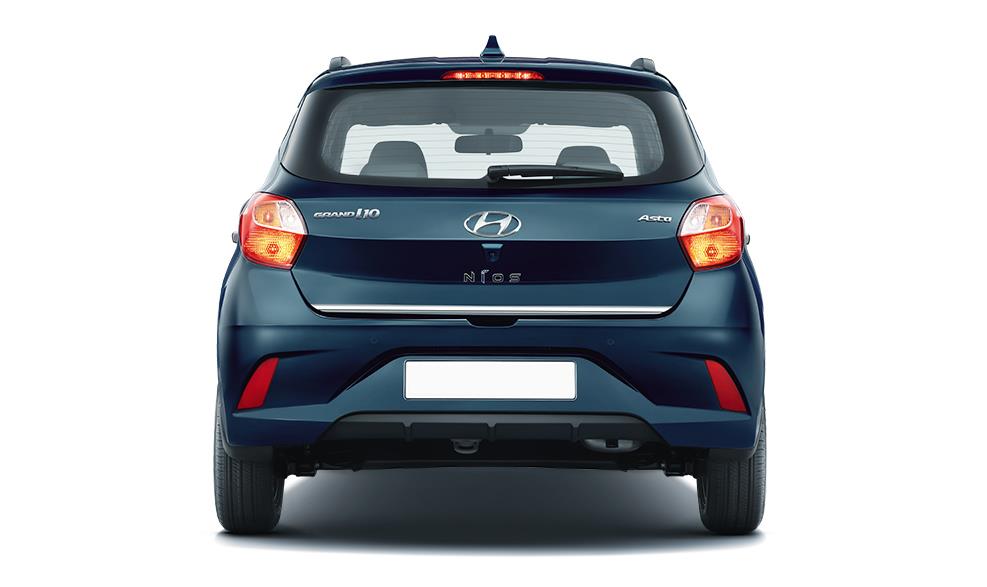

1. It’s bigger than the current Grand i10
We are yet to see it in the metal, but the cabin of the new Grand i10 seems very spacious, considering its exterior dimensions. The new car is 40 mm longer and 20 mm wider than the current model, but the height remains the same. Hyundai also increased the wheelbase by 25 mm. These enlargements translate into improved comfort for the occupants, while giving the newcomer a slightly sleeker appearance. Hyundai says aerodynamic design elements of the car have increased its overall stability and lowered the drag coefficient.
There’s plenty of legroom and headroom for rear passengers. At 260 litres, the boot size is almost the same as before. The driver’s seat is height-adjustable, and so are rear head-restraints. The front seats have integrated head restraints.
The European model is smaller than its Indian (and South African) counterpart, which is 135 mm longer, 40 mm taller and has a longer wheelbase, reports Gaadiwaadi.com. In India the Grand i10 is known as the Grand i10 Nios, since the old Grand i10 is still for sale in that country.
Related: Which Hyundai Grand i10 trim depreciates the fastest?

2. It will have premium features
The fancier versions of the Grand i10 will have nifty electrically-folding wing mirrors. This helps to prevents damage, allows occasional parking in very narrow spaces, tells you at a glance if your car is locked, and it simply looks cool when you lock the car remotely and the mirrors fold themselves to hug the car’s body.
Another feature that’s associated with premium cars, is a set of rear vents and a 12V power socket for the Grand i10’s rear passengers. It’s true that most passenger would prefer a USB socket(s), but it’s easy to source an adapter that can feed power to one or two USB cables.
An interior highlight is the user-friendly 20.3 cm (8 inch) touchscreen infotainment system – tuned by Arkamys – with Apple CarPlay and Android Auto.
The rest of the convenience features includes wireless smartphone charging (for compatible phones), a cooled glovebox, projector fog lights with chrome surrounds, diamond-cut alloy wheels and roof rails. Note that some of these features are reserved for the high-spec variants and not all of them have been confirmed for South Africa yet.

3. The engines are unchanged
If you had your heart set on a Grand i10 with turbo power, you’re going to be disappointed. To have Hyundai-Kia’s feisty 1.0-litre turbo mill in a small Hyundai, you’ll have to splurge on the Venue micro SUV, or move to India. However, the 1.0- and 1.2-litre engines in the present and forthcoming Grand i10s have proven their worth. What’s more; the new model is around 55 kg lighter than the retiring car, which boosts performance.
Autocar India says Hyundai claims to have improved the engines’ thermal efficiency and made modifications to the variable valve timing, thereby reducing frictional losses to improve performance as well as refinement.
We’re hoping the retail prices, like the engine line-up, will remain unchanged. Expect to pay between R185 000 and R250 000 for the new Grand i10. “This is an important new car for those who have to ‘buy down’, without feeling as if they’re driving a cheap car,” a spokesman for Hyundai South Africa says.
Related: Hyundai Grand i10 vs Kia Picanto vs Suzuki Swift: here’s our winner

4. The automatic transmission still uses a torque converter
Instead of the automated manual transmission (AMT) that often feature on Indian-market budget cars, the Grand i10's automatic option will still feature a traditional torque converter-type gearbox. It loses one gear, compared to what an AMT would offer in the Grand i10, but the enhanced gearshift smoothness and ease of dealing with heavy traffic likely compensates for the lack of a fifth gear.
AMTs are never particularly nice to drive, and often perform ratio changes with all the accuracy and fluency of a learner driver, so this gearbox type tends to lurch about a bit on congested roads. To get a smooth shift, you have to lift off the throttle in anticipation of the next upshift, or risk having your head move fore and aft like that of a strolling pigeon, when the car changes gear. In contrast, a torque converter-type automatic is smoother in its initial take-off, responds more readily to changing power demands, and swaps cogs a whole lot less intrusively.

5. It gets a mild safety upgrade
Hyundai uses a high percentage (65%) of lighter, yet more rigid Advanced High Strength Steel (AHSS) and High Strength Steel (HSS) in the construction of the new Grand i10. This makes it stronger, for better crash protection.
The ABS brakes have electronic brake-force distribution and the car will rapidly flash its hazard lights to warn vehicles behind it of a sudden stop. Some versions of the new Grand i10 will boast rear parking sensors and a rear camera. The latter will displays what it captures on the infotainment screen, when the car is in reverse.
The Grand i10 still has only two airbags – for the driver and front passenger. If you want more airbags in a small car, choose the tiny Peugeot 108, which has six of them.